The Brutal Truth About Workspace Mental Load
You've optimized everything, but you're still distracted. The problem isn't your gear—it's your brain's hidden tax for managing it all. This is the untold story of how your workspace mental load is killing your productivity, and why 'aesthetic' setups are the worst offenders.
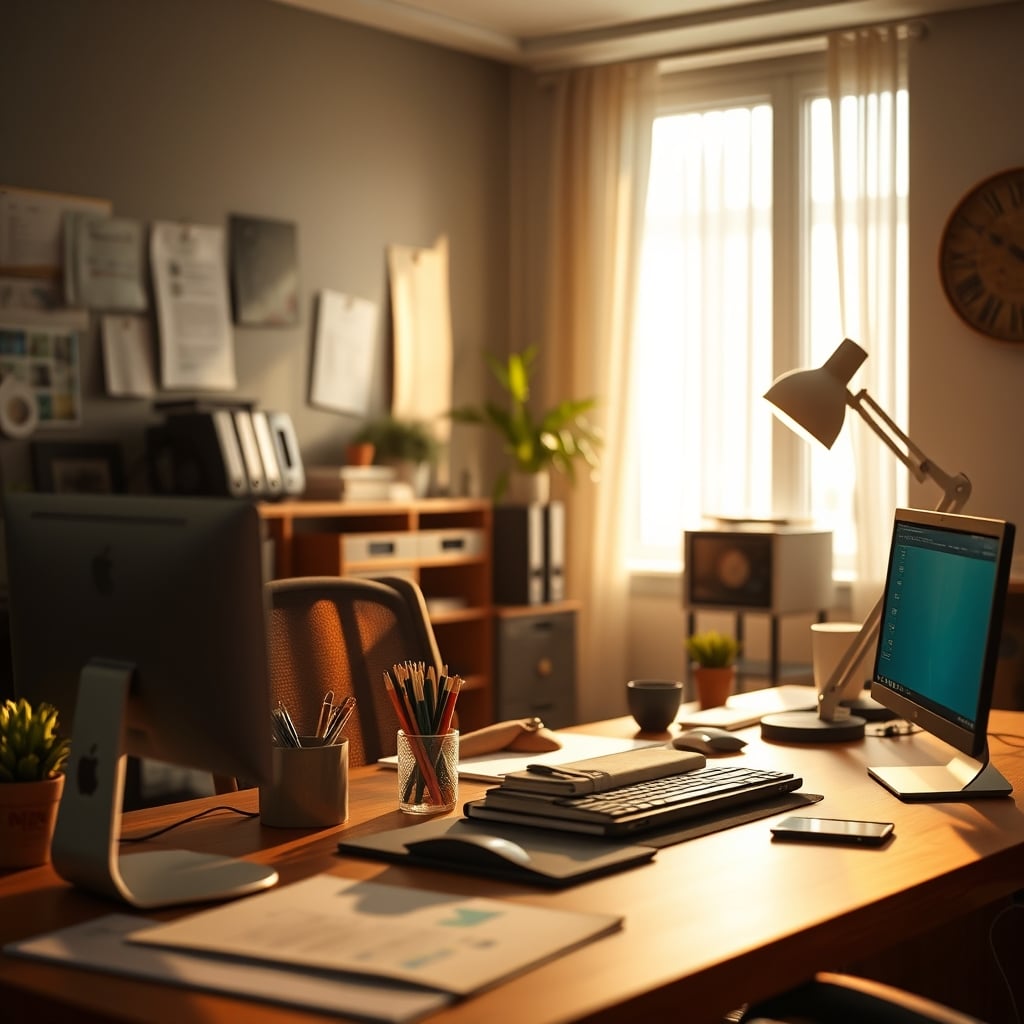
I used to think my desk was perfect. Monitor arms? Check. Ambient lighting? Programmed. Minimalist mat? Installed. Yet, by 2 PM, my brain felt like a browser with 87 tabs open. I blamed my discipline, my sleep, my diet. Turns out, I was wrong. The culprit was my desk. Not the mess, but the invisible, constant, subtle demand my 'optimized' space was placing on my attention. I was paying a tax my brain never agreed to pay. This is the brutal, unspoken reality of workspace mental load—the silent killer of deep work that nobody in the productivity porn space wants to talk about.
Workspace mental load isn't about physical clutter. It's about cognitive clutter. It's the background process running on your mental CPU. The mental check-in you perform every time your smart light flickers through a preset you didn't choose. The half-second decision fatigue from choosing between three wireless chargers. The subtle anxiety from a monitor arm that feels like it might sag. You've been sold a lie: that more features, more control, more 'personalization' equals more productivity. The reality is the exact opposite. Every single 'optimization' is a potential brain leak.
Most people get this wrong. They attack the visible mess but ignore the invisible one. The industry lies about this because they can't sell you a solution to a problem they're causing. Your beautiful, gadget-laden desk is a cognitive minefield, and you're walking through it every single day.
Your Brain's Desk Has Too Many Bosses
The first step is admitting your brain is not a project manager. It's a specialist. It wants to do one thing well. Your typical 2026 desk setup treats your prefrontal cortex like a universal remote control.
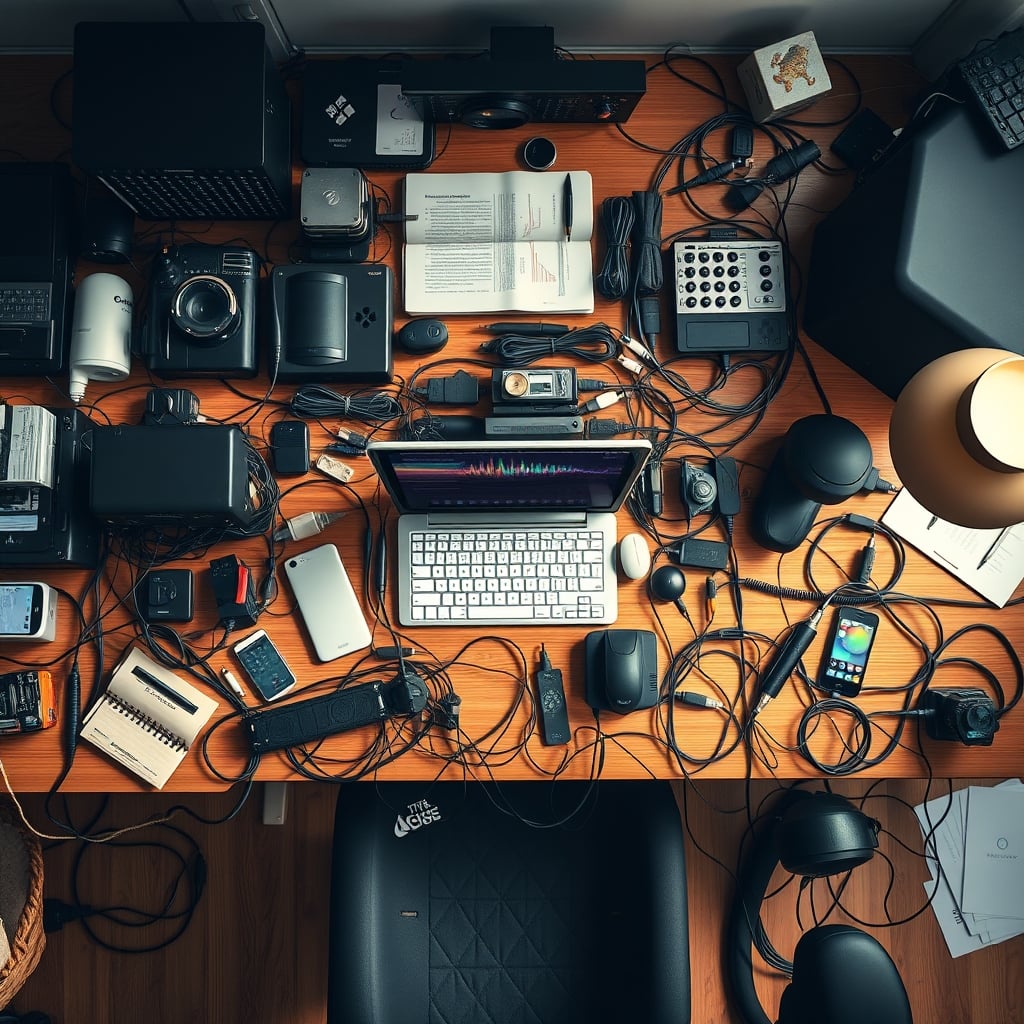
Think about it. You have a smart speaker that needs a voice command or app check. You have RGB lighting syncing to music or a game—your brain is subconsciously monitoring that sync. You have a monitor with five different picture modes. A keyboard with macro keys you never remember to use. A standing desk with a reminder to move that you either obey (interrupting flow) or ignore (creating guilt). Each of these is a tiny, persistent administrative task. They're not big enough to be a 'distraction,' but they're constant enough to be a tax. This is overrated. This entire paradigm of 'smart' control is a net negative for sustained focus. Users consistently report that after stripping back to dumb, single-function devices, their ability to stay in a task for hours dramatically improved.
The real issue isn't the presence of stuff—it's the presence of choice and responsibility where none should exist. Why does your desk lamp need 16 million colors? You only need one good one. Why does your charger need to tell you its battery percentage? You just need it to work. You're wasting money on features that actively make your work worse.
The 'Aesthetic Minimalism' Myth That Needs to Die
Premium Pick
- High performance
- Premium build
Here’s the biggest lie sold to you in 2026: that a clean, minimalist, beige-and-wood aesthetic equals a low-mental-load workspace. It's complete nonsense. This is the myth that needs to die a fiery death.
I’ve seen these setups. A single monitor on a $400 oak monitor stand. A solitary, sculptural desk lamp. A wireless charger embedded in the wood. It looks serene on Instagram. In practice, it's often worse. Why? Because the minimalism is visual, not cognitive. That beautiful monitor stand might require a specific, finicky counterbalance adjustment every time you slightly tilt the screen—a tiny mental task. That sculptural lamp might have a touch-sensitive control that's impossible to hit without looking, pulling your eyes from the screen. The embedded wireless charger probably fails if your phone is half a millimeter off-center, requiring a conscious placement ritual.
The aesthetic has been prioritized over function, creating more friction, not less. True minimalism isn't about how few things are on your desk; it's about how few decisions your brain has to make while using them. A bulky, ugly, knob-controlled lamp you can adjust by muscle memory without thought is more minimalist for your brain than a sleek, touch-sensitive one. This is overrated. The entire 'desk aesthetic' movement has you optimizing for the wrong user: your camera, not your cortex.
Based on widespread user feedback, the shift to 'ugly but dumb' tools—think big clunky mechanical switches, analog dials, single-purpose buttons—correlates far more strongly with reported deep work sessions than any visually minimalist setup. The goal is cognitive invisibility, not Instagram appeal.
Why Most Cable Management Is Actually Cognitive Sabotage
You read that right. Your pristine, r/CableManagement-worthy desk might be part of the problem. We've been sold a solution to an aesthetic problem disguised as a functional one.
Cable management's primary benefit is looking neat. Its primary cognitive cost is rigidity. When every cable is perfectly routed, zip-tied, and anchored, you have created a system that is terrifying to change. Need to swap a keyboard? That's a 15-minute surgery involving cable channels, adhesive clips, and the fear of tearing up your desk finish. This creates a psychological barrier to iteration and experimentation. Your setup becomes a museum piece, not a tool.
The real goal should be reduction, not management. Every cable you manage is a cable your brain still knows is there. The mental load comes from the existence of the peripheral, not the visibility of its wire. If a device's value is less than the cognitive cost of its cable, ditch the device. Don't just hide the evidence.
This is a known issue for long-term use. The initial satisfaction of a clean setup gives way to a subconscious reluctance to upgrade, adapt, or repair. Your brain starts seeing the desk as a finished artifact, not a work-in-progress workspace. This kills the adaptability you need for real work. For a deeper dive into how our fixation on neatness backfires, see our article on The Desk Clutter Productivity Myth is a Lie.
The Tyranny of the 'Smart' Workspace
Smart lights, smart plugs, smart desks, smart chairs. It's a trap. The promise was automation to free your mind. The reality is configuration, maintenance, troubleshooting, and app dependency that clutters it.
Your circadian rhythm lighting that's supposed to help your sleep? It requires a stable app, correct geolocation settings, and doesn't account for your weird schedule, making you manually override it constantly—a decision point. Your smart plug that turns off your monitor at night? It fails when your internet blips, making you check on it. This doesn't work. You've traded a simple physical action (hitting a power strip switch) for a complex digital responsibility (ensuring a digital ecosystem is functioning). The cognitive load of the 'solution' exceeds the load of the original 'problem' it solved.
This is the real issue. We've been solving for laziness (minimizing physical effort) instead of solving for focus (minimizing mental effort). They are not the same thing. A smart gadget that saves you one second of physical motion but adds five seconds of mental monitoring is a net loss. The industry lies about this by only advertising the physical savings. The mental costs are silent and borne by you. If you're struggling with this, our piece on Smart Lighting Cognitive Load: Your 2026 Focus Killer exposes the full breakdown.

The Single-Monitor Secret You've Been Ignoring
Dual monitors are the default recommendation. They're also a major source of workspace mental load that nobody acknowledges. Having two screens doesn't just give you more space; it gives your attention more places to escape to.
The constant presence of a secondary screen—even with your email or Slack hidden—creates a psychological invitation. It's a visual 'what's over there?' Your peripheral vision is constantly aware of it, and your brain dedicates a sliver of resources to monitoring that space. It's the digital equivalent of having a second doorway in your office. The research on 'attentional spotlight' is clear: a unified field of view is easier for the brain to manage.
Users who have switched from dual monitors to a single, high-quality ultrawide or large 4K screen consistently report a greater sense of calm and control. The physical constraint creates a cognitive container. You're not managing screen real estate; you're managing attention within a single, defined arena. This is the truth nobody tells you because monitor arms and dual-stand setups are a huge market. The real productivity hack isn't more screen—it's less screen management.
How to Actually Reduce Your Workspace Mental Load
Stop buying more stuff. Start subtracting. Your action plan isn't about organization; it's about elimination.
First, conduct a cognitive audit. For one week, put a small notepad on your desk. Every single time you interact with a part of your setup not directly related to your primary work task, make a tick. Adjusting a light? Tick. Fiddling with a charger? Tick. Glancing at a secondary monitor? Tick. Repositioning a microphone? Tick. You'll be horrified. Each tick is a leak.
Second, apply the 'Dumb & Direct' rule. For every device that caused a tick, ask: Can it be replaced with something that has zero configuration, no software, and a single, physical control? Swap the smart bulb for a dumb one on a dimmer switch. Replace the USB-C hub with a simpler model that has fewer, more reliable ports. Ditch the keyboard with macro keys for one without. The goal is to make every tool so simple that using it requires no more thought than picking up a pen.
Third, embrace 'functional ugly'. Let your cables be a little loose if it means you can swap a device in 10 seconds. Use the big, clunky monitor stand that's rock solid instead of the wobbly 'minimalist' arm. Choose the mouse with the physical DPI switch over the one with software-based profiles. Performance for your brain trumps aesthetics for your eyes.
The Biggest Mistake: Optimizing for the Wrong Moment
We optimize our desks for the moment of inspiration, the start of the workday, the photo. That's wrong. You should optimize for the 90th minute.
At the 90-minute mark of deep work, your willpower is depleted, your focus is fragile, and your brain is looking for any excuse to escape. That's when your workspace mental load attacks. The slightly uncomfortable chair you didn't notice at 9 AM is now a nagging presence. The fan on your laptop that's been whirring softly is now a rhythmic distraction. The notification light on your webcam is now a blinking siren.
Test your setup at the 90-minute mark. What is pulling your attention? What small discomfort has grown? That's your target. Not what looks good when you sit down fresh, but what feels intrusive when you're deep in the grind. This is where the real cost is paid. This is a known issue for long-term use that most setup guides completely ignore. For related insights on how your furniture choices impact this fragile state, read Chair Ergonomics Science 2026 Ultimate Guide.

Your Final Verdict on Workspace Mental Load
Is focusing on workspace mental load worth it? Absolutely. It's the single most impactful change you can make to your desk in 2026.
But the path to getting there requires skipping almost everything the desk setup industry sells you. Skip the smart gadgets. Skip the hyper-complex cable management. Skip the dual-monitor dogma. Skip the aesthetic that values form over brain-friendly function.
Your mission is to become a cognitive miser. Be ruthless. Every item on your desk should have a proven, frequent use case. Its operation should be instinctual, not instructional. Its presence should be invisible to your thinking mind. The benchmark is simple: Can you work for three hours without a single conscious thought about your desk, your gear, or your environment? If not, you have more cutting to do.
The verdict is clear. Reducing workspace mental load is actually good. It’s the real deep work secret. Everything else is just decoration for a brain that’s too busy to notice.
Frequently Asked Questions
What exactly is workspace mental load?
Workspace mental load is the invisible cognitive burden your desk setup places on your brain. It's not physical clutter, but the sum of all the tiny decisions, monitoring tasks, and points of friction your gear requires—like adjusting smart lights, managing multiple monitors, or troubleshooting finicky wireless chargers. It's the background processes that drain your focus before you even start your real work.
Does a clean, minimalist desk automatically mean low mental load?
No, and this is a huge myth. A visually minimalist desk can have very high mental load if the few items on it are complex, finicky, or require conscious interaction. True low mental load is about cognitive simplicity, not visual simplicity. An 'ugly' desk with simple, reliable, single-function tools you never think about is far better for your brain than a pristine desk with complex, app-dependent gadgets.
What's the first thing I should remove to reduce my workspace mental load?
Start with any 'smart' device that requires an app, has multiple modes, or needs configuration. Dumb it down. Replace a smart bulb with a dumb bulb on a physical dimmer. Replace a complex USB hub with a basic, reliable one. The goal is to eliminate devices that turn you into a system administrator and keep only tools that are simple operators.
Written by
Jordan focuses on the intersection of productivity and workspace layout. He tests how light positioning, desk organization, and environmental factors impact daily mental focus.
Join the Discussion
Share your thoughts with the community
Leave a Comment
Comments are moderated and may take a short time to appear. Links are not permitted.