Smart Lighting Cognitive Load: Your 2026 Focus Killer
Smart lighting was supposed to set your mood and boost focus. Instead, in 2026, it's become a constant, silent negotiation with an app, a major source of smart lighting cognitive load that drains mental energy before you even start your real work. The promised 'set and forget' automation is a lie.
I’ve spent the last month systematically unplugging every ‘smart’ bulb in my office. The silence is glorious. Not aural silence—visual and mental silence. The constant, low-grade hum of deciding between ‘Arctic Focus’ and ‘Deep Work Sunset’ is gone. The anxiety that maybe the ‘circadian rhythm’ setting isn’t perfectly synced to my actual rhythm has evaporated. This is the real smart lighting cognitive load nobody talks about in 2026: the mental tax of managing light that’s supposed to manage itself. We traded a simple light switch for a PhD in color psychology and home automation, and our ability to concentrate is paying the price.
Most setups in 2026 are a cognitive minefield. You’ve got schedules that conflict with meeting times, motion sensors that turn the lights off while you’re thinking, and ‘scenes’ that require three app taps to activate. This isn't automation; it's delegation to a bad employee. You’re the middle manager for your own desk, constantly troubleshooting a system that promised to be invisible.
Why ‘Set It and Forget It’ Smart Lighting Is a Complete Lie
The biggest myth sold to us is the promise of automation. Buy the bulbs, set a schedule, and never think about it again. This is overrated. In real use, it fails spectacularly. Your life isn’t a binary of ‘9-to-5 work’ and ‘7 PM relax.’ You have late-night creative spurts, midday video calls that need balanced lighting, and days where you just want a single, static, neutral white. A rigid schedule becomes a source of friction, not flow. You end up constantly overriding the automation, which means you’re constantly thinking about the lighting. That’s the opposite of forgetfulness.
Users consistently report this friction. The automation breaks, the geofencing is unreliable, and the ‘adaptive’ scenes never quite adapt to what you actually need in the moment. Based on widespread user feedback, the promised cognitive savings of automation are erased by the cognitive cost of managing its failures. You’re not saving mental energy; you’re redirecting it to a new, poorly designed task.
The Real Smart Lighting Cognitive Load: Decision Fatigue in HD Color
Premium Pick
- High performance
- Premium build
This is the real issue. Every time you sit down, you’re presented with a choice. Not just ‘light on or off,’ but a gallery of curated experiences. ‘Forest Glade.’ ‘Ocean Depth.’ ‘Productivity Boost 4000K.’ This is decision fatigue dressed up as a feature. Your brain uses precious glucose and executive function to choose between shades of white. This is a known issue for long-term use—the novelty of infinite choice wears off, leaving behind the burden of infinite choice.
The industry lies about this. They sell ‘personalization’ and ‘expression.’ What they’re actually selling is a constant, low-level distraction. Before you can write a sentence or code a function, you must first curate your visual environment from an endless menu. It’s like being asked to choose the ambient soundtrack before every single task. It’s exhausting, and it pulls you out of a potential flow state before you can even enter it.
Color Temperature Obsession Is Overrated Snake Oil
Let’s kill this one right now: you do not need 1% increments of color temperature. The whole ‘5700K for focus, 2700K for relaxation’ dogma is marketing pseudoscience extrapolated from limited studies. This doesn’t work for most people in real environments. The difference between 5000K and 5500K is imperceptible to your conscious brain and irrelevant to your circadian system. You’re wasting money and mental RAM fine-tuning this.
Most people get this wrong. They agonize over the perfect Kelvin value, chasing a focus boost that never materializes. The reality is that consistency and the absence of glare matter infinitely more than moving the slider from ‘Daylight’ to ‘Cool Daylight.’ A single, well-chosen neutral white (around 4000K is a sane default) and a separate, warm ambient glow for evening is all 99% of setups need. The quest for the ‘optimal’ color is itself a massive cognitive drain.
The Hardware Is Dumb, and That’s Its Genius
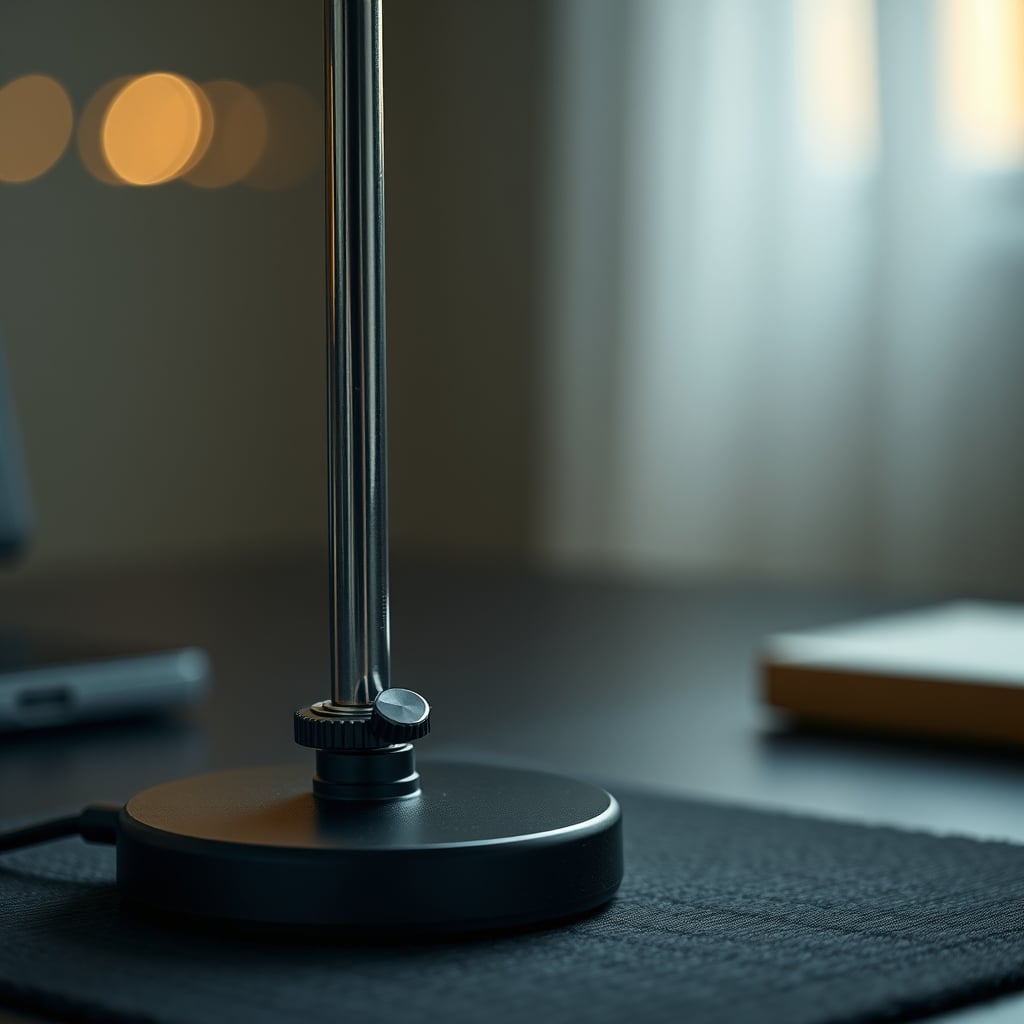
Here’s my contrarian stance after testing: the best smart lighting for reducing cognitive load is the dumbest hardware with a single, physical interface. I’m talking about a high-CRI LED panel on a manual dimmer switch. Or a quality, non-smart task light with a knob. No app, no schedules, no scenes. Just light, controlled by a muscle-memory gesture.
The cognitive load drops to zero. You don’t open an app. You don’t speak to a glitchy assistant. You reach out and turn a knob. The feedback is instant, tactile, and requires zero conscious thought. This is real performance. It’s lower ‘specs’ on paper—no RGB, no Wi-Fi—but the result is a mind freed from interface negotiation. The tool disappears, which is the entire point. For a deeper dive on how chasing aesthetic perfection can backfire, see our piece on Decorative Acoustic Panels Are Wall Art That Happens to Work.
If You Insist on Smart: The One-Scene Solution
Maybe you need the color for content creation or streaming. Fine. But you must adopt a radically minimalist approach. Create ONE scene. Call it ‘On.’ Dial in the single, most useful white balance and brightness for your primary work. Maybe create a second called ‘Evening’ that’s just dimmer and warmer. That’s it. Delete the other 48 scenes. Hide the color picker. Use a physical switch or a single-purpose smart button to trigger your one scene.
The goal is to make the technology as boring and predictable as a traditional light. The moment you find yourself browsing color wheels or setting ‘sunrise alarms,’ you’ve lost. You’ve reintroduced the cognitive load. This approach works because it treats smart lighting as a superior bulb, not as an entertainment system. It’s a philosophy that applies elsewhere, like choosing Monochromatic Keyboards 2026: The Ultimate Deep Work Secret over rainbow puke.
The Biggest Mistake: Chasing Immersion Over Clarity
The trap is believing your workspace should be an ‘immersive experience.’ It shouldn’t. It should be a clear, neutral field that gets out of the way of your work. Bathing your periphery in pulsing, reactive RGB is visual noise. Syncing lights to your music or game is a party trick that becomes actively irritating after 20 minutes. It’s a gimmick that directly increases cognitive load by constantly pulling your subconscious attention.
This is a known issue for long-term use. What feels ‘cool’ and ‘immersive’ initially becomes a nagging distraction. Your peripheral vision is hardwired to detect motion and change. When your walls are subtly shifting color, a part of your brain is always monitoring it. That’s mental energy not spent on your actual task. For a brutal look at how this affects sleep and deeper cognitive function, our article on Circadian Rhythm Lighting Dangers Are a Real Threat in 2026 is essential reading.
Final Verdict: Skip the ‘Smart’ Hype
Worth it? For 95% of people looking to reduce cognitive load and actually focus: Skip it. The category, as currently sold, is overrated. The promise of effortless environmental control is broken by the reality of app maintenance, decision fatigue, and unreliable automation.
The actually good solution is investing in high-quality, high-CRI, dumb lighting with excellent diffusers and simple physical controls. If you absolutely require color for a specific use case, lock it down to one or two static scenes accessed via a physical button. Stop letting your lighting setup be a hobby. Your brain has better things to do than manage a light show. Give it the gift of visual silence instead.
Frequently Asked Questions
What is smart lighting cognitive load?
It's the mental energy and attention required to set up, manage, choose between, and troubleshoot your 'automated' smart lights. Instead of a simple switch, you have apps, scenes, schedules, and unreliable automation that create constant, low-grade decision fatigue and distraction.
Does circadian rhythm lighting actually help?
The core idea of brighter, cooler light during the day and warmer, dimmer light at night is sound. However, the hyper-precise, app-controlled systems sold today are overrated. The benefits are massively overstated, and the mental overhead of managing the system often outweighs any minor biological benefit. A simple manual routine is more effective.
What's the simplest way to fix my smart lighting setup?
Delete all but one or two scenes. Set one for your main work (a neutral white) and one for evening (a warm, dim glow). Then, buy a physical smart button (like a Flic or Hue Tap) and program it to toggle just those scenes. Remove the lighting app from your home screen. Treat it like a dumb light with a better switch.

Written by
From bias lighting behind your monitor to smart RGB ecosystems, Leon knows exactly how to light a room for productivity during the day and gaming at night.
Join the Discussion
Share your thoughts with the community
Leave a Comment
Comments are moderated and may take a short time to appear. Links are not permitted.