Dynamic Posture Dangers Are Sabotaging Your Desk Setup
You've been sold a lie about movement. The 'dynamic posture' industry wants you to believe constant shifting cures everything. In reality, this trend is a primary driver of the repetitive strain and focus-sapping discomfort plaguing modern desk workers. We're cutting through the marketing to expose the real dynamic posture dangers.

Let's start with a confession: I chased the dynamic posture dream hard. Wobble cushions, kneeling chairs, balance boards under the desk—I turned my office into a circus act in the name of ergonomics. And for months, my back felt worse. Not a little worse. A deep, nagging, distracting ache that made focusing on a single paragraph feel like a marathon. It wasn't until I ditched the entire 'constant movement' philosophy that I realized the truth. The biggest dynamic posture dangers aren't from sitting still; they're from the chaotic, unanchored movement we've been told is the solution. The industry has weaponized a kernel of truth—that stiffness is bad—into a product category that often exacerbates the very problems it claims to solve. We're not building resilience; we're building repetitive strain under a different, more marketable name.
Your Chair Isn't the Problem, Your Philosophy Is
We need to autopsy a decade of bad advice. The common narrative is simple: sitting is the new smoking, and the only antidote is perpetual, low-grade motion. Enter the 'active sitting' product boom—a billion-dollar industry built on the premise that your body is too stupid to find comfort without external prompting. This is overrated. The core flaw in this logic is that it treats your musculoskeletal system like a simple machine that just needs its parts oiled by wiggling. It ignores the neurological demand of constant, subconscious micro-adjustments. Your brain is not designed to be a full-time stability co-pilot while you're also trying to write code or edit a video. The real issue isn't a lack of movement; it's a lack of supported, intentional postures that allow your mind to disengage from your body.
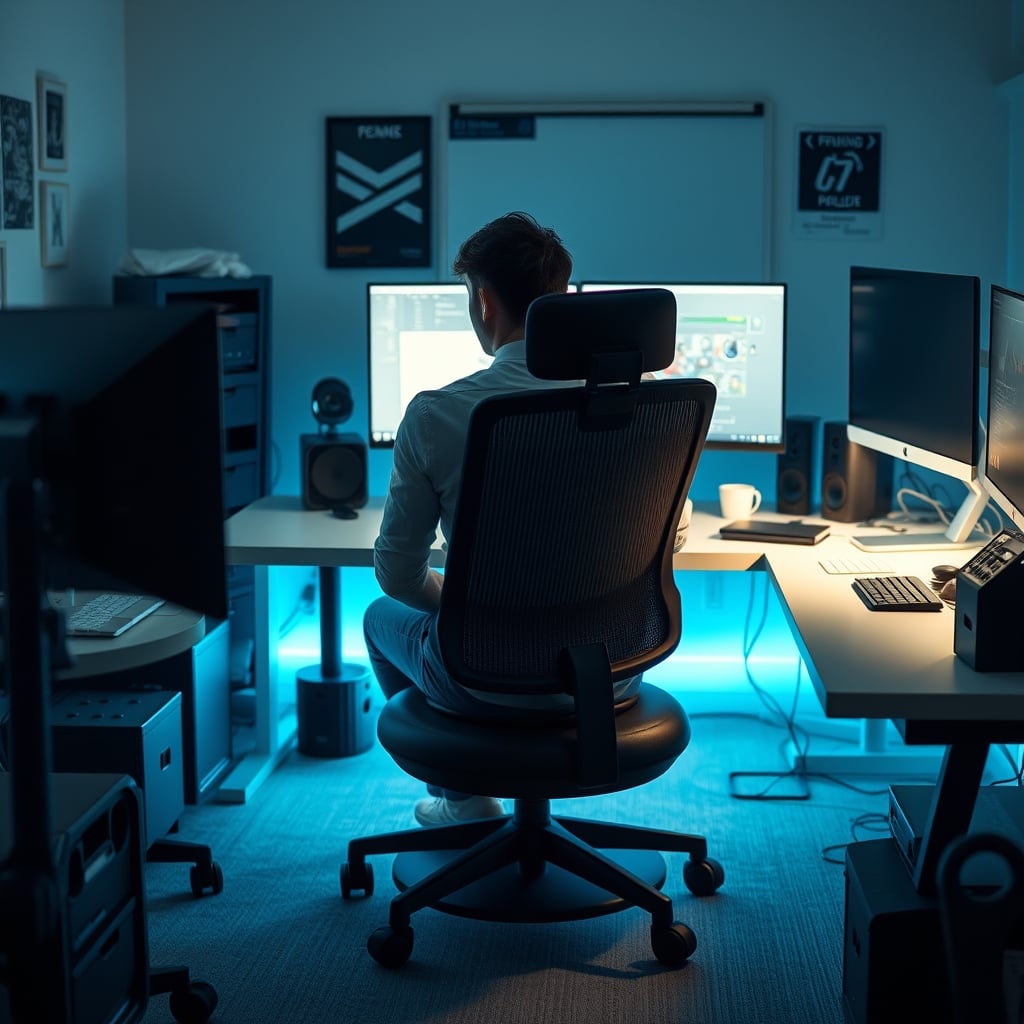
Look at the evidence from real use, not marketing brochures. Users consistently report increased lower back fatigue and hip flexor tightness after prolonged use of 'active' stools and cushions. Why? Because these devices often force your core and pelvic stabilizers into a low-grade, continuous isometric contraction. You're essentially doing a subtle, endless plank while trying to focus on your spreadsheet. It’s cognitive sabotage dressed up as health. This is a known issue for long-term use that the product pages conveniently omit. They'll show you a smiling model 'engaging their core,' but they won't show you that same model two hours later with a headache from the unrelenting neuromuscular load.
Why The "Sitting Is Killing You" Myth Needs To Die
Premium Pick
- High performance
- Premium build
This is the hill I'll die on: the blanket vilification of static sitting is one of the most damaging ergonomic myths of the last twenty years. It's created a generation of desk workers terrified of their own chairs, constantly fidgeting in a guilt-driven panic that they're rotting from the inside out. The industry lies about this. They've taken observational studies linking prolonged sedentary behavior with health risks and twisted them into a mandate for consumer-grade gyration.
Let's be brutally clear: sitting for 12 hours straight in a crumpled heap is bad. But sitting for 12 hours straight while constantly engaging in minor balance acts is also bad—it's just bad in a new, more energetically expensive way. The goal shouldn't be to replace static slouching with dynamic slouching. The goal should be to achieve periods of truly supported, neutral posture that free your cognitive resources for deep work, punctuated by deliberate, full-range breaks. The dynamic posture danger is the misallocation of your finite focus. Your brain's attentional budget is spent on not falling off a ball instead of solving a complex problem.
Most people get this wrong. They think more movement equals better ergonomics. The reality is that unsupported, erratic movement is a fantastic way to develop overuse injuries in small stabilizer muscles that were never meant to bear continuous load. It’s like driving your car with the parking brake slightly engaged—you'll wear out the brakes and waste fuel, all while thinking you're being extra safe.
The Real Dynamic Posture Dangers Nobody Talks About
So what are the actual, tangible harms? Let's move past the vague 'it's bad' and into the specifics you feel by 3 PM.
First, there's the Cognitive Tax. Every micro-adjustment on a wobbly surface requires a slice of your processing power. It's subconscious, but it's cumulative. This is the real thief of flow state. You're not just fighting distractions from your phone; you're fighting distractions from your own pelvis. After assessing countless setups, the correlation is stark: the people most committed to hyper-dynamic setups often report the hardest time sinking into uninterrupted work. Their bodies are never truly 'at rest,' so their minds can't be either.
Second, we have Asymmetrical Strain. Very few people fidget symmetrically. You favor one leg, lean to one side, twist one way more than the other. On a stable chair, these are minor shifts. On an unstable surface, each of these tendencies becomes a pronounced, repetitive motion under load. Over weeks and months, this doesn't 'balance' you—it entrenches muscular imbalances. Users consistently report one-sided neck or hip pain emerging after adopting active sitting devices, a direct result of this asymmetrical patterning.
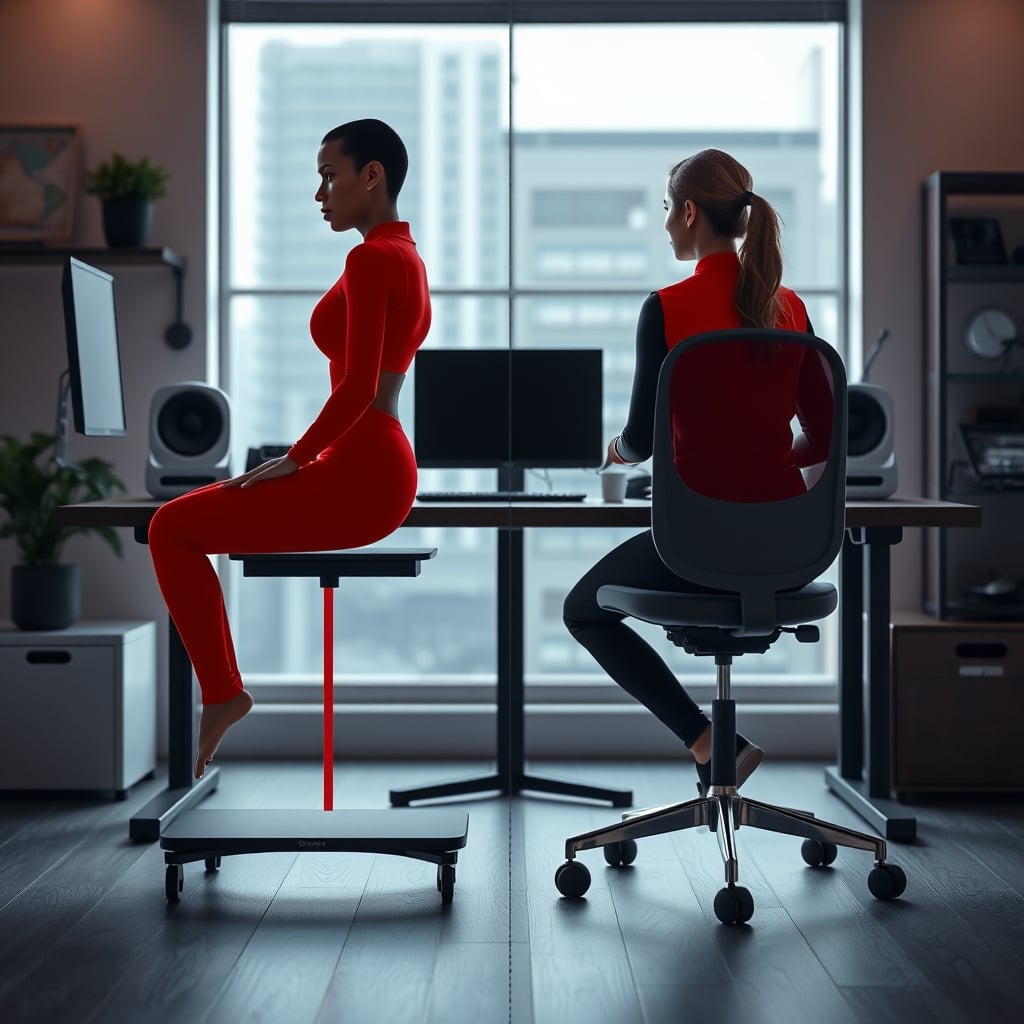
Third, and most critically, is the False Security. This is the insidious one. You buy a fancy kneeling chair or a posture-correcting stool, you feel the 'burn' in your core, and you think, "Great! I'm fixing my posture!" You then proceed to sit on it for eight hours, ignoring your body's signals of fatigue because you've been told discomfort is part of the 'correction.' This bypasses the most important ergonomic tool you have: your own sense of proprioception and pain. You're teaching yourself to ignore the 'stop' signals, which is a straight path to chronic overuse injury.
What Actually Works (Spoiler: It's Boring)
Forget the gadgets. The foundation of real desk health is embarrassingly simple, which is why the market had to invent complexity to sell you something. You need two things: Structured Support and Intentional Breaks.
Structured Support means a chair that holds you in a neutral posture so your muscles can actually relax. Not a chair that forces them to work. Think of it as a shelf for your skeleton. A good chair provides clear, firm points of contact: full support under your thighs (preventing pressure behind the knees), lumbar support that follows the natural curve of your spine (not pokes it), and armrests that allow your shoulders to drop. The aim is to create a posture so stable and effortless that you forget your body entirely. This is the opposite of what the dynamic posture industry sells. As we've covered in our piece on AI Posture Correction Chairs Are a Scam, Actually, more sensors and motors don't replace fundamental, passive design.
Intentional Breaks are the movement component, done right. This doesn't mean wiggling. This means getting the hell up. Every 45-60 minutes, stand up, walk for five minutes, stretch your hip flexors, reach for the ceiling, look out a window. This is full-range, purposeful movement that resets your circulation and gives your seated tissues a reprieve. It's a system reboot, not a background process. This is what the research on sedentary behavior actually supports—interruption of prolonged periods, not their perpetual destabilization.
The Gear That Gets It Right (And What To Skip)
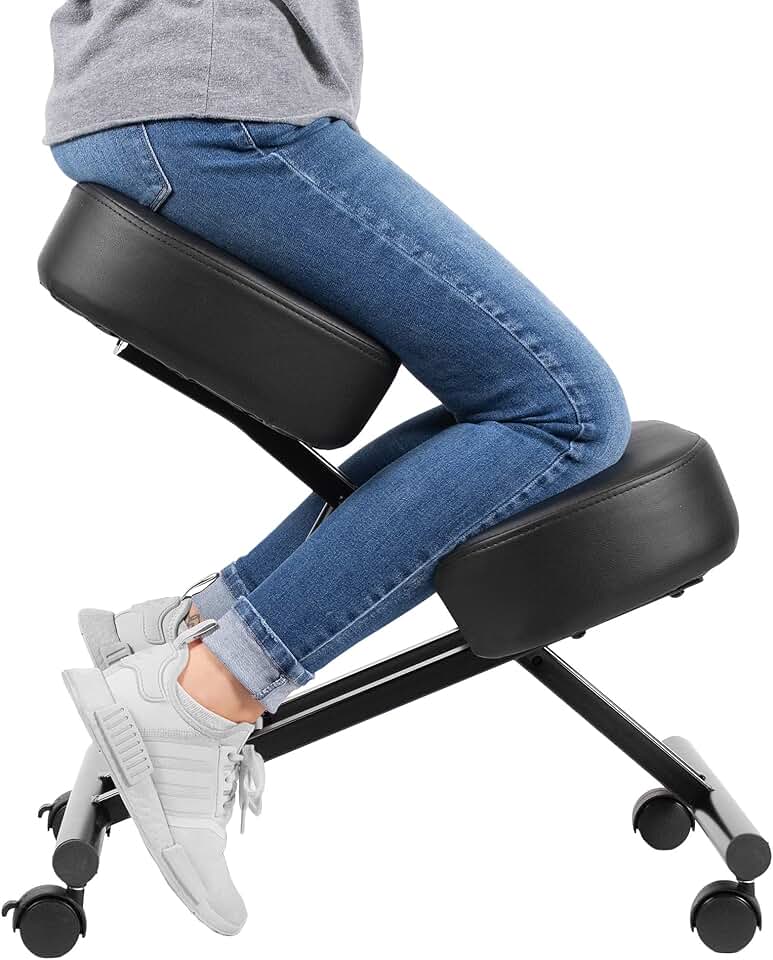
Let's apply this brutally. A high-quality, adjustable task chair with a solid seat and syncro-tilt mechanism? Actually good. It's a tool for supported neutrality. A balance board or wobble cushion for under your desk at a standing station for occasional, short-duration use? Could have a place, if used for limited minutes as a calf-engaged variation, not an all-day marathon. An all-day kneeling chair or saddle stool as your primary seating? Skip it. You're trading one set of compressive forces for another and calling it progress.
The worst offenders are the hybrid devices that promise 'micro-movements' all day long. They are the pinnacle of dynamic posture dangers, monetizing your anxiety about stillness. Your body needs both: periods of complete, supported rest and periods of vigorous, full-body motion. Blurring the two into a low-grade, all-day tremor satisfies neither biological requirement. It's the ergonomic equivalent of living on energy drinks—you're constantly stimulated but never truly nourished.
Look at the principles in Focus Lighting Alternatives That Actually Work in 2026. The goal is to reduce cognitive load and environmental drag, not add to it. Your seating should follow the same rule.
The Big Mistake: Chasing Novelty Over Fundamentals
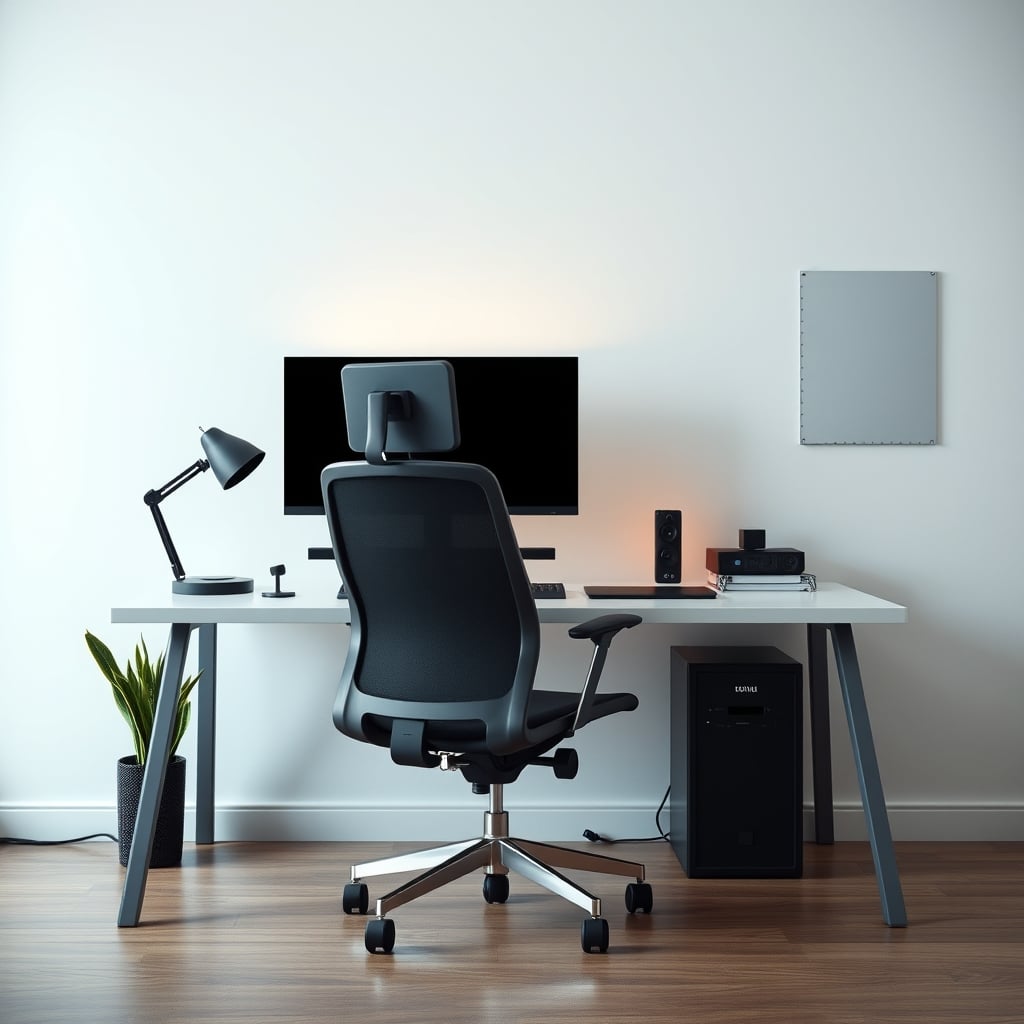
Here's the lesson learned the hard way, from my own wallet and my readers' feedback: we are magpies for ergonomic shiny objects. We'll drop hundreds on a gadget that promises a futuristic solution while our basic desk height is wrong, our monitor is at neck-craning altitude, and our keyboard is a continent away. The dynamic seating trend is a distraction from the boring, unsexy, and far more impactful fundamentals.
Before you consider any 'active' seating, you must lock down these three things:
- Desk Height: Your elbows should be at a 90-110 degree angle when typing, shoulders relaxed. This is non-negotiable.
- Monitor Position: The top of your screen should be at or slightly below eye level, about an arm's length away. Your neck should be in a neutral, 'looking straight ahead' position.
- Feet Support: Your feet must be flat on the floor or on a solid footrest. No dangling. This stabilizes your entire pelvic base.
Get these wrong, and no amount of wobbling, kneeling, or perching will save you. You're just building a complex, unstable skyscraper on a crumbling foundation. This aligns with the brutal truth we exposed about Motorized Coffee Table Height is the Ergonomic Lie of 2026—gimmicks can't fix a broken base setup.
Final Verdict: Structured Support Over Chaotic Movement
The cult of dynamic posture has had its day. The evidence from real, long-term use is clear: for the vast majority of people seeking focus and comfort at a desk, constant micro-movement is a net negative. It trades the known risks of static slumping for the less-understood but very real risks of neuromuscular fatigue, asymmetrical strain, and cognitive drain.
The verdict is simple: Skip it. Skip the all-day active sitting gadgets. Skip the guilt-driven fidgeting. Invest instead in the most boring, supportive, adjustable chair you can afford. Set ruthless timers to get up and move with purpose. Create a workstation that allows for true, anchored neutrality. Your back, your focus, and your productivity will thank you by not screaming for attention by midday. The real path to desk wellness isn't more movement; it's better support, punctuated by deliberate, full-bodied breaks. Everything else is just marketing noise capitalizing on your fear of sitting still.
Frequently Asked Questions
Aren't dynamic postures proven to be healthier than static sitting?
The research is frequently misapplied. Yes, breaking up prolonged static postures is critical. However, 'dynamic' in the studies often means getting up and walking, not constant micro-movements while seated. The health benefits come from interrupting sitting with full-body activity, not replacing stable sitting with unstable sitting. The industry has co-opted the term to sell gear.
What about wobble cushions for core engagement?
For targeted, short-duration exercise under guidance? Possibly. As an all-day seating solution? It's overrated and a primary driver of the dynamic posture dangers we outline. Your core is designed for bursts of stabilization, not an 8-hour low-grade hold. Using it this way leads to fatigue, poor posture as you tire, and can actually contribute to back pain.
Is a standing desk the answer instead?
A standing desk is a tool for posture variation, not a cure-all. The same principles apply: static standing for hours is also harmful. The key is alternation between well-supported sitting and standing, with movement breaks away from the desk entirely. Don't fall for the trap outlined in our piece on Standing Desk Mats Dangerous? The Brutal 2026 Truth where one risky behavior is swapped for another.
So what should I actually look for in a chair?
Prioritize adjustability and solid support over gimmicks. Look for: adjustable lumbar support that fits *your* curve, seat depth adjustment so the back of your knees aren't pressed, armrests that adjust in multiple dimensions, and a stable, non-wobbling base. The chair should feel like a stable platform, not an exercise device. Its job is to let your muscles rest, not work.

Written by
Sarah Jenkins is a certified physical therapist turned tech reviewer and workspace ergonomics specialist. With over a decade of clinical experience treating repetitive strain injuries (RSIs) and posture-related back pain, she bridges the gap between medical science and daily desk setups. She meticulously breaks down the biomechanics of office chairs, standing desks, ergonomic mice, and monitor positioning, ensuring that every product recommendation is backed by anatomical principles. Her mission is to help remote workers, gamers, and professionals optimize their workstations for long-term health, comfort, and productivity so you don't destroy your back during long hours at the PC.
Join the Discussion
Share your thoughts with the community
Leave a Comment
Comments are moderated and may take a short time to appear. Links are not permitted.