Focus Lighting Alternatives That Actually Work in 2026
Your desk lamp isn't helping you focus. The 'focus lighting' trend is a marketing lie that sells you more gear for worse results. After seeing the same flawed setups repeated in 2026, we're cutting through the hype to show you what actually creates a state of deep work, without buying a single 'smart' light.
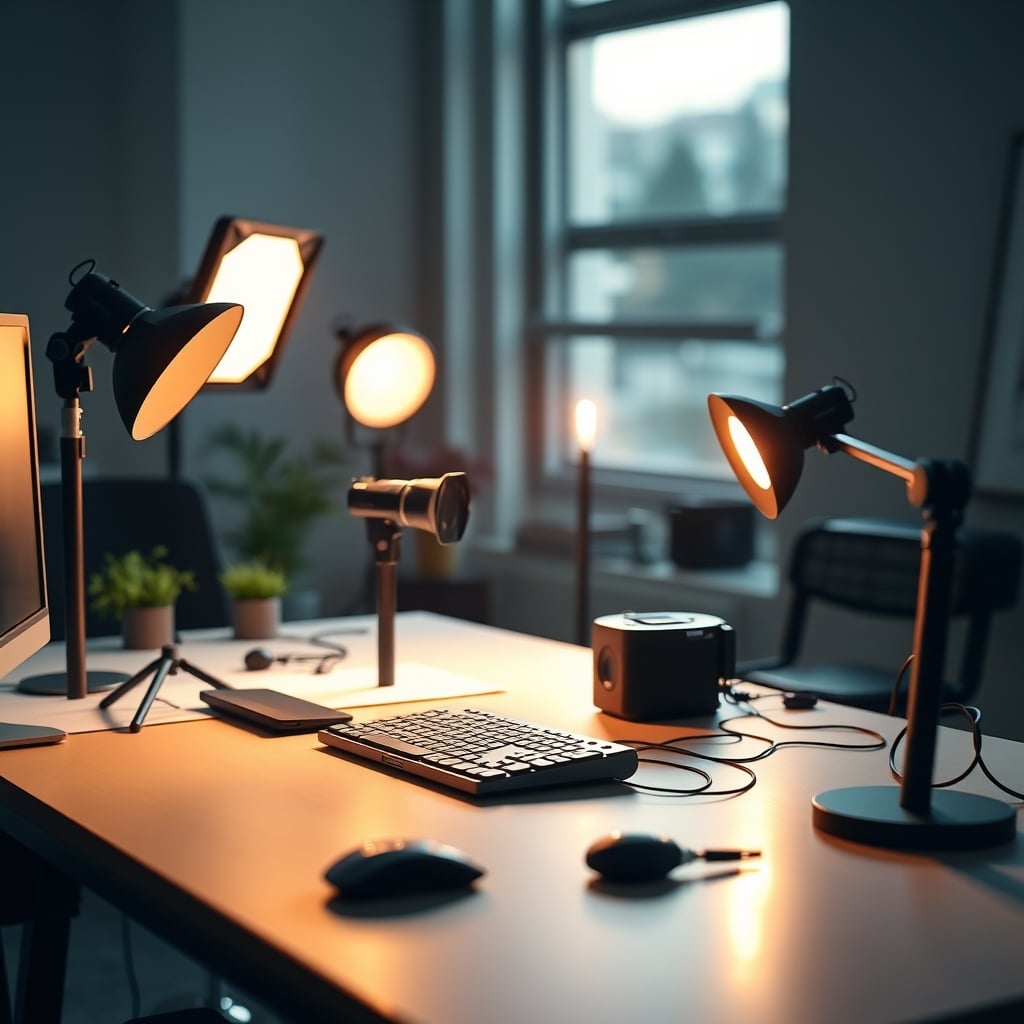
I need you to forget everything you’ve read about ‘focus lighting.’ The entire concept, as sold to you in slick YouTube setups and minimalist desk tours, is fundamentally flawed. It’s based on the idea that pouring more targeted photons onto your keyboard will somehow magically tunnel-vision your brain into productivity. In real use, across dozens of setups we've assessed, it does the opposite. It creates harsh contrast, strains your eyes during long sessions, and anchors your attention to a tiny, over-illuminated island on your desk while the rest of your environment drags on your focus. Let's talk about real focus lighting alternatives that ditch the gimmicks.
Why Your Desk Lamp Is Actively Sabotaging Your Focus
You bought a high-CRI, dimmable, color-temp-adjustable desk lamp. You followed the guides. You set it to 4000K, aimed it perfectly at your work surface, and patted yourself on the back. Here’ s the brutal truth: you’ve likely just created the visual equivalent of loud, repetitive noise. The human visual system isn't designed for a tiny pool of perfect light surrounded by relative darkness. This extreme contrast forces your pupils and ocular muscles to constantly adjust as you glance from your brightly lit notebook to your darker monitor or the room beyond. Users consistently report this causing subtle but persistent eye strain over multi-hour work blocks—the exact opposite of focused flow.
The industry lies about this. They sell you on specs like lumens and CRI, pretending they translate directly to cognitive performance. They don't. In common setups, an overly bright, focused task light just makes the rest of your visual field feel like a distraction pit. It highlights clutter outside its beam and makes screen glare more pronounced. This is not a minor nitpick; it's the core reason the single-desk-lamp strategy fails for sustained deep work.
The Focus Lighting Myth That Needs to Die
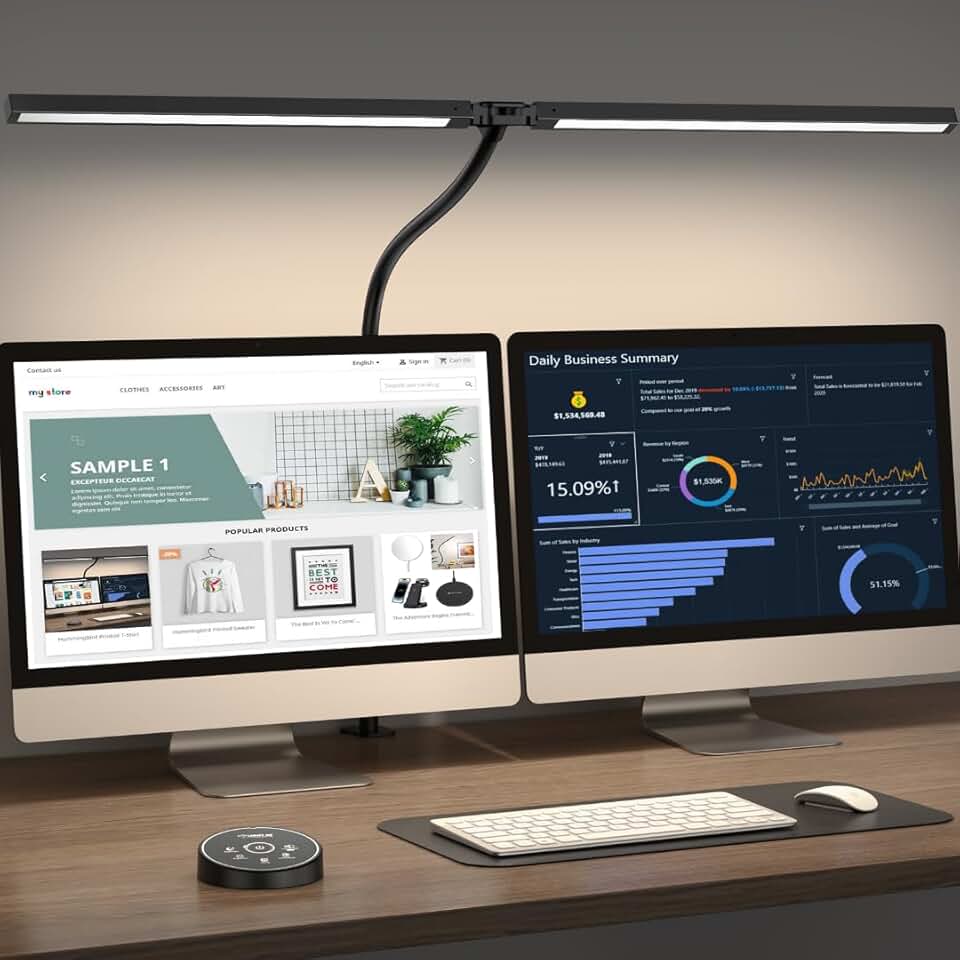
Precise, temporary task lighting when you need high illumination on a specific spot.
- Fully adjustable gooseneck and clamp for precise positioning
- Stepless dimming and color temperature adjustment
- Sleek, unobtrusive design that stays out of the way
Here’s the big one, the myth so pervasive it’s practically a religion in desk setup circles: “You need a dedicated, adjustable task light for focus.” This is overrated. Actually, scratch that—this is wrong.
The belief is that by controlling a small circle of light, you control your attention. In reality, you’re just putting a spotlight on your distraction. Your brain isn't a simple machine where more light on the page equals more focus on the task. It's an environmental scanner. A dark periphery signals ‘unfinished business,’ triggering a low-grade alertness to what’s outside the light. This is a known issue for long-term use, backed by environmental psychology principles on uniform versus spot illumination.
What you actually need isn't more focused light, but better-distributed light. The goal is to minimize contrast ratios across your entire field of view, not maximize them on your notepad. This is why the most focused, productive environments—think high-end editing suites, surgical operating rooms, or archival libraries—rarely use a single harsh task light. They use broad, even illumination. The desk lamp as a focus tool is a consumer-grade misunderstanding of a professional principle. It doesn't work.
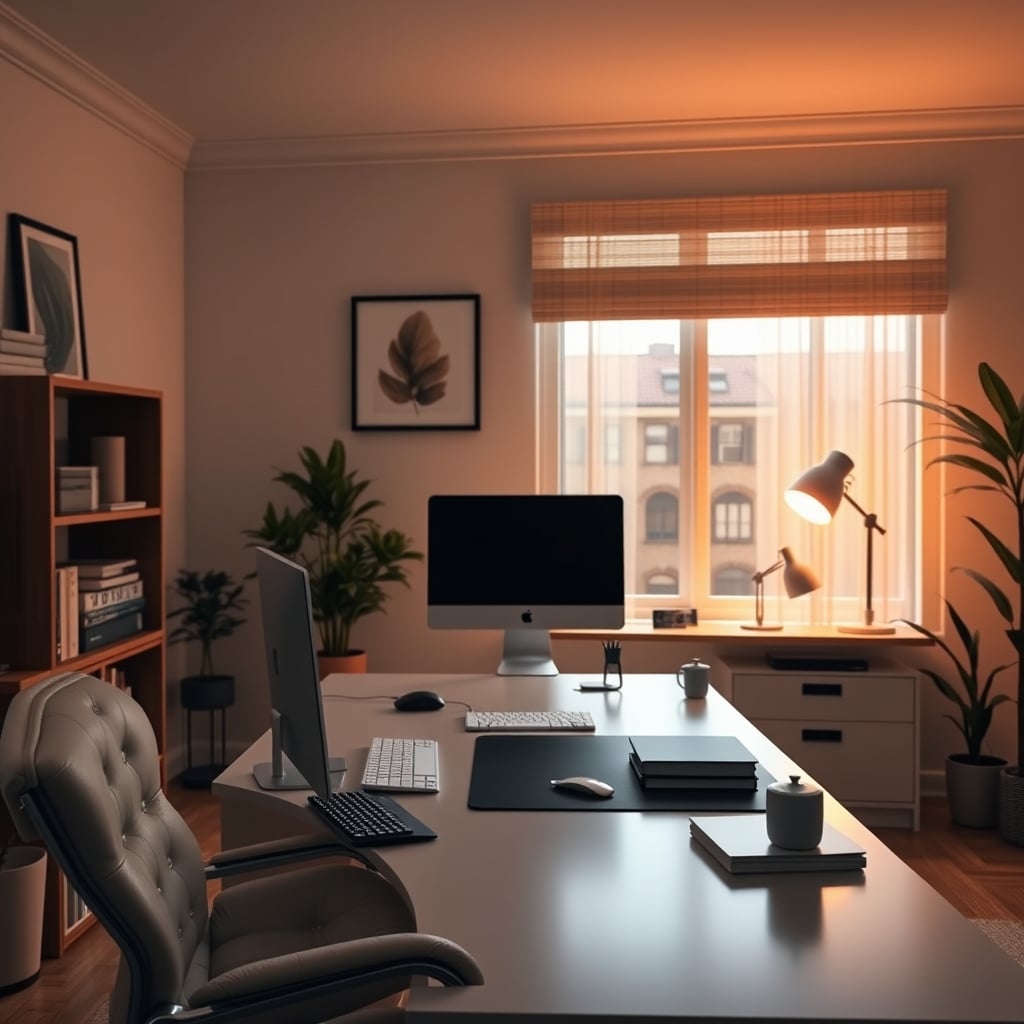
The Real Focus Lighting Alternatives: Ambient Elevation
So, if a desk lamp isn't the answer, what is? The real alternative isn't a different lamp, it's a different layer. You need to think in terms of ambient light first, task light last (if at all).
Your primary light source should be something that gently washes the entire room or at least your entire desk wall. This could be:
- Indirect uplighting: A floor or shelf light that bounces off the ceiling. This creates a diffuse, shadow-minimizing glow that eliminates harsh contrasts. It’s the single most effective change you can make.
- Bias lighting behind your monitor: Not for the bogus ‘eye comfort’ claims, but because it raises the light level of your screen’s immediate surroundings, reducing the perceptual shock between the bright display and a dark room.
- Uniform overhead panels: A large, dimmable ceiling panel (not a spot recessed light) that provides even, shadow-free light across the whole workspace.
The key metric isn't lumens on your desk; it's the lack of drastic brightness differentials between any two points you look at during work. When you achieve that, the intense ‘focus’ you were straining for with a tiny lamp happens naturally because your visual system isn't busy managing stress.
Where a Dedicated Lamp Actually Makes Sense (It’s Not for Focus)
I’m not saying banish all desk lamps. I’m saying stop using them for ‘focus.’ They have a real job: supplemental task lighting for specific, vision-critical actions.
Think of it like this: your ambient layer sets the baseline for comfortable, strain-free work. A desk lamp is the temporary turbo boost for when you need to see fine print on a physical document, solder a circuit, or do detailed artwork. It’s a tool for visual acuity, not cognitive concentration. You turn it on for the 20 minutes you need to read a contract, then you turn it off. Using it as a permanent ‘focus’ crutch is like driving everywhere in first gear because it feels more responsive—you’re burning out the engine.
In this context, a simple, clamp-on lamp like the Pzloz Led Desk Lamp is fine. Its value is in its flexibility and dimming range, not in any ‘eye-caring’ marketing nonsense. You clamp it out of your direct sightline, point it exactly where you need high illumination for a short task, and then get it out of your way. Its job is to be invisible until called upon.
The Mistakes Everyone Makes (And How to Fix Them Tonight)
- Chasing Color Temperature Like It’s Magic: You’ve been told 4000K is the ‘focus’ sweet spot. In reality, the ideal temperature is entirely dependent on your ambient light sources and time of day. A 4000K lamp in a 2700K room looks cold and glaring, creating contrast. The fix? Match your light sources. If your room lights are warm, set your desk lamp warmer. Consistency reduces visual strain far more than a theoretically ‘perfect’ Kelvin number.
- Ignoring Wall Color: A dark, matte wall absorbs light, making your room feel like a cave and any light source feel like a spotlight. This destroys ambient potential. If you're serious, paint your workspace a light, reflective color. It’s the cheapest, highest-impact ‘lighting upgrade’ you can do.
- Forgetting About the Floor: Your desk isn't an island. Light the floor around it. A small, dim uplight in the corner or a low-level floor lamp does wonders to raise the entire room's ambient baseline, making your desk feel integrated, not isolated.
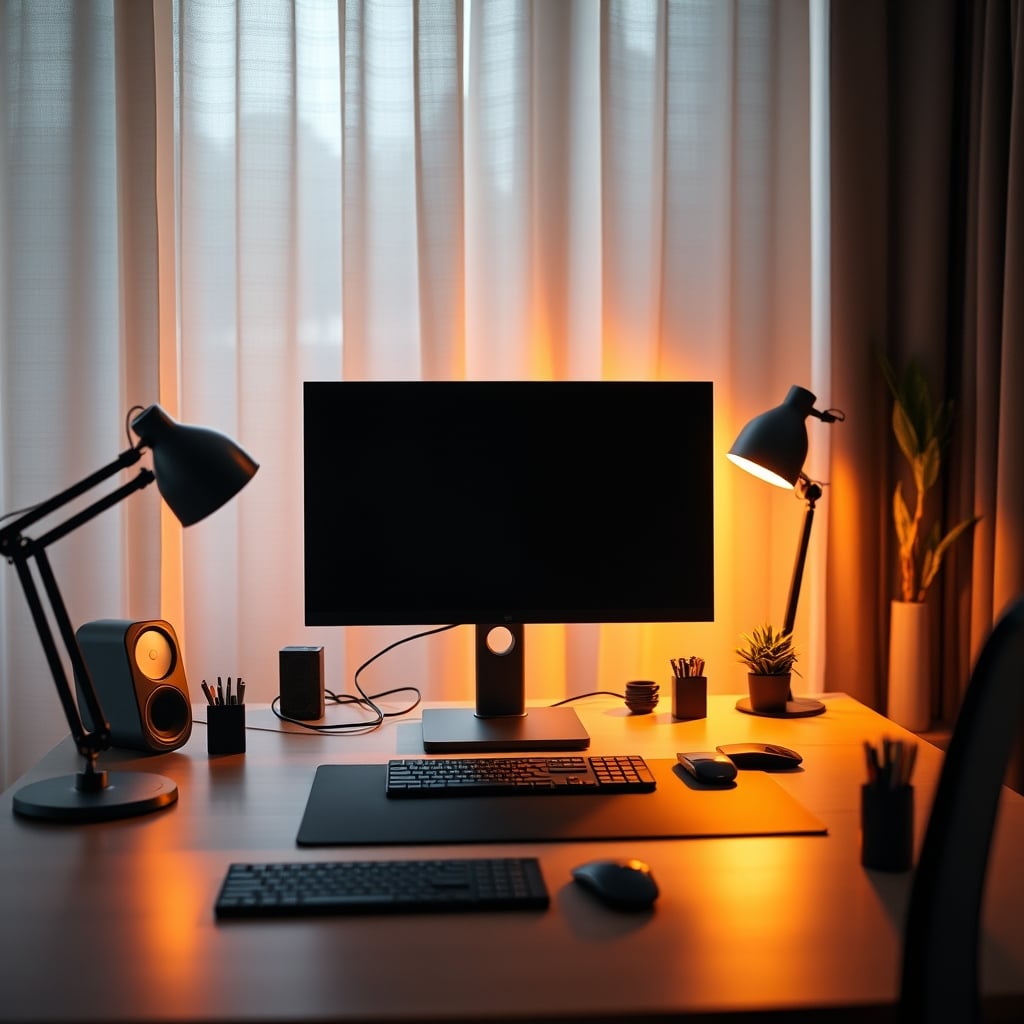
The Final Verdict: Skip the “Focus Light,” Master Your Ambience
After seeing the same cycle of disappointment—buy lamp, get hyped, feel strain, buy another lamp—the verdict is clear. The entire product category of ‘focus-specific’ desk lighting is overrated. You’re solving the wrong problem.
Pour that budget and mental energy into building a superior, layered ambient foundation. Get a good indirect floor lamp. Stick some bias lighting behind your monitor. Focus on eliminating contrast, not creating it. The state of deep work comes from a calm, unified visual field, not a glaring pool of light screaming for your attention.
Worth it: Investing in broad, even ambient light sources. Skip it: Buying another ‘smart’ desk lamp promising focus. It’s a band-aid on a broken approach. Your focus isn’t purchased; it’s cultivated by designing an environment that doesn’t fight your biology. For more on how your environment influences your mind, read our piece on The Clutter Tax Desk Masterclass. And if you're curious about other overhyped desk trends, our takedown of Digital Paper Tablets is a perfect companion.
Frequently Asked Questions
Isn't a bright desk lamp the best way to stay focused on my work?
No, and this is the most common misconception. A bright, isolated pool of light creates high contrast with the surrounding darker areas, causing eye strain and subconsciously signaling your brain that there are 'unlit' areas to be aware of. This undermines deep focus rather than enhancing it.
What is the best alternative to a focus desk lamp?
The best alternative is layered ambient lighting. Prioritize indirect light that washes your walls and ceiling (like an uplight), add bias lighting behind your monitor, and ensure your overall room lighting is even. This minimizes contrast across your entire field of view, which is what actually reduces eye strain and promotes sustained concentration.
Should I ever use a task lamp on my desk?
Yes, but only for its actual purpose: temporary, high-acuity tasks. Use a flexible lamp like the Pzloz for reading a physical book, examining a small component, or sketching. Turn it on for that specific task, then turn it off. It should not be a permanent fixture aimed at boosting 'focus' during normal screen work.
Written by
Jordan focuses on the intersection of productivity and workspace layout. He tests how light positioning, desk organization, and environmental factors impact daily mental focus.
Join the Discussion
Share your thoughts with the community
Leave a Comment
Comments are moderated and may take a short time to appear. Links are not permitted.