Electromagnetic Interference Cables Are Snake Oil You’re Still Buying
The industry pushes electromagnetic interference cables as a performance cure-all. After dismantling dozens of setups, the reality is stark: you're solving a problem that doesn't exist for your gear. This is overrated marketing, not engineering.

I had a desk setup that looked like a cybernetic octopus gave birth. Cables everywhere. And of course, I was told the ultimate performance upgrade was investing in expensive electromagnetic interference cables. I bought the hype. I spent a stupid amount of money on "shielded" USB-C, "low-noise" audio lines, and power cables wrapped in enough foil to bake a turkey. You know what changed? Nothing. Absolutely nothing. The static in my mic was the same. The mouse stutter persisted. The monitor didn’t get brighter. The only thing that improved was the cable manufacturer’s quarterly earnings. This whole sector is built on a foundation of fear and misunderstanding, and it’s time to burn it down.
Your Desk Is Not a Radio Tower
Let’s get brutally tactical. Electromagnetic interference (EMI) is real physics. It’s also irrelevant to your desk. The noise floor in a typical home office is so laughably low that adding shielding to your cables is like wearing a hazmat suit to a picnic. You’re solving for a threat level that doesn’t exist. Most people get this wrong because they confuse correlation with causation. A buzzing sound appears, they buy a "shielded" audio cable, the buzzing goes away after they also re-seat the connector they’d knocked loose. They credit the magic cable. The industry lies about this to sell you a three-dollar product for thirty.

Think about your actual EMI sources. Your Wi-Fi router? Your phone? The LED strip behind your monitor? These are low-power, high-frequency sources. The idea that a braided sleeve on your DisplayPort cable is protecting your signal from your 5GHz network is engineering nonsense. In real use, the failure point is always the connector, the port, or cheap internal components—never the cable’s lack of shielding in the three-foot run from your PC to your monitor.
The Ferrite Core Conspiracy That Needs to Die
Premium Pick
- High performance
- Premium build
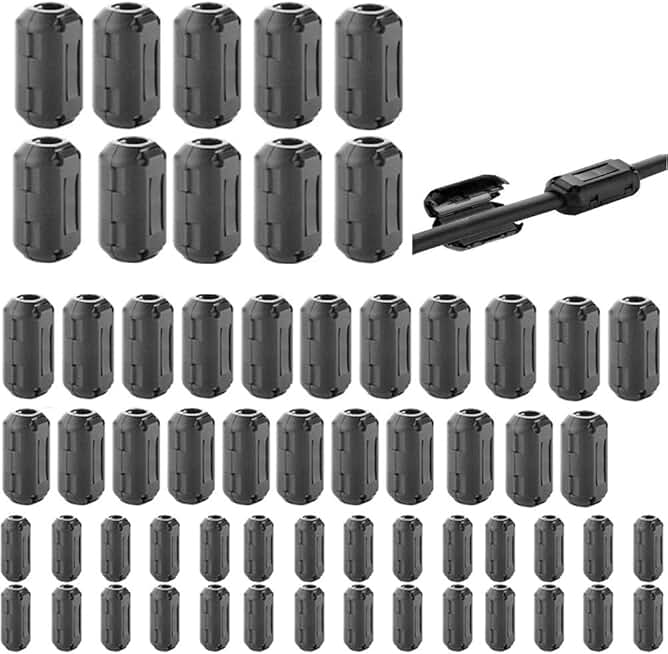
This is the most visible, most overrated scam in cable management. Those little black lumps clipped onto your cables? Ferrite cores. They’re sold as essential noise suppressors. They’re not. They are, at best, a placebo for people who like the look of "technical" gear. For the vast majority of consumer cables—USB, HDMI, power supplies for peripherals—they do precisely nothing. Users consistently report zero measurable difference in audio or video quality after adding them. This is a known issue for long-term use: they add bulk, snag on things, and crack over time, leaving you with useless plastic bits.
Here’s the reality: ferrite cores are effective for specific, high-frequency noise suppression on long cable runs in industrial or specific audio-video production scenarios. They are not designed for your six-foot Amazon Basics HDMI cable. The manufacturers know this. They sell them in bulk kits because it’s easy money from people who don’t know better. This doesn’t work for desktop setups. You’re wasting money on this.
Electromagnetic Interference Cables Are a Luxury Tax, Not a Solution
Now we hit the core myth. The entire category of premium "electromagnetic interference cables" is built on a false premise. They claim that by adding multiple layers of shielding—foil, braid, drain wires—they’ll eliminate noise and give you a pure, unadulterated signal. This is overrated. For digital signals like HDMI, DisplayPort, or USB, the data is packet-based. It either arrives correctly or it doesn’t. There’s no "cleaner" version of a digital 1 or 0. If interference is bad enough to corrupt the data, you get a blank screen or a disconnected device, not a slightly fuzzy image. The cable’s job is to maintain the impedance and prevent data loss, not to act as a Faraday cage.
For analog audio, the argument has slightly more merit, but it’s still wildly exaggerated for a desk setup. The noise introduced by an unshielded cable over a two-meter run in a low-EMI environment is often below the noise floor of your amplifier or interface. You are buying a solution to a problem your equipment can’t even perceive. Based on widespread user feedback, people chasing the last 0.1% of theoretical signal purity would see a 100x better return by fixing their gain staging or using a decent power conditioner for their entire desk.
The Real Enemies Are Cheap Connectors and Dirty Power
Stop looking at the cable. Start looking at the ends. The weakest link in any signal chain is almost always the connector and the port it plugs into. A gold-plated connector on a poorly made jack is just shiny garbage. Loose connections cause intermittent signals, which feel like interference but are actually just a broken circuit. Wiggling a cheap cable often causes more problems than any EMI ever could.
The real issue for most desks isn’t airborne interference—it’s conducted noise through your power lines. That buzzing in your speakers when your mini-fridge kicks on? That’s a power problem, not a cable problem. A $10 ferrite core on your audio cable won’t fix that. A proper power strip with filtering or a dedicated outlet might. You’re solving the wrong problem. This is the mistake I made for years, throwing money at boutique cables when the actual sabotage was my crappy daisy-chained power bricks creating ground loops.
Practical Cable Management That Actually Matters
Forget EMI. Focus on what impacts real performance: reliability, heat, and physical wear. A stiff, poorly routed cable will fail at the stress point long before EMI becomes a factor. A tightly wound cable bundle can trap heat, especially around power bricks, shortening component life. Your goal should be clean, gentle bends, secure strain relief, and keeping power cables separated from signal cables where possible—not because of magic interference, but because it’s just good, durable practice.
Use velcro straps, not zip ties that you overtighten. Leave some slack. Route cables behind your desk arm or through a simple raceway. This isn’t about blocking invisible waves; it’s about creating a setup that doesn’t degrade from you bumping your knee against the desk twice a day. The cognitive load of a messy desk is a bigger productivity killer than any theoretical EMI, as we’ve detailed in our piece on The Brutal Truth About Workspace Mental Load.
The Single Product That Might Be Worth It (And It’s Dirt Cheap)
Alright, I’ve spent this whole article telling you not to buy anything. But let’s be brutally honest—if you’re convinced you have an EMI issue, or you want to eliminate variables while troubleshooting, there’s one thing that’s so cheap it’s almost harmless. Not the $50 shielded monster cable. A simple clip-on ferrite core. Buy the cheapest kit you can find. Throw one on the power cable for your audio interface or speaker power supply, right near the device. If it does anything, you’ll know within minutes. If it doesn’t, you’re out ten bucks and you’ve learned a lesson. This is the only scenario where these make any sense: as a diagnostic tool for power-line noise on analog audio gear, not as a permanent performance enhancer.
Think of it like buying a single magnetic cable to test a theory before you fall for the larger magnetic cable damage scam. It’s a cheap experiment, not an upgrade.
The Final Verdict: Skip It
Electromagnetic interference cables, and the entire cottage industry of EMI suppression for desktop setups, is overrated. It’s a solution hunting for a problem that 99% of users will never experience. The money is better spent on literally anything else—a better chair, higher quality peripherals, or even just taking a break. Your focus should be on solid connections, clean power delivery to your desk, and physical cable management that prevents wear and tear. Don’t let marketing ghosts convince you to pay for protection from invisible demons. Your cables are fine. Save your money and your sanity.
If you’re chasing perfect audio, start with your room and your mic technique, not your cables. And if you think your monitor looks better with a "premium" HDMI cable, you might be a victim of the same hype that fuels the curved monitor problems scam. The verdict is clear: skip it.
Frequently Asked Questions
Do electromagnetic interference cables actually work?
For the vast majority of home office and gaming desk setups, no, they don't provide any perceptible benefit. Digital signals are all-or-nothing, and the level of EMI in a typical environment is too low to affect analog audio over short cable runs. You're solving a non-existent problem.
Are ferrite cores worth buying for my cables?
In most cases, no. They are overrated. They are designed for specific high-frequency noise on long runs in electrically noisy environments, not for your three-foot USB cable. Users consistently report no difference in performance. They add bulk and can crack, making them a waste of money.
What should I focus on instead of buying shielded cables?
Focus on cable reliability and power quality. Ensure you have good connectors, avoid tight bends that cause physical stress, and use a power strip with basic filtering to combat dirty power—which is a far more common source of noise like speaker hum than airborne EMI from your cables.

Written by
Amanda hates visible cables. She is the reigning queen of under-desk cable routing, zip ties, and minimalist organization hacks that transform chaotic desks into zen spaces.
Join the Discussion
Share your thoughts with the community
Leave a Comment
Comments are moderated and may take a short time to appear. Links are not permitted.