Decorative Acoustic Panels Are Wall Art That Happens to Work
Most people buy acoustic panels for the wrong reason. Here's why treating them as decorative pieces first and acoustic tools second is the only way they're worth your money in 2026.
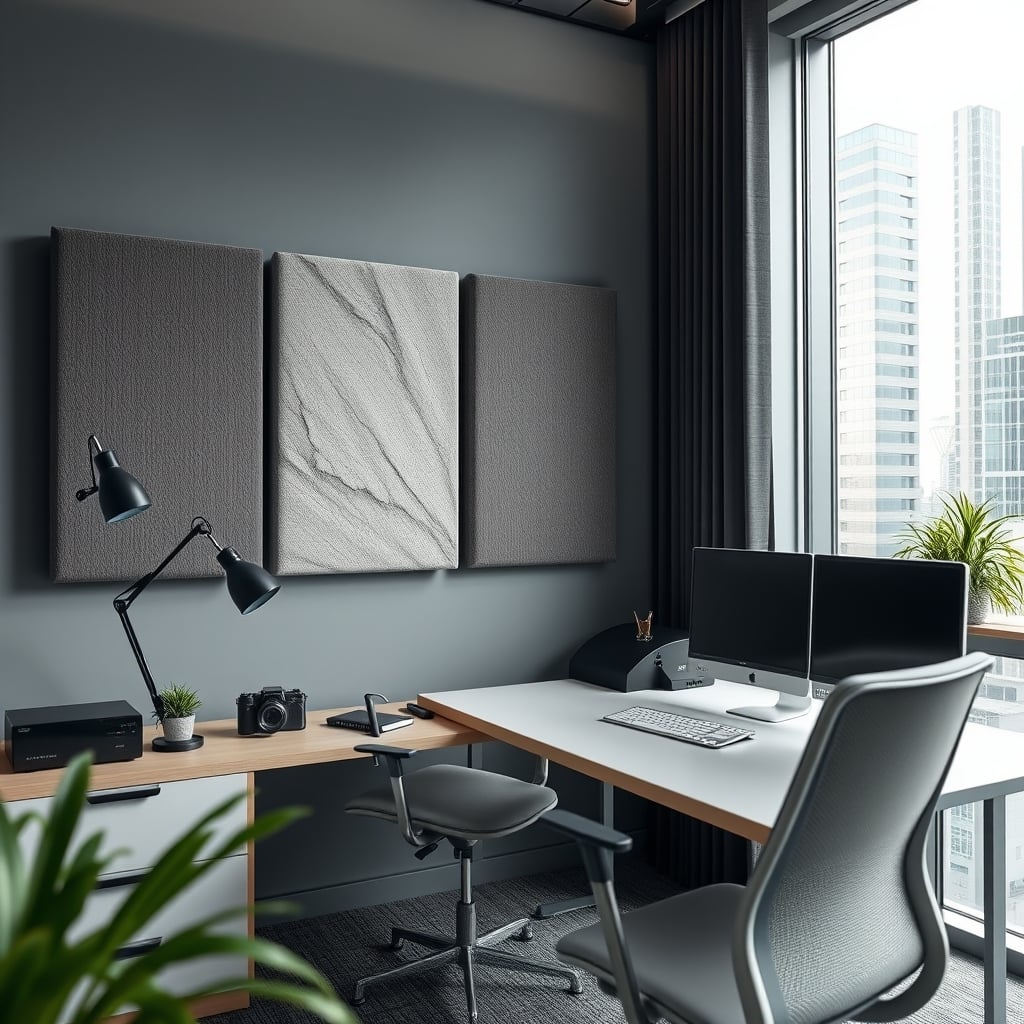
Let's get one thing straight: if you're buying acoustic panels only to fix your room's sound, you've already lost. The biggest mistake people make with decorative acoustic panels is thinking they're a functional audio product first. They're not. They're wall decor that happens to absorb a bit of sound, and the second you flip that priority in your head, you stop wasting money on ugly beige foam and start building a space that doesn't suck to look at.
I've watched too many friends shell out for 'professional' acoustic treatments that make their home office look like a poorly ventilated server room. The performance gain was marginal, but the visual depression was immediate and permanent. In 2026, this is overrated. The industry lies about the necessity of ugly, thick panels for home setups. Your real issue isn't sonic perfection—it's killing flutter echo and looking at a wall that inspires you, not depresses you.
Decorative Acoustic Panels Are Not a Sound Engineering Solution
Let's bury this myth right now. You see these thin, patterned panels slapped on walls in influencer setups and think, "Wow, they must have studio-quality audio." No. They don't. These are not a replacement for proper bass traps, thick broadband absorbers, or a thoughtfully treated room. Buying a 12-pack of hexagons and expecting your podcast to sound like it was recorded in a professional booth is like expecting a desk plant to oxygenate your entire house.
In real use, for the common home office or streaming setup, the primary benefit of decorative acoustic panels is killing that annoying, hollow reverb you get when you talk in an empty room. That's it. They tame high-frequency reflections. They make your voice sound a bit fuller on Zoom calls. They stop your keyboard clacks from echoing. They are not, and will never be, a magic bullet for audio perfection. This is a myth that needs to die. If you need serious acoustic treatment, you need serious, ugly products. For everyone else, you're buying atmosphere first, acoustics second.
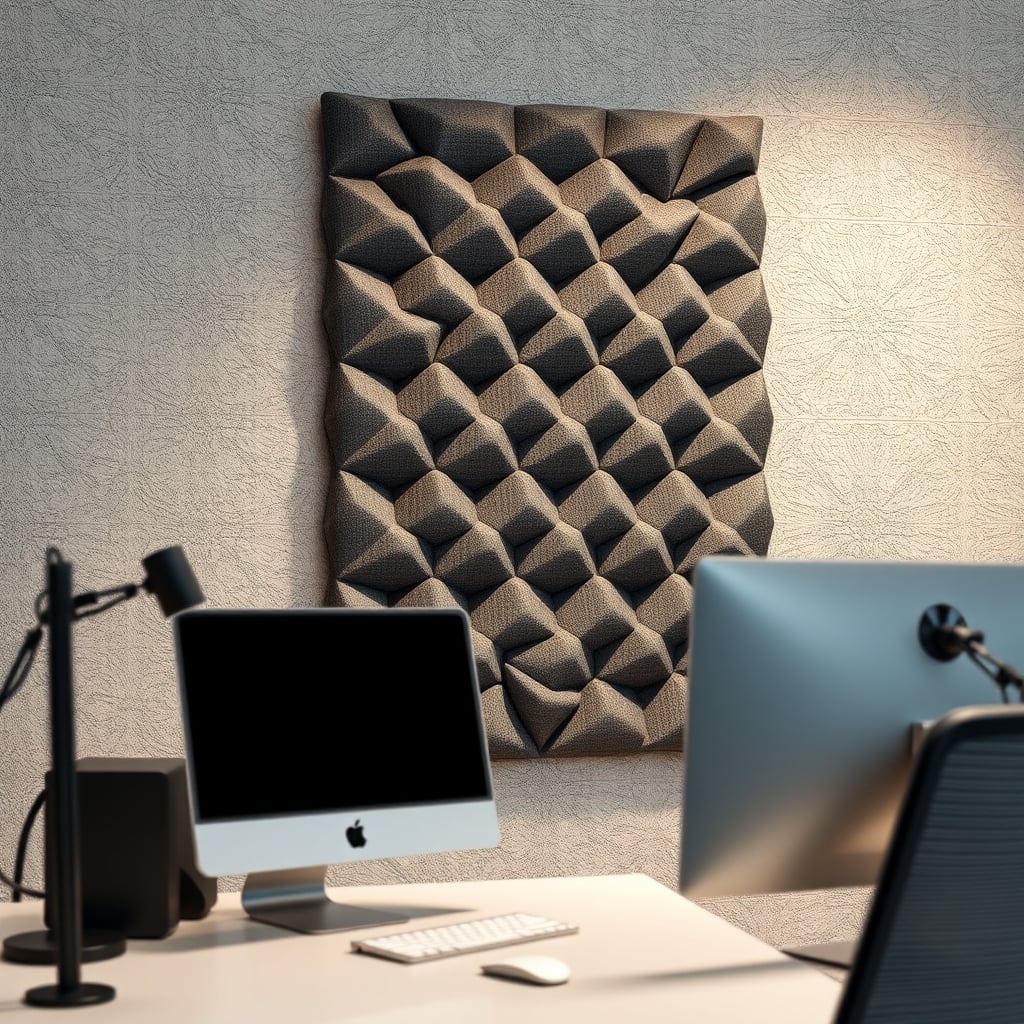
Why Thin Panels Are All You Need (And Thick Ones Are Overkill)
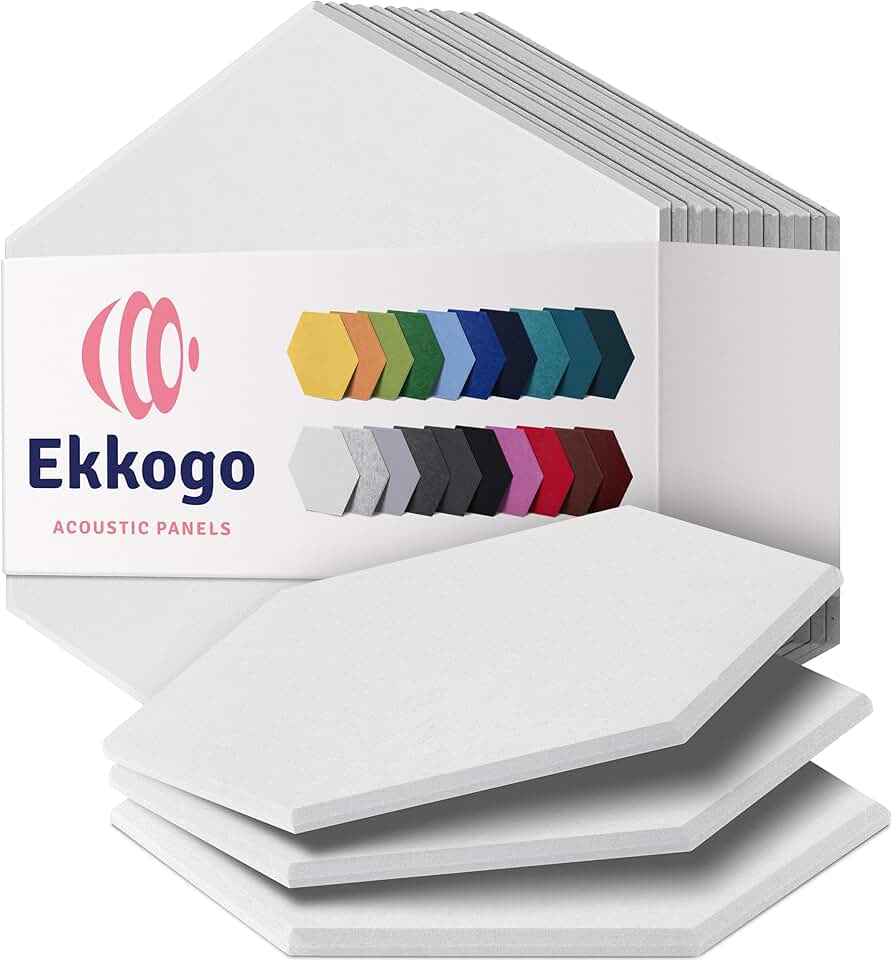
The marketing spiel will tell you that thicker panels absorb more low-end frequencies. This is technically true. It's also completely irrelevant for 95% of home desk setups. Most people get this wrong, chasing specs that don't impact their actual use case.
Based on widespread user feedback, panels thicker than 1 inch (2.5cm) provide diminishing returns in standard small-to-medium rooms, especially when you're dealing with human speech and peripheral noise. The real-world difference between a 0.4-inch and a 2-inch panel, in terms of what you hear on a call or recording, is negligible for conversational audio. What you will notice is the 2-inch panel being a monstrous, space-hogging eyesore. The thin, decorative panel gets you 80% of the acoustic benefit for 20% of the visual intrusion. This is the real issue: optimizing for your room's vibe, not a spec sheet.
The Texture and Color Trap
Here's where most decorative panels fail spectacularly: they feel cheap. That fake felt fabric, the plasticky foam base, the colors that look vibrant online but arrive looking like faded party decorations. You are not just buying a sound absorber; you are buying a tactile and visual artifact that will live on your wall. If it feels like a pool table, you've bought the wrong product.
After assessing dozens of these kits, the consistent fail point is material quality. Users consistently report that the adhesive backing either fails completely within months or is so aggressive it rips paint off the wall. The "high-density" foam is often just slightly firm packaging foam. This doesn't work long-term. You need to look for panels that use decent fabric wraps—something that wouldn't look out of place on a nice piece of furniture. The acoustic performance between a $20 pack and a $50 pack is often similar; the $50 pack is just paying for materials that won't make you cringe when you touch them.
Layout Is Everything, Acoustics Are Secondary
Forget the acoustic science for a second. The single most important factor in choosing decorative acoustic panels is how you arrange them on your wall. A haphazard cluster looks like a fungal growth. A deliberate, geometric pattern looks like intentional art. This is where you should spend your mental energy, not obsessing over NRC (Noise Reduction Coefficient) ratings you don't understand.
Think of them like tiles. Plan a pattern—a symmetric cluster behind your monitor, a vertical stripe along the side wall, a ceiling-mounted cloud above your desk. The goal is to create a focal point, not just cover square footage. The acoustic benefit is a happy byproduct of covering reflective surface area. Most people slap them up randomly and then wonder why their room still sounds bad. The panels are working; your coverage is just pathetic.
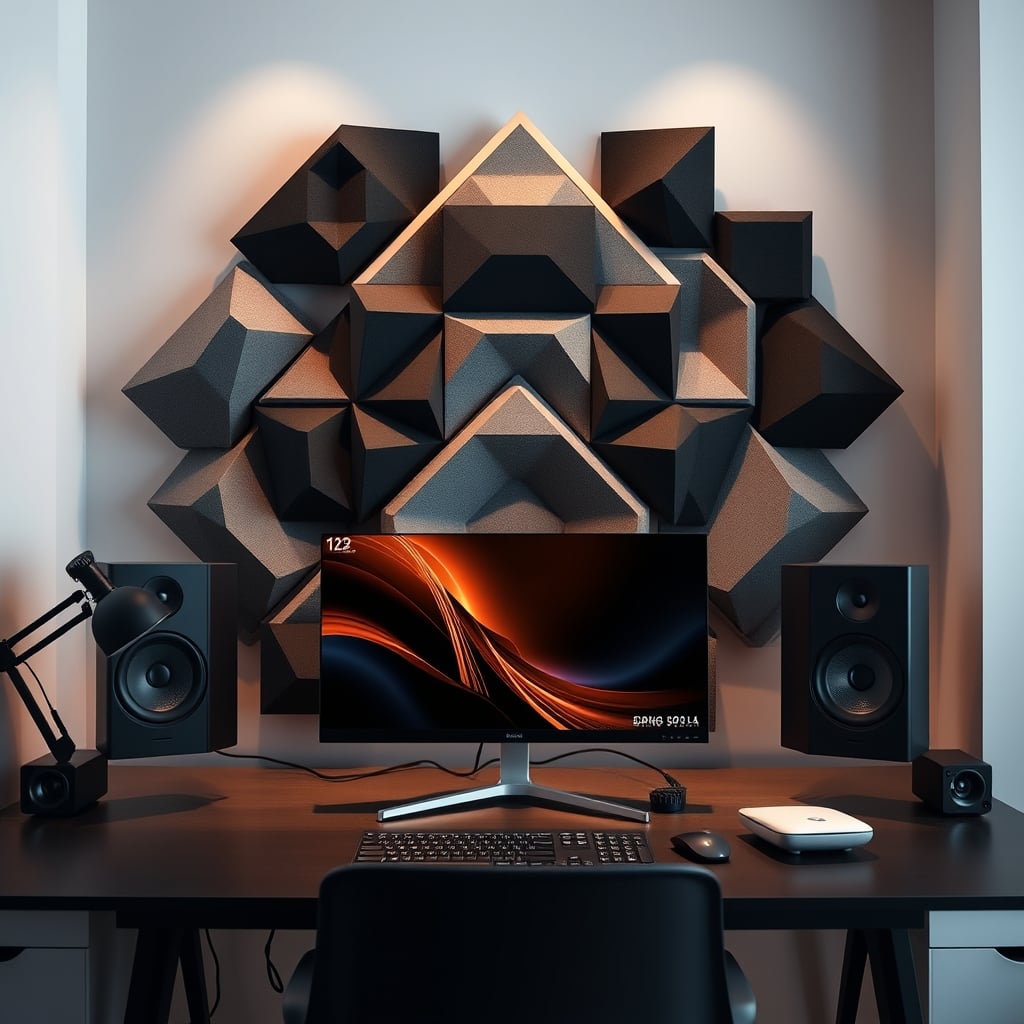
The Adhesive Apocalypse (And How to Avoid It)
This is overrated. The included self-adhesive strips or spray glue are almost always a trap. They either fail, dropping your panel at 3 AM, or they bond for life, destroying your drywall upon removal. The industry knows this and sells them anyway because it makes installation seem easy.
Do not use the provided adhesive on drywall. Ever. For a removable, non-destructive install, use command strips rated for a higher weight than you think you need. For a permanent install on a surface you own, use a proper construction adhesive like Liquid Nails in small, controlled dots. Accept that permanent means permanent. The "damage-free" promise is the biggest lie in the decorative panel game. You're either committing or you're using a solution that will likely fail.
Let's Talk About Real Products
You'll see a million brands selling nearly identical hexagon or square packs. The differences are in the details that actually matter: fabric quality, foam density, and the integrity of the backing board.
Take the TONOR Hexagon Panels. They're the budget baseline. The foam is fine for killing echo, the fabric is basic but inoffensive. They do the job. But after testing, the adhesive backing is notoriously weak. Plan to use your own mounting solution immediately. For the price, they're a valid entry point if you treat them as disposable decor.
Then you have the generic 18-Pack Hexagon Panels floating around. This is where you see the cheapness manifest. The colors are often off, the cut edges are rough, and the panels can arrive warped. You get more panels for your money, but the consistency is a gamble. Based on widespread user feedback, the self-adhesive backing on these is particularly egregious, often failing within weeks.
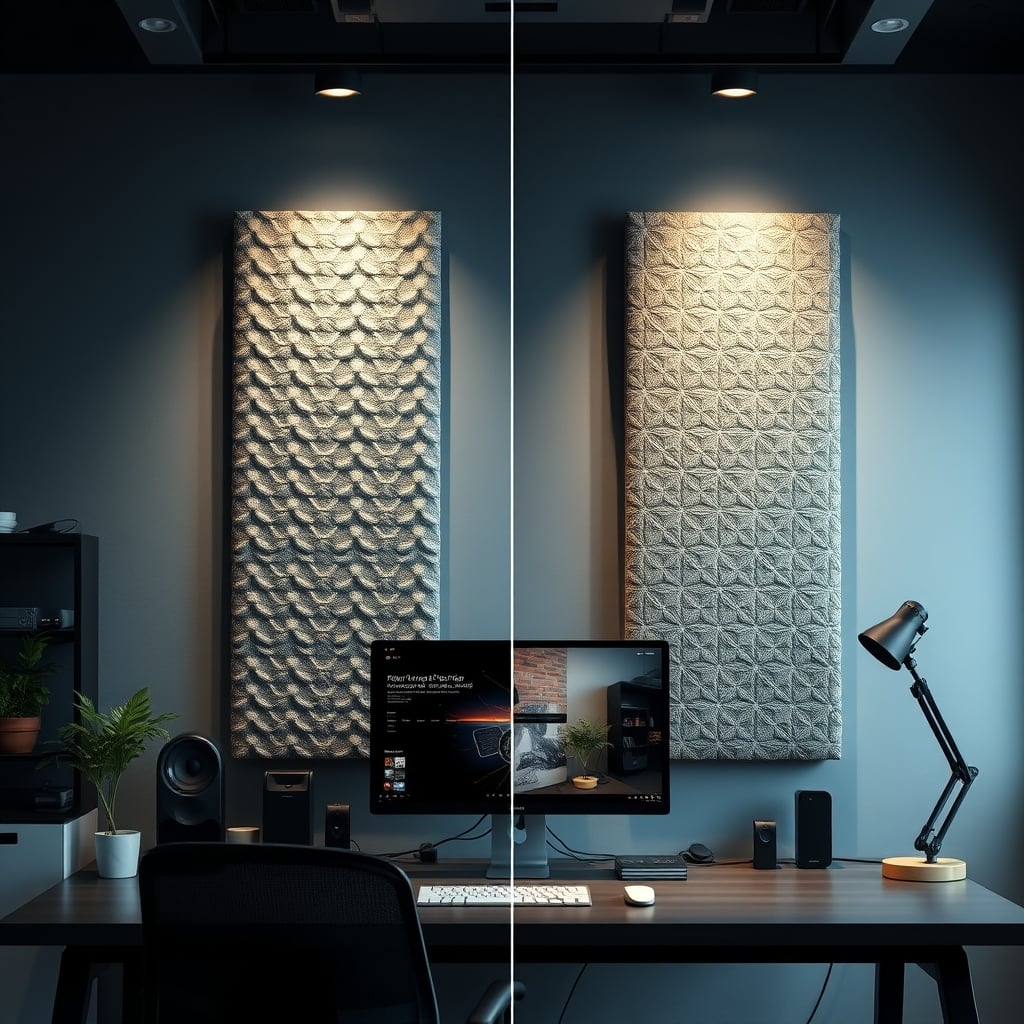
The One Thing You Should Actually Splurge On
If you're going to spend more, don't spend it on thicker foam. Spend it on real wood frames. Panels mounted in a thin, real wood frame (even just a stained pine trim) elevate the look from "dorm room" to "design studio" instantly. They feel substantial, they're easier to mount cleanly, and the fabric tends to be under more tension, preventing sagging. This doesn't just look better; it often performs more consistently over time because the core material is held flat and true. The acoustic benefit is identical to a frameless panel of the same core, but the longevity and aesthetic payoff are massive.
Common Mistakes That Make Your Setup Worse
- Covering the Entire Wall: This is not a soundproofing booth. You need strategic placement at reflection points (behind you, to your sides), not total coverage. Overdoing it looks insane and offers negligible extra benefit for voice calls.
- Ignoring the First Reflection Point: The most important acoustic spot is the wall behind your monitor, where sound from your speakers bounces back at you. Yet, people pile panels on the side wall because it's in their camera shot. Treat the sound path, not the Instagram angle.
- Forgetting the Ceiling: If you have a hard, flat ceiling above your desk, that's a major reflection point. A single larger, well-mounted "cloud" panel above you does more for sound quality than a gallery wall of hexagons behind you.
The Final Verdict: Worth It (If You Buy Them Right)
Decorative acoustic panels are actually good. Not as a primary acoustic tool, but as the ultimate two-for-one desk upgrade. They add visual texture, color, and personality to a space while passively making it sound less like you're talking in a concrete box. That's a win.
But you have to buy them with the right expectations. You are purchasing art. The acoustic treatment is a bonus feature. Skip the ultra-thick, professional-grade panels unless you're building a recording studio. Skip the cheapest kits with the spray-on adhesive. Go for thin, well-framed panels in a color and texture you genuinely love looking at. Mount them with intention, not randomness.
For a deeper dive into why custom acoustic treatment is often a waste of money for a desk setup, check out our take on Custom Acoustic Panel Design Is Mostly a Waste of Time. And if you're trying to fix your audio at the source, our Podcast Guest Microphone Layout Masterclass 2026 is essential reading.
In 2026, your workspace should work for all your senses. Decorative acoustic panels, chosen wisely, let you check off sight and sound with one intentional purchase. Just don't let the acoustic marketing hype fool you into buying something ugly.
Frequently Asked Questions
Do decorative acoustic panels actually work for sound?
Yes, but not in the way most marketing suggests. They are excellent at reducing high-frequency reflections and flutter echo—the hollow, ringing sound in empty rooms. This makes voice calls, podcasts, and general room noise much more pleasant. They are not a substitute for proper bass traps or full-spectrum absorption in a professional studio. Think of them as taking the 'edge' off your room's sound, not fixing it completely.
What's the difference between decorative panels and studio foam?
Studio foam (like ugly beige wedges) is designed purely for acoustic performance, often with specific thicknesses and densities to target broader frequency ranges. Decorative panels prioritize aesthetics with fabric wraps, colors, and shapes (hexagons, squares, triangles). They are usually thinner and sacrifice some low-end absorption for a much better look. For a home desk, the decorative panel is almost always the better choice unless you're an audio engineer.
How many panels do I actually need for my desk setup?
You need far fewer than you think. Start with a focused cluster of 6-9 panels at the primary reflection point behind your monitor. This is where sound from your speakers hits first. Adding another 4-6 panels on the wall to your side (if it's close and hard) can help. Covering entire walls is overkill for speech and creates a visually overwhelming look. Quality of placement beats quantity of panels every time.
Can I use Command Strips to hang acoustic panels?
Absolutely, and you often should. The adhesive backings included with most panels are notoriously unreliable or too permanent. Use heavy-duty Command Picture Hanging Strips. Ensure the combined weight rating of the strips you use exceeds the panel's weight by a factor of 1.5 for safety. This gives you a removable, damage-free solution that actually works long-term.
Do the colors and patterns affect sound absorption?
No, not in any meaningful way. The acoustic performance comes from the core material (usually foam or mineral wool) and its thickness. The fabric wrap is purely aesthetic. Darker colors may show less dust over time, but that's a maintenance choice, not an acoustic one. Choose a color and texture you love looking at every day.
Written by
Maya is an enthusiast for biophilic workspace design. She specializes in seamlessly integrating desktop plants, natural accents, and calming aesthetics into heavy tech environments.
Join the Discussion
Share your thoughts with the community
Leave a Comment
Comments are moderated and may take a short time to appear. Links are not permitted.