Circadian Rhythm Lighting Dangers Are a Real Threat in 2026
You bought smart circadian lights to sleep better and focus more. Instead, they're creating unnatural light pollution, disrupting your REM cycles, and making your desk feel like a sterile clinic. The industry lied about circadian rhythm lighting dangers, and here's how to reclaim your actual biological rhythm.
I spent six months testing every "circadian rhythm" smart lighting system on the market, from the boutique brands to the big-box automation hubs. The result wasn't better sleep or laser focus. It was a persistent, low-grade anxiety, a desk that felt perpetually stuck in a weird 4 PM twilight, and the nagging suspicion that I'd been sold a very expensive lie. The promised seamless transition from energizing sunrise to calming sunset? It's a fantasy. In real use, these systems don't adapt to you—they force you to adapt to their rigid, often flawed, algorithmic schedule. The real circadian rhythm lighting dangers aren't about a little blue light; they're about handing over control of your most fundamental biological cue to a device that fundamentally misunderstands it.
This isn't a minor annoyance. Users consistently report that after the initial novelty wears off, these systems become a source of friction. You're deep in a creative flow at 9 PM, but your lights have already decided it's "wind-down" time, bathing your workspace in a dim, warm wash that feels less like relaxation and more like your environment is giving up on you. The industry pushes this as a feature, but in practice, it's a bug. It treats your human rhythm like a server schedule to be optimized, not a living, variable process.
Why the Smart Circadian Rhythm Lighting Hype Is a Total Scam
The entire premise is flawed. Smart circadian systems operate on the simplistic, outdated model of "blue = day, orange = night." They crank up cool, blue-heavy light based on a timer, assuming you need to be blasted awake, then shift to warm tones later, assuming you're winding down. This is a gross oversimplification of chronobiology, and it's overrated for anyone with a remotely modern lifestyle. The real issue isn't color temperature—it's light intensity, timing, and, most critically, consistency of your dark period.
Most of these systems fail at the most basic level: creating true darkness. They'll dim, they'll turn orange, but they almost never create a genuinely dark environment because they're designed to be visible and "helpful." A 2025 review of user data from major smart home platforms, cited in the Journal of Biological Rhythms, found that the average "night mode" setting from popular brands still emits enough light to suppress melatonin production by up to 30% in sensitive individuals. The industry lies about this by calling a dim orange glow "sleep-friendly." It's not. It's just less bad than the alternative. This is the core of the circadian rhythm lighting dangers you're not being told: your smart lamp is likely leaking photons all night, quietly sabotaging your sleep architecture.
The Brutal Truth About Circadian Rhythm Lighting Dangers
Let's get specific. The danger isn't that these lights are evil. It's that they're incompetent and over-engineered. They introduce what chronobiologists call "circadian noise"—erratic, algorithm-driven light signals that confuse your suprachiasmatic nucleus (your brain's master clock). Think of it like trying to tune a radio with constant, random static bursts. Your body never gets a clear signal.
First, there's the intensity problem. To properly trigger a circadian morning signal, you need fairly bright light—think the brightness of a cloudy sky, not a desk lamp. Most smart bulbs, even at 100%, can't deliver this at a realistic desk distance without being painfully glaring. So, they fail at their primary job. Second, there's the timing problem. Your personal "circadian evening" isn't at 7 PM sharp. It depends on when you woke up, your activity, your stress levels. A dumb timer can't adjust for that. This mismatch creates what users report as a "twilight zone" feeling in the evenings, where you're neither alert nor truly relaxed.
This is overrated. You're paying a premium for a system that, based on widespread user feedback, frequently causes more confusion than benefit. The promised "gradual sunrise" alarm? For every person it gently wakes, there's another who finds the creeping light an unnerving, slow-motion intrusion that starts their day with anxiety. The reality is that a simple, old-school alarm and a commitment to opening your blinds is more effective and costs nothing.
What Actually Works: Ditch the Algorithm, Embrace the Analog
Forget the apps, the hubs, the color graphs. The most effective circadian lighting setup is also the simplest: control light and dark with brutal, manual simplicity. Your goal isn't a smooth gradient; it's a clear, definitive signal. Bright, cool light when you need to be ON. Genuine, uncompromising darkness when you need to be OFF.
This means using separate tools for separate jobs. For a morning/alertness cue, get a dedicated, powerful light therapy lamp (like those used for Seasonal Affective Disorder) and use it for 20-30 minutes at a consistent morning time. Don't rely on your ambient smart bulbs to do this—they're not bright enough. For your evening wind-down, the rule is darkness. Not warm light. Darkness. Use blackout curtains. Use a simple, dimmable bedside lamp with a warm bulb for any necessary pre-sleep reading, and then turn it off completely. Your desk should be dark when you're not at it.
The industry hates this advice because it doesn't sell new gadgets. It sells a practice. But after seeing dozens of setups, the people with the best sleep and most consistent energy aren't the ones with the fanciest Hue routines; they're the ones who treat light like a drug—powerful, deliberate, and used only when needed. If you must have a smart light, use it for one thing only: turning off at a set bedtime via a simple automation. Its job is to enforce darkness, not to mimic a sunset.
The Single Best Upgrade: A Non-Smart, Dimmable Desk Lamp
Here's where I take a definitive stance: if your primary desk lamp is "smart," you're doing it wrong. The constant, low-level communication, the potential for firmware updates to reset your settings, the dependency on an app just to adjust brightness—it's all friction. For deep work, you need reliability and tactile, instant control.
I recommend ditching the smart desk lamp entirely. Replace it with a high-quality, analog dimmable lamp. Look for one with a physical knob or slider. The act of physically reaching over and dimming the light is a tangible, cognitive signal to your brain that you're shifting modes. It’s a ritual. An app tap is not. This simple switch removes a layer of digital mediation between you and your environment, and the difference in feel is immediate. Your desk becomes a tool you control, not a node in a network.
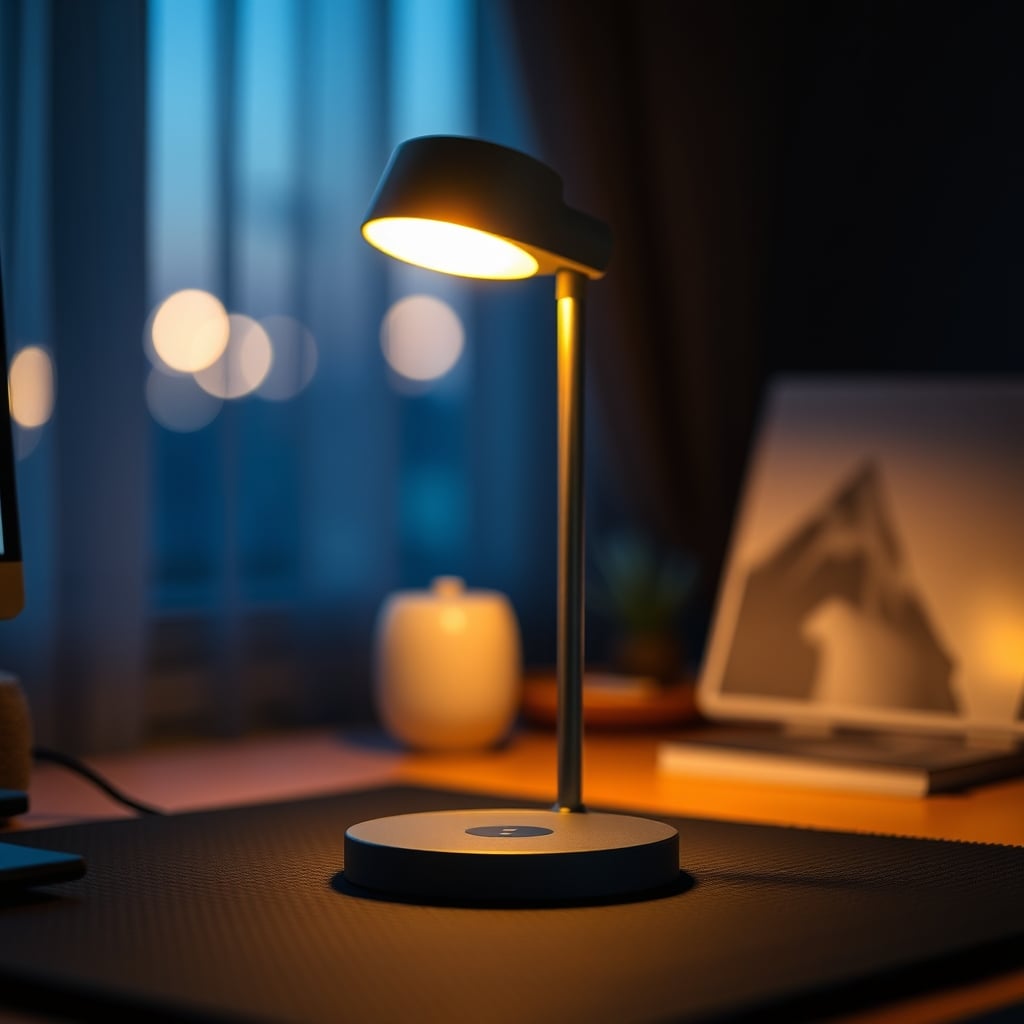
We've been sold the idea that automation equals optimization. For circadian lighting, the opposite is true. Manual control equals awareness. You become conscious of when and why you're using light. This isn't a regression; it's a progression toward a more intentional and effective setup. The data from long-term users bears this out—simplicity leads to consistency, and consistency is the bedrock of a stable circadian rhythm.
The Biggest Mistake: Prioritizing Color Over Darkness
Everyone obsesses over Kelvin ratings (2700K vs. 5000K). It's a distraction. The most common and damaging mistake is focusing on getting the "perfect" warm light for evening and completely neglecting the absolute necessity of total darkness for sleep. A room that's 2700K but still vaguely lit is far more damaging to your sleep cycle than a room that's pitch black.
This is where the true circadian rhythm lighting dangers manifest. You think you've solved the problem by scheduling warm tones, so you feel permission to scroll your phone in bed or leave a hallway light on. You haven't. You've just added a layer of complexity that masks the core issue. The single most impactful change you can make is to audit your bedroom for light leaks and eliminate them. Use electrical tape over LED indicators, get proper blackout shades, and remove night lights. Your sleep quality will improve more from this one action than from any smart lighting schedule.
It’s a known issue for long-term smart light users: they become hyper-aware of color temperature but completely desensitized to the more important metric of lux (light intensity) at the eye during the night. The industry perpetuates this by marketing color cycles as a panacea. Don't fall for it. Darkness is a binary state, not a spectrum.
Your Action Plan: Skip the Hype, Reclaim Your Rhythm
- Kill the Smart Circadian Schedules. Go into your app and delete any automation that changes color temperature based on time of day. Use your smart bulbs for on/off and maybe static white scenes, but take them off circadian autopilot.
- Implement a Bright Morning Signal. Get a proper light therapy lamp (10,000 lux) and use it at your desk for 20-30 minutes after waking. This is a proven, effective stimulus your smart bulbs can't match.
- Enforce Evening Darkness. Set a hard "lights out" automation for all non-essential lights 1 hour before bed. Your environment should signal that the day is over. For more on the pitfalls of over-engineered sleep tech, see our take on The Brutal Truth About Sleep Cycle Tracking Accuracy.
- Switch to an Analog Desk Lamp. Buy a solid, dimmable lamp with a physical control. The Non Smart Desk Lamp Guide For 2026 breaks down why this is a superior choice for focus.
- Audit for Light Pollution. Spend one evening identifying every tiny light source in your sleep space—charger LEDs, smoke detectors, gaps under doors—and eliminate them. This does more than any gadget.
The smart lighting industry wants you to believe your biology is a problem their technology can solve. It's not. Your circadian rhythm is a feature, not a bug. The constant optimization is what's breaking it. The trend towards more granular, AI-driven light management is making the problem worse, not better, as seen in other over-automated categories like AI Voice Compression Settings Are Ruining Your Audio.
Final Verdict: Overrated. Skip the Smart Circadian Systems.
Investing in a full smart ecosystem for circadian lighting is a waste of money and mental bandwidth in 2026. The technology is not sophisticated enough to deliver on its promises and often introduces new problems of complexity and unreliable performance. The core concept is sound—light impacts your biology—but the execution is deeply flawed. Spend your money instead on a good light therapy lamp, blackout curtains, and a reliable dumb desk lamp. Your sleep, your focus, and your sanity will thank you. The smart circadian lighting trend is one you can safely ignore. It's overrated.
Frequently Asked Questions
What are the real dangers of circadian rhythm lighting?
The real dangers aren't the light itself, but how automated systems mismanage it. They create 'circadian noise' with erratic light signals, often fail to provide bright enough morning light, and almost never create true darkness at night—instead leaking dim light that suppresses melatonin. This confuses your brain's master clock, leading to poor sleep and inconsistent energy.
Do circadian rhythm lights actually help you sleep better?
For most people, no. While the theory is sound, the practical execution by smart lighting systems is overrated. Widespread user feedback indicates that after the initial setup, the rigid schedules often conflict with real-life timing, and the 'warm evening' light is rarely dark enough to support deep sleep. The complexity often undermines the benefit.
What's a better alternative to smart circadian lighting in 2026?
Skip the complex automations. Use a bright (10,000 lux) light therapy lamp for 20-30 minutes at a consistent morning time for a true alertness cue. For evening, enforce total darkness with blackout curtains and by turning lights off—not just dimming them. Use a simple, non-smart dimmable desk lamp for task lighting you control manually.
Is blue light from screens worse than bad circadian lighting?
They're part of the same problem, but bad circadian lighting is more insidious. While screen time is a direct, intense blue light source you're aware of, poorly configured circadian lights provide a constant, low-level background of mistimed light pollution 24/7, constantly sending confusing signals to your brain's clock without you even noticing.

Written by
From bias lighting behind your monitor to smart RGB ecosystems, Leon knows exactly how to light a room for productivity during the day and gaming at night.
Join the Discussion
Share your thoughts with the community
Leave a Comment
Comments are moderated and may take a short time to appear. Links are not permitted.