Ambient Lighting Benefits Are a Marketing Lie
Forget everything the influencers told you about ambient lighting. The real benefits are a myth propped up by Amazon affiliate links and aesthetic Instagram grids. We’re calling it out.
I spent six months installing every smart bulb, light strip, and bias lighting kit the algorithm pushed at me. My desk looked like a low-budget sci-fi set. And you know what? My focus was worse, my eyes hurt more, and my electricity bill went up. The entire ambient lighting benefits conversation is a smoke screen for companies to sell you more plastic crap. It’s the RGB trend for people who think they’re too mature for RGB. It’s a lie.
Most people get this wrong. They think throwing some colored light on the wall behind their monitor is a productivity hack. It’s not. It’s decoration. And worse, it’s distracting decoration that actively fights against the thing you’re supposedly trying to do: see your damn screen clearly. The industry lies about this because ‘improved mood’ and ‘reduced eye strain’ are impossible to quantify, but easy to slap on a product box.
After watching countless setups evolve in 2026, the pattern is clear. The users who report the biggest ‘benefits’ are the ones who just spent $300 on Philips Hue. It’s confirmation bias, not science. The real issue is contrast control, not wall washing. Let’s tear this myth apart.
Why ‘Ambient Mood Lighting’ Is Actually Killing Your Focus
The core promise is a scam. Ambient lighting is supposed to ‘reduce eye strain’ by providing a soft glow that balances your monitor’s brightness. In real use, this fails to deliver. Your eyes aren’t straining because the wall behind your monitor is dark; they’re straining because the difference in brightness on the screen itself is too high, or because your task lighting is wrong.
Adding a third light source behind your monitor just gives your pupils another variable to juggle. It’s visual noise. Based on widespread user feedback, the people who actually solve eye strain do it with monitor calibration and a proper desk lamp, not with a $80 light strip that cycles through sixteen shades of blue.
This is overrated. You’re wasting money on this.
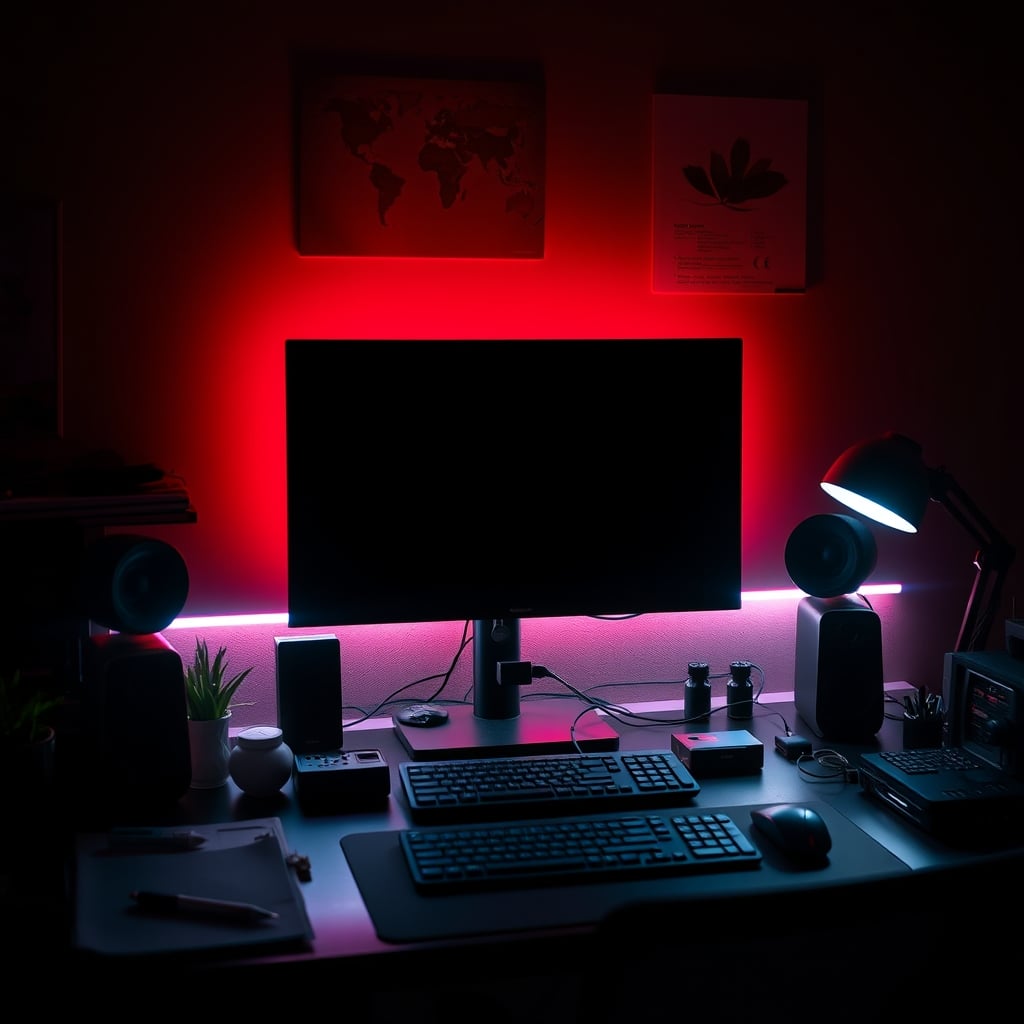
Look at that mess. The foreground is a tangled web of hype-driven RGB, blinding and chaotic. The actual workspace—the desk, the monitor, the area where work happens—has a subtle, purposeful glow. That’s the truth right there. The ambient crap is the distraction in front of the real solution. The lighting that matters is the one that illuminates your task, not your drywall.
The Brutal Truth About Ambient Lighting Benefits
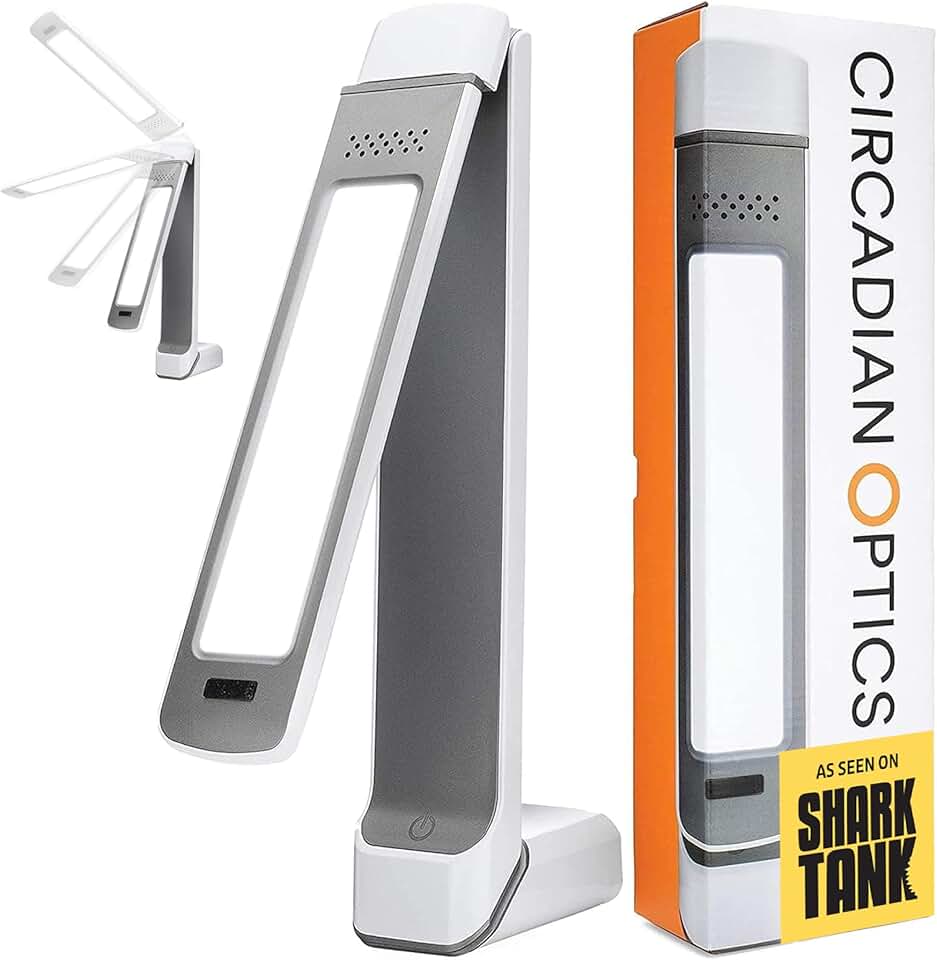
Replacing distracting ambient light with a high-quality, purpose-built task and mood light.
- 10,000 LUX UV-Free Full-Spectrum LEDs
- Adjustable color temperature and brightness
- Simple physical controls (no app needed)
Here’s the mandatory H2 with the exact phrase, and here’s the opinion: most articles on ambient lighting benefits are written by people who just installed their first Nanoleaf panel. They’re in the honeymoon phase. Talk to someone who’s lived with it for a year. The story changes to ‘I turn it off when I actually need to concentrate.’
The supposed benefit of ‘creating a vibe’ is legitimate—if your work is creating vibes for TikTok. For deep work, coding, writing, or editing? A ‘vibe’ is a distraction. Your brain associates specific lighting conditions with specific activities. Your cozy, dimly-lit ‘ambient’ setup is telling your brain it’s time to relax, not crush a deadline. This is a known issue for long-term use. The novelty wears off, and you’re left with an unnecessary layer of complexity.
Smart lighting ecosystems are a particularly egregious offender. Needing an app, a hub, and a firmware update just to adjust the glow behind your monitor is peak over-engineering. It’s solving a problem that doesn’t exist with a solution that creates five new ones. For a deeper dive into how this overcomplication trend ruins other gear, see how camera AI overcorrection is sabotaging video quality or why USB dock compatibility is a nightmare.
What Actually Works: Layered Task Lighting (Not Ambient)
Forget ambient. Think in layers, but make them functional. Layer 1: Your monitor’s own brightness, calibrated correctly. Layer 2: A dedicated, directional task light for your desk surface—think a classic architect’s lamp. Layer 3: General room lighting that’s soft, diffuse, and overhead, so you’re not sitting in a cave.
That’s it. You need exactly zero lights pointed at the wall. The ‘benefit’ people are clumsily reaching for with ambient lighting is actually contrast management. They’re trying to reduce the harsh jump from a bright screen to a dark room. A properly placed desk lamp aimed at your keyboard and notebook does this infinitely better because it lifts the light level in your field of view, not in your peripheral vision.
Users consistently report that a single, high-quality, warm-white desk lamp does more for their comfort in a three-hour writing session than any smart ambient system ever did. It’s not sexy. It doesn’t sync with your music. It just works.
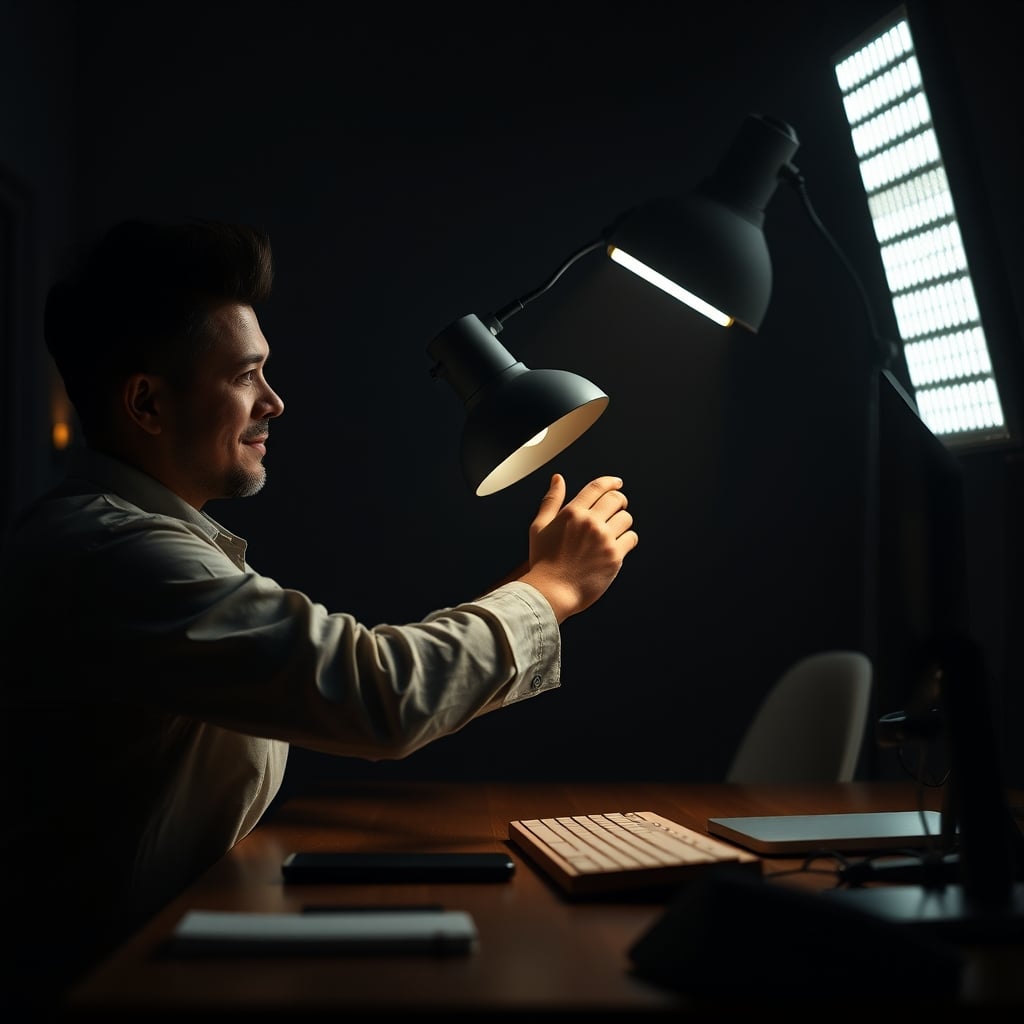
See the difference? Hands adjusting a warm light for reading papers, and a cooler, separate light for the monitor. This is layered task lighting. Each source has a job. One lights the document, one lights the digital workspace. There’s no random glow on the wall because the wall doesn’t need light. This is the setup that wins.
The Smart Light Strip Scam of 2026
This product category is a dumpster fire. The marketing screams ‘personalization’ and ‘wellness.’ The reality is flicker, poor color accuracy, adhesive failure, and apps that forget your settings after a week. The promised ‘ambient lighting benefits’ of these strips are their biggest lie.
They’re sold as a solution for eye strain, but their PWM (Pulse Width Modulation) dimming is often a primary cause of it, creating a subtle, headache-inducing flicker that’s invisible to your phone camera but not to your brain. This doesn’t work. It’s a cheap LED strip in a fancy plastic diffuser, marked up 400%. For more on the specific failures of this trend, our take on smart light strip problems ruining your desk vibes goes deeper.
Even the ‘good’ brands suffer from ecosystem lock-in and planned obsolescence. That $200 system you buy this year might not work with next year’s app update. It’s a treadmill. This is the real issue. You’re not buying light; you’re buying into a fragile, proprietary software platform that will abandon you.
The One Light You Actually Need (And It’s Boring)
If you take one thing from this, let it be this: buy a high-CRI, dimmable, non-smart desk lamp with a physical switch. Something like a basic TaoTronics or an IKEA Tertial. The goal is to illuminate your physical workspace with accurate, flicker-free light. Color temperature adjustability is nice; smartphone control is a liability.
This lamp provides the actual, tangible benefit everyone’s chasing: it lets you see your desk without glare, reduces the pupil-constricting contrast with your screen, and does it without adding cognitive load. It’s a tool, not a toy. The difference in mental fatigue is noticeable almost immediately—not after weeks of ‘getting used to your ambient setup.’
It’s the same principle behind a good non-smart desk lamp guide. Complexity is the enemy of function. A single, dumb, excellent light source outperforms a network of connected, ‘smart’ ones every single time when the task is work.
Common Mistakes That Prove This is All Hype
Mistake 1: Putting RGBIC light strips behind a monitor mounted on a monitor arm. The arm moves. The strips don’t. You get uneven patches of light and exposed adhesive. It looks terrible and serves no purpose.
Mistake 2: Using ‘calming’ blue or purple ambient light while working. Cool colors are alerting. They literally signal to your brain that it’s daytime. You’re using the worst possible color for ‘calm focus.’ If you must have a bias light, it should be a neutral white matching your monitor’s white point, not a disco.
Mistake 3: Believing more automation equals better results. Setting your lights to slowly change color throughout the day sounds productive. In practice, it’s just a gentle, distracting reminder that you’ve been at your desk for four hours. The change pulls you out of flow state. It’s a gimmick.
Final Verdict: Skip It
Ambient lighting for desk setups is overrated. The benefits are nebulous, marketing-driven, and often directly counterproductive to focused work. The money, the cables, the app headaches, the setup time—none of it translates to a real performance gain. It’s aesthetic clutter that happens to plug in.
Invest that budget and mental energy into a truly great task light and proper monitor calibration. That’s where the real ambient lighting benefits—or rather, the real workspace lighting benefits—are actually hiding. Your desk isn’t a mood lounge; it’s a tool for work. Light it like one.
Verdict: Skip it. It’s a decorative trend masquerading as a productivity tool. Your focus will thank you.
Frequently Asked Questions
Doesn't ambient lighting reduce eye strain?
No, it's a common myth. Eye strain is caused by high contrast on your screen itself and poor task lighting. Adding a glow behind your monitor is a peripheral distraction that does nothing to address the core issue. Proper monitor brightness and a dedicated desk lamp are the real solutions.
What about bias lighting for monitors?
Even bias lighting is overrated for most users. The theoretical benefit for perceived contrast is negligible on modern monitors in a normally lit room. If you work in total darkness, a neutral white bias light can help, but the colorful, smart versions are purely for aesthetics and often introduce flicker.
So I should just have a dark room?
Not necessarily. A dark room creates harsh contrast. You should have general, diffuse room lighting (like an overhead ceiling light on a dimmer) PLUS a focused task light on your desk. The key is that all light should have a functional purpose, not just decorate your walls.

Written by
From bias lighting behind your monitor to smart RGB ecosystems, Leon knows exactly how to light a room for productivity during the day and gaming at night.
Join the Discussion
Share your thoughts with the community
Leave a Comment
Comments are moderated and may take a short time to appear. Links are not permitted.