Smart Speaker Audio Quality Is A Lie You're Buying
You bought a smart speaker for convenience, but its audio quality is a compromised joke. This is the hard truth about DSP, Bluetooth, and why a single-purpose device always wins.
Let's be brutally honest: you didn't buy that smart speaker for its sound. You bought it because Alexa lives inside it, or because Google Assistant can tell you the weather. You traded audio fidelity for convenience, and the result is a sonic compromise that the marketing teams desperately try to hide. The truth about smart speaker audio quality isn't a story of innovation; it's a story of compromise, compression, and the pursuit of a feature list over genuine performance. After hearing the muddy, processed audio from countless units in real setups, it's clear this entire category is overrated for anyone who actually cares about sound.
Most people get this wrong. They think a higher price tag or a brand name like Sonos equates to good audio in a smart speaker. It doesn't. The fundamental architecture is flawed. You're cramming a digital signal processor (DSP), a Wi-Fi/Bluetooth radio, and cheap drivers into a single box, all fighting for power and priority. The assistant's listening mic and the audio output share the same compromised circuitry. This is not worth it for critical listening.
Why Your Smart Speaker Sounds Like a Tin Can
The first clue is in the spec sheet they never show you. Look for the driver size, the amplifier wattage, or the frequency response. You won't find them in the prominent marketing copy. Instead, you'll see boasts about "room-filling sound" and "crystal-clear voice." These are meaningless phrases designed to obscure the reality: tiny, cheap drivers housed in a plastic enclosure, driven by a low-power amp that's also busy processing your "Hey Google" commands.
In common setups, especially on a desk where you're close to the source, the flaws are glaring. There's no bass extension. The midrange is hollow and processed because the DSP is constantly active, not just for music, but to suppress ambient noise for the assistant microphone. The high-end is either absent or painfully sharp, a common trick to make the audio seem "detailed" when it's actually just unbalanced. This doesn't work for music. It works for weather updates.
The DSP Compression Myth That Needs To Die
Premium Pick
- High performance
- Premium build
Here's the biggest lie sold to you: that digital signal processing (DSP) in smart speakers "enhances" your audio. It doesn't. It degrades it. DSP is not an audiophile tool in these devices; it's a necessity to make the hardware feasible. It dynamically compresses the audio signal to prevent the tiny amplifiers and drivers from distorting at higher volumes. It applies heavy equalization to mask the terrible native frequency response of the cheap components. It's a corrective bandage on a fundamentally broken design.
The industry lies about this. They call it "audio tuning" or "smart sound optimization." It's damage control. When you play a rich, dynamic track, the DSP smashes it down into a safe, narrow range that won't blow the speaker. The result is audio that lacks punch, depth, and dynamics. Everything sounds flat and confined. This is a known issue for long-term use; the constant processing introduces a fatiguing, artificial quality that dedicated speakers simply don't have.
Bluetooth: The Silent Killer of Smart Speaker Audio Quality
If you're using the Bluetooth function on your smart speaker—which most people do for quick connectivity—you're stacking another layer of degradation on top of the DSP mess. Bluetooth audio, especially the common SBC codec, is lossy. It compresses the audio signal before it even reaches the speaker. Then the speaker's own DSP compresses it again. You're listening to a compression of a compression.
The latency is another real-world killer. For desk use, where you might be watching a video or playing a game, the audio lag via Bluetooth is noticeable and irritating. It's not just a spec sheet number; it's a sync issue that makes the experience feel cheap and broken. This is overrated. A dedicated Bluetooth speaker, designed solely for that purpose, often handles the codec and latency better because it doesn't have to split its resources with an assistant AI. As covered in our piece on USB hub bandwidth limits crippling your high-end gear, shared resources always lead to performance loss.
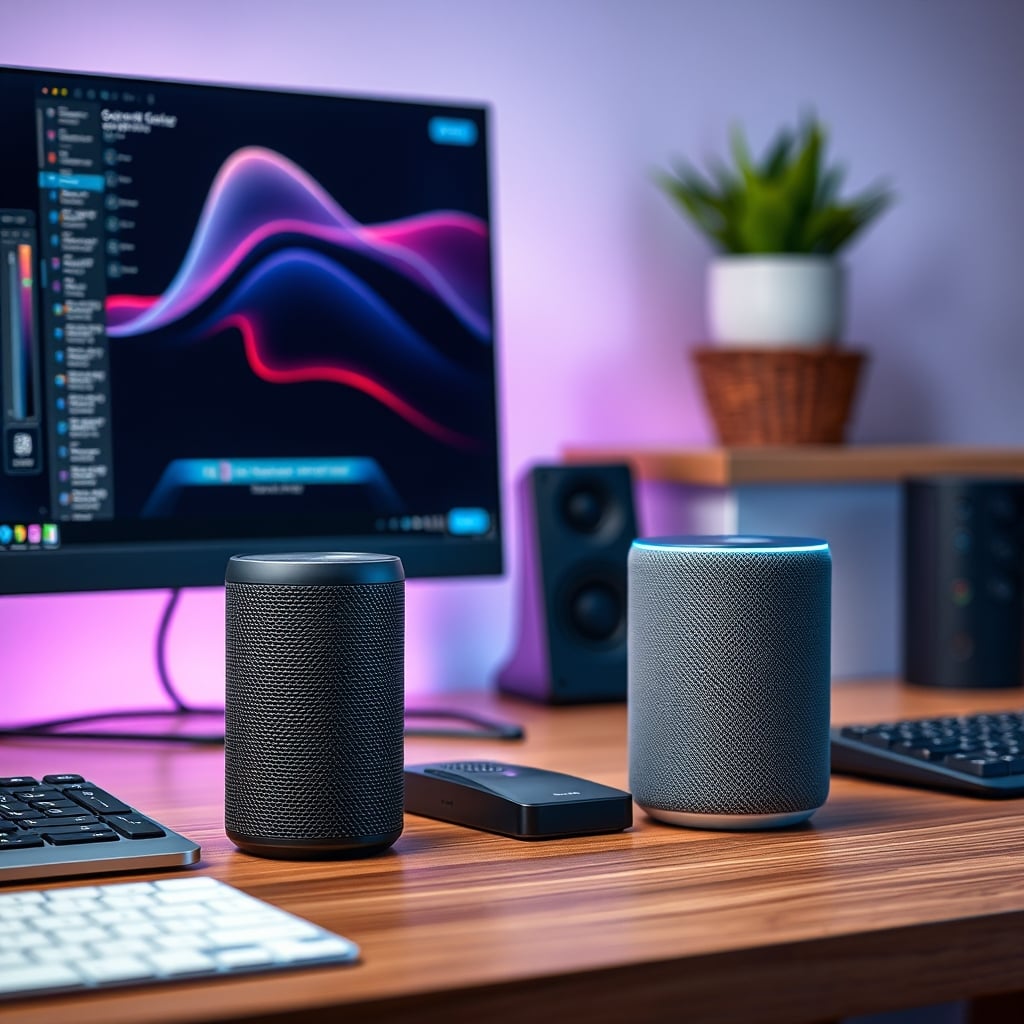
The Single-Purpose Device Always Wins
This is the core GlowRig philosophy: a device designed for one job will outperform a device designed for ten. A dedicated bookshelf speaker connected to a proper amplifier or even a simple USB DAC will deliver sound that obliterates any smart speaker. It's not about raw power; it's about purity of signal path. The audio goes from your source to a DAC (Digital-to-Analog Converter) to an amplifier to a speaker. No AI microphone listening loop, no Wi-Fi stack sharing bandwidth, no DSP applying corrective surgery.
The real issue is convenience versus quality. People want the voice assistant on their desk. But you can achieve that without sacrificing audio. Get a simple, quality passive speaker and a small USB DAC. For the assistant, use a separate, cheap smart display or even your phone. Splitting the functions removes the compromise. Users consistently report that this separation provides a night-and-day difference in listening enjoyment and assistant responsiveness. Most people get this wrong by trying to combine everything into one neat box.
What Actually Works on a Desk
For desk audio, you need clarity, detail, and a lack of fatigue at close range. A smart speaker fails at all three. Here's what works: a compact, dedicated 2.0 speaker system. Even a modest pair of Edifier bookshelf speakers powered by a simple desktop DAC will provide a wider soundstage, actual stereo separation, and a natural frequency response that doesn't need DSP correction.
If you must have wireless, use a Wi-Fi streamer like a Chromecast Audio (if you can find one) into a proper speaker system, not Bluetooth. Wi-Fi streaming protocols like Google's Cast or Apple's AirPlay maintain much higher audio quality than Bluetooth. This is the real solution. The convenience of wireless is preserved, but the audio chain isn't crippled by low-bitrate compression and shared device resources.
The Biggest Mistake: Believing the Feature List
The most common mistake is buying based on the bullet points. "Smart Assistant, Bluetooth, Wi-Fi, Multi-room, Touch Controls." This list screams versatility, but it whispers compromised performance. Every added feature dilutes the core budget and engineering focus. The audio components become the cost-cutting victim. You end up with a gadget that does many things poorly instead of one thing excellently.
This is a lesson from the broader tech world. Look at the myth of the high refresh rate monitor—where chasing a spec leads to ignoring more important qualities. Or the snake oil of audiophile USB cables where placebo overrides physics. The smart speaker is the same: a feature chase that leaves real performance behind.

The Verdict: Skip It
Smart speaker audio quality is overrated. It's a compromised product category that prioritizes convenience and feature integration over sonic performance. For a desk setup where you listen to music, podcasts, or video audio while working, the degraded, processed sound is a distraction, not an enhancement.
If you want good sound, buy a good speaker. If you want a voice assistant, buy a cheap, separate assistant. Combining them into one device gives you the worst of both worlds: mediocre audio and an assistant that's sometimes sluggish because it's busy processing music. The verdict is clear: skip the smart speaker for your desk audio. The alternative path is simpler, cheaper, and objectively superior. Your ears aren't wrong; the marketing is.
Frequently Asked Questions
Can a high-end smart speaker like a Sonos One actually have good audio quality?
No. While Sonos uses better hardware than many, the fundamental compromise remains. The DSP processing for the microphone and multi-room networking still degrades the pure audio signal path. It's better than a $50 gadget, but it's still worse than a dedicated speaker of equivalent cost.
Is Bluetooth 5.0 or aptX codec good enough for smart speaker audio?
It's less bad, but still bad. A better codec reduces one layer of compression, but the speaker's own internal DSP compression and the shared-resource latency issues persist. The core architectural flaw isn't fixed by a better Bluetooth spec.
What's the best alternative for desk audio with assistant functionality?
Use a pair of dedicated powered speakers (like the iLoud Micro Monitor) connected via a USB DAC to your computer. For the assistant, use a separate, minimal device like an Amazon Echo Dot placed elsewhere. This splits the functions and gives you excellent audio without the compromise.

Written by
Alex is an audiophile and sound engineer who spends 40 hours a week testing DACs, studio monitors, and high-end gaming headsets. He believes bad audio ruins good games.
3 Comments
Share your thoughts with the community
Upgraded my smart speaker audio setup after reading something similar and the difference was immediate.
Does this apply if you're working with a budget setup for smart speaker audio, or is it mainly for premium builds?
Have you tested this with older hardware? Wondering if smart speaker audio performs differently in that case.
Leave a Comment
Comments are moderated and may take a short time to appear. Links are not permitted.