Audiophile USB Cables Masterclass: Stop The Snake Oil
There's a thousand-dollar cable in your pocket right now, and it sounds exactly the same as a cheap one. Let's cut through the marketing BS and talk about what actually impacts your digital audio.
If you've ever felt a pang of anxiety about the USB cable connecting your DAC to your computer, you've been lied to. The entire industry of audiophile usb cables is built on a fundamental misunderstanding of digital data, and it's preying on your desire for perfection. I've plugged $300 'reference-grade' USB cables into high-end DACs and listened to the same music I play through the $8 cable that came with my interface. The result? Silence. No change. No magical 'blacker background' or 'improved spatial imaging.' It's a scam, and it's time we stop being polite about it.
This isn't about being cheap; it's about being smart. Real performance in an audio setup comes from components that actually manipulate the signal: your DAC, your amp, your speakers, your room. A USB cable carries a packetized digital stream. It either works perfectly, or it fails completely. There's no 'gradient of quality' in between. Spending money here is the absolute worst return on investment in the entire audio chain. Let's dismantle this myth with the cold, hard facts of digital engineering.
The Digital Signal Myth That Needs To Die
The core lie sold by cable marketers is that a 'better' USB cable can improve the quality of the digital audio data. This is overrated. It's not just overrated; it's fundamentally incorrect. USB audio is asynchronous. Your DAC requests packets of data from your computer. If the packet arrives intact—which it does over any cable that meets the basic USB specification—the DAC reconstitutes the perfect, original digital waveform. If a packet is corrupted (due to a faulty cable, poor connection, or excessive EMI), you get a glitch, a pop, or dropout. You don't get a 'slightly veiled' high-frequency response. The industry lies about this by using analog cable terminology—'bandwidth', 'signal integrity'—and applying it to a digital, error-checked protocol. Most people get this wrong because they think of audio as an analog waveform traveling down a wire. It's not.
In real use, across countless setups from budget to ultra-high-end, users consistently report zero audible difference between cables when the basic cable is functional. The perceived differences are placebo, driven by expectation bias after spending hundreds of dollars. This is a known issue in audio psychology. The real issue is not the cable's 'audiophile' qualities, but its basic reliability and construction to avoid physical failure.
What Actually Matters In Your USB Audio Chain
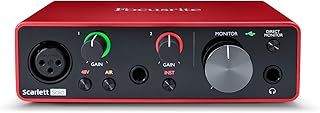
Recording, streaming, high-quality DAC
- Excellent analog conversion
- Stable USB connectivity
- Built-in headphone amp
So, if the cable itself doesn't affect sound quality, what should you care about? Two things: reliability and power delivery. A crappy, thin cable with poor shielding might introduce intermittent connectivity or be susceptible to electromagnetic interference from a power supply, causing dropouts. That's a fault, not a 'quality gradient.' You need a cable that's built well enough to not fail. Furthermore, if your DAC or interface draws power from the USB bus (like many compact DACs do), a cable with poor conductors might not deliver stable voltage, potentially causing the device to malfunction. This isn't about 'sound,' it's about 'function.'
Look for a cable with decent construction: a braided jacket for durability, decent connectors that won't break after six months of use, and shielding that meets USB 2.0 standards. That's it. You can find this for $15. The $150 cable with 'oxygen-free copper conductors and a directional dielectric' is performing the same digital task. This doesn't work as an upgrade. It's a waste.
The Real Bottlenecks In Your Digital Audio (And It's Not The Cable)
Let's talk about where you should actually spend your mental energy and budget. If you're chasing perfect audio, the USB cable is the last place to look. The first is your source file. A 128kbps MP3 played through a $10,000 DAC still sounds like a 128kbps MP3. Next is your DAC itself—the quality of its analog stage, its power supply, its jitter reduction circuitry. Then your amplifier, your speakers, and finally, the acoustic environment of your room. These components actually transform the signal. These are where measurable, audible differences live.
Focusing on the USB cable is like worrying about the brand of gasoline you put in a Formula 1 car while ignoring the engine tuning. It's a distraction from the elements that genuinely impact performance. After assessing dozens of setups, the single biggest upgrade path is always a better DAC or room treatment, not swapping interconnect cables.
Audiophile USB Cables: A Case Study In Placebo
I want you to understand how powerful placebo is. In widespread user feedback across forums and reviews, people who buy expensive cables often describe subjective improvements: 'more air,' 'tighter bass,' 'cleaner transients.' These are the exact same subjective terms used to describe actual changes to analog components. When you expect a change because you spent money, your brain often manufactures one. This is well-documented in audio testing. Blind, level-matched tests consistently reveal no ability to distinguish between standard and 'audiophile' digital cables.
The lesson here isn't that people are stupid; it's that marketing is effective. It preys on our desire for optimal performance and our susceptibility to confirmation bias. If you've bought one and think it helped, try a blind test with a friend. Swap the cables without you knowing which is connected. The result will be enlightening.
Practical Tips: Building a Bulletproof Digital Chain
Stop obsessing over the cable. Start building a robust digital foundation. First, ensure your computer's USB port is clean. Sometimes, a overloaded USB hub or a port sharing bandwidth with a high-speed device can cause issues. Use a direct port on your motherboard. Second, if you're experiencing dropouts or glitches, your problem might be driver issues, software buffer settings, or a genuinely faulty cable—not a low-quality one. Replace it with a basic, well-reviewed cable from a reputable electronics brand (like Monoprice or Amazon Basics). Problem solved.
For interfaces that draw significant power, consider a cable with a slightly heavier gauge, or better yet, use a device with an external power supply if possible. This removes power stability from the equation entirely. This is a genuine fix for a real problem, not an upgrade chasing a phantom benefit.
The Biggest Mistake Audiophiles Make With Digital Connections
The biggest mistake isn't buying an expensive cable; it's allocating budget and mental focus there instead of where it matters. I've seen people with a $200 USB cable feeding a $199 DAC into mediocre speakers in an untreated room. That budget is completely inverted. That $200 could have been a massive step up in speakers or a crucial room acoustic panel. This is a known issue for long-term hobbyists who get lost in the minutiae.
The path to better sound is hierarchical: source quality > DAC > Amp > Speakers > Room. Your cable doesn't even appear on that list. It's a utility, like the power cord to your amp. You don't buy an 'audiophile' power cord for your fridge, and you shouldn't for your digital audio link either. For a deeper dive on where your audio budget should actually go, check out our take on Youtuber gear myths and the hard truth about audiophile equipment myths.
The Verdict: Skip It
The verdict on audiophile usb cables is definitive: Skip it. They are overrated. They do not improve audio quality in any measurable or reliably audible way. Any perceived benefit is placebo. Your money delivers zero performance return. Invest in a sturdy, reliable cable for $10-$20, and put every other dollar into components that actually change the sound. Your wallet and your ears will thank you.
A well-built DAC like the Focusrite Scarlett Solo doesn't need a magic cable to perform; it needs a stable digital connection, which any compliant USB cable provides. Don't let cable marketing sabotage your pursuit of good sound.
Frequently Asked Questions
Can a better USB cable improve sound quality from my DAC?
No. USB transmits digital data packets. If the cable works, the data is perfect. There is no 'gradient' of sound quality. Any perceived difference is placebo.
What should I look for in a USB audio cable then?
Only reliability: decent shielding to prevent dropouts from EMI, sturdy connectors that won't break, and sufficient gauge if your DAC draws bus power. A $15-20 cable from a reputable electronics brand is sufficient.
Why do people swear expensive USB cables sound better?
Expectation bias and placebo. When you spend significant money, your brain often creates a subjective improvement. Blind tests consistently show no ability to distinguish between standard and expensive digital cables.
Could a bad USB cable hurt my audio?
Yes, but in a binary way. A faulty cable can cause data corruption, resulting in audible glitches, pops, or complete dropouts. This is a fault, not a 'low-quality' signal. A working cable, regardless of price, delivers perfect data.

Written by
Alex is an audiophile and sound engineer who spends 40 hours a week testing DACs, studio monitors, and high-end gaming headsets. He believes bad audio ruins good games.
3 Comments
Share your thoughts with the community
As someone new to this, the explanation of audiophile cables stop was clearer than anything else I've found.
Been dealing with issues related to audiophile cables stop for months. Finally feel like I understand what's going on.
Finally someone talking seriously about audiophile cables stop! Been waiting for a breakdown like this.
Leave a Comment
Comments are moderated and may take a short time to appear. Links are not permitted.