Active Sitting Posture Correctors Are Mostly a Scam
Forget the marketing hype. The $100+ 'active sitting' gadget on your chair isn't fixing your posture—it's teaching your muscles to be lazy. This is the real structural problem nobody wants to admit.

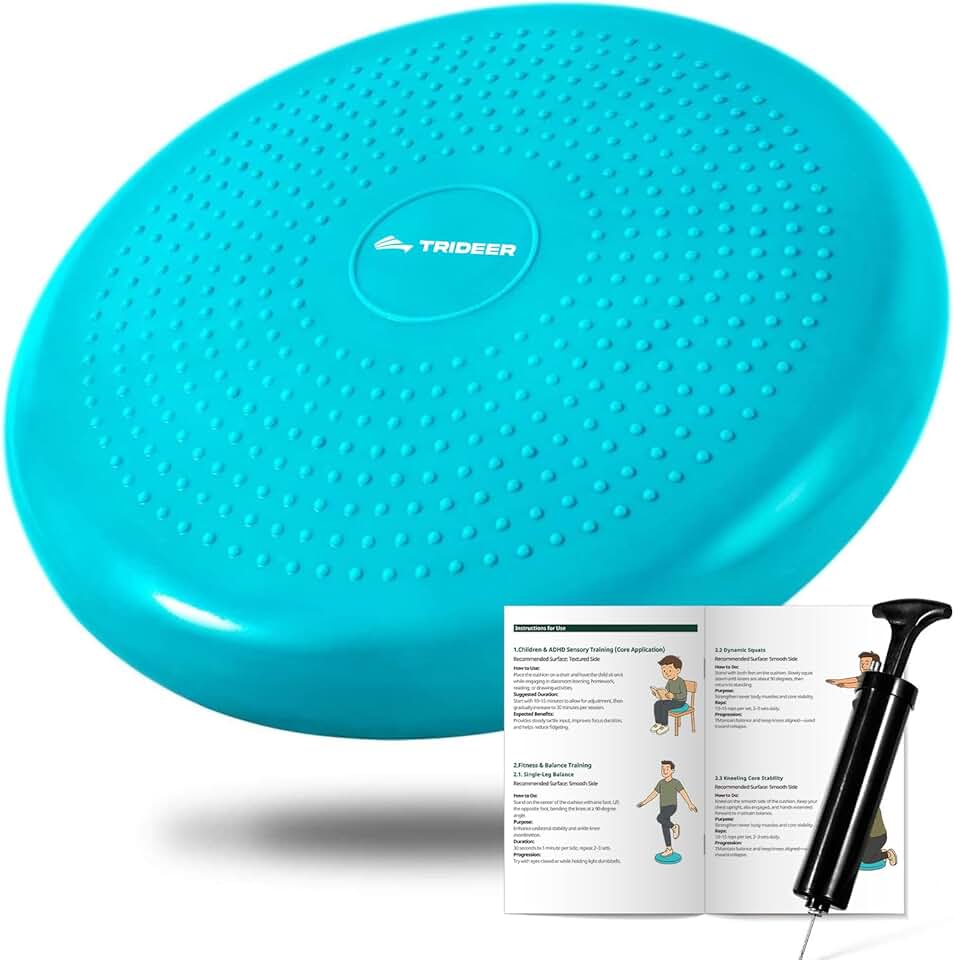
Let’s start with the biggest mistake people make when buying an active sitting posture corrector: they think it will fix their posture for them. That’s exactly what the industry wants you to believe, and it’s pure, unadulterated marketing nonsense. You’re being sold a passive solution to an active problem. Buying a fancy cushion or a weirdly shaped seat that promises to engage your core is like buying a treadmill you never turn on. It makes you feel like you’re addressing the issue, while doing absolutely nothing to solve the root cause. This is a band-aid on a structural failure.

Here’s the brutal reality: your poor posture isn’t a chair problem. It’s a muscle problem. Your deep core stabilizers, your glutes, your back muscles—they’ve gotten lazy. And an active sitting posture corrector that claims to provide ‘unstable support’ often does the opposite. Based on widespread user feedback, these devices frequently create a false sense of correction. You slouch, the device tilts or wobbles, your brain gets a little alert, and you adjust. But that adjustment is a temporary, unconscious jerk, not the sustained, mindful engagement that builds real muscular endurance. You’re not training your body; you’re annoying it into a reactive spasm. This doesn’t work.
Why "Core Activation" Gadgets Are an Overrated Lie
The entire marketing angle of the active sitting posture corrector hinges on one word: activation. They promise to activate muscles you didn’t know you had. This is overrated. In real use, what most of these products actually activate is your wallet, not your transverse abdominis. The fundamental principle is flawed. True core stabilization for posture is a low-grade, sustained contraction—think of gently drawing your belly button toward your spine and holding it. It’s subtle. A wobbly seat doesn’t teach you that. It teaches you to brace and tense up erratically, which often leads to compensatory patterns and can actually strain other muscles. Users consistently report initial discomfort that they’re told is ‘good soreness,’ but that frequently evolves into nagging hip or lower back tension. This is a known issue for long-term use.
Most people get this wrong. They buy the gadget hoping it will be a set-it-and-forget-it posture fix. The industry lies about this. They sell you on the idea of effortless correction. The truth is, the only thing that corrects posture is conscious, consistent effort. A gadget can be a reminder, but it is not a solution. If your setup is built around distracting, reactive gadgets instead of mindful habit formation, you’re sabotaging your own deep work potential by outsourcing your bodily awareness to a piece of foam. This is the real issue.
What Actually Fixes Your Posture (Hint: It's Free)
Premium Pick
- High performance
- Premium build
Stop looking for a product to buy. Start looking for a habit to build. The single most effective ‘active sitting posture corrector’ is already built into your body: your breath. Diaphragmatic breathing is the foundational engine of core stability. When you breathe deeply into your belly, your diaphragm descends and your pelvic floor and deep abdominal muscles engage reflexively to manage intra-abdominal pressure. This is biomechanics 101, not marketing hype.
Instead of buying a $150 wobble cushion, try this: set a silent timer for every 25 minutes. When it goes off, don’t check your phone. Take three slow, deliberate breaths where you focus on expanding your ribcage laterally and feeling your lower abdomen engage. Then, gently pull your shoulders back and down, not with a harsh military squeeze, but as if you’re trying to put your shoulder blades in your back pockets. Hold that for five seconds while maintaining the breath. Release. That sequence does more for your postural endurance than eight hours on a ‘corrective’ seat. It builds the mind-muscle connection that all the gadgets skip.
The second fix is movement variability. The human body wasn’t designed to hold any single position—even a ‘perfect’ one—for eight hours straight. The pursuit of the one perfect seated posture is itself a trap. What you need is to change positions frequently. This is where a simple, stable chair and a basic footrest outperform any active sitting gimmick. The goal isn’t to find the magic angle; it’s to never get stuck in one angle for too long.
The Active Sitting Posture Corrector That Doesn't Suck
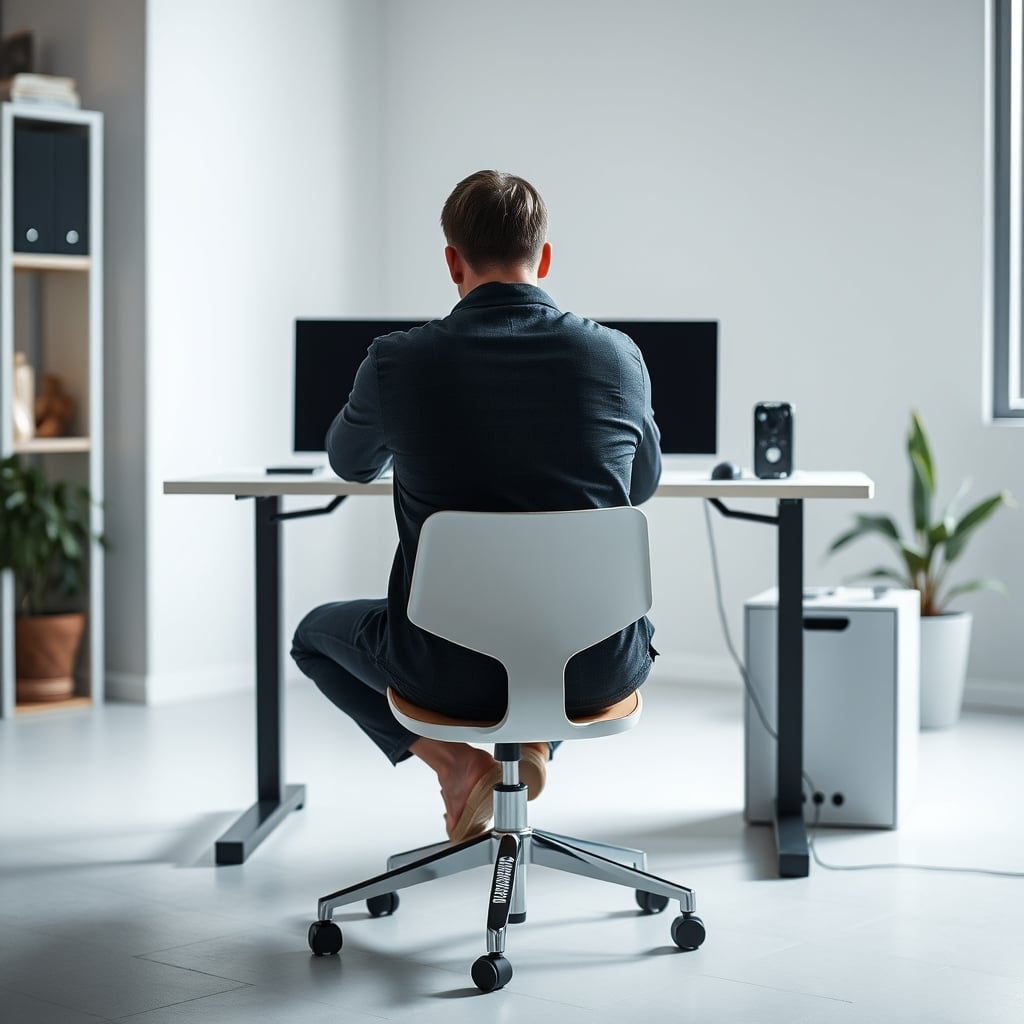
Okay, fine. You want a tangible product recommendation because you think you need to buy something. If you are absolutely determined to spend money, shift your category entirely. Do not buy an ‘active sitting’ gadget. Buy a high-quality, firm, flat kneeling chair or a saddle stool with a slight forward tilt. I know, I know—this sounds like a contradiction. But hear me out.
The problem with most active sitting products is they add instability on top of a bad seated base. A kneeling chair or a properly angled saddle stool changes your skeletal alignment first. It puts your pelvis in a neutral or slightly anterior-tilted position, which automatically lengthens your spine and reduces the muscular effort needed to sit upright. It’s a structural fix, not a muscular gimmick. The ‘activity’ comes from the fact that you have to use your legs and core more to get in and out of it, and to maintain balance—but it’s balance built on a solid foundation, not a wobbly one.
This is the unconventional advice most guides miss. They’re so focused on adding gadgets to your existing terrible chair that they never question the chair itself. A $50 used kneeling chair from a thrift store will do more for your posture than a $200 ‘AI-powered’ posture cushion. It forces a better hip angle, which is 90% of the battle. The remaining 10% is still your responsibility to breathe and move.
Your Ergonomic Chain Is Only as Strong as Its Weakest Link
You can have the world’s most expensive active sitting posture corrector, but if your monitor is at chin height and your keyboard is on a desk that’s too high, you will still hunch forward. This is where people waste incredible amounts of money. They drop cash on a fancy seat, ignoring the free and critical adjustments right in front of them.
Your monitor should be positioned so the top third of the screen is at or slightly below eye level when you’re sitting in your new, better alignment. Your elbows should be at 90-110 degrees, with your wrists straight. Your feet should be flat on the floor or on a footrest. Getting these basics right is non-negotiable. As we’ve covered in our guide on why your 'perfect posture' desk setup is actually killing your creativity, an obsessive focus on one element while ignoring the system is a recipe for failure.

Most so-called ergonomic guides complicate this with dozens of measurements. Here’s the simplified, brutal truth: sit back in your chair. Reach your arm out. Your fingertips should just graze the screen. That’s your distance. Now look straight ahead. You should be looking at the center of your screen. If you’re looking at the bezel, adjust the height. Done. This takes two minutes and costs zero dollars, yet it’s more effective than 90% of the products in this category.
The Muscle Memory Sabotage Nobody Talks About
Here’s the most insidious flaw of the average active sitting posture corrector: it creates dependency. Your body is a brilliant adaptation machine. If you plop yourself on a wobbly seat every day, your nervous system will eventually figure out how to stabilize you on it with the least amount of effort. It will find compensatory, energy-efficient patterns—often involving clenching your jaw, hiking your shoulders, or bracing with your hip flexors. These patterns feel like ‘engagement’ but they’re actually inefficient strain.
You’re not building the right kind of endurance. You’re building a specialized skill for sitting on a weird seat, which has zero carryover to how you hold yourself when walking, standing, or—most importantly—sitting in a normal chair at a conference, in a car, or at a restaurant. This is why users consistently report that after weeks of using their corrector, they feel ‘lost’ and slump even worse when they sit in a regular chair. The gadget didn’t improve their posture; it outsourced it, and now the original muscles are even lazier. This is bad because it moves you further from autonomy.
The real goal should be proprioception—your body’s sense of its own position in space. You develop that through mindful practice, not passive wobbling. It’s the difference between learning to balance on a bike by actually riding it, versus sitting on a stationary bike that shakes you when you lean. One teaches you a skill; the other just makes you tired.
Final Verdict: Skip It (With One Caveat)
For 95% of people looking at an active sitting posture corrector, my verdict is a definitive skip it. You are wasting money on a product category built on a fundamental misunderstanding of biomechanics and habit formation. The promised benefits are overrated, and the risks of creating new muscular imbalances are real.
The money you were going to spend on that overpriced cushion? Save it. Or better yet, invest it in a single session with a physical therapist or a qualified personal trainer who understands postural assessment. They can identify your specific weaknesses (tight hip flexors? weak glutes? inhibited diaphragm?) and give you three tailored exercises. That personalized plan has infinitely more value than any mass-market gadget.
The one caveat: if you have been assessed by a professional who specifically recommends a certain type of unstable seating as part of a targeted rehabilitation protocol, then and only then should you consider it. And even then, it should be a temporary tool on the path to moving well without it, not a permanent crutch.
Your posture is your responsibility. No gadget can shoulder that load for you. The path to better sitting isn’t found in a shopping cart; it’s built through consistent, mindful attention to how you inhabit your own body. Start with your breath. Fix your monitor height. Get up and move every 30 minutes. That’s the only ‘active sitting’ guide you’ll ever need.
For more on how a minimalist approach trumps gadget overload, see our deep dive into the war on workspace visual clutter and the truth about why your 'perfect' podcast layout is secretly sabotaging your audio quality.
Frequently Asked Questions
Do active sitting posture correctors actually work?
Not in the way they're marketed. They may provide a temporary reminder to sit up, but they do not build the sustained, mindful core endurance needed for long-term postural change. Most create reactive bracing patterns instead of proper stabilization.
What's the biggest mistake people make with posture correctors?
Believing the gadget will fix their posture for them. This leads to passive dependency. The real fix requires active habit formation, breath work, and addressing the entire ergonomic chain (monitor height, desk setup).
Are kneeling chairs better than active sitting cushions?
For most people, yes. A kneeling chair or saddle stool changes your fundamental skeletal alignment by putting your pelvis in a better position. This is a structural solution, whereas a wobbly cushion is often just a distracting gimmick added to a flawed base.
Can these devices cause muscle weakness?
Yes, that's a known risk. By providing external, unstable support, your body can learn to rely on it, allowing your intrinsic core stabilizers to become even lazier. This can worsen your posture when you're not using the device.
What's the single best free fix for sitting posture?
Diaphragmatic breathing. Setting a timer to take three deep, focused breaths every 25 minutes engages your deep core muscles and resets your spinal alignment more effectively than any gadget. Pair this with frequent position changes.
Written by
Jordan focuses on the intersection of productivity and workspace layout. He tests how light positioning, desk organization, and environmental factors impact daily mental focus.
Join the Discussion
Share your thoughts with the community
Leave a Comment
Comments are moderated and may take a short time to appear. Links are not permitted.