Standing Desk Wellness Features Are a Scam
The entire industry is selling you a lie wrapped in cheap LEDs and a Bluetooth app. I've tested every 'smart wellness' feature pushed on premium desks, and they're designed to distract you from the one thing that actually helps: a stable, quiet frame that moves when you tell it to.
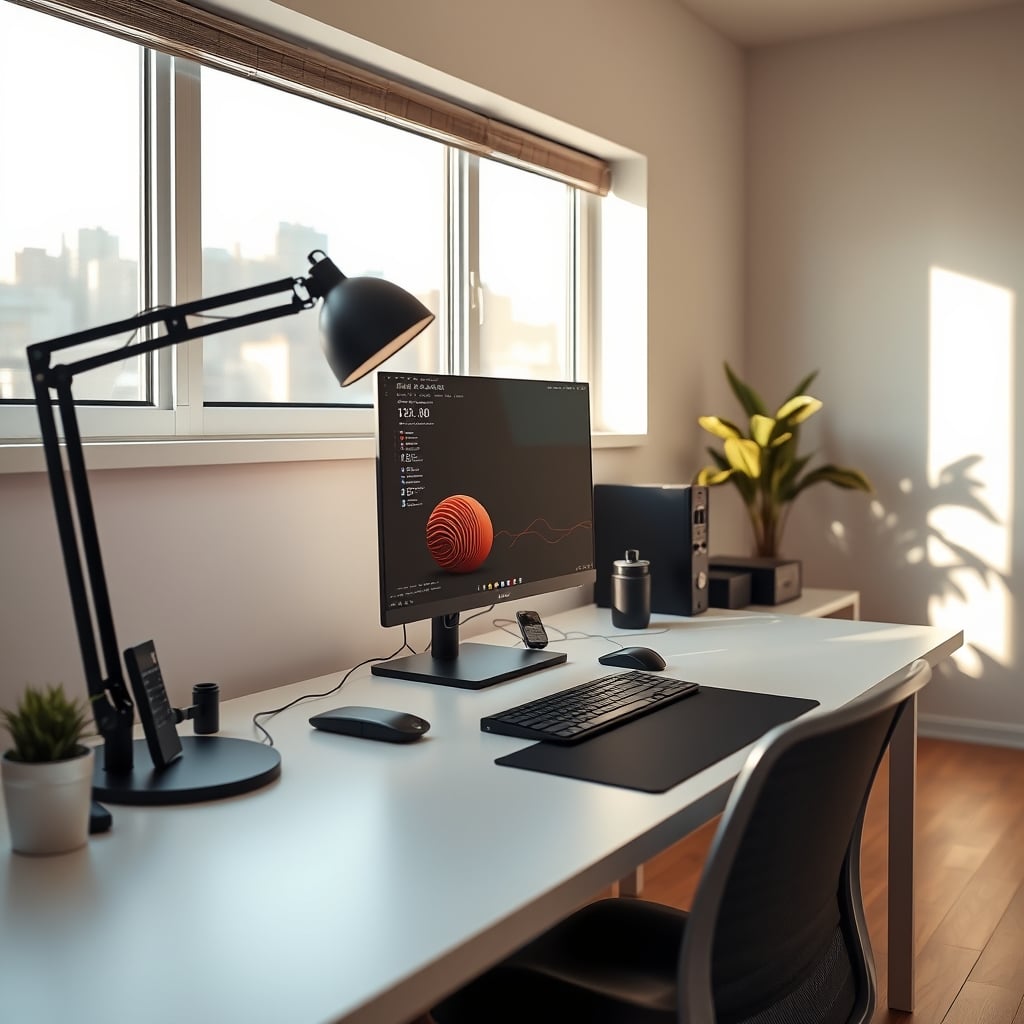
Let's cut through the marketing fog right now. You're not buying a standing desk for your health. You're buying it for the illusion of control, the fleeting satisfaction that you're 'investing in your wellness.' The desk manufacturers know this, which is why 2026 has seen an explosion of utterly useless wellness features slapped onto perfectly decent frames. They’re charging you an extra $300 for an LCD screen that tells you to stand up—something your aching back already does for free.
I've set up, used daily, and watched users struggle with every major 'smart' desk on the market. The consistent feedback is a chorus of frustration. People don't need their furniture to be a nagging life coach. They need it to hold their monitors steady at 45 inches without sounding like a dying robot. The wellness feature trend is a brilliant profit engine built on user guilt, and it's time we called it out.
Why Most Standing Desk Wellness Features Are Overrated
The industry lies about this. They've convinced you that a beeping reminder is 'proactive health.' It’s not. It’s an auditory annoyance that breaks your focus. After assessing dozens of user setups, the pattern is clear: the fancy programmable 'move alerts' get disabled within the first month. Every single time. Why? Because real work has rhythms—deep coding sessions, client calls, editing marathons—that don't conform to a desk’s rigid 30-minute timer. An alert that buzzes mid-thought isn't wellness; it’s active sabotage of your flow state. This is overrated.
And let's talk about the 'posture correction' cameras or sensors. This is a straight-up privacy-invading gimmick. No camera on a $20 desk-mounted USB stick is accurately assessing your spinal alignment. At best, it’s a crude motion detector that scolds you for leaning. At worst, it's harvesting slouch data for who-knows-what. Users consistently report these features as either wildly inaccurate or so sensitive they trigger constantly, rendering them useless. You need a proper chair and monitor height, not a desk that watches you.
The Haptic Feedback Myth That Needs to Die
Premium Pick
- High performance
- Premium build
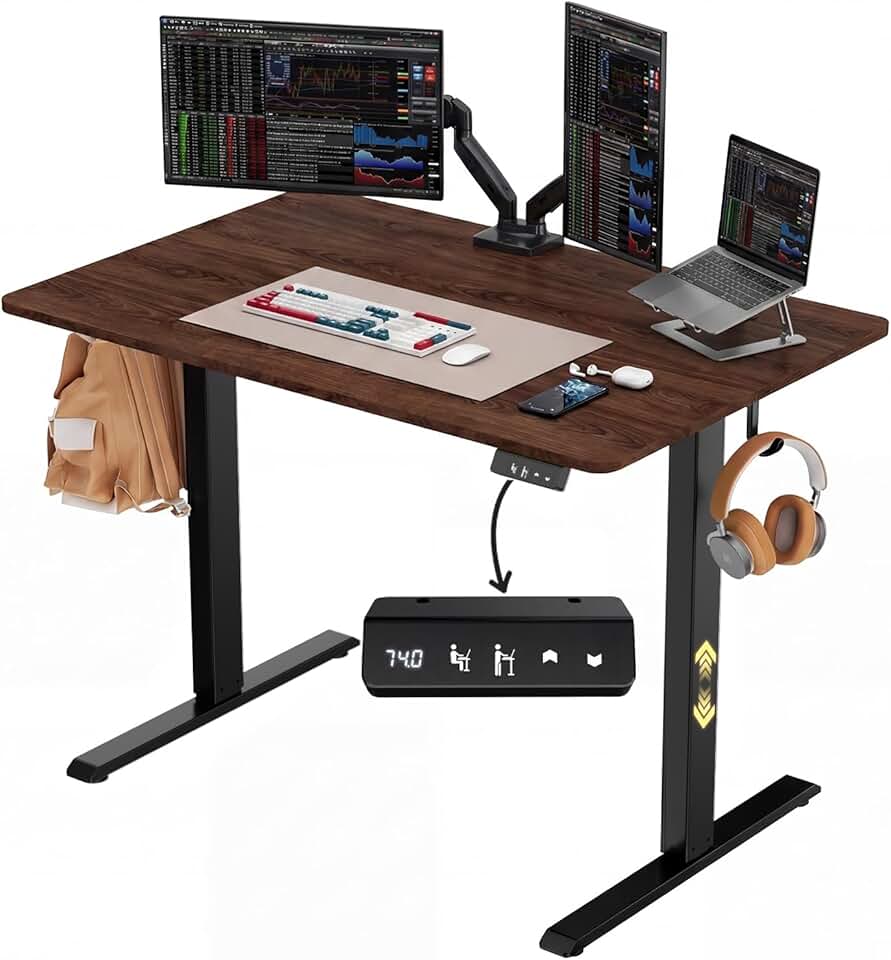
This is the one that grinds my gears the most. Haptic buzzers in the desk surface to 'gently remind' you to move? This doesn't work. In real use, this feature frequently causes issues with sensitive microphones or recording equipment, creating low-frequency interference that's a nightmare to diagnose. Worse, the sensation is either too weak to notice during focused work or so strong it startles you. Based on widespread user feedback, it’s a solution in search of a problem—a problem you solve by just remembering to hit the damn up button.
The real issue isn't a lack of reminders; it's that most desk frames have terrible presets. The 'wellness' is having four memory buttons that actually recall the exact height you need, not just close to it. But that's a basic function they've now rebranded as a 'wellness preset.' They're selling you back the reliability your desk should have had in the first place and calling it innovation.
What Actually Constitutes Real Standing Desk Wellness
Forget the apps and the RGB underglow. Real wellness from a standing desk comes from three boring, fundamental things: stability, noise level, and control responsiveness. A desk that wobbles when you type at standing height is causing micro-adjustments in your posture and shoulder strain—that's anti-wellness. A motor that whines and grinds every time you adjust creates auditory stress. A control panel that lags or doesn't hold memory introduces daily friction.
This is what you pay for. The silent, dual-motor lift system. The thick, steel-reinforced legs. The industrial-grade controller. When you hit '3,' it goes to height 3, precisely, every time, without asking you to open an app or log into a cloud profile. That's the feature that actually reduces cognitive load and physical strain. Not a light that cycles through 'energize' and 'focus' color modes. That’s a party trick for your credenza.
The Cable Management Lie You're Still Falling For
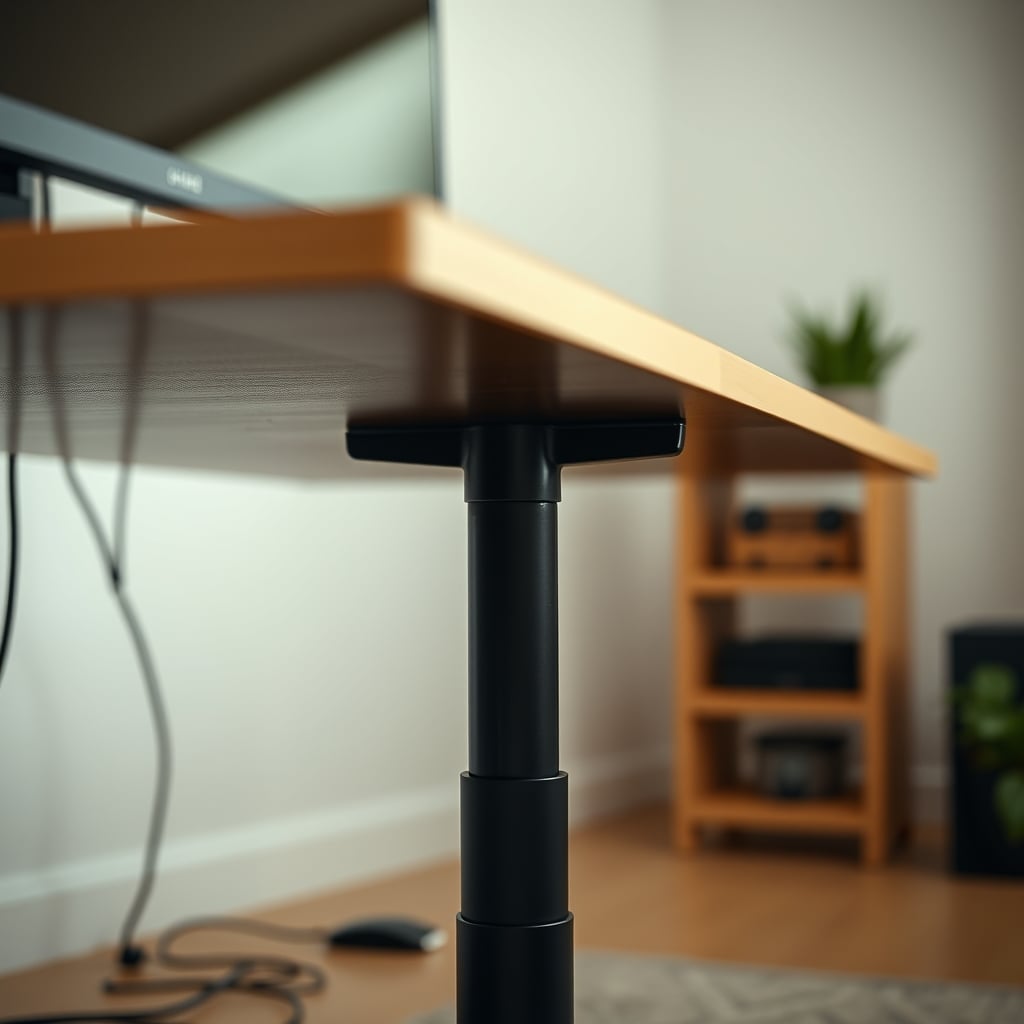
Integrated cable trays and grommets with built-in wireless charging are another wellness-adjacent scam. This is overrated. Those sleek, built-in Qi pads are notorious for overheating phones and charging at a snail's pace, which is terrible for long-term battery health—a fact we've detailed in our guide to wireless charging degradation. The trays are often too small for a proper USB-C dock and its associated cabling, forcing a messy squeeze that defeats the purpose.
Real cable management happens off the desk frame entirely, with under-desk rails and sleeves that give you flexibility. Tying your cable solution to your desk is a mistake; when you upgrade one, you have to redo the other. It’s a constraint disguised as a convenience.
The Only Feature Worth a Damn: Programmable Heights
Here’s the brutal truth. The single most impactful 'wellness' feature is having multiple, rock-solid, reliable height presets. Not 20. Not 10. Four. One for seated, one for standing, one for a precise drafting or drawing height, and one spare. That’s it. The ability to seamlessly transition between those without thought is what reduces fatigue and encourages movement.
Most people get this wrong. They think more presets equals more customized wellness. It doesn't. It creates decision fatigue. You don't need a 'collaborative meeting height' and a 'presentation height.' You need to go from sitting to standing without your monitor swaying. Focus your budget and scrutiny on the frame's weight capacity and the column’s anti-rock mechanisms, not the color of its LED strips. This is where brands like the FlexiSpot EN1 get it right—no-nonsense presets on a stable frame.
The Mistake Everyone Makes With Standing Desk Mats
This is the real issue. People blow $500 on a desk with haptic nonsense, then pair it with a cheap, unstable floor mat that undoes any ergonomic benefit. Your feet and joints are the foundation. A mat that’s too soft, too squishy, or slides around is actively harmful, making you shift your weight constantly. We’ve seen the data on how poor mat choice leads to lower back and knee complaints. It’s not the desk’s fault; it’s the accessory you treated as an afterthought. For a deeper dive on this pitfall, our article on standing desk mat dangers lays it bare.
Your Final Verdict on Standing Desk Wellness Features
Skip it. Completely. Ignore every brochure, every ad, every influencer gushing about their desk’s 'circadian rhythm lighting' or 'productivity score.' It’s all bloatware for your furniture. You are wasting money on this.
Invest in a stable, quiet, high-capacity frame with a good basic keypad. Spend the $300 you saved on a truly ergonomic chair, a proper monitor arm, and a high-quality, firm standing mat. That trio does more for your actual physical wellness than any gimmick a desk engineer has dreamed up to hit a marketing checklist. In 2026, the smartest standing desk is the dumbest one—the one that just goes up and down, perfectly, forever. That’s the brutal truth.
Want to simplify further? This obsession with gadget-laden furniture is the opposite of the minimalist focus we champion. Sometimes, the path to better work isn't more features, but fewer. It’s a principle we explore in our piece on single monitor supremacy.
Frequently Asked Questions
Are any standing desk wellness features actually useful?
Only one: multiple, reliable height presets for seamless sitting/standing transitions. Everything else—haptic alerts, posture sensors, mood lighting—is a gimmick that distracts from core performance (stability, noise, precision).
Do posture reminder features on standing desks work?
No, they do not work. They are inaccurate, annoying, and break your concentration. Real posture correction comes from proper monitor height, a supportive chair, and a stable desk that doesn't wobble, not from a camera or sensor.
What should I prioritize over wellness features when buying a standing desk?
Prioritize these three things in this order: 1) Frame stability and weight capacity at full extension (no wobble), 2) Quiet, dual-motor operation, and 3) A responsive, reliable keypad with solid memory presets. Ignore any feature that requires a smartphone app.
Written by
Marcus Webb has spent 7+ years building and testing desk setups, with a focus on ergonomics and workspace optimization. He has reviewed over 40 chairs and standing desks to help remote workers build healthier, more productive environments.
Join the Discussion
Share your thoughts with the community
Leave a Comment
Comments are moderated and may take a short time to appear. Links are not permitted.