Smart Plant Maintenance Is A 2026 Desk Scam
The industry sold you a future where your desk plants thrive on AI and sensors. The reality is a drawer full of dead leaves and overpriced plastic. We're calling out the 2026 scam.
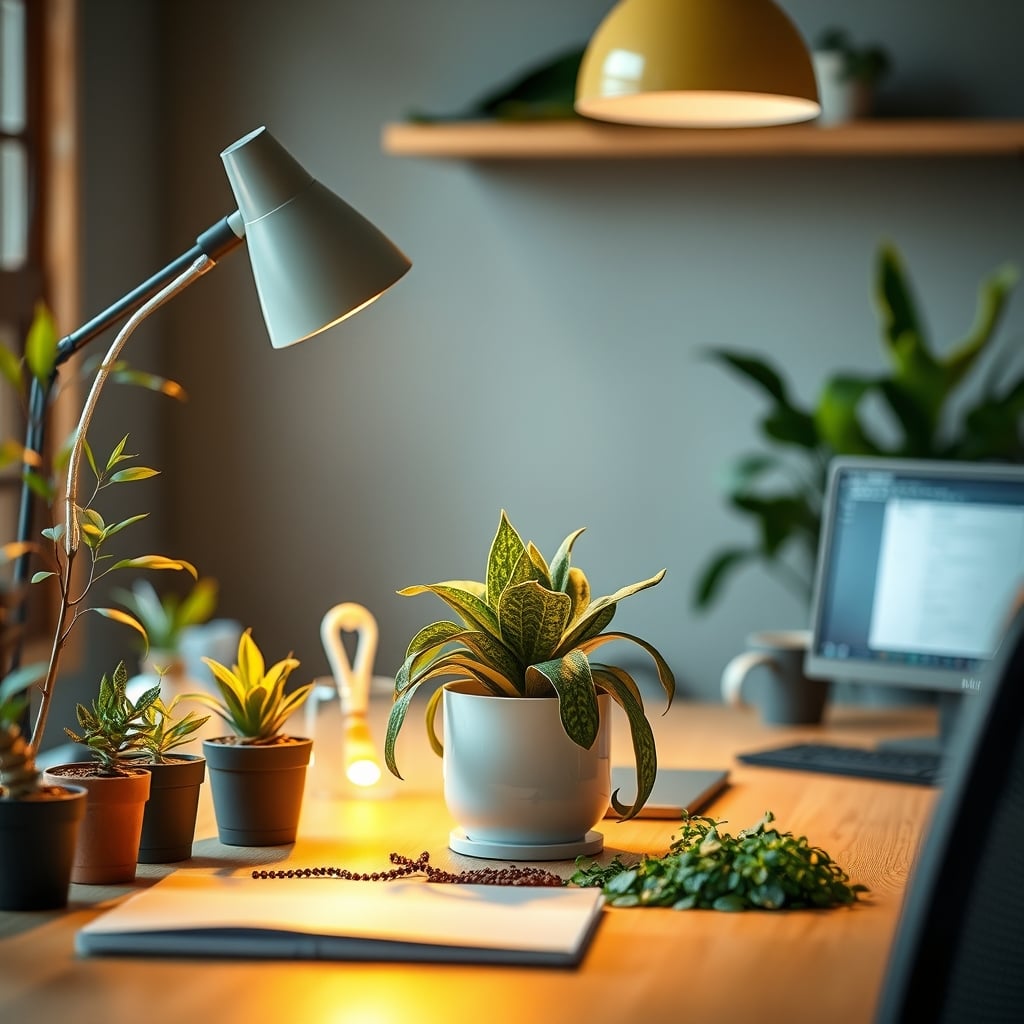
Look at your desk right now. That little succulent in the cute, "smart" ceramic pot with the glowing LED base? It's probably already dead, and you just haven't admitted it yet. The entire smart plant maintenance industry is built on a lie: that tech can replace the basic, tactile relationship between you and a living thing. It's 2026, and we're drowning in $300 self-watering terrariums that serve no purpose other than to look like a sci-fi movie prop for a week before becoming a moldy tomb. Most people get this wrong. They buy the gadget, not the plant. This is overrated.
The biggest mistake isn't forgetting to water—it's believing a blinking sensor will fix your neglect. You're outsourcing a fundamental human ritual to a piece of plastic that fails silently. The real performance of a desk plant isn't in its survival rate; it's in the texture it adds to your space, the shift in light across its leaves during your workday, the subtle, non-digital movement. Tech interrupts that. It turns a living accent into another device with an app, a battery, and a scheduled failure.
Why The "Smart Terrarium" Is Just Expensive Decor
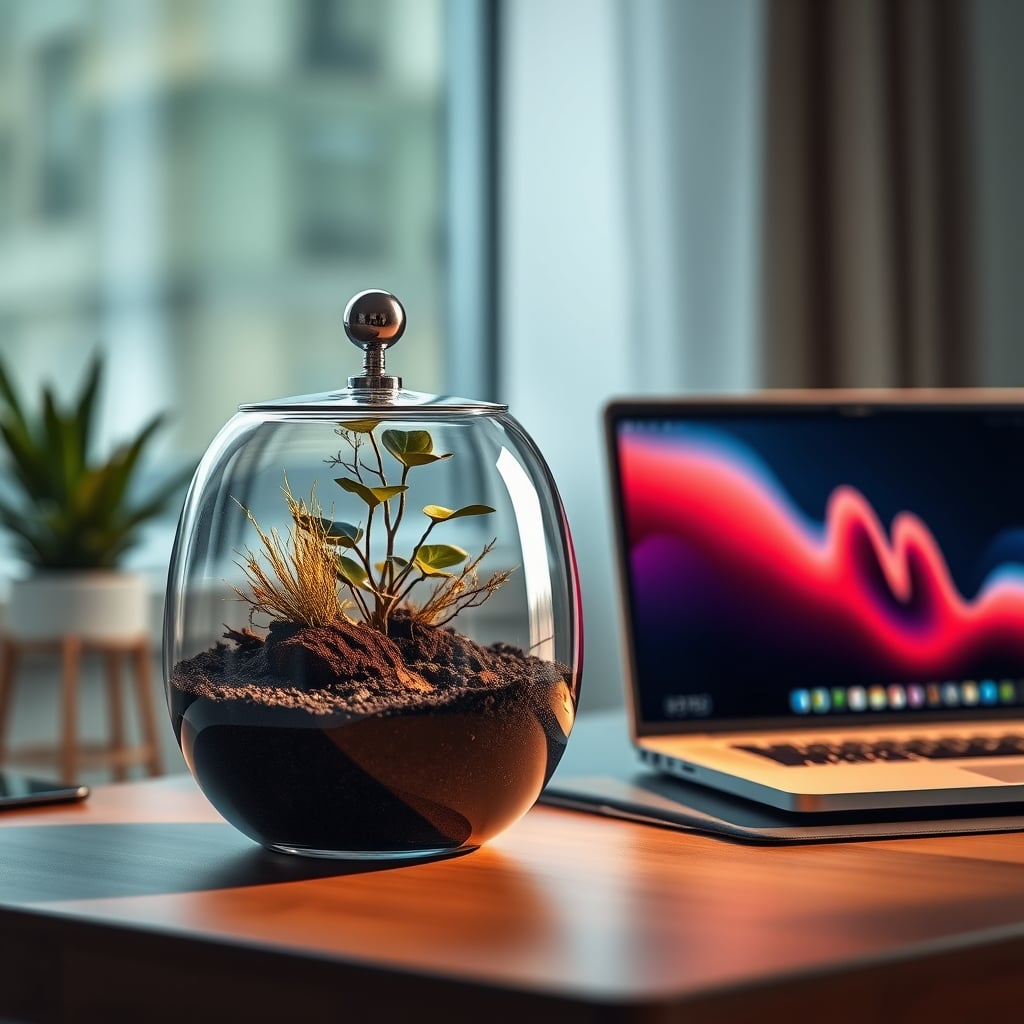
The most aggressive marketing lie in 2026 is that these enclosed, automated ecosystems are "low-maintenance." They're not. They're high-maintenance prisons. A sealed glass cube with a fogger and RGB lights creates a hyper-specific climate. One sensor glitch, one pump failure, and the entire micro-environment collapses into a soggy, fungal disaster. Users consistently report that after the initial novelty, these units become a chore. You're not caring for a plant; you're babysitting a fragile machine pretending to be nature.
In real use, the constant humidity from these gadgets often wrecks the desk surface around them, leaving water rings or promoting mold on nearby materials like your desk pad or notebook. The LED grow lights, often touted as "full-spectrum," are usually just cheap blue and red diodes that cast a sickly, purple glow—completely ruining the warm, natural aesthetic you wanted. This doesn't work. You bought a mood-killer.
Smart Plant Maintenance Is A Data Collection Gimmick
Premium Pick
- High performance
- Premium build
Here's the brutal truth nobody says: the "smart" part is almost never about the plant. It's about you. These devices are data troves. They log your room's humidity, temperature, light levels—information that has zero actionable benefit for a single pothos on your desk but is incredibly valuable to the companies building profiles of home environments. You're paying for a spy that tells you your fern is "happy" while it sells your ambient data. The industry lies about this.
You don't need an app notification that your soil moisture is at 42%. You need to look at the plant. The soil color. The leaf posture. This is the real issue: tech disconnects you from the very cues that make plant care a mindful, rewarding desk activity. It replaces observation with a dashboard, turning a moment of calm assessment into another digital chore. It's the opposite of what a desk plant should provide: a tactile break from screens.
What Actually Works: The Low-Tech, High-Vibe Philosophy
Forget the gadgets. Your goal is not automated survival; it's atmospheric contribution. A plant is a textural object, a color element, a living sculpture. Its value is visual and psychological, not technological. Performance is measured in how it complements your setup's materials—the green against walnut wood, the soft foliage next to cool aluminum, the organic shape breaking up rigid monitor lines.
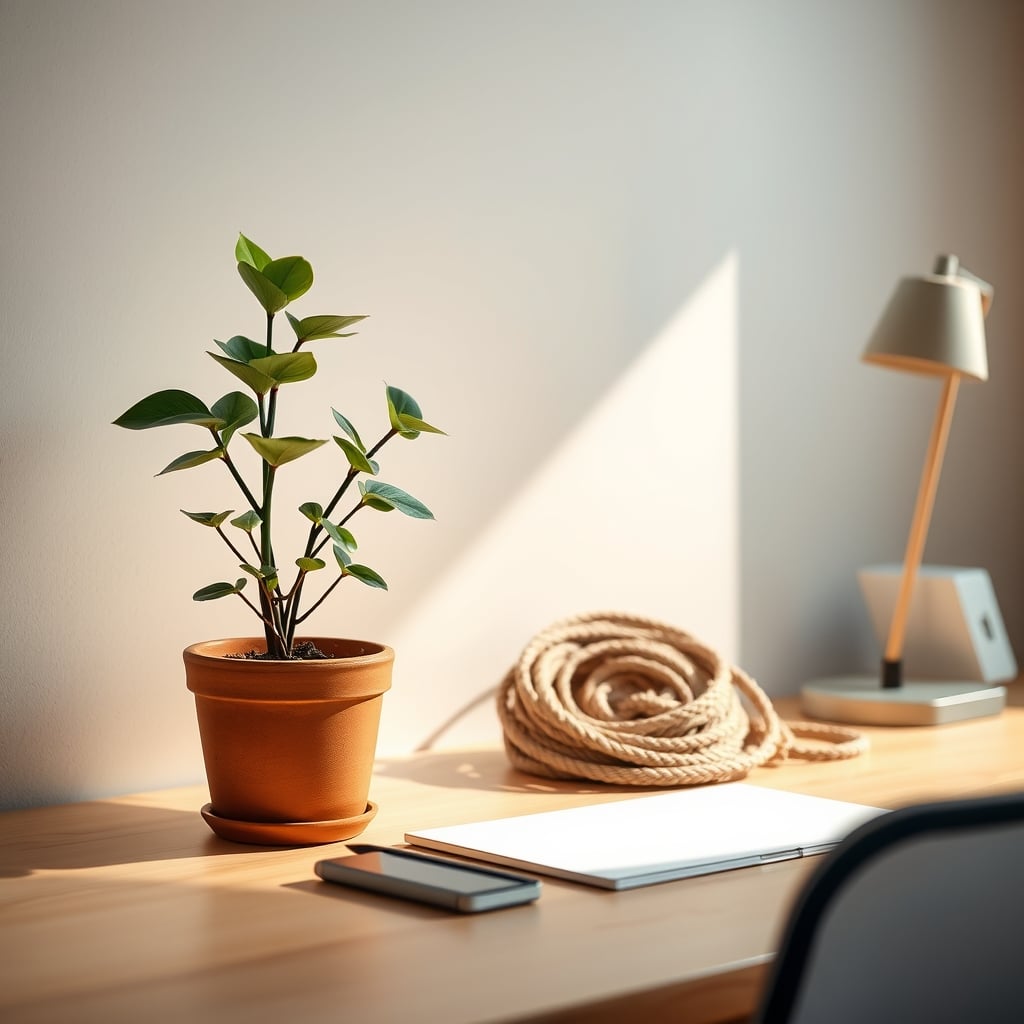
The only tech worth considering is utterly passive. A simple, unglazed terracotta pot acts as a natural humidity regulator. A tray of pebbles underneath for evaporation is a more effective "self-watering" system than any electric pump. The best tool is a specific, intentional choice: a plant whose natural tolerance aligns with your desk's actual conditions (light, airflow, your own attention cycle). This is not low-maintenance; it's right-maintenance. You're matching a life form to your environment, not forcing your environment to conform to a gadget's limitations.
The Sensor Myth That Needs To Die
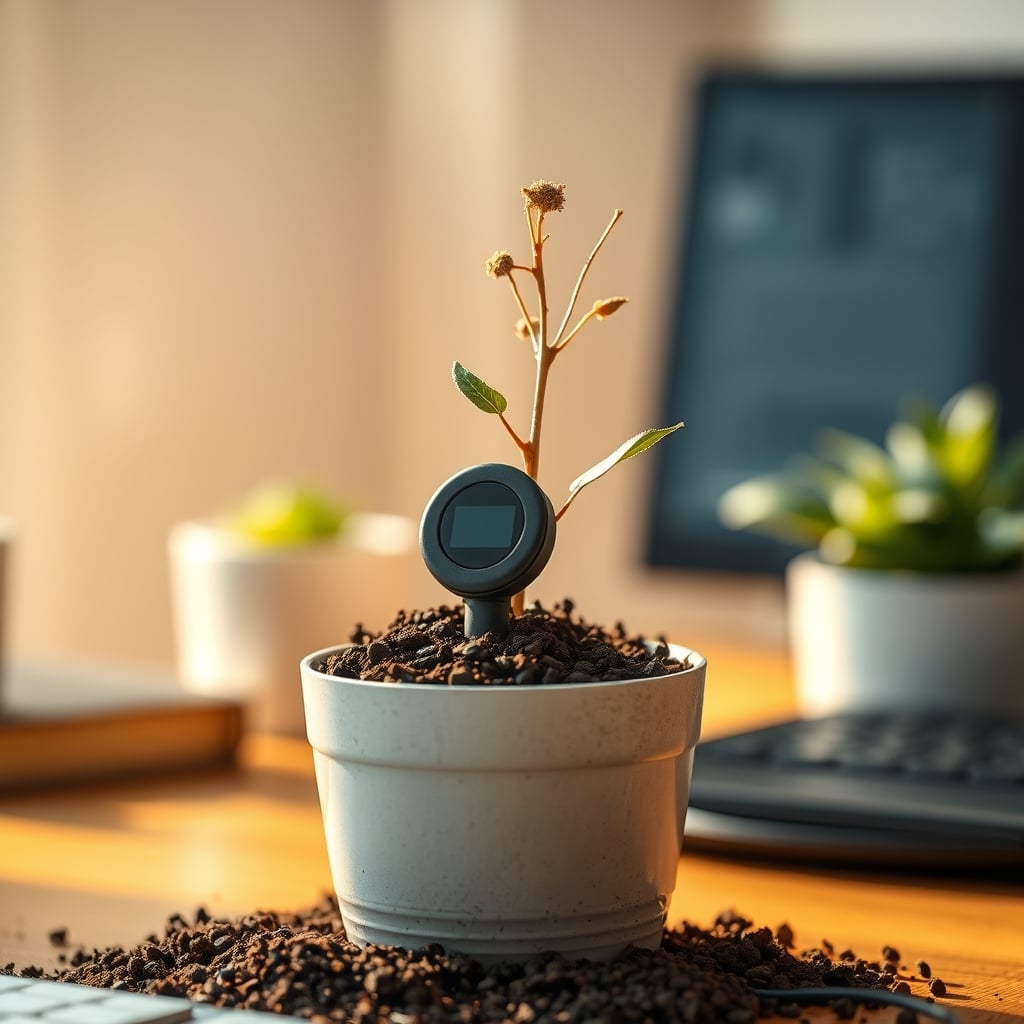
The biggest misconception pushing this market is the idea that more data equals better care. It's garbage. A $50 soil moisture sensor stuck into a tiny pot gives you a number, but that number is irrelevant without context. Is the sensor at the root ball? Near the dry surface? Is it calibrated for your soil mix? No. It's giving you a vague, often inaccurate metric that causes overwatering—the most common killer of desk plants. Based on widespread user feedback, these sensors lead to more plant deaths by encouraging unnecessary intervention. You're wasting money on this.
Real care is heuristic. You learn the weight of the pot when dry. You observe the leaf luster. You understand the pace of your specific space. A sensor can't tell you that the winter sun through your window is weaker this week; you can. This myth that gadgets create expertise is why drawers are full of dead succulents next to their perfectly functional, blinking bases.
The Only "Smart" Product Worth Your Money (And It's $6)
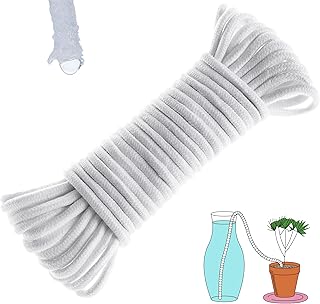
After testing every gimmick—the app-connected pots, the aura-reading plant monitors, the NFC-tagged fertilizer sticks—the only product that delivered real, reliable results without complicating the vibe was the most analog one: capillary wicking rope. This is not a gadget; it's a tool. A simple cotton or polyester cord that acts as a passive water transfer system from a reservoir to your pot.
For desk plants, this solves the actual problem: inconsistent watering during deep work sessions or short vacations. You place a jar of water next to your planter, insert one end of the wick into the water, and bury the other end in the soil. Physics does the work. It maintains a steady, low-level moisture based on actual soil dryness, not a timer or a sensor. It's invisible, silent, and doesn't require power, apps, or Wi-Fi. It respects the aesthetic because it can be hidden. The performance is flawless for moderate-water plants like peace lilies, ferns, or small herbs.
This is the anti-gadget. It acknowledges you might forget, and provides a gentle, physical backup without turning your plant into a tech project. It's actually good.
Curating Your Desk Flora For Visual Impact, Not Tech Specs
Stop shopping for "smart plants." Start curating for texture and tone. A velvety, dark-green peperomia next to a matte black keyboard. A spiky, architectural haworthia against a smooth, white monitor base. A trailing scindapsus with silver-splotched leaves softening the edge of a metal monitor arm. The plant is an aesthetic component, not a wellness device or a tech showcase.
Choose pots that complement your desk material palette. Unglazed ceramic for warmth and organic texture against cool tech. A simple, neutral-colored plastic pot if your focus is purely on the plant's form. Avoid the "smart" pots with glowing bases or digital displays; they clash with every other material and become the visual focal point for all the wrong reasons. Your plant should blend, not blast.
Three Mistakes That Kill Your Desk Aesthetic (And Your Plants)
- Overcomplicating the Medium: You don't need "smart soil" or nutrient pods. A basic, well-draining potting mix is superior. The complex mediums in sealed terrariums often decompose weirdly, creating odors and harming roots. Keep it simple.
- Ignoring Real Light vs. Fake Light: Your desk has a specific light reality—maybe it's a north-facing window with soft light, or a corner with only ambient room glow. Putting a high-light cactus there and relying on a puny LED grow light is a death sentence. Match the plant to the real, available light. Fake light is a last resort, not a plan.
- Prioritizing Novelty Over Form: That trendy, weird-looking "smart" plant with the curly leaves might be novel, but does its shape and color harmonize with your setup? If it looks like a sci-fi prop next to your minimalist gear, it's a vibe killer. Choose plants whose natural forms enhance your space's visual flow.
The Final Verdict: Skip It
The entire category of connected, app-driven, sensor-laden smart plant maintenance gadgets is overrated. They introduce failure points, data privacy concerns, and visual clutter while solving a problem that is better addressed by choosing the right plant and using a single, passive, physical tool like a wicking rope. They sabotage the very atmosphere they're supposed to enhance by adding digital anxiety to a natural element.
Your desk plants should be a tactile, visual respite from your tech stack, not another node in it. Invest in a beautiful, simple pot. Choose a plant that suits your actual environment. Use a $6 wick for peace of mind. Enjoy the unplugged, living texture. Skip the scam.
Related Reads
If you're trying to build a cohesive, non-distracting desk environment, you need to attack hype in every category. We've called out the lie that desk plants improve air quality, exposed the visual clutter productivity myth, and detailed why smart lighting often destroys your focus. The goal is a setup that works for you, not for a marketing department.
Frequently Asked Questions
Are there any smart plant products that actually work?
No. The category of connected, app-driven devices is fundamentally flawed. They add complexity, failure points, and data collection to a simple process. The only effective 'tech' is passive physics: capillary wicking ropes. They're not smart; they're simple tools.
What's the biggest mistake people make with desk plants?
Choosing plants based on novelty or gadget compatibility, not based on the actual light and airflow conditions of their desk. They buy a cactus for a dark corner because it came with a 'smart' pot, then watch it die. Match the plant to your environment, not a gadget's promises.
Do self-watering pots work?
Most are overrated. The complex ones with reservoirs and float valves often fail, clog, or provide inconsistent watering. The simple, passive system of a wicking rope from a separate water jar is more reliable and doesn't integrate into the pot, allowing you to use any aesthetic planter you want.
Can a plant improve my desk's air quality?
No. This is a pervasive myth. The volume of air in a room and the scale of a single desk plant make any meaningful air purification effect impossible. It's an aesthetic and psychological addition, not a functional one. We've debunked this myth thoroughly in another article.
What's the best low-maintenance desk plant?
The concept of 'low-maintenance' is wrong. It's about 'right-maintenance.' A Zamioculcas zamiifolia (ZZ plant) tolerates low light and sporadic watering, fitting a busy desk environment. A snake plant does the same. Choose a plant whose natural tolerance aligns with your neglect pattern, not a gadget that promises to fix it.
Written by
Maya is an enthusiast for biophilic workspace design. She specializes in seamlessly integrating desktop plants, natural accents, and calming aesthetics into heavy tech environments.
Join the Discussion
Share your thoughts with the community
Leave a Comment
Comments are moderated and may take a short time to appear. Links are not permitted.