Smart Lighting Distraction Masterclass: The 2026 Brutal Truth
We've all been sold a lie. The promise of smart lighting—endless colors, app control, automated scenes—was supposed to enhance our work. In 2026, the brutal truth is clear: it's the single biggest source of smart lighting distraction on your desk, and you need to kill it to get anything done.
The core issue in 2026 is the smart lighting distraction. I bought into the hype. My desk in 2024 was a glowing shrine to connectivity: Philips Hue strips behind the monitors, Nanoleaf panels on the wall, a smart bulb in every fixture. I could sync my lights to my music, have them slowly shift color with my Pomodoro timer, or bathe the room in a ‘deep work’ amber hue with a single voice command. It was the future. And it made me completely, utterly incapable of focusing on a single task for more than twenty minutes.
The problem wasn't the light itself. It was the interface. Every time I wanted to adjust a brightness, tweak a tone, or turn off a specific strip, I had to pick up my phone, unlock it, open an app, navigate a labyrinth of menus, and make a choice. That’s not convenience; that’s a cognitive detour bomb. This is the core of the smart lighting distraction: you’ve outsourced a simple, physical action to a complex digital decision-making process that yanks you out of your workflow. In 2026, after watching this trend reach peak absurdity with AI-powered ‘mood-sensing’ lights, the verdict from real users is unanimous: it’s overrated tech that solves a problem nobody had while creating a massive new one.
Why The Smart Lighting Revolution Is Actually A Step Backwards
The industry wants you to believe that more control equals better performance. That’s a lie. What they’re selling is more options, which is the enemy of deep work. Your brain has a finite amount of decision-making energy. Wasting it on whether your desk should be at 4000K or 4500K, or if the ambient glow should pulse or breathe, is a direct siphon from the task you're actually trying to accomplish.
Users consistently report the same experience: the initial novelty wears off in a week. After that, the smart features become either ignored background noise or, worse, active friction. You don’t need 16 million colors. You need one or two good ones. You don’t need an app. You need a knob. The real issue isn't illumination—it’s interruption. By replacing a simple muscle-memory action (flipping a switch, turning a dial) with a digital intermediary, you've inserted a distraction gateway right into your primary workspace.
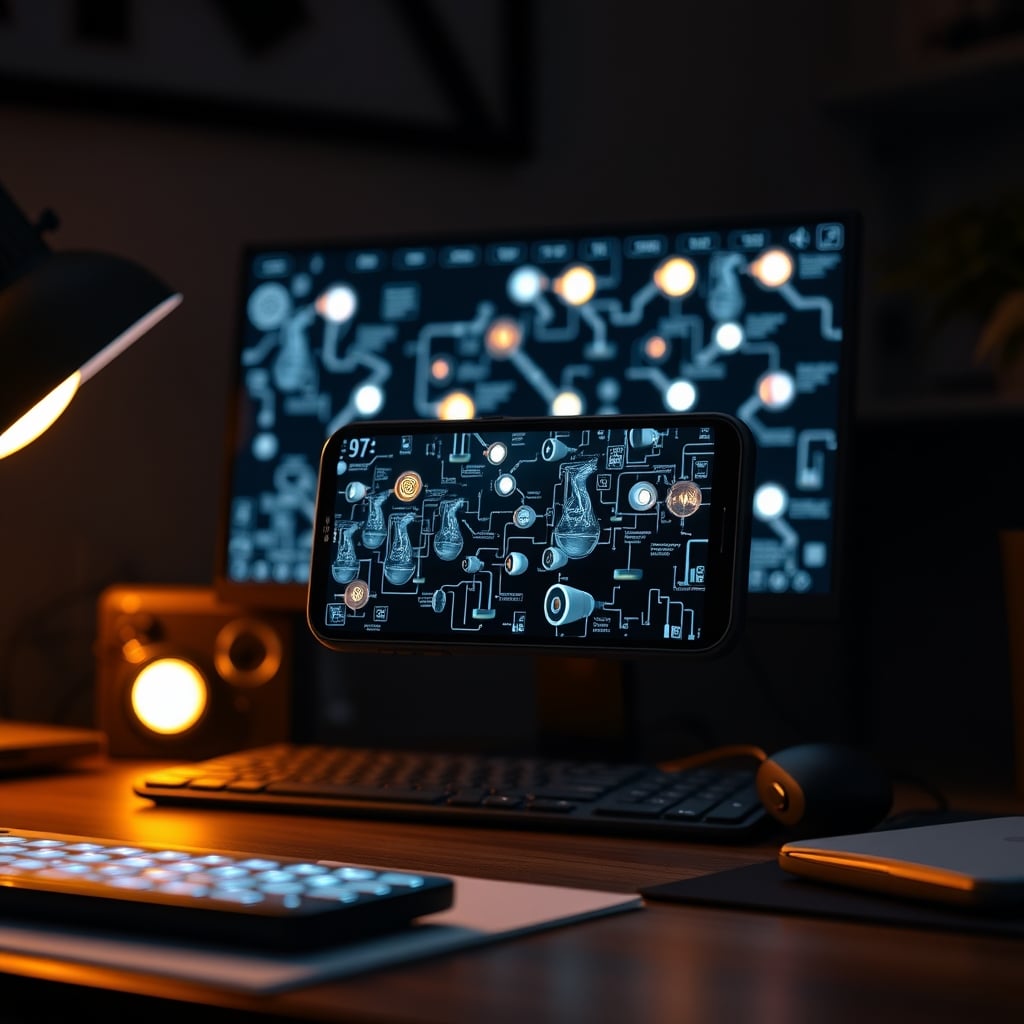
Look at that mess. That’s a real app dashboard for a premium smart lighting system. To turn on a desk lamp, you’re presented with color wheels, scene selectors, brightness sliders, schedules, and automation rules. It’s a cockpit for a fighter jet, not a tool for turning on a light. This is bad because it turns a utility into a hobby. Your lighting shouldn’t be a hobby. It should be invisible infrastructure.
The Smart Lighting Distraction Myth That Needs To Die
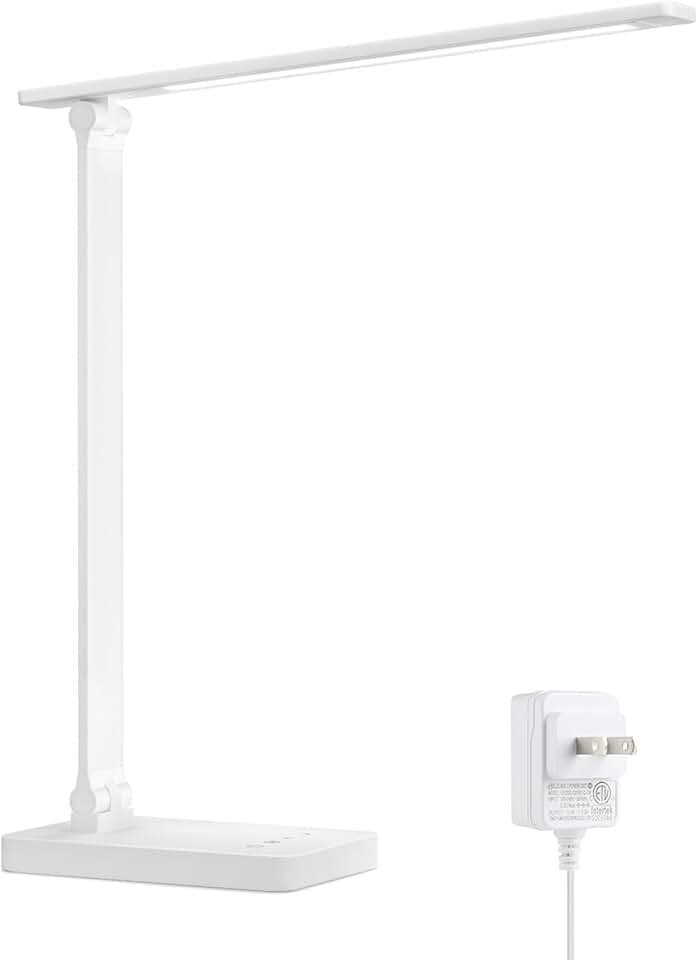
Minimalist, focus-driven setups that need reliable light without app distraction.
- Physical touch controls for dimming
- High CRI for accurate color
- Stable metal base
Here’s the most pervasive, toxic belief pushed by every tech reviewer and setup influencer: “Smart lighting boosts productivity by creating the perfect environment.” This is overrated nonsense. It doesn’t work.
The truth is, the quest for the ‘perfect’ lighting environment via smart tech becomes the task. It’s productivity theater. You’re not writing the report; you’re calibrating the ‘report-writing’ lighting scene. You’re not coding; you’re tweaking the ‘developer focus’ automation. The tool becomes the project. Based on widespread user feedback, the people who claim the biggest focus gains from smart lights are the same ones who spend hours configuring them. Their productivity boost came from finally stopping the configuration and doing actual work, not from the magical properties of a RGBIC LED strip.
Most people get this wrong. They think complexity equals capability. For desk lighting, the opposite is true. Simplicity equals reliability. Reliability equals uninterrupted focus. A dumb light with a great switch will outperform a smart light with a cluttered app every single time in real use, because it removes an entire layer of potential failure and distraction. This is the real issue the industry doesn’t want to admit: their products add mental load, and mental load is the silent killer of concentration.
The 2026 Solution: Tactile, Single-Purpose Light
So what actually works? In 2026, the counter-trend among people who actually get work done isn't more tech—it's less. It’s a return to dedicated, tactile, single-purpose task lighting. We’re seeing a massive resurgence of high-quality, dimmable LED desk lamps with one thing: a great physical control.
Think about the vibe. It’s not the cold, algorithmic glow of a screen-synced RGB system. It’s the warm, focused pool of light from a single source. The texture is matte metal and frosted glass, not glossy plastic and app icons. The aesthetic is monastic and intentional, not gamer-battlestation. This lamp has one job: to illuminate your desk well. It doesn’t connect to Wi-Fi. It doesn’t have a ‘party mode’. It has a knob you turn, and the light gets brighter or warmer. That’s it. And that’s everything.
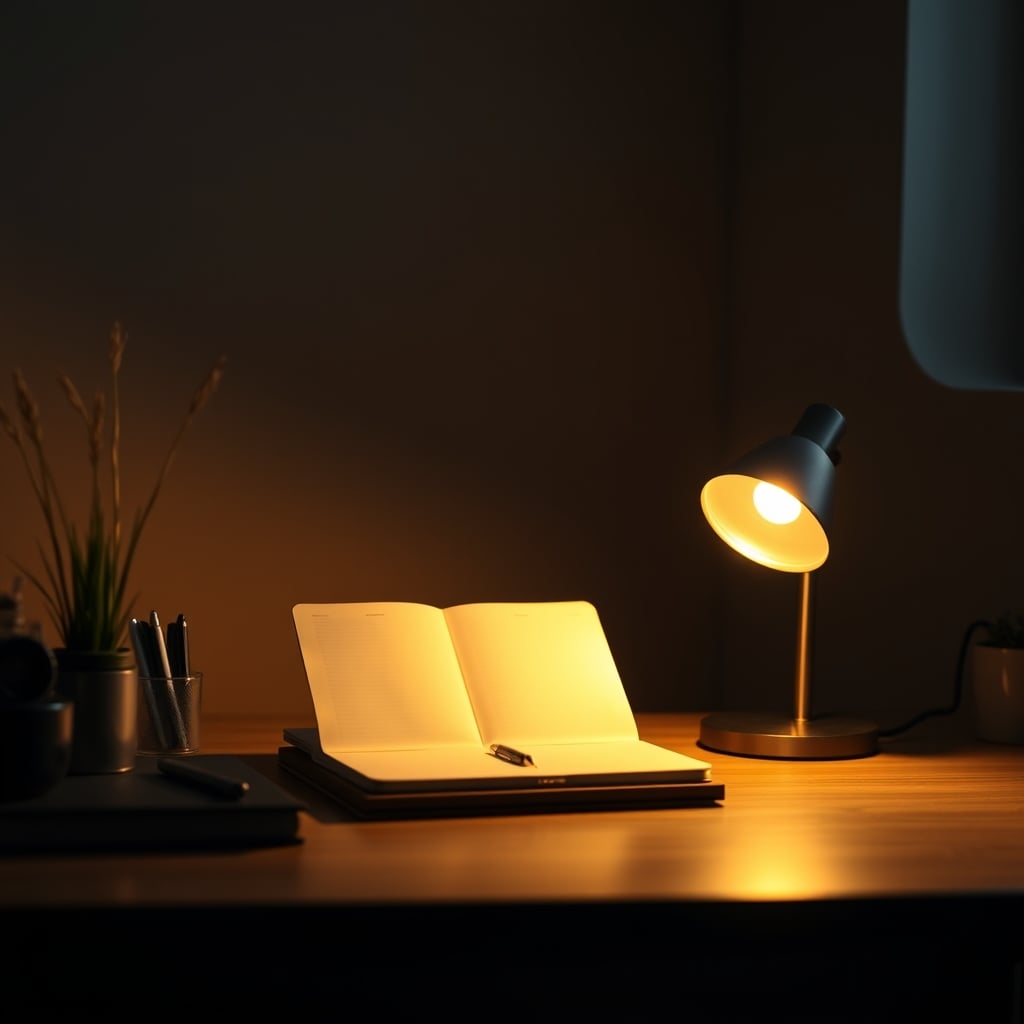
See the difference? One light source. One job. No phone in sight. The darkness around the pool of light isn’t a bug—it’s a feature. It visually corrals your attention to the lit area. This setup doesn't ask anything of you. It just works, immediately, without a single cognitive calorie spent. After testing countless ‘smart’ solutions, this is the only one that consistently disappears and lets the work happen.
What Makes A Good Desk Lamp In 2026 (And It’s Not Smarts)
Let’s get specific. If smart features are a distraction vector, what should you look for? The specs are boring and that’s the point.
You want high CRI (Color Rendering Index)—90+ is ideal. This isn’t a marketing gimmick; it’s an objective measure of how accurately the light reveals true colors. If you’re reading, drawing, or examining anything physical on your desk, high CRI reduces eye strain. You want a wide dimming range, from a soft night-light glow to a surgical brightness. Crucially, this dimming must be controlled by a physical dial or slider, not a digital step via an app. The feel of the mechanism matters. A textured, metal knob with smooth resistance is satisfying and fast.
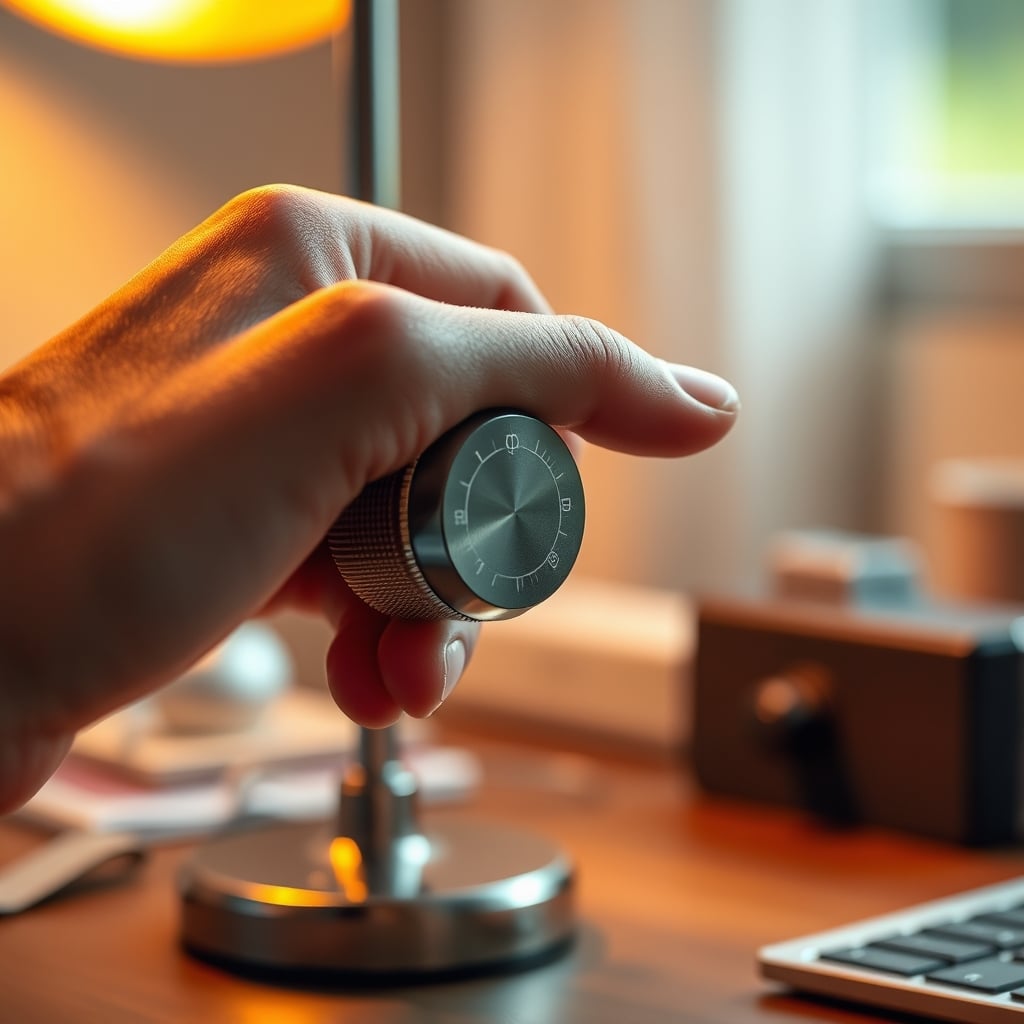
The build should be heavy and stable. No wobbly goose necks that vibrate when you type. The light source should be shielded so you’re never looking directly at the LED chip—glare is another form of visual distraction. The temperature control, if it has it, should be a separate physical control or a simple toggle between two or three preset tones (warm, neutral, cool). Not a slider on a screen.
One product that nails this philosophy is the Lepro LED Desk Lamp. It’s a chunk of metal with a touch-control base for on/off and dimming. It offers five color modes, but they’re selected by tapping a button on the base, not diving into an app. It’s a bridge—it gives you some choice but keeps it physical and immediate. In real use, this lamp gets ignored in the best way. You turn it on, set it, and forget it. That’s the hallmark of a good tool.
The Mistakes Everyone Makes (And How To Stop)
The biggest mistake is believing integration equals improvement. Just because your lights can talk to your smart speaker, calendar, and computer doesn’t mean they should. That integration is a reliability nightmare waiting to happen. Imagine your Wi-Fi drops, and now you can’t turn on your desk lamp. It’s absurd.
Another common error is positional. People layer too many light sources: an overhead light, a monitor light bar, bias lighting, and a desk lamp. This creates multiple shadows, conflicting color temperatures, and general visual chaos. Your eyes don’t know where to settle. The fix is extreme simplification. Try a single, strong task lamp in a dark room for a week. The reduction in visual noise is profound, as we’ve explored in our piece on Smart Lighting Overstimulation Is Sabotaging Your Brain.
Finally, people chase the wrong metric: lumens. They think brighter is always better. For desk work, the quality and direction of light matter infinitely more than raw output. A 500-lumen lamp with a perfect diffuser and correct placement is superior to a 1500-lumen bare bulb blinding you from the side.
The Final Verdict: Skip The Smart, Embrace The Dumb
After assessing the market and the real-world experience of users trying to get work done in 2026, the conclusion is unambiguous.
Smart desk lighting is overrated.
It’s a solution in search of a problem, built to sell apps and ecosystems, not to illuminate your work. The smart lighting distraction it introduces—through app dependency, choice overload, and integration fragility—actively sabotages the focus it claims to enhance. The industry lies about the benefits because the benefits don’t exist for the task of concentrated work.
Your move is simple. Unplug the smart strips. Ditch the app-controlled bulbs. Sell the hex panels. Invest in one excellent, dumb, tactile task lamp with a great switch. Put your phone in another room. The path to better focus isn’t through more technology on your desk; it’s through less. It’s through tools that work without asking for your attention. For desk lighting in 2026, the only verdict that makes sense is to skip the smart hype entirely. It’s not worth your time, your money, or your cognitive space.
If you want to understand the deeper cognitive toll of all this connected clutter, our article on The Brutal Truth About Workspace Mental Load breaks it down further. The principle is the same: every decision point, every notification, every app login is a tax. Your lighting should be a tax-free zone.
Frequently Asked Questions
What exactly is a 'smart lighting distraction'?
A smart lighting distraction is the cognitive interruption caused by using app-based or voice-controlled lights. Instead of a simple physical action like flipping a switch, you must use your phone, navigate menus, and make digital choices, which pulls you out of your workflow and drains focus.
Are all smart lights bad for focus?
For desk work where deep concentration is key, yes, they are overrated. The core design of smart lighting—offering endless choices through a digital interface—is inherently distracting. While they may be fine for ambient room lighting, on your desk they introduce an unnecessary layer of complexity and potential failure.
What should I look for in a good 2026 desk lamp instead?
Look for high CRI (90+), wide-range dimming via a physical knob or slider, a stable heavy base, and a shielded light source to prevent glare. Choose a lamp with simple, tactile controls for on/off and temperature. The goal is a tool that works instantly and disappears, not one you have to manage.

Written by
From bias lighting behind your monitor to smart RGB ecosystems, Leon knows exactly how to light a room for productivity during the day and gaming at night.
Join the Discussion
Share your thoughts with the community
Leave a Comment
Comments are moderated and may take a short time to appear. Links are not permitted.