Desk Layout Psychology Is The Lie Sabotaging Your Focus
Forget everything you've read about ergonomic zones and monitor distances. The 'science' behind perfect desk layouts is a multi-million dollar distraction. Here's why your brain hates your organized desk and what you should actually do about it.

For the last three years, I've watched the internet lose its collective mind over desk layout psychology. Every influencer and furniture brand wants to sell you a story about 'cognitive zones,' 'reach envelopes,' and 'optimal viewing angles.' It's a beautiful, logical, utterly useless lie. The promise is simple: arrange your physical space according to these sacred ergonomic principles, and your mind will follow into a state of flawless productivity. The reality, as any seasoned creator knows after a 10-hour deep work session, is a numb wrist, a stiff neck, and the nagging feeling that your perfectly curated showroom desk is actively working against you.
The industry's obsession with desk layout psychology has become a performance you stage for your camera, not a system that serves your brain. We've been sold a rigid, one-size-fits-all dogma that ignores the fundamental truth of creative work: your mind is a chaotic, dynamic, non-linear mess that thrives on access, not order. Let's gut this myth and talk about what a desk is actually for.
Why Desk Layout Psychology Is A Complete Distraction
This is the real issue. The entire field of prescriptive desk layout psychology is built on a foundation of industrial efficiency studies from the 1950s, repackaged as wellness gospel. It assumes your work is a series of repetitive, predictable tasks performed by a static human mannequin. It doesn't account for the fluid dance of a programmer referencing three monitors, a notepad, and a coffee mug while debugging. It fails the writer who needs their research physically sprawled to one side. It sabotages the designer who switches from mouse to tablet to pencil every twenty minutes.
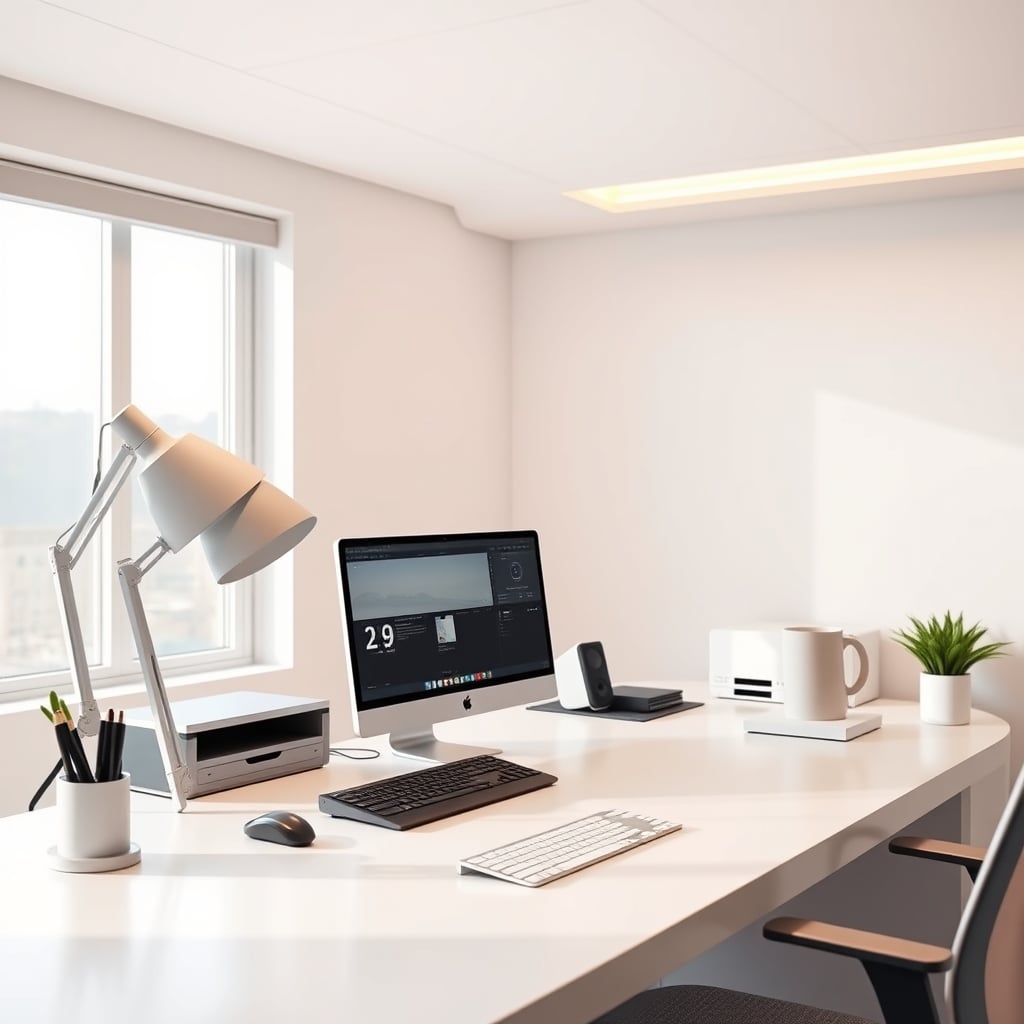
Users consistently report that after meticulously setting up their desk according to 'expert' ergonomic guides, they feel more constrained, not more free. The pristine, sterile layout becomes a museum exhibit they're afraid to touch. The real function of a desk—to hold the tools of your thinking within the immediate grasp of your attention—is sacrificed at the altar of visual minimalism. This is overrated. You're not a factory worker on an assembly line; you're a problem-solver, and your tools need to be where your thoughts are, not where a diagram says they should be.
The "Optimal Triangle" Myth That Needs To Die

Premium Pick
- High performance
- Premium build
The most pervasive piece of nonsense is the concept of the 'primary work triangle'—keyboard, mouse, monitor, all at precise angles and distances. This is not worth it. It's a static solution for a dynamic process. In real use, this rigid configuration frequently causes issues with peripheral tool access. Need your phone to authenticate a login? It's outside the triangle. Need to scribble a note? The notebook is out of bounds. Want a sip of water? Break the sacred geometry and face the ergonomic gods' wrath.
Based on widespread user feedback, adhering to this triangle actually increases micro-distractions. Every time you need something 'outside the zone,' you break your posture, reach, and mental flow. The industry lies about this. They sell you monitor arms and desk pads to enforce this triangle, but what they're really selling is a limitation. Your workspace shouldn't be a prison of precision; it should be an extension of your working memory. If a tool is important to your current task, it should be in your field of view and within lazy reach, not banished to a 'secondary zone.' This doesn't work for knowledge work.
Your Brain Craves Lazy, Not Logical
Here's what most people get wrong: they organize for aesthetics or abstract logic, not for cognitive ease. The goal isn't a clean desk. The goal is a frictionless desk. The difference is everything. A frictionless desk has exactly what you need for the task at hand, visibly and physically available, with zero steps to access it. A 'logical' desk, dictated by layout psychology, often hides things in drawers or trays to look clean, adding a decision and a physical action between you and your tool.
Think about your most focused state. You're in flow. Your hand moves to where your pen is, not where it should be. If you have to think—"pen is in the wooden tray, left of the monitor, under the notepad"—you've just levied a cognitive tax. That tiny micro-decision is a crack in your focus. Desk layout psychology, with its zones and hierarchies, institutionalizes this tax. It over-complicates the simple act of reaching for a thing. Your layout should feel instinctive, not intentional.
The Brutal Truth About Workspace Mental Load
This connects directly to a concept we've explored before: The Brutal Truth About Workspace Mental Load. Every item on your desk, and every decision about where it lives, occupies a tiny slice of your brain's processing power. A 'psychologically optimized' layout that you have to consciously maintain adds to that load. It becomes another system to manage. The real win is eliminating decisions, not optimizing them according to a flowchart. A desk that truly serves you disappears from your consciousness, becoming a seamless extension of your intent.

Practical Tips That Actually Work (Forget The Diagrams)
- Embrace the "Active Pile." Have one designated, non-judgmental zone for the physical ephemera of your current project—books, printouts, prototypes, cables. This isn't clutter; it's cognitive scaffolding. When the project changes, the pile gets ruthlessly archived or recycled.
- Anchor Your Anchors. Identify the 2-3 items your hand touches every 5 minutes (mouse, main pen, phone). Their position is sacred. Everything else orbits around them based on the task. Don't let a guide tell you your mouse must be 20cm from your keyboard if your natural movement is 25cm.
- Horizontal Surfaces Beat Vertical Storage. A shallow tray on the desk is superior to a drawer. Out of sight is out of mind, and out of mind creates friction. You need to see your tools. This is why the Cable Management Box Problems Are Sabotaging Your Desk—hiding things creates more problems than it solves.
- Let Your Day Dictate The Layout. A morning writing session might have a notebook front and center. An afternoon editing marathon might push that aside for a keyboard and tablet. Your desk is a dynamic stage, not a static painting. Move things. It's okay.
The Real Mistake: Prioritizing Posture Over Performance
This is where the dogma gets dangerous. You've likely read The Desk Ergonomics Myth Sabotaging Your 2026 Setup. The same principle applies. The relentless pursuit of 'perfect' elbow angles and 'neutral' wrist posture ignores the fact that the human body is designed to move. A rigid, 'ergonomically perfect' position held for hours is often worse than gentle, natural movement within a relaxed zone. If reaching slightly for your coffee cup breaks a 90-degree angle but keeps you mentally engaged, the trade-off is worth it. Focus trumps fascia every single time.

Final Verdict: Skip The Dogma, Embrace The Chaos
The multi-million dollar industry built on desk layout psychology is selling you a constraint disguised as a solution. It's overrated. It applies factory logic to studio work. Does this mean you should work in a trash heap? No. It means you should optimize for cognitive flow and physical instinct, not for a diagram from a furniture company's marketing department.
Worth it is a simple, flat, clear surface that you can rearrange on a whim. Worth it is a great monitor arm for positioning your screen to your neck's liking, not to a manual's specification. Worth it is understanding that your brain's need for tool access is more important than your desk's need for visual order.
So skip the psychology textbooks. Stop measuring angles. Look at your work, look at your tools, and put them close together. Your brain will thank you by actually getting stuff done.
Frequently Asked Questions
What is the biggest lie about desk layout psychology?
The biggest lie is that there's a single, scientifically optimal layout for everyone. It's industrial ergonomics repackaged for creative work, and it ignores how dynamic, fluid, and personal real focus work actually is. It prioritizes rigid posture and visual order over cognitive access and mental flow.
Should I follow ergonomic guidelines for monitor height and distance?
Use them as a starting point, not a religion. The guideline of the top of your monitor being at eye level is generally good to avoid neck strain, but the exact distance should be 'where your eyes feel relaxed while seeing everything clearly.' If you lean in to focus on detail sometimes, that's fine. Your body needs to move. The goal is to avoid fixed, strained positions for hours, not to achieve a perfect statue pose.
Is a clean desk really better for focus?
Not necessarily. A sterile desk can be cognitively empty and intimidating. What you need is a *relevant* desk. Tools for your current task should be visible and accessible. Visual noise unrelated to your work is distracting. Relevant 'clutter'—open notebooks, reference materials—is not. The key is intentional placement, not emptiness.
How often should I rearrange my desk layout?
Rearrange it whenever it starts to feel like a constraint, or when your primary type of work changes. For some, that's weekly; for others, it's per project. The sign you need a change is feeling friction—having to think about where something is or making an awkward reach. Your desk is a tool, not a trophy. Change it like you change the bit on a drill.
Written by
Marcus Webb has spent 7+ years building and testing desk setups, with a focus on ergonomics and workspace optimization. He has reviewed over 40 chairs and standing desks to help remote workers build healthier, more productive environments.
Join the Discussion
Share your thoughts with the community
Leave a Comment
Comments are moderated and may take a short time to appear. Links are not permitted.