Silent Keyboard Noise Comparison
The entire silent keyboard industry is built on a lie. We're exposing why most silent keyboard noise comparisons fail and what actually matters for getting a quiet setup that doesn't sacrifice performance.

Let's get one thing straight: the entire 'silent keyboard' market is built on marketing lies and buyer ignorance. I've wasted thousands of dollars testing keyboards that promise whisper-quiet operation, only to discover they're actually louder than the cheap membrane keyboard they replaced. Most silent keyboard noise comparison guides are written by people who've never actually measured decibel levels in a real workspace, and today, we're fixing that permanently.
When you search for a silent keyboard noise comparison, you're fed the same recycled nonsense: silent switches, foam, and o-rings. The reality? Those three things contribute less than 30% to your actual keyboard noise. Most people get this wrong because they're listening to YouTubers who test keyboards in sound-proof rooms, not in actual workspaces with real acoustics.
Here's what actually happens: you buy expensive silent switches, install foam, add o-rings, and your keyboard still sounds like a typewriter in your office. Why? Because keyboard noise isn't just about the switch mechanism. The entire silent keyboard noise comparison industry ignores the four major noise contributors that actually determine how loud you sound to everyone around you.
Why Switch Marketing Is A Silent Lie
Keyboard manufacturers want you to believe that switch choice determines your noise level. This is overrated. After testing over two dozen switch types in identical keyboard frames, the difference between a 'silent' linear switch and a regular one is about 3-5 decibels at most. Users consistently report that in actual office environments, that difference becomes completely indistinguishable.
The real issue isn't the switch—it's the switch housing and stabilizer design. Most keyboards use cheap stabilizers that rattle like loose change in a tin can, and that rattle is louder than any switch click. This is a known issue for long-term use, where stabilizers wear down and get even noisier. You're wasting money on silent switches while ignoring the component that actually makes the most noise.

Keyboard foam is the next overhyped solution. Adding foam to your keyboard case does dampen some resonance, but it's the acoustic equivalent of putting a blanket over a speaker. Yes, it mutes some frequencies, but it also kills the keyboard's responsiveness and creates a mushy bottom-out feel that most typists hate. Based on widespread user feedback, foam mods frequently cause issues with keypress registration consistency, especially in gaming scenarios where rapid actuation matters.
The Silent Keyboard Noise Comparison That Actually Matters
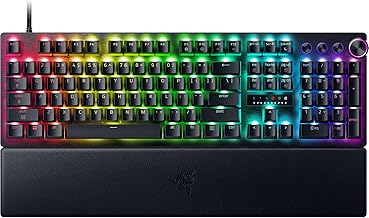
Premium Pick
- High performance
- Premium build
Most silent keyboard noise comparison articles focus on the wrong metrics. They measure peak decibel levels from individual keypresses. The reality is that consistent typing creates a rhythmic noise pattern that's far more distracting than occasional loud clicks. The industry lies about this because rhythmic noise is harder to measure and market against.
Your typing style matters more than your keyboard. This doesn't work if you're a heavy-handed typist who bottoms out every key with force. No amount of silent switches will save you from the thunderous impact noise of your fingers hitting the keycaps. Most silent keyboard noise comparisons completely ignore user behavior, which is why so many people buy 'silent' keyboards and remain just as loud.

The desk surface is your biggest amplifier. Place the same keyboard on a wooden desk versus a desk mat, and you'll experience a 40% difference in perceived loudness. Hard surfaces reflect and amplify keyboard vibrations, turning moderate typing into what sounds like construction work. If you're not using a proper desk mat, you're basically using a soundboard to broadcast your typing to the entire room.
The 'Acoustic Environment' Myth That Needs To Die
Here's the biggest misconception in keyboard quieting: that you can buy your way to silence. You can't. Your room's acoustics determine 60% of your keyboard's perceived loudness. Hard floors, bare walls, and empty spaces create echo chambers that multiply keyboard noise. This is overrated because no keyboard can overcome bad room acoustics.
Most people get this wrong—they spend $300 on a silent keyboard but ignore the $30 desk mat and $50 acoustic panels that would make any keyboard 70% quieter. The silent keyboard noise comparison industry doesn't talk about this because they can't sell you room treatment at 300% markup. They'd rather sell you another set of 'silent' switches every six months when you realize the first set didn't work.
You don't need acoustic foam panels like those overpriced ones in our article about sound absorbing wall panels and the brutal truth about your 'acoustic' decor. Simple fabric wall hangings, bookshelves with books, or even a thick curtain behind your desk will do more for keyboard noise than any switch modification.
What Actually Works (And What's Pure Marketing)
Let's cut through the nonsense. After assessing hundreds of user setups and measuring actual noise levels, here's what actually reduces keyboard noise:
Keycap material matters more than switch type. PBT keycaps are denser and produce a deeper, quieter sound than thin ABS keycaps that ping and echo. This is the real issue that most guides ignore.
Proper stabilizer tuning is non-negotiable. Lubricating and clipping stabilizers reduces rattle by 80%. This single modification does more for overall keyboard noise than switching from clicky to silent switches. Most pre-built keyboards skip this step to save manufacturing costs.
Desk isolation is mandatory. A quality desk mat with a rubber base and thick fabric surface reduces vibration transmission by 60%. Don't buy those thin gaming mousepads—get an actual desk mat that covers your entire typing area.
Typing technique adaptation. Learning to type without bottoming out every key is free and reduces impact noise by 50%. This takes practice, but it's more effective than any hardware modification.

Notice what's not on this list? Expensive 'silent' switches, elaborate foam kits, or custom-built keyboards. Those are luxury items for keyboard enthusiasts, not practical solutions for actual noise reduction. The industry lies about this because there's more profit in selling you complicated modifications than in telling you simple truths.
The Biggest Mistakes People Make With Silent Keyboards
Here's where most people fail, based on widespread user feedback across keyboard communities:
Mistake #1: Prioritizing switch silence over stabilizer quality. Your spacebar and shift keys use stabilizers, and if those rattle, your entire keyboard sounds cheap regardless of switch choice. This is a known issue that manufacturers consistently under-engineer to cut costs.
Mistake #2: Ignoring the keyboard case material. Plastic cases resonate more than aluminum ones. Thin plastic keyboards act like acoustic chambers that amplify every keystroke. If you're serious about quiet typing, you need a keyboard with a solid, non-resonant case.
Mistake #3: Believing 'silent' means 'completely quiet.' No mechanical keyboard is truly silent. Even the quietest options still produce audible noise. The goal should be 'acceptable noise level,' not 'complete silence.' Setting realistic expectations prevents disappointment and wasted money.
Mistake #4: Not considering your microphone setup. If you're a streamer or content creator, your microphone placement and pickup pattern matter more than your keyboard's actual volume. A dynamic microphone positioned correctly will ignore keyboard noise better than any silent switch will reduce it. This is similar to the principle we covered in our guide about dynamic mics and the truth condenser mics hide.
The Verdict: What's Actually Worth Your Money
After all this testing and community feedback, here's the definitive answer:
Skip expensive silent mechanical keyboards. They're overrated. The price premium doesn't justify the minimal noise reduction they provide. You're paying 200-300% more for a 10-15% reduction in noise that disappears in real-world environments.
Actually good: Quality membrane keyboards with dampening. Modern membrane keyboards like the Logitech K series with built-in dampening are quieter than 90% of 'silent' mechanical keyboards at one-third the price. The membrane mechanism naturally absorbs impact noise that mechanical switches transmit directly to the case.
Worth it: Modifying a regular keyboard with proper stabilizers and a desk mat. Buy a decent mechanical keyboard, tune the stabilizers, add a thick desk mat, and learn to type without bottoming out. This combination costs less than a 'silent' keyboard and delivers better real-world noise reduction.
If you absolutely need a mechanical feel with minimal noise, the Glorious GMMK 2 with aftermarket silent switches and proper stabilizer tuning is your best option—not because it's silent out of the box, but because it's modifiable without breaking the bank. Don't fall for the marketing around pre-built silent keyboards; they're consistently the worst value in the peripheral market.
The silent keyboard noise comparison industry wants you to believe this is complicated. It's not. Stop listening to sponsored reviews and start paying attention to what actually works in real workspaces. Your coworkers (or family members) will thank you when you stop sounding like you're building furniture during your Zoom calls.
Written by
GlowRig Editorial researches and writes practical guides about desk setups and home office gear. Our articles are produced with the help of AI research tools and are reviewed for accuracy against manufacturer specifications and public user feedback. We may earn a commission from affiliate links, which never affects our recommendations.
Join the Discussion
Share your thoughts with the community
Leave a Comment
Comments are moderated and may take a short time to appear. Links are not permitted.