Sound Absorbing Wall Panels: The Brutal Truth About Your 'Acoustic' Decor
You bought those stylish hexagon panels to fix your room's echo. They look great. They do almost nothing for sound. This is the reality check you need before wasting another dollar on acoustic decor.
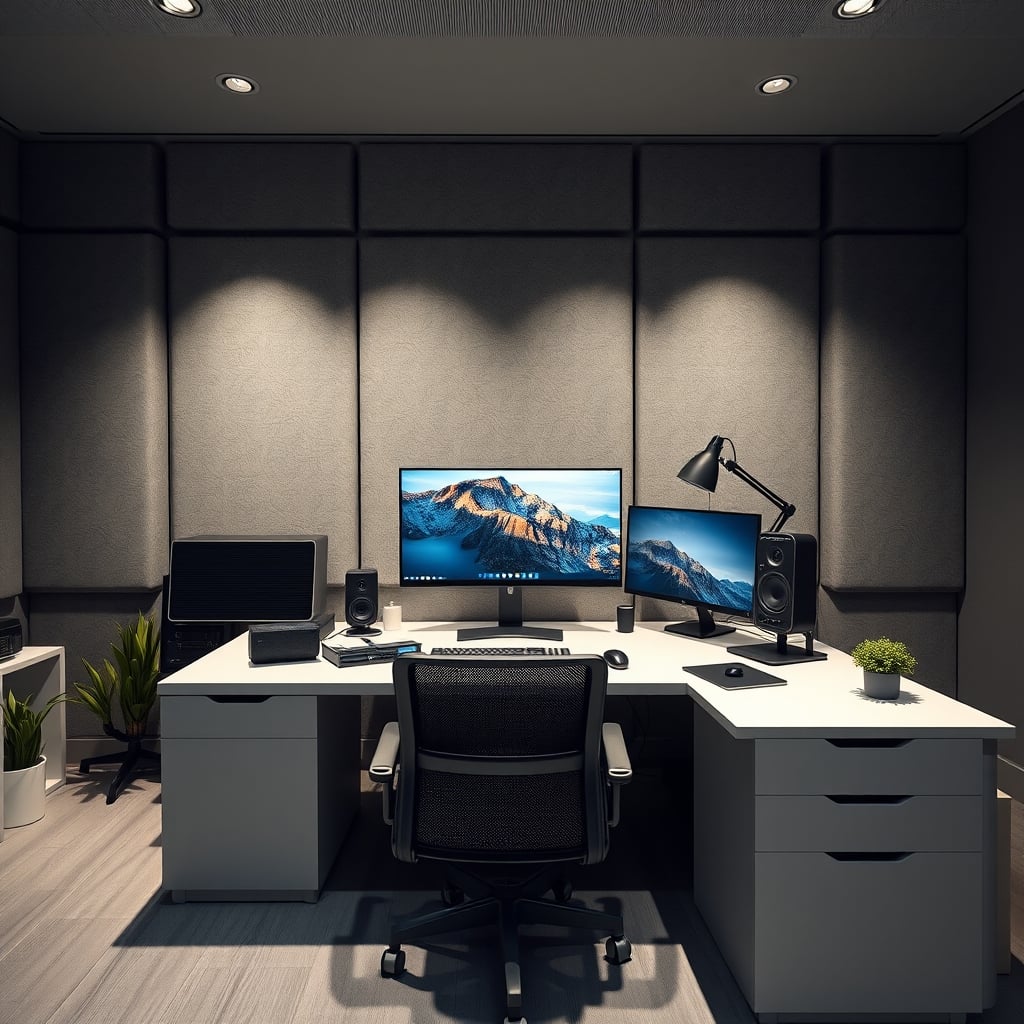
Let's start with the biggest mistake people make when buying sound absorbing wall panels: they prioritize Instagram aesthetics over actual acoustic performance. You see a cool geometric pattern, a trendy fabric color, and think, "This will make my Zoom calls sound professional." You're wrong. Most of what's marketed as 'acoustic wall art' is decorative fluff with the acoustic effectiveness of a bath towel. The industry is selling you a vibe, not a solution. After seeing dozens of home studios and podcast setups, the pattern is consistent: people cover walls with pretty panels that have a Noise Reduction Coefficient (NRC) lower than 0.4, which is basically useless for taming mid-range voice frequencies. You're decorating with expensive placebos.
Why The "Acoustic Wall Art" Trend Is A Scam
This needs to die. The entire category of thin, decorative fabric panels marketed for serious sound treatment is overrated. They're designed to be photographed, not to perform. The core issue is thickness—or lack thereof. Real acoustic absorption requires mass and depth to trap sound waves, especially the problematic low-mid frequencies that make voices sound muddy and rooms echoey. Most decorative panels are barely an inch thick. They might absorb some high-end ‘sizzle,’ but they completely ignore the frequencies that actually ruin your audio. This is a known compromise that brands don't advertise. Users consistently report that after covering a wall, the room still sounds hollow and their microphone still picks up noticeable reverb. You're paying for wall decor with a marketing buzzword attached.
Sound Absorbing Wall Panels: What Actually Works (And What Doesn't)
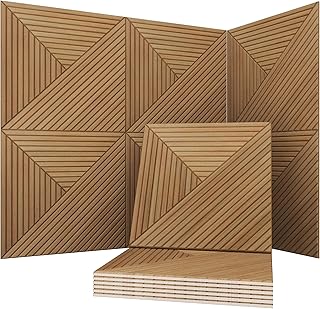
Users who prioritize a specific aesthetic look and need mild high-frequency absorption.
- Decorative geometric art panel design
- Fabric-wrapped for a finished look
- Includes mounting hardware for easy installation
Forget looks for a second. If you want to improve your room's sound, you need to evaluate panels like an engineer, not an interior designer. Here are the real criteria that matter, and where most products fail.
1. Thickness is Non-Negotiable. Anything under 2 inches is a decorative accent, not a treatment panel. For meaningful broadband absorption—the kind that actually cleans up voice and reduces general room echo—you need panels that are 2 to 4 inches thick. This is not a suggestion; it's basic acoustics. Sound waves are physical energy. A thin panel can't dissipate that energy effectively. Most people get this wrong because they buy based on square footage covered, not on the depth of the material. A 4-inch panel doesn't just work a little better; it works on entirely different, more problematic frequencies.
2. The NRC Rating Lie. The Noise Reduction Coefficient (NRC) is the most abused spec in acoustic products. An NRC of 0.8 means the panel absorbs 80% of sound that hits it. Sounds great, right? Here's the catch: that rating is an average across several frequencies (250Hz, 500Hz, 1000Hz, 2000Hz). A panel can score well by absorbing tons of high frequencies while doing nothing at 250Hz or 500Hz—the very frequencies that give a room its boomy, boxy character. Brands love to tout a high NRC on a thin panel because it's technically true but practically misleading. You need to see the full test data, not just the average. If a brand doesn't provide it, assume they're hiding poor low-frequency performance.
3. Core Material Dictates Everything. The fluffy, recycled cotton or polyester batting in cheap panels is garbage for consistent absorption. It compresses over time, loses effectiveness, and can be a fire hazard if not properly treated. The industry standard for a reason is rigid fiberglass (like Owens Corning 703) or mineral wool. These materials are dense, non-compressible, and have predictable acoustic properties. If a product description is vague about the core—calling it "acoustic foam," "premium filling," or "sound-absorbing material"—it's a red flag. They're using cheap fill to cut costs, and your sound quality will show it.
4. Frame and Mounting Stability. A wobbly panel that vibrates is worse than no panel at all. It can create resonant rattles. A solid, sealed wooden frame is mandatory. Furthermore, the mounting method matters. Panels must be spaced off the wall by at least an inch (using spacers or a Z-clip system) to improve low-frequency absorption. Mounting flat against the wall kills a significant portion of its potential effectiveness. This is a detail almost every DIY installer misses.
The "Just Add More Panels" Myth That Needs to Die
You think the solution to weak panels is to buy more of them. This is wrong. Covering 100% of your wall with 1-inch decorative panels is less effective than strategically placing a few 4-inch proper panels at the first reflection points. Throwing more of a bad solution at a problem doesn't fix it; it just makes your room look like a padded cell. The real issue is panel quality, not quantity. Based on widespread user feedback, the frustration sets in after the third or fourth panel pack when the room's acoustics still haven't meaningfully changed. You've spent hundreds to wallpaper your room in acoustic-themed fabric.
A Realistic Product Assessment: Cutting Through the Hype
Let's apply the above criteria to what's actually on the market. I'm looking at the typical Amazon bestsellers—the art acoustic panels that dominate search results. Most are failures by engineering standards but wins by decor standards.
Take the common 12"x12" or 24"x24" fabric-wrapped hexagon/ square panels. They're almost universally 1 inch thick. Their core is often mystery foam or recycled felt. They have no meaningful spacing for wall mounting. They look fantastic in a YouTuber's background. They will not fix your echo. They are the definition of overrated for anyone needing actual acoustic improvement. They're for people who want the idea of a treated room, not the reality.
So, is there anything worth buying? If you must have the aesthetic but also need some function, you have to compromise intelligently. Look for panels that are at least 2 inches thick and explicitly use mineral wool or rigid fiberglass. Be prepared to pay more. The performance jump from 1" to 2" is massive. For a home office where you're mostly killing echo for calls and recording voiceovers, a 2-inch mineral wool panel with a good fabric wrap can be "actually good." It won't make your room a studio, but it will take the harsh edge off.
For a deeper dive on why your audio might still suck even after treatment, our article on Your Youtuber Audio Setup Is Lying To You exposes more common gear myths.
The Strategic Placement Everyone Ignores
You can have the best panels in the world and install them wrong. The classic mistake is creating a "feature wall" of panels behind the monitor. While that looks cool for the camera, it's often one of the least effective places acoustically. The primary spots you need to treat are the first reflection points on the side walls and ceiling. Sit in your chair and have a friend slide a mirror along the wall beside you. Anywhere you can see your speakers (or your head if you use a headset mic) in the mirror is a first reflection point. That's where sound bounces directly to your ears, causing comb filtering and muddiness. A single panel at each side reflection point does more than an entire wall behind you. This is a real, actionable tip that most setup guides gloss over because it doesn't create a symmetrical background for your webcam.
Common Mistakes That Waste Your Money
- Treating the Wrong Surface: Placing panels on a hollow door or a window is pointless. The massive reflective surface of a window or the resonant cavity of a door overwhelms any panel. Address the biggest reflectors first (large, flat walls), not the prettiest ones.
- Ignoring the Ceiling: If you have a flat, hard ceiling, it's a massive sound reflector, especially for someone sitting at a desk. A single ceiling cloud panel above your workspace is more effective than two wall panels. Most people never think about it.
- Forgetting About Bass: Panels only handle mid and high frequencies. If you have a rumbling HVAC, street noise, or a subwoofer, you need bass traps in the room corners. No amount of wall panels will fix a bass problem. This is where people feel betrayed—they treat the walls, but the room still feels "boomy."
If you're dealing with a small space, you'll face unique acoustic challenges. The lies about space-saving solutions are unpacked in The Small Desk Lie: Why Your 'Space-Saving' Setup Is Actually Sabotaging Your Productivity.
Final Verdict: Worth It or Skip It?
Here's the clear, definitive stance: Skip the decorative "acoustic art" panels. They are overrated, underperforming decor items sold at an acoustic premium. If you need actual sound improvement for calls, streaming, or recording, your money is better spent on fewer, thicker, properly engineered panels made of mineral wool or rigid fiberglass. They might not come in hexagon shapes or sunset gradients, but they will actually change the sound of your room. For pure decoration with zero acoustic expectations, buy cheap art. For acoustic treatment, buy boring, thick panels. Don't fall for the hybrid product that fails at both. The choice is simple: are you solving a sound problem or a decor problem? You can't solve both with the same thin piece of fabric.
Frequently Asked Questions
Do sound absorbing wall panels actually work for home offices?
It depends entirely on the panel. Most decorative, thin (1-inch) panels do very little. Properly thick (2-inch+) panels made of dense mineral wool or fiberglass can significantly reduce echo and reverb, making voice calls and recordings much clearer.
What's more important, panel thickness or coverage area?
Thickness is far more important. A few strategically placed 4-inch panels will outperform a wall covered in 1-inch panels. Thickness determines which sound frequencies you can absorb, and low-end frequencies require depth.
Can I use acoustic panels to soundproof a room?
No, and this is a critical distinction. Absorption panels reduce echo and reverb *inside* a room. Soundproofing (blocking sound from entering/leaving) requires mass, decoupling, and sealing—like extra drywall, insulation, and special seals. Panels do not soundproof.
Where is the best place to put acoustic panels in a desk setup?
The most effective spots are the first reflection points on the side walls (found using the mirror trick) and the ceiling directly above you. The wall behind your monitor is often less critical for sound than these reflection points.
What does the NRC rating on a panel mean?
NRC (Noise Reduction Coefficient) is an average absorption rating across mid-range frequencies. A high NRC (e.g., 0.8) is good, but it can be misleading if the panel is thin and absorbs only high frequencies. Look for panels that also specify low-frequency performance.
Written by
Maya is an enthusiast for biophilic workspace design. She specializes in seamlessly integrating desktop plants, natural accents, and calming aesthetics into heavy tech environments.
2 Comments
Share your thoughts with the community
Some of this I disagree with, but the core argument about sound absorbing wall is solid.
Honestly thought this would be overhyped but there are some genuinely useful points here about sound absorbing wall.
Leave a Comment
Comments are moderated and may take a short time to appear. Links are not permitted.