Chair for Short Person Buying Guide for 2026
Most chair advice is written by and for average-height people, which is why shorter buyers keep ending up with dangling feet and a seat edge digging into the back of their knees. Two measurements decide everything, and one of them isn't on the chair at all.

Most people shopping for a chair for short person setups start with the wrong question. They ask which chair is "best" when the only questions that actually decide it are narrower: how low does the seat go, and how deep is the seat pan? Nail those two numbers and a $250 chair beats a $1,200 one designed around a 5'10" reference body.
Here's the direct answer. Measure from the floor to the crease behind your knee, shoes on — that's your popliteal height. If it lands under about 16 inches, you need a chair that adjusts down to 15–16 inches and a seat pan 16 inches deep or less. Very few mainstream chairs do both. The ones that do cluster into three groups: petite-specific task chairs in the $150–300 range, mid-range chairs with a genuinely short gas cylinder, and premium chairs sold in a size matrix where the small frame is separately tooled rather than a marketing label.
The rest of this guide gives you the numbers, the price tiers, and the compatibility problem almost nobody mentions until the chair is already in the room — your desk.
The Four Measurements That Decide Whether a Chair Fits
Four numbers matter, in this order.
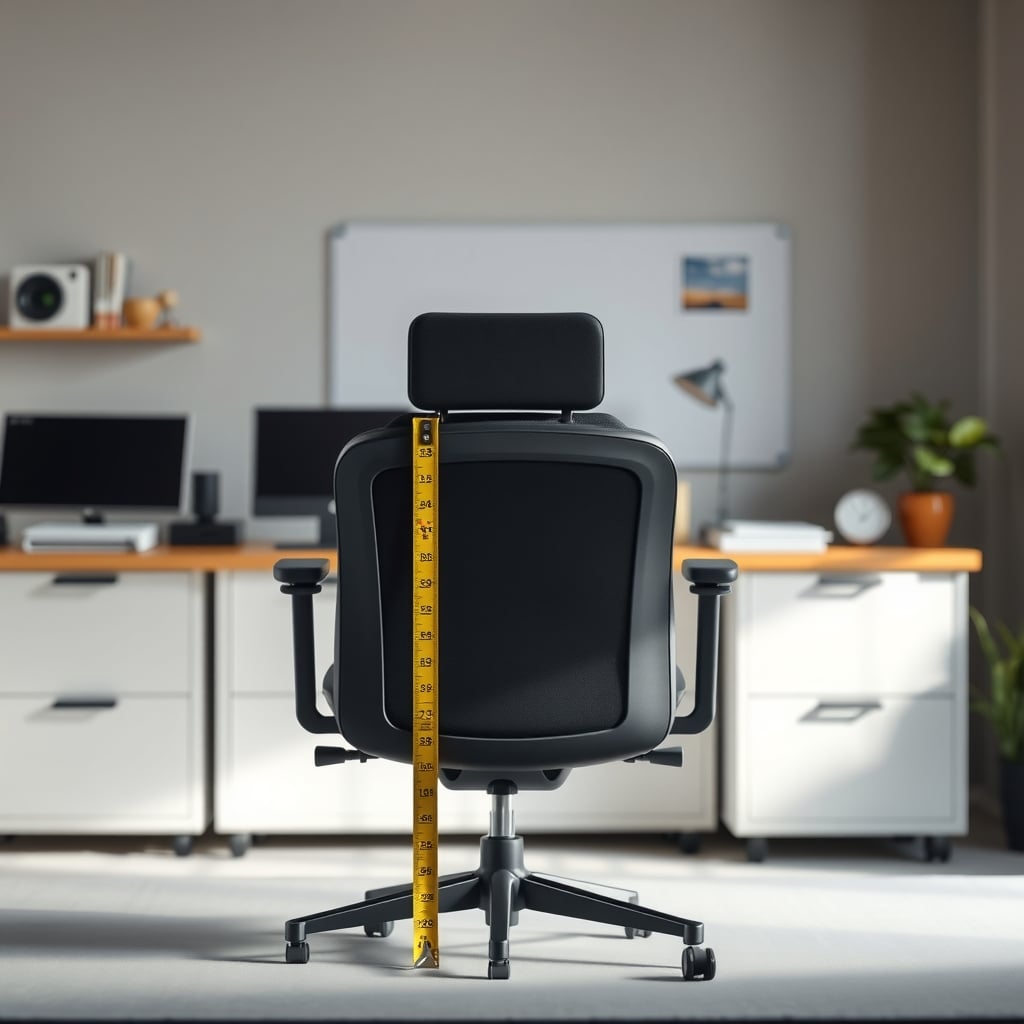
1. Popliteal height. Floor to the crease behind your knee, shoes on. This sets your floor-level fit. The anthropometric tables that feed commercial furniture standards — BIFMA G1, which is what most office chairs are dimensioned against, draws on U.S. civilian body-measurement data — put adult female popliteal height near 15 inches at the 5th percentile and adult male popliteal height near 19 inches at the 95th. Office chairs are engineered for the fat middle of that spread, which is precisely how a 5'1" buyer ends up with feet dangling.
2. Seat pan depth. The front-to-back cushion measurement. OSHA's computer workstation guidance recommends leaving two to three fingers of space between the back of your knee and the front edge of the seat. If you can't fit them, the edge is pressing into the tissue behind your knee, and you'll spend the day unconsciously sliding forward — which throws away whatever lumbar support the chair has. Standard seat pans run 17–20 inches. If your body needs 15–16.5 inches, you're in a minority of the market, and that's the entire reason this category exists.
3. Sitting elbow height. Seat surface to the underside of a relaxed elbow. Sitting elbow height runs roughly 7–8 inches at the 5th percentile female and up to 11 inches at the 95th percentile male. That range is why armrest adjustability below 8 inches matters more than almost any other feature. If your armrests bottom out higher than your elbows, your shoulders ride up all day and the chair fights you.
4. Seated eye height. Floor to your eyes when the chair is correctly set. This determines monitor height, and it's the number that turns a well-fitted chair into a well-fitted workstation.
Measure all four before you shop. Ten minutes with a tape measure and a wall saves a return shipping label and a week of bad posture.
Where Chair Specs Stop Telling the Truth
Three places where the spec sheet goes quiet.
"Ergonomic" is not a regulated word. Any chair can print it. The testable claim is durability, and the standard for that is ANSI/BIFMA X5.1 — a chair that passes it usually carries a 250–300 lb weight rating and a warranty worth reading. If a listing doesn't mention BIFMA or a specific test standard, treat the ergonomic language as decoration.
Two identical-looking chairs adjust differently. The gas cylinder inside is a wear part sold in a handful of common sizes, with 50 mm diameter as the de facto standard and length varying between models. A chair specced at "16–20.5 inches of seat height" might bottom out at 16 inches loaded, or it might hit that number only with nobody in it. If a manufacturer publishes a proper size chart, it will say the range is measured to the top of the cushion, unloaded — and that's your cue to subtract half an inch to an inch for real-world compression of thick foam.
Tilt tension has a floor, and it's usually above a lighter user. Weight-activated recline mechanisms auto-adjust; manual tension knobs often run out of adjustment range for lighter bodies, which is a consistent theme in long-term owner discussions. If you weigh under about 130 lb, a weight-activated tilt is worth paying for. Or at least check whether the tension range is published. Most brands don't publish it, which tells you something.
Chair for Short Person Options Across Four Price Tiers
Under $250: compact task chairs. This is where you find true low-floor chairs. What to look for: a published minimum seat height of 15–16 inches, seat pan depth of 16–17 inches, BIFMA X5.1 certification, and a warranty of at least three years. What you give up: thin foam that compresses and flattens in 18–24 months, armrests that flip up rather than adjust, and a recline that's either stiff or loose. Buy here if you're under 5'3" and on a hard budget — the fit will be right even if the longevity isn't. Expect to replace it in three to five years.
$250–$600: mid-range with real adjustability. The sweet spot. Look for height-adjustable armrests that reach down to roughly 7 inches above the seat, a sliding seat pan so you can shorten the effective depth by 1–2 inches, adjustable lumbar height (not just depth), and a 5–10 year warranty. What you give up: size matrices. Almost everything in this band is one-size, so you're relying on the depth adjustment to compensate. That works — a seat that slides forward 2 inches effectively becomes a shorter seat — but only if it slides. A fixed 19-inch seat pan can't be rescued.
$600–$1,500: premium chairs with a genuine small frame. This is the honest answer for most people under 5'4" who sit six or more hours a day. Chairs sold in a small, medium, and large matrix, where the small frame uses its own seat pan, its own back height, and its own cylinder, typically shave 1.5–2 inches off seat depth and drop the seat height floor by 1–1.5 inches versus the medium. The difference isn't cosmetic. What you give up: 30–45 lb shipping weight, a 20-minute assembly you'll do once, and the fact that headrests and other add-ons are usually separate purchases. What you get: a 12-year warranty, serviceable gas cylinders and casters, and a resale market that returns $200–400 when you're done with it.
The hybrid: keep the chair, swap the parts. If you already own a chair you otherwise like, a shorter gas cylinder plus an adjustable footrest costs $80–200 total and can move the fit 2–3 inches. This is the highest-value move in the whole category when it applies.
Fixing the Chair You Already Own
Before you spend $700, check whether you're solving the right problem.
Dangling feet: a footrest. Get one with 3–5 inches of height adjustment and a tilt angle, not a fixed plastic block. Set it so your thighs are roughly parallel to the floor and your knees sit at or slightly below hip level.
Seat too high overall: a shorter gas cylinder. Cylinders are standardized enough to swap, and a shorter one lowers the whole seat range. It's a 15-minute job with basic tools, and it's the cheapest way to turn a standard chair into a short-person chair. There's a full breakdown of cylinder sizes and failure modes in our guide to chair gas cylinder replacement.
Seat too deep: a seat depth reducer or a wedge cushion that sits at the front of the pan and moves your knee crease forward. Ugly, cheap, effective. Note what does not work here: a footrest. A footrest fixes where your feet land. It does nothing about pressure behind your knees, and nothing about the fact that a deep pan pushes your lower back away from the backrest.
Armrests too high: some height-adjustable armrests can be re-drilled or shimmed lower, but honestly, if they won't go low enough, remove them or replace the chair. Shrugged shoulders for eight hours is not a problem you fix with padding.
If you've tried all four and you're still sliding forward, the problem is the chair rather than the accessories — and it's time to look at the price tiers above.
The Desk Breaks What the Chair Fixes
Here's the part that catches short buyers after the chair is already assembled.
Do the math. If you're 5'1" with a properly fitted chair, your seat sits around 16 inches and your elbows land roughly 22–23 inches off the floor. A standard fixed desk is 28–30 inches tall — most commonly 29. That's a six to seven inch mismatch. Put your chair at the correct height and your keyboard is now well above your elbows, which forces your wrists to angle back and your shoulders to lift. Your chair is right and your workstation is still wrong.
Three fixes, in order of cost:
An under-desk keyboard tray ($50–150). Cheap and effective, but check clamp depth against your desktop thickness and make sure it leaves an inch or two of thigh clearance. Thick desktops and deep aprons kill this option.
A height-adjustable desk with three-stage legs ($300–600). Three-stage columns reach down into the 22–24 inch range, which is where a shorter user actually needs them. Two-stage desks typically bottom out around 25–26 inches, which is often still too tall. This is the cleanest fix if you also want to stand — though if you're adding standing time, read up on common standing desk health risks first, because the failure modes are different from sitting.
A fixed desk cut down or replaced. Cheapest if you're handy, but check the leg structure before you commit.
Then there's the monitor. Your correctly set chair puts your eyes two to four inches lower than the average setup, so if your screen's top edge sits above your eyeline, you're tilting your head back all day. A monitor arm or a taller stand is the fix, and the monitor stand versus wall mount decision is worth working through before you buy hardware.
Four Ways to Solve This, Side by Side
Approach Realistic cost Seat height floor Seat depth Adjustability Best for Compact budget task chair $150–250 15–16 in 16–17 in, fixed Height plus tilt only Under 5'3", tight budget, light daily use Mid-range chair with sliding seat $250–600 16–17 in 17–19 in, reducible 1–2 in 4D armrests, sliding pan, lumbar height Most short buyers, 4–8 hrs/day Premium chair in a small frame $600–1,500 15–16 in 15.5–17 in Full, 12-year parts support Under 5'4", 6+ hrs/day, long ownership Existing chair plus short cylinder and footrest $80–200 Drops 2–3 in Unchanged Unchanged A chair you already like, or a seat-height-only problemThe last column is the one that matters. If your only complaint is dangling feet, the bottom row is your answer and you should stop reading. If you're uncomfortable after two hours, you need the depth fix, and that means row two or row three.
Mistakes That Cost Short Buyers Money
Buying by review score instead of minimum seat height. The most-recommended chair of any given year is recommended by average-height people. Two minutes on the manufacturer's size chart beats a hundred reviews. If the size chart doesn't exist, that's your answer about the brand.
Assuming a footrest fixes a chair that's too big. A footrest is a leg-length solution. It has no effect on seat depth or backrest fit. Buying a $60 footrest to solve a $60 problem is fine; buying one to solve a seat depth problem is $60 wasted.
Ignoring the desk until after the chair arrives. Covered above, but it's the most common post-purchase regret: the chair fits and the setup still hurts.
Treating petite as a single size. A short person with a long torso needs a taller backrest than a short person with long legs. Buying a small chair solves depth and height; it doesn't guarantee backrest height. Check that the top of the backrest still lands between your shoulder blades and your mid-back.
Skipping the warranty fine print. Twelve-year warranties that exclude the gas cylinder, or that require you to ship a 40 lb chair back at your own cost, are worth less than a five-year warranty with a parts program. Look for the phrase parts shipped rather than return for service.
Who Should Buy What
Under 5'3", budget under $250, sitting 2–4 hours a day: a compact task chair with a published 15–16 inch seat height floor. Accept the foam-quality trade-off and plan to replace it in a few years.
Under 5'4", 4–8 hours a day, $250–600: a mid-range chair with a sliding seat pan and height-adjustable armrests that reach low. This is the recommendation for most readers.
Any height under 5'6", six or more hours a day, buying once: a premium chair in a small size frame. The resale value and 12-year parts support change the math — cost per year is often lower than two mid-range chairs.
Already own a chair you like: swap the cylinder and add an adjustable footrest. Stop there unless seat depth is the actual problem.
Whose real issue is that sitting hurts and no chair helps: a kneeling chair or a sit-stand rotation is worth investigating before you spend premium money on a different seat. We compared those paths in the kneeling chair versus office chair breakdown.
Who should skip all of this: if you're 5'6" or taller, you don't need a specialty chair. A standard mid-range chair with a 16-inch seat height floor will fit you, and you'll usually get more features for the same money because you're shopping in the mainline market.
Bottom Line
The chair for short person problem is a measurement problem, not a brand problem. Buy on two numbers — minimum seat height and seat pan depth — and treat everything else as secondary tuning.
If you want the shortest path: measure your popliteal height, then buy a mid-range chair with a sliding seat pan and armrests that adjust down to about 7 inches above the seat. Budget $250–600. Check the size chart before you check the reviews. Then measure your desk and accept that you'll probably need a keyboard tray or a three-stage adjustable desk, because the chair is only half of the geometry. And if your current chair is fine except for height, spend $80 on a shorter cylinder and a footrest instead of $700 on a new chair.
Frequently Asked Questions
What seat height should a chair for a short person have?
Measure your popliteal height — floor to the crease behind your knee, shoes on. That number is your minimum seat height. For most people under 5'4", it lands between 15 and 16 inches. Look for a chair whose published minimum seat height is at or slightly below your measurement, since loaded foam compresses about half an inch to an inch.
Do I need a footrest if my chair fits properly?
No. A footrest is a corrective tool for a seat that sits too high. If your feet rest flat on the floor with your thighs roughly parallel to the ground, you don't need one. If you need a footrest to sit comfortably, that's a sign the seat height range is wrong for you.
Can I make a standard office chair sit lower?
Often, yes. Gas cylinders are a standardized wear part, and swapping in a shorter one typically drops the seat range by 2 to 3 inches. It's roughly a 15-minute job. Check that your chair uses a standard cylinder diameter, most commonly 50 mm, and that the base separates from the seat.
How deep should the seat pan be for short legs?
You should be able to fit two to three fingers between the back of your knee and the front edge of the seat, per OSHA's computer workstation guidance. For most shorter users that means a seat pan of 16 to 17 inches. Standard chairs run 17 to 20 inches, which is why depth is the most common fit failure.
Why do my armrests feel too high?
Armrest height is tied to your sitting elbow height, which runs roughly 7 to 8 inches above the seat at the 5th percentile female and up to 11 inches at the 95th percentile male. Many armrests bottom out around 8 to 9 inches, which is too high for a shorter torso. Look for armrests that adjust down to about 7 inches, or remove them entirely.
Is a petite chair worth it if I'm 5'3"?
Check your measurements first. If your popliteal height is 16 inches or less and a standard chair bottoms out at 17 inches, yes. But a mid-range chair with a sliding seat pan and a 16-inch seat height floor will often fit as well as a dedicated petite frame for less money — the sliding pan is doing the same job as a shorter seat.
Written by
GlowRig Editorial researches and writes practical guides about desk setups and home office gear. Our articles are produced with the help of AI research tools and are reviewed for accuracy against manufacturer specifications and public user feedback. We may earn a commission from affiliate links, which never affects our recommendations.
Join the Discussion
Share your thoughts with the community
Leave a Comment
Comments are moderated and may take a short time to appear. Links are not permitted.