USB Cable Speed: The Brutal 2026 Truth
You're being sold a lie about USB cable speed. The marketing pushes specs that don't translate to real-world use. Here's what actually determines if a cable fails or performs.
I’ve wasted more money on overhyped USB cables than I care to admit, chasing specs that promised zero-latency bliss and flawless data transfers. The reality? Most of it is marketing noise designed to make you pay a premium for performance you’ll never actually perceive. In 2026, the obsession with USB cable speed has reached peak absurdity, with brands slapping '10Gbps' and '40Gbps' on packaging like it's the only metric that matters. It's not. After seeing countless cables fail in common setups—not from speed issues, but from heat build-up, connector fatigue, and simple electrical resistance—I'm done with the spec sheet worship. The industry lies about this. Your cable’s real performance is dictated by three boring, unsexy factors that have nothing to do with the theoretical maximum printed on the box.
Why Your Obsession with Max Speed Is Wrong
This is the myth that needs to die. You don't need a 40Gbps cable to charge your phone or connect a keyboard. The industry pushes these numbers because they’re easy to market, not because they deliver tangible benefits. In real use, plugging a standard external SSD into a USB 3.2 Gen 1 port (5Gbps) versus a USB4 port (40Gbps) shows negligible difference for 99% of file transfers because the drive’s internal controller becomes the bottleneck. Users consistently report that ‘upgrading’ to a higher-spec cable did nothing to solve their actual problems: intermittent disconnects, slow charging, or devices not being recognized. This is overrated. You’re paying for headroom you cannot and will not use. The real issue is signal integrity over distance, which most cheap, high-speed cables butcher.
The Real Determinants of USB Cable Performance
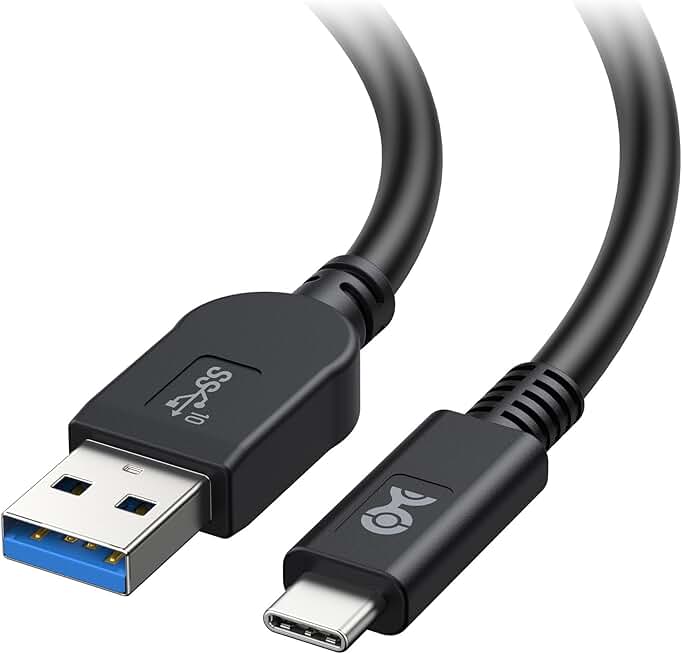
Reliable high-speed data transfer and charging for docks, drives, and phones.
- USB-IF Certified for guaranteed compatibility
- Reinforced connectors with stress relief
- 10Gbps data speed with 60W power delivery
Forget speed. If you want a cable that works reliably for years, focus on these three things. First, build quality at the connector. This is the point of failure. A poorly molded stress relief will crack, exposing wires and causing shorts. We’ve seen this kill ports on expensive laptops. Second, conductor gauge. Thicker copper wires have lower electrical resistance, which translates to less voltage drop over distance. This is the real secret to consistent fast charging, not the marketed ‘fast charge’ logo. A thin, cheap cable might claim 60W charging but will deliver far less over a 6-foot run, causing your device to charge slowly and heat up. Based on widespread user feedback, heat dissipation is the silent killer. A cable that gets warm during use is losing efficiency and degrading faster. Third, and most critical, certification. A USB-IF Certified logo means the cable has passed interoperability and safety tests. Most no-name ‘high-speed’ cables skip this to cut costs, leading to the compatibility nightmares everyone hates.
USB Cable Speed and the Latency Lie
Let’s gut this one directly. There is no such thing as a ‘low-latency’ USB cable for peripherals. The protocol overhead and your computer’s USB controller introduce orders of magnitude more delay than the cable ever could. Buying a ‘gaming’ USB cable for your mouse is a complete waste of money. The signal travels at nearly the speed of light; the difference between a cheap and expensive cable is measured in picoseconds, which is utterly meaningless for human perception. This doesn’t work as advertised. Where cable quality does matter for perceived responsiveness is in avoiding packet loss and disconnects. A flaky cable causes your mouse to stutter or your external drive to disappear. That feels like lag, but it’s a reliability failure, not a speed issue. Most people get this wrong and throw money at the wrong solution.

How to Actually Manage Cables for Longevity
Cable management isn't just about looks; it's a performance and reliability necessity. Tight bends, especially near the connectors, are the fastest way to break internal wires. This frequently causes issues with long-term use. Using rigid conduits or velcro ties that are too tight creates pinch points that increase electrical resistance and heat. The goal isn't to make cables invisible, but to route them with gentle curves. Leave slack. Strain on the connector is the primary reason cables fail. If your cable is pulling taut from your desk grommet to your device, you’re actively destroying it. For a deep dive on avoiding common pitfalls, check out our guide on Cable Management Fails You Keep Making in 2026. Also, avoid running power-hungry USB-C cables (like those for laptops) parallel to data cables for long distances. Inductive coupling can introduce noise, though this is less common in 2026 with better shielding standards.
The One Cable You Actually Need to Spend On
Here’s the unpopular truth: you should cheap out on most cables, but invest in one specific type. Your primary USB-C cable that connects your laptop to a dock or monitor, carrying power, data, and video simultaneously, is worth buying from a reputable brand. This cable is under constant electrical and mechanical stress. A failure here can brick your dock or damage your laptop’s port. For this, get a certified, well-reviewed cable from a known manufacturer. For everything else—phone charging, peripheral connections, occasional data transfers—a basic, certified cable is perfectly fine. The idea that you need a ‘premium’ cable for every connection is a scam. This is not worth it. Just like with Fake USB Hub Specs, the accessory market is flooded with overpriced junk riding on meaningless buzzwords.
The Final Verdict on USB Cable Hype
Skip the hype. The marketing around USB cable speed is designed to confuse you into overspending. Your money is far better spent on ensuring you have USB-IF Certified cables for reliability, and focusing on proper cable management to prevent physical damage. In 2026, with the widespread adoption of USB4 and USB PD 3.1, the standards themselves guarantee high performance; your job is just to not buy a cable that cheats those standards. For charging and data, a simple, certified cable from a trustworthy brand outperforms a flashy, uncertified ‘high-speed’ cable every single time. Stop looking at the big number on the package. Start looking for the certification logo and feeling the quality of the connector. That’s the brutal, unsexy truth.
Overrated. Stop buying cables based on speed claims you'll never use.
Frequently Asked Questions
Does a more expensive USB cable mean faster speed?
No, not necessarily. A higher price often pays for branding, aesthetics, or durability, not increased speed beyond the standard it supports. A USB-IF Certified $10 cable will perform at the same spec as a $50 cable of the same generation. Pay for reliability, not marketing.
What does USB-IF Certified mean and why is it important?
USB-IF Certified means the cable has passed rigorous testing by the USB Implementers Forum for compliance with the standard. It ensures the cable will work safely and reliably with certified devices. Uncertified cables are a gamble on compatibility and safety.
Can a bad USB cable damage my device?
Absolutely. Poorly made cables with incorrect wiring or inadequate power delivery can cause overcurrent, overvoltage, or short circuits, potentially damaging device ports or internal components. This is a known issue with ultra-cheap, uncertified cables.

Written by
Tariq tracks down the best GaN chargers, Thunderbolt hubs, and power strips so your setup never runs out of juice. He tests thermals and wattage delivery extensively.
Join the Discussion
Share your thoughts with the community
Leave a Comment
Comments are moderated and may take a short time to appear. Links are not permitted.