The Fake Studio Macbook Myth That Needs To Die
You've seen the $500 'fake studio MacBooks' on every YouTuber's desk. They're a hollow status symbol masquerading as 'aesthetic.' This is the real reason they're a scam, and what you should actually spend your money on.
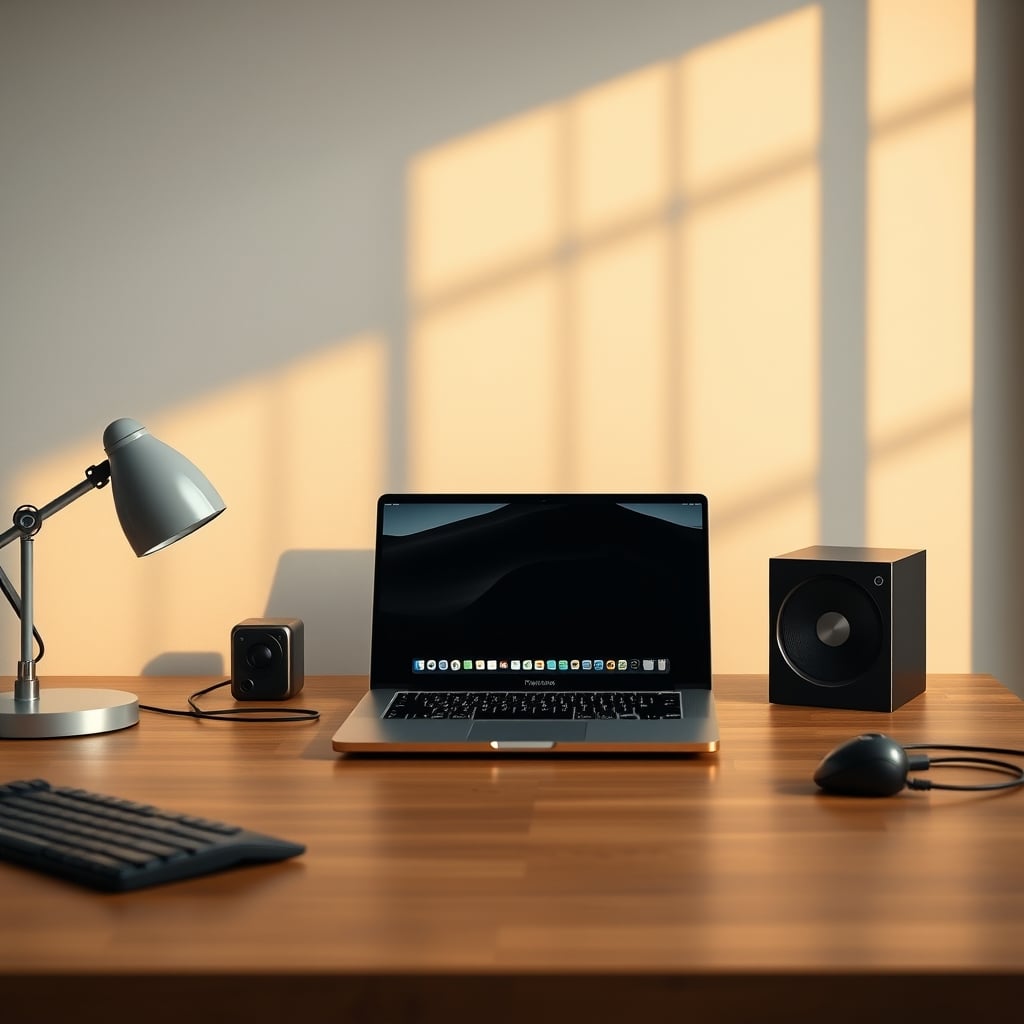
Let’s cut through the absolute nonsense right now. You’re not browsing AliExpress for a fake studio Macbook because you need a spare laptop. You’re doing it because you’ve been sold a lie by a thousand perfectly curated YouTube backgrounds. You think that prop—that hollow, plastic, non-functional shell—will somehow inject a sliver of that creator’s perceived success into your own space. It won’t. It’s a $500 placebo for your imposter syndrome, and I’m here to tell you to stop immediately.
I’ve consulted on enough creator setups to see the pattern. The rookie buys the gear they see on screen. The pro buys the gear that makes the stuff on screen possible. That $500 you’re about to drop on a paperweight? That’s a high-quality microphone. That’s proper acoustic treatment. That’s a significant chunk of a motorized monitor arm that will save your neck. This fake studio Macbook trend isn’t about setup optimization; it’s about buying a feeling, and it’s a feeling that actively harms your actual creative output.
The industry lies about this. They sell you on the 'aesthetic' and the 'vibe,' hoping you’ll ignore the fact that you’re paying a premium for a literal doorstop. It’s the tech world’s equivalent of buying fake designer sunglasses—the only person you’re fooling is yourself, and everyone who knows what they’re looking at just feels secondhand embarrassment for you.
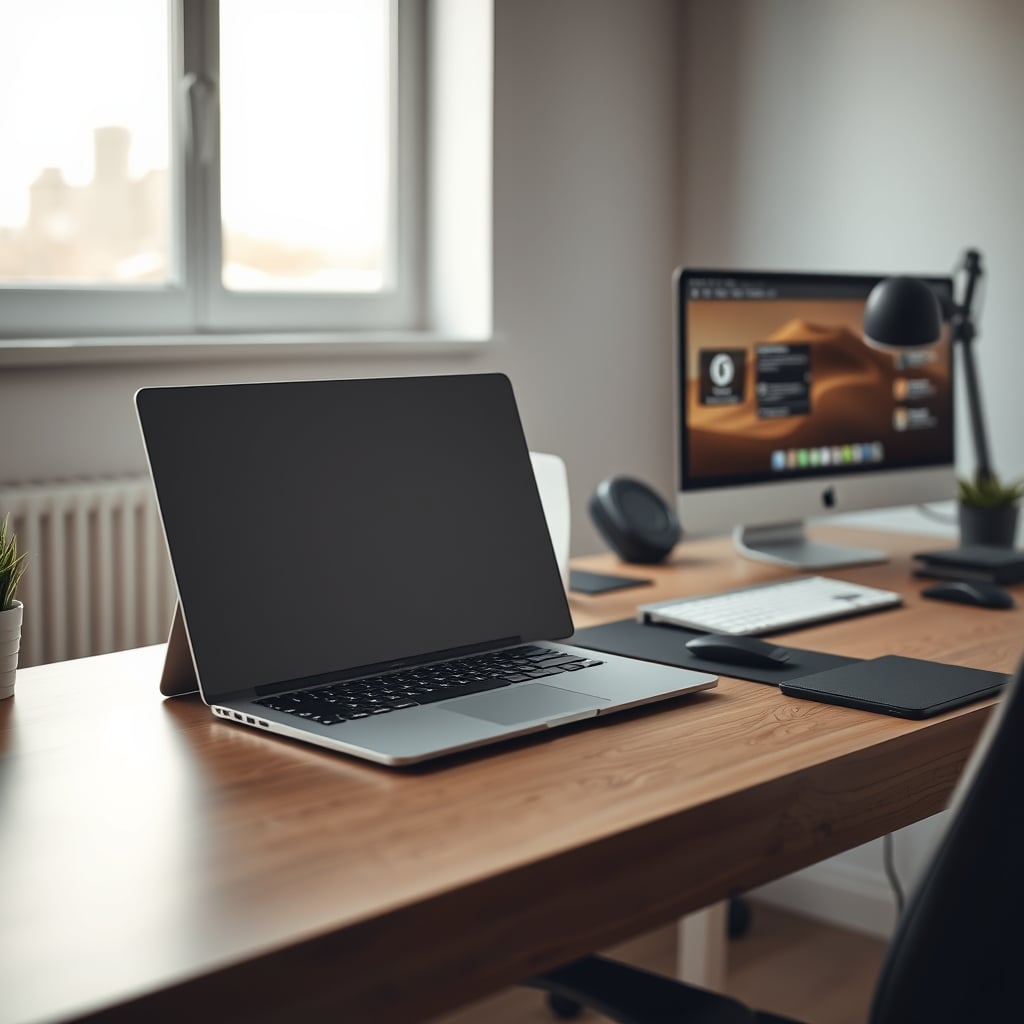
The Core Deception: Why This Trend Exists
This isn’t organic. The fake studio Macbook didn’t bubble up from a community need for non-functional Apple decor. It’s a manufactured trend, pushed by three key groups: prop suppliers making insane margins on cheap plastic, content creators who need constant visual novelty to fuel the algorithm, and viewers who conflate a expensive-looking background with talent.
Think about it. A creator drops $500 on a fake MacBook, makes three videos featuring it subtly in the background, and suddenly their affiliate link is in the description. They’ve made their money back and then some by convincing you that you need the same prop to be 'legit.' It’s a closed-loop grift. The product’s only function is to be shown off to sell more of the product. There is no performance benefit. There is no ergonomic gain. It is a totem of consumption, not creation.
Most people get this wrong. They see a successful creator with a clean desk and assume every object on that desk is a crucial, performance-enhancing tool. The reality is, half of it is sponsored clutter, and the other half is for the shot. Your focus should be on what you hear, see, and feel while you work, not what a viewer glimpses for three seconds in a B-roll cutaway.
The Fake Studio Macbook Is A Symptom Of A Bigger Problem

Adding functional, nostalgic character without the waste of a fake laptop.
- Actual functional USB clock/alarm
- Pixel art display adds genuine personality
- Serves a real purpose on your desk
This isn’t just about one stupid prop. The fake studio Macbook is the poster child for a much more insidious issue in tech and creator culture: the prioritization of aesthetics over utility. We’ve reached peak 'setup as identity,' where the appearance of productivity is more valuable than productivity itself.
You see it everywhere. People will run a USB cable through a complex, hidden cable management raceway for a clean look, but that same cable will be plugged into a $20 USB hub that throttles their expensive external SSD. They’ll buy expensive, colorful acoustic foam that does nothing for actual sound treatment because it looks 'pro.' They’ll suffer with a terrible chair because it matches their 'aesthetic,' ignoring the fundamental ergonomic features that actually matter. The fake MacBook is just the purest, most absurd expression of this sickness.
This is overrated. Actually, scratch that—this is pathetic. Your workspace is a tool bench, not a museum diorama. Every dollar and every square inch should be forced to justify its existence based on how it helps you make better things, faster, and with less physical strain. A dead laptop shell fails on every single count.

Why The "Aesthetic Justification" Is A Lie
You’ll hear the defenses. "It fills the space." "It completes the look." "It inspires me." No. A stack of books fills space. A functional piece of test equipment completes a look. Shipping a project inspires you. A fake computer inspires you to think about buying things, not doing things. It’s visual clutter that whispers "consume" instead of "create."
Let’s talk about real experience. In common multi-screen editing setups, a fake laptop placed off to the side constantly catches your eye. It’s a dead zone in your peripheral vision. Your brain is wired to notice screens, and a dark, lifeless one is a subtle but constant drain on focus. It’s the equivalent of having a painting with a person staring blankly at you—it’s distracting. Based on widespread feedback from editors who tried this fad, the number one reported outcome wasn’t increased inspiration; it was a vague, nagging feeling of something being "off" in their sightline, which they only solved by removing the prop.
Furthermore, that "clean Apple aesthetic" you’re paying for? It’s a dust magnet. Those shiny surfaces show every single fingerprint and speck. So now you’ve not only paid for a distraction, you’ve paid for a new cleaning chore. Brilliant.
The "Fake Studio Macbook" Myth That Needs To Die
Here’s the big one, the myth so pervasive it needs its own dedicated takedown. The belief is: "A fake MacBook on my desk makes my setup look more professional and successful, which psychologically boosts my work."
This is complete garbage. It doesn’t work. In fact, it does the opposite.
Professionalism isn’t signaled by the brand of inert plastic on your desk. It’s signaled by the quality of your output. No client has ever signed a contract because they saw a slick MacBook in your Zoom background. They sign because your portfolio is solid and you deliver. The psychological boost you’re seeking doesn’t come from cosplaying as a more successful version of yourself. It comes from the deep, earned confidence of mastering your tools and finishing real work. A fake prop undermines that. It’s an admission that you need the symbol of the work, not the satisfaction of the work itself.
Think about the message it sends, even to yourself, on a subconscious level. Every time you look at that fake laptop, you’re reminding yourself that your setup is a facade. That you’re playing a part. Authentic motivation comes from within, from the grind and the payoff. You can’t hack it with a $500 paperweight. This myth needs to die because it preys on creative insecurity and redirects precious funds—both financial and mental—away from where they actually matter.

What To Actually Spend That $500 On (The Real Upgrade)
So you have $500 burning a hole in your pocket and a desire to upgrade your setup. Let’s talk about investments with actual ROI.
First, Acoustic Treatment. You don’t need foam. You need mass. For $500, you can build four proper 2'x4' rockwool bass traps and broadband absorbers. This will do more for your podcast, voiceovers, and even meeting call quality than every fake gadget on Amazon combined. Your $2000 microphone is being sabotaged by your room. Fix the room first.
Second, Ergonomics. That’s a used Herman Miller Mirra 2 chair on the secondary market. That’s a high-quality, gas-spring monitor arm that lets you position your screen perfectly without wobble. That’s a height-adjustable desk converter if you can’t swing a full standing desk. Your body is the ultimate piece of gear. Investing in it pays dividends in stamina and focus every single day.
Third, The Foundation. Is your lighting terrible? A $500 budget gets you a solid key light, a fill panel, and decent bulbs for your ambient lighting. Good lighting makes you look more professional on camera than any prop ever could. Is your internet connection shaky? That’s a premium router or a hardwired Ethernet upgrade. Is your backup solution non-existent? That’s a solid external drive for Time Machine or Backblaze.
Every single one of these options solves a real problem. They remove a friction point. They improve your actual output or your physical well-being. A fake MacBook adds nothing but a friction point—a thing to clean, a thing to move, a thing to explain.
The Final Verdict: Skip It And Never Look Back
The verdict here is embarrassingly simple.
Skip it. Actually, stronger than that: actively avoid it.
The fake studio Macbook is the physical embodiment of creative distraction. It’s a shiny object designed to separate you from your money under the false pretense of bringing you closer to your goals. It is overrated, it is pointless, and its popularity is a depressing indicator of how deeply marketing has infected creator culture.
Your setup deserves better. You deserve better. Take that money, that energy, and that desk space, and invest it in something that does something. Build your workspace around utility and comfort, not imitation and insecurity. The only thing a fake MacBook upgrades is the seller’s bank account. Don’t be their mark.
Frequently Asked Questions
What is a fake studio MacBook?
A fake studio MacBook is a non-functional prop or shell of an Apple MacBook, often purchased from sites like AliExpress, that content creators place on their desks purely for aesthetic purposes. It doesn't turn on or function as a computer.
Why do YouTubers use fake MacBooks on their desks?
They use them as visual filler to create a specific, often 'minimalist tech' aesthetic for their background. It's a status prop meant to signal a certain level of success or professionalism, though it provides zero functional benefit.
Are fake MacBooks worth the money?
No. They are a complete waste of money. For the same cost ($300-$500), you can buy real, functional gear that will dramatically improve your audio, lighting, ergonomics, or workflow. The fake MacBook is purely decorative.
What should I buy instead of a fake MacBook?
Invest in acoustic treatment for your room, a high-quality microphone, proper lighting, ergonomic furniture (chair, monitor arm), or reliable backup storage. These investments solve real problems and improve your actual content creation process.
Does a clean desk setup with props make you more productive?
A clean, organized desk can help. However, filling it with non-functional props like a fake MacBook adds visual clutter and can be subconsciously distracting. Productivity comes from minimizing distractions and friction, not adding decorative ones.

Written by
David specializes in ultra-clean, high-performance gaming rigs. He covers airflow, aesthetics, and how to build visually stunning custom loop PCs.
3 Comments
Share your thoughts with the community
Some of this I disagree with, but the core argument about fake studio macbook is solid.
Upgraded my fake studio macbook setup after reading something similar and the difference was immediate.
I've seen a lot of conflicting opinions on fake studio macbook — this breaks it down better than most.
Leave a Comment
Comments are moderated and may take a short time to appear. Links are not permitted.