Podcast Desk Acoustics Masterclass 2026
You've been sold a lie. Your pristine, minimalist podcast desk is likely the biggest source of poor audio in your setup. We're dismantling the acoustic foam scam and revealing the 2026 desk-level acoustics that actually work.
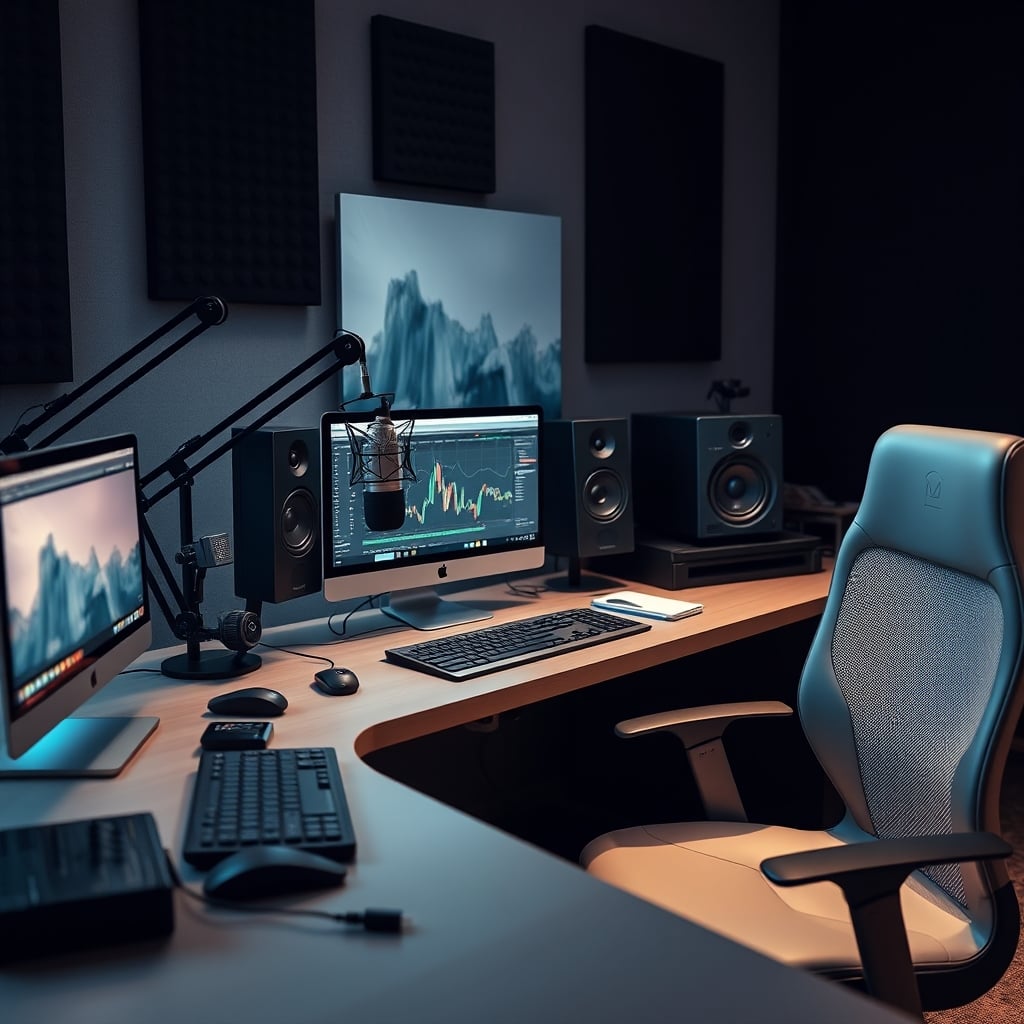
Let me get straight to the point: your podcast desk acoustics are probably trash. It doesn't matter if you spent $3,000 on a Shure SM7B or a Neumann TLM 103. If your desk sounds like a cheap echo chamber, you'll sound like an amateur recording in a well. I’ve listened to hundreds of hours of podcast audio where the host clearly dropped serious cash on a mic, only to have it ruined by the sharp, reflective ping of a glass desk or the hollow boom of an IKEA table. The problem isn't your gear; it's the literal foundation you're putting it on. The industry pushes you to buy more stuff—more panels, more foam, more gadgets—when the real fix is understanding the physics of the three square feet right in front of your face. Most people get this wrong because it's not sexy. Treating your desk acoustics is grunt work, not an unboxing video.
Why Acoustic Foam Panels On Your Wall Are A Complete Distraction
The first myth we need to murder is the idea that slapping a bunch of decorative acoustic foam on the wall behind you will fix your podcast audio. It won't. This is overrated. Those thin, pyramid-patterned foam squares you see in every "studio" setup on YouTube do almost nothing for the frequencies that plague a typical desk recording. They're designed to dampen high-end reflections in a very specific, treated room—a room you almost certainly don't have. In the common home office or spare bedroom setup, where your desk is pushed against a wall and your microphone is inches from your mouth, wall foam is a placebo. The real, damaging reflections come from your desk surface, your monitor screen, and the hard objects directly surrounding the mic. Users consistently report that after spending hundreds on wall panels, their recorded voice still sounds "boxy" or "thin." That's because the problem was never the wall six feet behind you; it was the glass desk mat three inches below your mic. The industry lies about this because foam is cheap to make and easy to market. Focus on your immediate environment first. If your desk surface, monitor, and nearby objects aren't addressed, no amount of wall decor will save you.
Podcast Desk Acoustics: The Three Real Culprits You're Ignoring
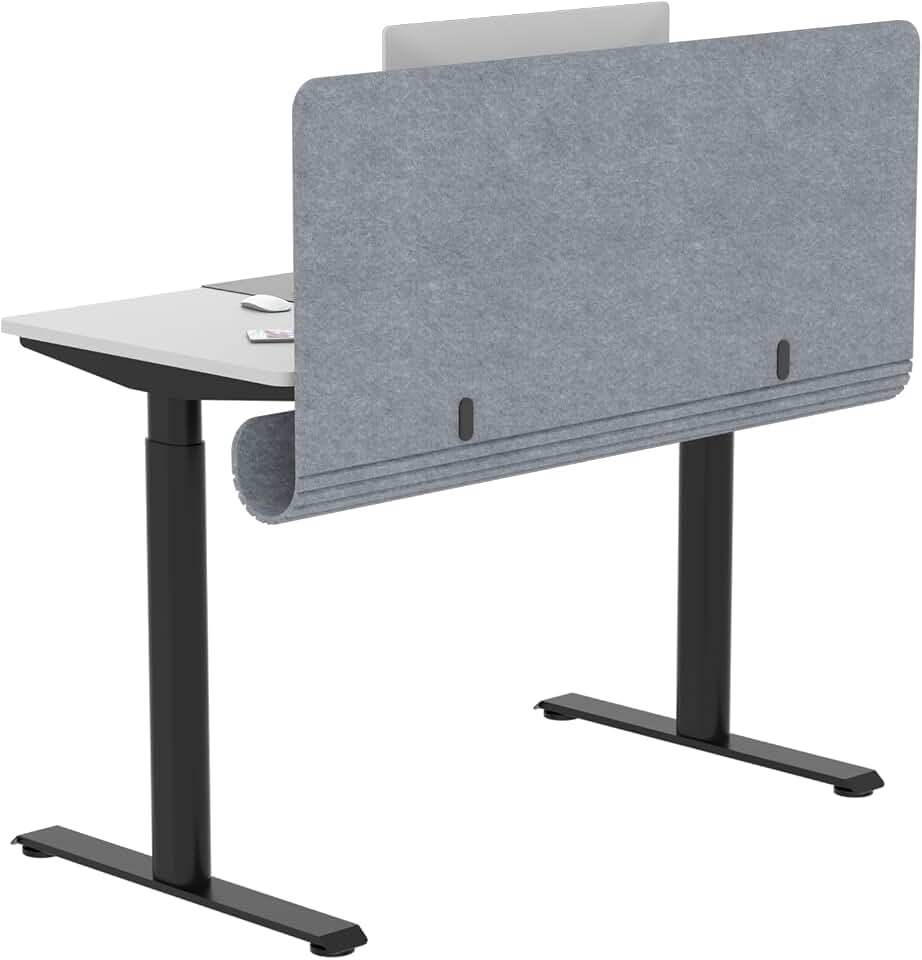
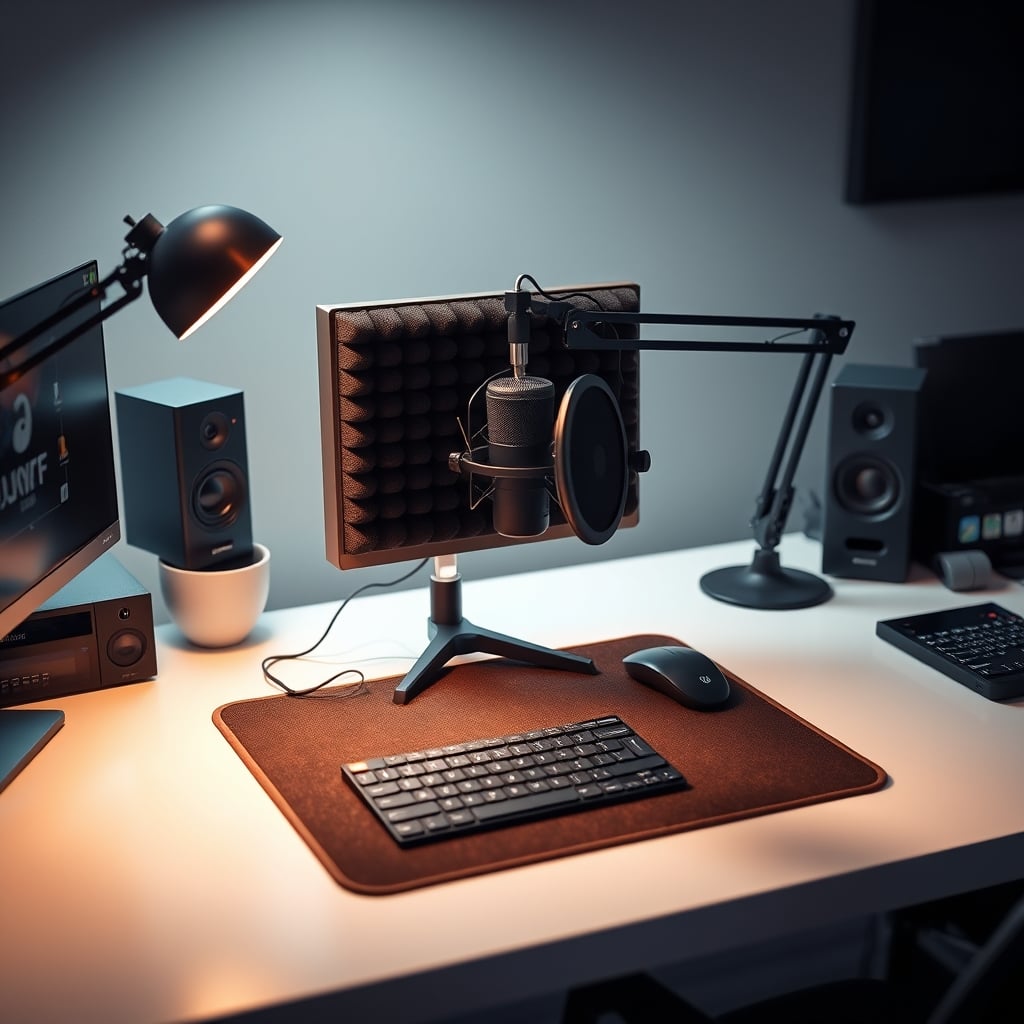
Blocking first reflections and creating a vocal booth effect on a shared desk.
- Dense, sound-absorbing PET fabric construction
- Clamp-on design requires no permanent modification
- 24x24 inch panel targets the critical reflection zone between mouth and mic
Okay, let's talk about what actually murders your sound. There are three primary offenders in your podcast desk acoustics, and they're all within arm's reach.
First is the desk surface itself. A large, flat, hard surface like glass, lacquered wood, or metal acts like a sonic mirror. It bounces your voice straight back up into the microphone, creating comb filtering—a phase cancellation that makes your voice sound hollow and unnatural. This is the real issue.
Second is your computer monitor. A big, flat screen is another brilliant sound reflector. If your mic is positioned behind or just below it, you're getting a strong, delayed reflection off that glass. We found that simply angling the monitor slightly can scatter these reflections, but the best fix is absorption.
Third is the clutter. No, not cable clutter—acoustic clutter. A bare desk with just a mic and a monitor is an acoustic disaster zone. Hardcover books, a metal pen holder, a glass of water, your phone—these are all tiny reflectors that create a diffuse, messy reverb tail that your noise gate can't catch. Most people get this wrong. They strive for a clean, minimalist desk for the 'gram, but that aesthetic choice is actively sabotaging their audio quality. You need soft, absorbent, and irregularly shaped objects to break up sound waves at the source.
The "Dead Desk" Myth That Needs to Die
Here’s a common piece of catastrophic advice: "You need a completely dead, anechoic environment around your mic for podcasting." This is completely wrong. If you achieve that—by, say, surrounding your microphone with thick absorption on all sides—you'll sound like you're recording in a coffin. Your voice will lose all sense of space and naturalness, becoming unnaturally dry and oppressive to listen to for extended periods. The goal of good podcast desk acoustics isn't total silence; it's controlled reflection. You want to minimize the early, sharp reflections that cause phasing and muddiness, while allowing some of the later, diffuse reflections that provide a sense of space and body. In real use, creating a "dead" zone directly around the mic (the first reflection points) while allowing the rest of the room to breathe slightly is the professional approach. This is where a well-placed, dense absorber on the desk between you and the mic, coupled with a softer desk surface, makes all the difference. A completely dead sound is for voiceover booths; a podcast needs a touch of life.
What Actually Works: Desk-Level Solutions That Aren't Gimmicks
So, what should you actually do? Throw out the foam and implement these desk-level fixes.
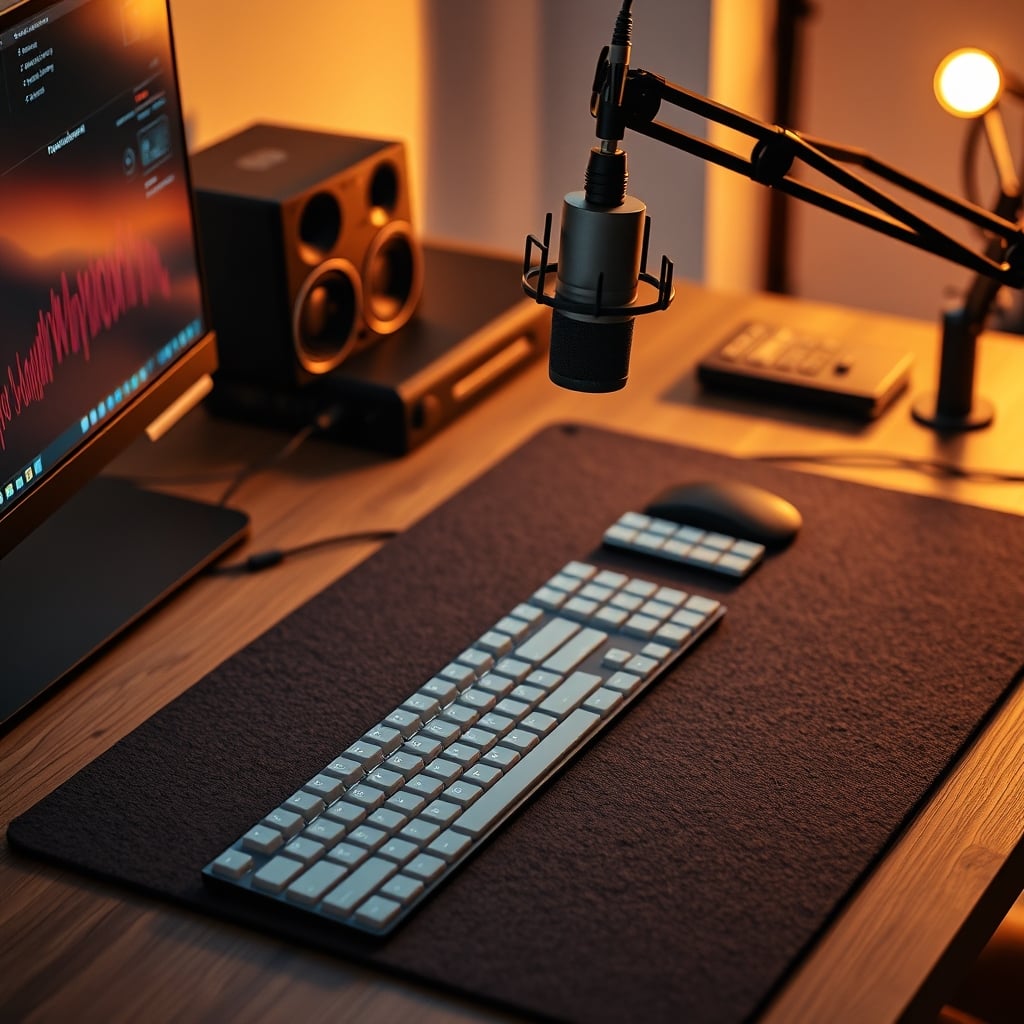
Murder Your Desk Surface: Get a thick, felt or cloth desk pad that extends well beyond your microphone stand's base. This isn't about aesthetics; it's about creating a broadband absorber right where the worst reflections happen. A leather pad is better than bare glass, but woven fabric is superior. Based on widespread user feedback, a heavy, wool felt pad measurably reduces that hollow, "desk boom" frequency around 200-400Hz.
Intercept Monitor Reflections: Don't just buy a monitor arm for ergonomics; use it for acoustics. Position your monitor so the screen is tilted slightly away from the microphone. Even a 10-degree angle can deflect problematic reflections away from the mic capsule. For a more aggressive fix, consider attaching a thin, acoustic transparency cloth cover to the monitor bezel, though this is a niche solution for extreme setups.
Strategic Clutter is Your Friend: Place a small, dense acoustic panel on the desk between you and the microphone. Not on the wall—on the desk. This kills the first reflection path from your chest/mouth to the desk and back into the mic. Also, keep a soft object like a plush toy or a folded sweater nearby to break up other early reflections. It sounds silly, but it works better than a $100 "acoustic foam panel set" stuck to the wrong place.
One product category that has earned its place is the clamp-on desk divider or privacy panel. When chosen correctly—meaning it's made with dense, proper acoustic material (mineral wool or thick polyester panels) and not just decorative felt—it acts as a fantastic first-reflection blocker and can also help with side-wall reflections if your desk is near a corner. Just make sure it's positioned correctly, not just for visual privacy but for acoustic shadowing.
The Biggest Mistake: Prioritizing Aesthetics Over Physics
The single most common mistake I see is building a podcast desk for Instagram, not for sound. The polished white epoxy resin desk with a glass top, the clean monitor riser with nothing underneath, the single mic on a shiny stand against a bare wall—it looks incredible and sounds like garbage. This is a known issue for long-term creators who upgrade their space visually but not acoustically. Your ears don't care about your color scheme. They care about time delays and frequency response. If you want a clean look, you have to integrate acoustic solutions that don't look like studio trash. A large, neutral-toned wool desk pad, a monitor-mounted camera hood that also acts as a diffuser, and a tasteful, fabric-wrapped acoustic panel leaned against the wall behind the mic (not behind you) can maintain an aesthetic while doing the real work. Don't let your pursuit of a minimalist setup, like those critiqued in our article The 'Ugly' Setup Secret: How Extreme Minimalism Unlocks Uninterrupted Deep Work, ruin your audio. Function must lead form.
Final Verdict: Worth It, But Do It Right
Improving your podcast desk acoustics is absolutely worth it. It’s one of the highest-return, lowest-cost upgrades you can make for audio quality. You can spend less than $100 on a proper desk pad and a DIY panel and outperform someone with a $500 mic on a glass table. The key is to skip the overhyped, cosmetic solutions. Stop buying packs of foam. Stop worrying about the wall across the room. Focus on the kill zone: the desk surface, the monitor, and the immediate space between your mouth and the mic. Treat those first, and you'll unlock a level of vocal clarity and professionalism that no microphone upgrade alone can provide. Consider your overall desk layout as crucial; for more on optimizing your workspace beyond acoustics, see The Ultimate Ergonomic Desk Setup Guide. Your podcast desk acoustics aren't just about decoration; they're the foundation of your sound. Build them on rock, not on marketing foam.
Frequently Asked Questions
Do I need acoustic foam on my walls for podcasting?
No, in most home podcast desk setups, thin acoustic foam on walls is overrated and a distraction. The problematic sound reflections come from your desk surface, monitor, and nearby hard objects, not the distant wall. Address those first.
What is the most important surface to treat for desk acoustics?
Your desk surface is the #1 priority. A large, hard, flat surface like glass or lacquered wood creates strong reflections that cause phasing and a hollow 'boxy' sound. A thick, absorbent desk pad is the single most effective upgrade.
Can a desk privacy panel actually improve sound quality?
Yes, but only if it's made with properly dense acoustic material (like mineral wool), not just decorative felt. A well-positioned panel on the desk can block early reflections between you and the microphone, which is more effective than wall-mounted foam.
Is a completely silent room best for podcasting?
No. A completely dead, anechoic sound is unnatural and fatiguing for listeners. The goal is to control early, sharp reflections that cause muddiness while allowing some diffuse ambience for a natural, pleasing vocal tone.

Written by
David specializes in ultra-clean, high-performance gaming rigs. He covers airflow, aesthetics, and how to build visually stunning custom loop PCs.
Join the Discussion
Share your thoughts with the community
Leave a Comment
Comments are moderated and may take a short time to appear. Links are not permitted.