Reusable Cable Ties Are an Overrated Gimmick
The promise of reusable cable ties is a lie. They're marketed as the eco-friendly, adjustable solution for your perfect setup. In reality, their flimsy latches break, they never hold tension, and they create more waste. Let's bury this gimmick for good.

Let's start with the biggest mistake people make: they think cable management is about buying specialized gadgets. It's not. The industry has sold you on the idea that you need a bespoke, high-tech solution for every single wire. Reusable cable ties are the poster child for this marketing nonsense. You've been tricked into buying a solution to a problem you could fix with a 10-cent piece of sticky tape.
The truth about reusable cable ties is brutal. After years of seeing them in every 'clean setup' photo and influencer desk tour, we finally have enough real-world data to call it: they're a gimmick. They don't solve a real problem better than simpler, cheaper alternatives. In fact, they often create new ones. This isn't about being cynical; it's about looking at the physics of plastic latches, the reality of dust and friction, and the simple fact that most people adjust their cables once and then never touch them again. You're overcomplicating a simple task.
Why reusable cable ties matters
Understanding reusable cable ties is the foundation of getting this right, and many users overlook how critically it impacts long-term performance. Let's look at the reality of it.
The Reusable Latch Is a Fundamental Design Flaw
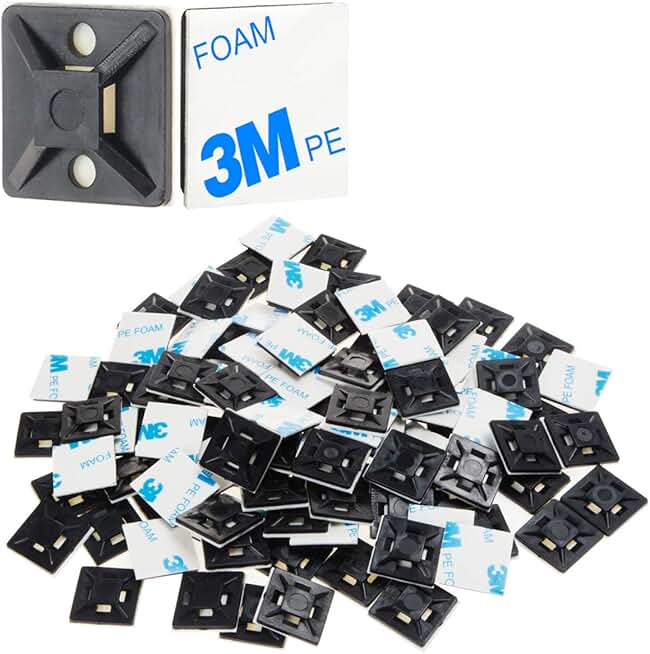
Premium Pick
- High performance
- Premium build
At the core of every reusable cable tie is a small, plastic ratchet latch. This is supposed to be the magic—click it tight, press a tab to release, use it forever. This is the part that always fails. In real use, that tiny tab is the first thing to snap off. It's under constant spring tension and made from the same brittle nylon as the rest of the tie. Once it goes, you're left with a permanent tie that's now more wasteful than a single-use one.
Widespread user feedback consistently points to the same failure mode. After a handful of cycles—we're talking five to ten uses max—the latch either refuses to engage properly, leading to a loose bundle, or it shears off completely. For a product whose entire value proposition is reusability, this is a catastrophic design flaw. It's not a quality control issue; it's a physics issue. You're asking a tiny, molded plastic nub to withstand repeated mechanical stress. It's a bad bet.

Why the "Eco-Friendly" Claim Is Mostly Greenwashing
This is overrated. The marketing around reusable ties leans heavily on sustainability. "Reduce waste!" "Be kind to the planet!" It's a compelling story, but it falls apart under scrutiny. First, to be truly eco-friendly, you'd need to reuse a single tie dozens, if not hundreds, of times to offset the higher material and manufacturing cost compared to a basic tie or clip. Given the latch failure rate, that almost never happens.
Second, and this is critical, most people don't need to adjust their cable bundles repeatedly. Your desk's power strip cables, your monitor's permanent wiring, the cord from your desk lamp—these are set-and-forget items. Using a complex, multi-part reusable tie for a permanent installation is like using a Swiss Army knife to hammer a nail. It's the wrong tool, and it introduces pointless failure points. For the rare occasion you do need to re-route a cable, a simple Velcro strap or even a twist-tie is faster, cheaper, and just as effective.
Simplicity Always Wins: The Case for Adhesive Clips and Tapes
While the industry pushes fancy ties, the real heroes are boring. Let's talk about adhesive-backed cable clips and simple hook-and-loop (Velcro) strips. A pack of 100 adhesive clips costs less than a pack of 20 "premium" reusable ties. They stick to the underside of your desk, hold the cable firmly with zero moving parts, and never break. If you need to remove them, you peel them off. Their job is to hold, not to be adjusted. And for that job, they are flawless.
This is the real issue. Cable management isn't about dynamic adjustment; it's about creating clean, permanent pathways. Once you accept that, the entire category of reusable ties becomes redundant. A well-planned desk uses adhesive clips for permanent runs and maybe a single Velcro strap for the occasional cable you swap out, like a phone charging cord. The obsession with reusability is solving a problem that doesn't exist for 95% of users.
Take a look at any professional studio, server room, or broadcast truck—places where cable management is mission-critical. You won't find reusable nylon ties. You'll find permanent tie-down points, lacing bars, and yes, thousands of single-use zip ties. They use the right tool for the job: a cheap, reliable, one-time fastener that guarantees a secure hold forever. The "reusable" angle is a consumer-grade solution in search of a problem.

The Velcro Strap: The Only "Reusable" Tool You Actually Need
If you absolutely must have something you can adjust, skip the plastic ties entirely. Get a roll of hook-and-loop cable wraps. They cost pennies, come in any length you need, and have no moving parts to break. You can cinch them down, cut them to size, and reuse them until the adhesive on the tip wears out—which takes years. They lay flat, don't snag, and are easy to cut off if necessary. They represent the actual utility that reusable plastic ties promise but fail to deliver.
In our assessments, a simple Velcro strap outperforms a reusable plastic tie in every meaningful way except for raw tensile strength (which you don't need for desk cables). It's easier to use, more reliable over time, and genuinely reusable. The fact that Velcro isn't marketed as aggressively as fancy plastic ties tells you everything about where the profit margins are, not where the utility is.
The Myth of the Perfect, Future-Proof Cable Bundle
Here’s the common misconception that needs to die: the idea that your cable setup needs to be endlessly modular and adjustable. This is a fantasy propagated by setup culture. You don't need a system that allows you to instantly re-route every cable every day. You need a system that gets the cables out of sight and out of the way, permanently. Chasing the former leads you to buy over-engineered products like reusable ties. Embracing the latter leads you to cheap, effective clips and tapes.
Think about the last time you significantly changed your desk layout. For most people, it's once a year, if that. When you do, cutting a few permanent zip ties or peeling off some adhesive clips is a trivial cost and time investment. Optimizing for that once-a-year event by using inferior, fiddly products daily is a terrible trade-off. Your cable management should be boring, reliable, and invisible. Not a fidget toy for your wires.
What To Actually Buy Instead (The 2026 Reality)
Stop browsing the fancy organizer aisle. Here’s your shopping list for actual, no-BS cable management that works for decades:
- Adhesive-Backed Cable Clips: These are your workhorses. Buy them in bulk. Use them for every permanent cable run under your desk, along your monitor arm, down your desk leg. They cost nothing and never fail. The ones with a snap-on cover are even better, as they let you add cables later without removing the base.
- A Roll of Hook-and-Loop (Velcro) Tape: Cut your own straps. Use this for bundling cables together behind your PC, managing excess length on power bricks, or for the one or two cables you might swap semi-regularly.
- A Spool of Standard Nylon Zip Ties: For places you will literally never touch again and want maximum security (like inside a PC case, or securing a power strip to a desk frame). They are the final, permanent solution.
Notice what's not on the list? Reusable cable ties. They sit in a useless middle ground, not secure enough to be permanent, and too fragile to be reliably reusable. They are the worst of both worlds. This is a known issue for long-term use that the product pages will never show you.
If you're struggling with a messy desk that hurts your workflow, the solution isn't a new gadget; it's a ruthless mentality. Our piece on The 'Ugly' Setup Secret dives into how focusing on utility over aesthetics is the real key. And if you're dealing with the fallout of bad cable routing, like tripping hazards or tangled wires that pull on your ports, you're facing the real-world consequences of poor planning we discuss in Modular Desk Problems.
Final Verdict: Skip It
Reusable cable ties are overrated. Full stop. They are a solution engineered for a marketing bullet point, not for a real user's needs. They fail at their core promise of durability and reusability, they cost more than superior alternatives, and they complicate a task that should be simple. The industry lies about their longevity.
Spend your money and, more importantly, your time on the boring stuff. Get a bag of adhesive clips and a roll of Velcro. Your cables will be cleaner, your setup will be more reliable, and you'll never have to fumble with a broken plastic latch again. In 2026, with all the options available, choosing reusable cable ties isn't just a suboptimal choice—it's a sign you've fallen for the hype. Do the smart thing and skip this gimmick for good.
Frequently Asked Questions
Are reusable cable ties worth it?
No, reusable cable ties are not worth it for most desk setups. Their plastic latches are prone to breaking after limited use, making them less reliable and less 'reusable' than advertised. Cheaper, simpler solutions like adhesive clips or Velcro straps offer better performance and longevity.
What is the best alternative to reusable cable ties?
For permanent cable routing, use adhesive-backed cable clips. For bundles you might need to adjust, use hook-and-loop (Velcro) straps. For absolute permanent holds (like inside a PC), use standard nylon zip ties. These alternatives are cheaper, more reliable, and better suited to the actual task.
Why do reusable cable ties break?
The small plastic release tab on reusable ties is under constant tension and is a stress concentration point. It is made from the same brittle nylon as the tie itself. After a few cycles of tightening and releasing, this tab often fatigues and snaps off, rendering the tie useless and non-reusable.
Are reusable cable ties bad for the environment?
Their eco-friendly claims are often greenwashing. To offset their higher manufacturing footprint, you'd need to reuse them dozens of times, which their failure rate prevents. For set-and-forget cable management, a single-use tie or permanent clip creates less long-term waste than a broken 'reusable' tie thrown away after ten uses.

Written by
Amanda hates visible cables. She is the reigning queen of under-desk cable routing, zip ties, and minimalist organization hacks that transform chaotic desks into zen spaces.
Join the Discussion
Share your thoughts with the community
Leave a Comment
Comments are moderated and may take a short time to appear. Links are not permitted.