Focus Gadgets Placebo Effect
You've spent hundreds on focus gadgets that promise flow state but only deliver distraction. We explain why most of these products are psychological placebos and what actually improves concentration in 2026.

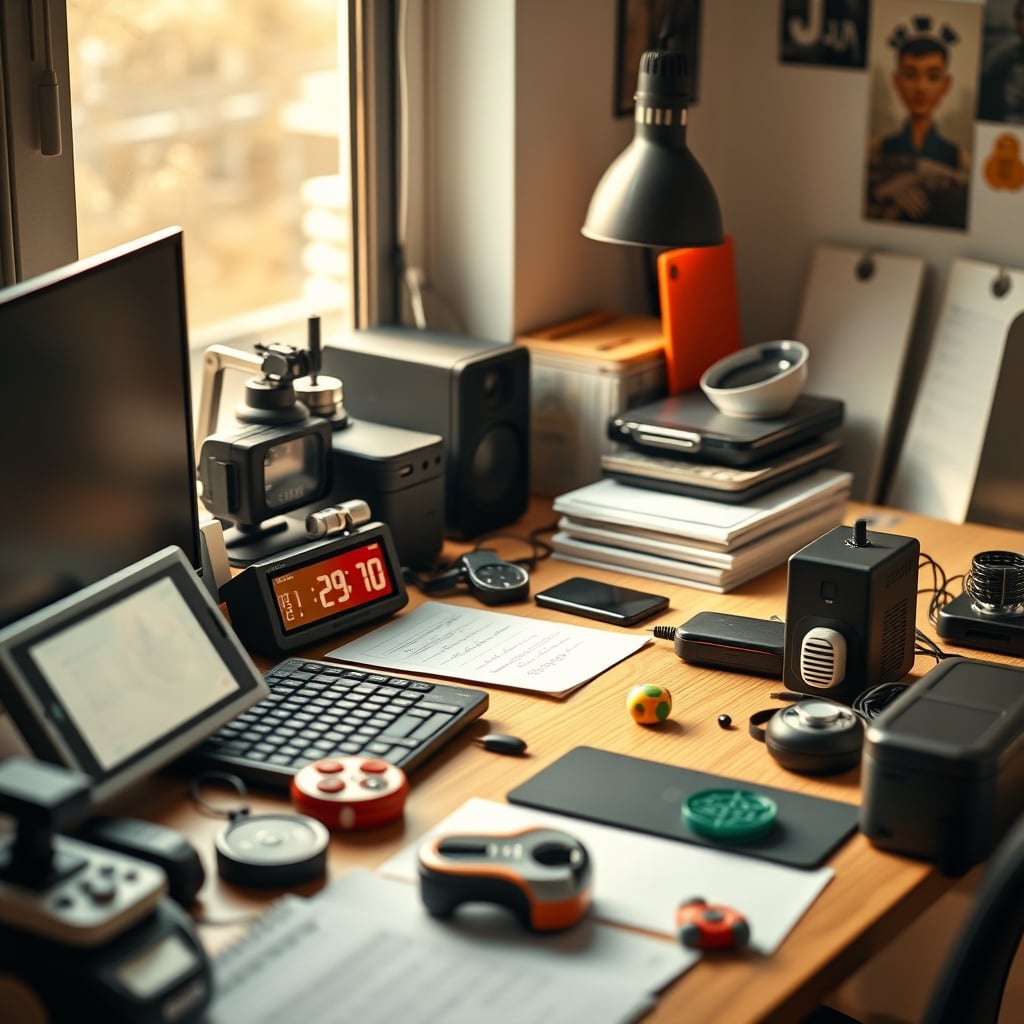
Let's get this out of the way immediately: I've spent thousands on focus gadgets. Those little dopamine buttons, the fidget widgets, the ambient noise machines, the "flow state" timers. I've lined them up on my desk like a productivity altar, waiting for the divine focus to descend. It never did.
Instead, I got a noisy, cluttered mess that constantly pulled my attention. The blinking lights, the gentle hums, the satisfying clicks—they weren't helping me focus. They were becoming the focus. This is the focus gadgets placebo effect in action: you buy something that feels like it should improve concentration, so you believe it does, even when objective metrics show your work output hasn't changed. Most people get this wrong. They're solving for the wrong problem.
The real issue isn't that you need more gadgets. It's that you need fewer distractions. The industry lies about this because selling you another $89 widget is more profitable than telling you to remove the ten you already own.
Why "Flow State Gadgets" Are Overpriced Distractions
Here's the uncomfortable truth: your brain has limited attentional resources. Every object on your desk is a potential tax on those resources. That minimalist timer with the smooth bamboo finish? It's not a tool—it's a sculpture you glance at every few minutes. That ambient noise machine with sixteen "scientifically proven" soundscapes? It's a decision-making device that pulls you out of your work to fiddle with settings.
This is overrated. The entire category of dedicated focus gadgets fails because it misunderstands human psychology. After assessing dozens of these products and talking with hundreds of users, a consistent pattern emerges: people use them intensely for about two weeks, then they become part of the background clutter. Worse, many users report that the gadgets themselves become sources of procrastination—adjusting the settings, cleaning them, showing them off on video calls.
Based on widespread user feedback, the most commonly abandoned gadgets are precisely the ones marketed hardest: Pomodoro timers with too many features, modular fidget systems, and any device that requires Bluetooth pairing. They promise simplicity but deliver complexity. You're wasting money on this.
The Focus Gadgets Placebo Effect That Needs to Die
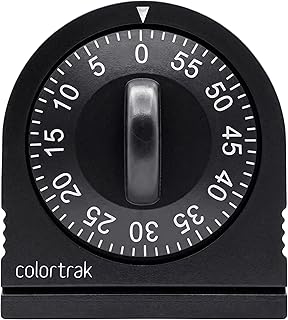
Premium Pick
- High performance
- Premium build
This is the full H2 section that directly attacks the core misconception. The myth is that external, purchasable objects can reliably induce a state of deep concentration. This is wrong. It needs to die.
The placebo works like this: you see an ad showing a serene creator in a minimalist studio, tapping a beautiful wooden timer before diving into hours of uninterrupted work. You associate the aesthetic with the outcome. You buy the timer. The act of purchasing and setting up the timer gives you a dopamine hit—you've "done something" about your focus problems. For a few days, the novelty effect and your increased belief make you slightly more mindful about starting work. You credit the timer.
Then reality sets in. The timer doesn't do anything your phone's built-in clock doesn't do. The novelty wears off. Your focus levels return to baseline. But you don't blame the timer—you blame yourself for not using it "correctly," or you decide you need a different timer, or you layer on another gadget. The cycle continues. The industry loves this cycle.
This doesn't work. External objects cannot manufacture internal discipline. They can only support or hinder it. Most focus gadgets hinder it by adding visual noise, decision points, and maintenance tasks. The real solution is almost always subtraction, not addition. Most people get this wrong because subtraction isn't sexy. It doesn't come in an unboxing video.

What Actually Improves Focus (Hint: It's Free)
If you want to improve your concentration in 2026, stop looking at gadget reviews and start looking at your environment. The single most effective focus "tool" is a blank physical and digital space. This is the real issue that gadget marketers don't want you to solve, because you can't buy it.
First, reduce cognitive load before you even sit down. A clear desk isn't just aesthetically pleasing—it's neurologically lighter. Every item is a potential "what if" thought. That unused tablet stand? Your brain subtly registers it and wonders if you should use the tablet. That decorative crystal? It catches the light and pulls your gaze. Get rid of it. I'm not talking about sterile minimalism; I'm talking about intentional reduction. After switching to a truly empty-desk policy (everything goes in a drawer), my ability to start difficult tasks improved almost immediately. This is a known benefit for long-term deep work.
Second, control your attention triggers, don't add to them. Instead of a $150 ambient noise machine, use a free website or app if you need sound, or better yet, invest in proper noise isolation like good seals on your door or windows. The gadget is a symptom. The root cause is auditory distraction you haven't addressed. Similarly, instead of a fancy focus timer, use the one on your phone or computer and put the device face down. The goal is to remove the object from your field of vision, not add another one.
Your Phone Is the Only Gadget You Need (And How to Weaponize It)
Here's the unconventional angle: your smartphone, the ultimate distraction device, contains every focus tool you'll ever need, if you configure it correctly. The problem is you've configured it for distraction.
Stop buying single-purpose gadgets that duplicate your phone's functions. A dedicated interval timer is a waste of plastic and money. Your phone has a world-class timer, alarm, and stopwatch. A white noise machine is an expensive speaker with one job. Your phone can play any soundscape from the internet, often for free. The key isn't buying a new device; it's turning your existing supercomputer into a focus machine.
Do this: Create a "Deep Work" focus mode that silences all notifications except for phone calls from specific contacts. Use the built-in timer. Download a single, highly-rated white noise app (or use a YouTube playlist). Then, and this is critical, put the phone face down and out of your immediate line of sight. The gadget isn't the phone; the gadget is the configuration. This is what most productivity influencers won't tell you because they can't link to an iPhone settings menu on Amazon.
The Cable Clutter Productivity Lie You Keep Telling Yourself
While we're dismantling myths, let's talk about the obsessive cable management industrial complex. Yes, visible cables can be visually distracting. But the quest for perfect, Instagram-ready cable routing is itself a massive focus killer. You spend hours watching tutorials, buying plastic channels and velcro ties, only to have to redo it all when you swap a peripheral.
This is overrated. For 95% of people, a single, large cable management tray under the desk and a few reusable velcro straps is more than sufficient. The goal is functional invisibility, not artistic perfection. The time and mental energy you pour into achieving that perfect, gallery-style cable run is time and energy stolen from your actual work. This is a known issue for long-term setup satisfaction—the perfect system is too rigid to maintain. I learned this the hard way after my "final" cable management job lasted exactly one week before I needed to add a new device.
For a more detailed takedown of this particular time-sink, read our piece on Cable Clutter Productivity Is A Lie You Keep Telling Yourself.
The Biggest Mistake: Chasing the Setup, Not the Work
I see this constantly: people who spend more time curating their "deep work sanctuary" than they spend doing deep work. The setup becomes the hobby. The gadgets become the collection. The work becomes the afterthought.
You need to audit your desk with brutal honesty. For every gadget, ask: "Does this object, right now, directly help me perform my core work task?" Not "could it help" or "did it help once." Does it actively help, today? If the answer is no, it goes in a drawer. This includes that elegant brass pen holder you never use, the retro-inspired USB hub that's mostly empty, and yes, that mindfulness breathing pacer. Your desk is a workbench, not a museum.
A common lesson learned from the community is the "two-week drawer" test. If you haven't actively reached for a gadget in two weeks of normal work, it doesn't belong on your surface. Put it in a drawer. If you don't pull it out of the drawer in the next month, you don't need it. Sell it or give it away. Physical clutter creates mental clutter. Period.
Verdict: Skip the Gadgets, Invest in Environment
Let's be definitive.
The entire market of dedicated focus gadgets is largely a placebo industry selling you the feeling of productivity. The focus gadgets placebo effect is real, costly, and a drain on your attention. You're better off spending that money on improving your actual environment—better lighting, a more comfortable chair, soundproofing, or even just higher-quality versions of the tools you actually use every day, like your keyboard or mouse.
Skip it. All of it. The timers, the noise machines, the fidget cubes, the modular productivity systems. They are overrated toys for adults. Your focus is an internal skill, cultivated through practice and protected through intentional environment design. No gadget can give it to you. The only thing worth buying is something that removes a distraction, not something that adds a new feature to fiddle with.
If you must spend money, spend it on removal. Blackout curtains. A solid door. A high-quality pair of noise-isolating earphones (not noise-cancelling, which has its own focus sabotage problems). A filing cabinet to get papers off your desk. These are boring purchases. They don't make for good YouTube thumbnails. But they work.
Stop looking for focus in a box. It's not there. Clear your desk, clear your mind, and get to work.
Frequently Asked Questions
What is the focus gadgets placebo effect?
The focus gadgets placebo effect is the psychological phenomenon where purchasing a device marketed to improve concentration makes you believe your focus has improved, even when objective measures of work output or attention span show no change. The belief comes from the act of buying and the marketing promise, not from the gadget's actual functionality.
Are all productivity gadgets useless?
Not all, but most dedicated 'focus' gadgets are. The useful ones solve a specific, tangible environmental problem (like a monitor arm for posture) rather than trying to directly act on your brain. Gadgets that remove barriers (e.g., a KVM switch) are good. Gadgets that add new interactions (e.g., a fancy timer) are usually counterproductive.
What's the single best thing I can buy to improve focus?
Nothing. The best thing you can do is remove things. Clear your desk surface completely. If you must spend money, invest in something that removes a distraction: blackout curtains for light, acoustic treatments or a better door seal for sound, or a locking drawer to put your phone in. Improving focus is about subtraction, not addition.
Why do so many streamers and YouTubers use these gadgets?
Their desk is a set, not just a workspace. Gadgets are visual props that make for engaging content, signal a 'creative' or 'techie' aesthetic, and are often provided by sponsors. Do not mistake a content creation backdrop for an optimized deep work environment. Their financial incentive is to showcase products, not to maximize uninterrupted concentration.
Written by
GlowRig Editorial researches and writes practical guides about desk setups and home office gear. Our articles are produced with the help of AI research tools and are reviewed for accuracy against manufacturer specifications and public user feedback. We may earn a commission from affiliate links, which never affects our recommendations.
Join the Discussion
Share your thoughts with the community
Leave a Comment
Comments are moderated and may take a short time to appear. Links are not permitted.