Cable Clutter Productivity Is A Lie You Keep Telling Yourself
You've been sold a lie. The endless hunt for perfect cable management isn't unlocking productivity—it's a procrastination ritual disguised as optimization. The real enemy isn't the cable mess; it's the belief that fixing it will fix your focus.
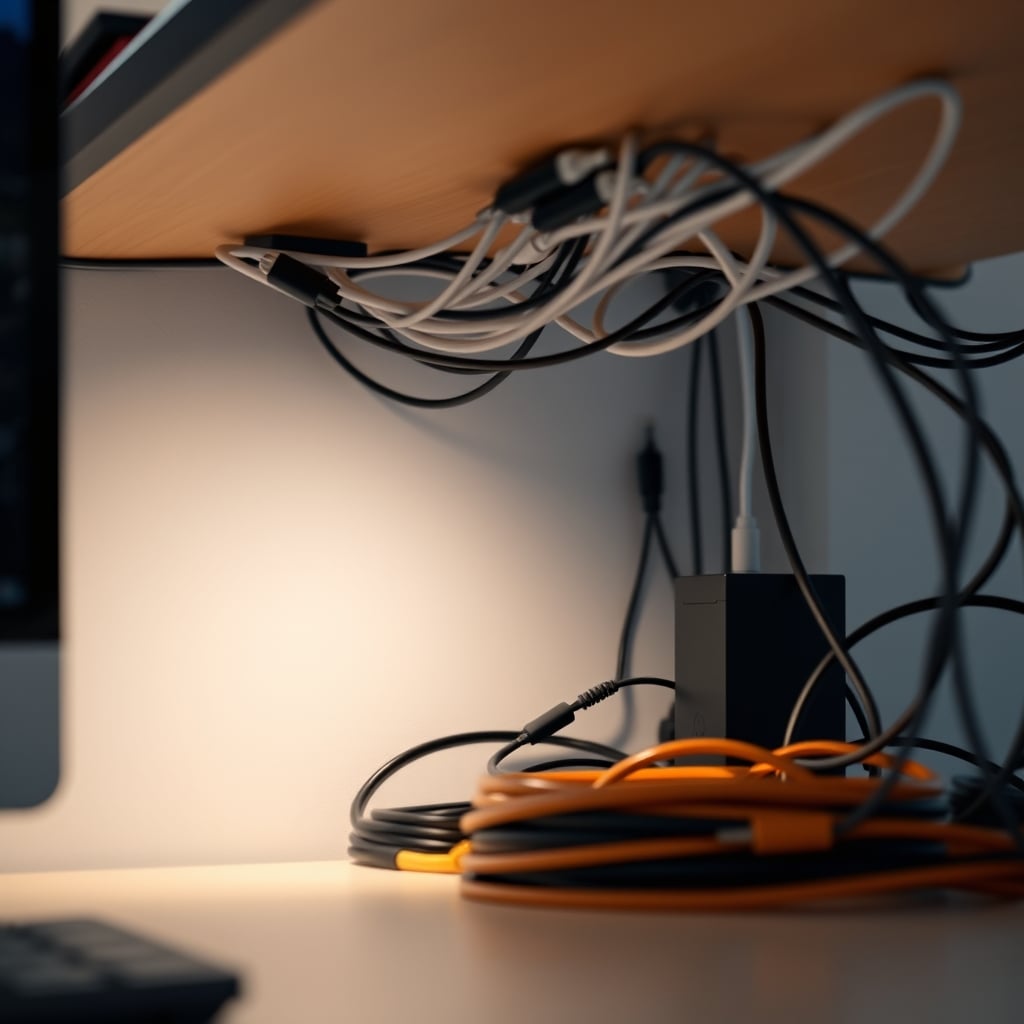
Let’s start with the biggest mistake you’re making right now. You think the tangled nest of wires under your desk is the source of your distraction. You’ve watched the setup tours, bought the Velcro ties, and spent a Saturday afternoon routing every USB-C cable with millimeter precision. And for what? The fleeting dopamine hit of a clean photo for Instagram, followed by the crushing realization on Monday that you’re still just as distracted.
That’s the scam. The entire cable clutter productivity industry is built on a placebo effect. You confuse the act of organizing with the state of being productive. They are not the same. In fact, the obsessive chase for a pristine, photogenic desk is one of the most sophisticated forms of procrastination we’ve ever seen. It feels like work. It looks like optimization. But it’s just mental masturbation.
Real productivity comes from uninterrupted, deep work states. Not from whether your HDMI cable makes a perfect 90-degree turn behind your monitor arm. We need to kill this myth before it wastes another minute of your creative life.

The Obsessive-Compulsive Trap of “Clean Desk” Culture
Walk into any productivity forum or desk setup subreddit, and you’re bombarded with sterile, lifeless battlestations that look more like showroom displays than creative workshops. The message is clear: a clean desk equals a clean mind. This is overrated.
What you’re actually seeing is a cargo cult. People copy the aesthetic without understanding the function. They invest hours and hundreds of dollars into cable channels, magnetic sleeves, and color-coordinated braiding, believing the marketing that this will “declutter their mind.” In real use, after the initial setup photo, these systems become a nightmare. Need to swap a monitor? Good luck undoing the perfect loom you created. New microphone? Time to disassemble the entire under-desk routing. The pursuit of permanent neatness creates a system that’s hostile to the one constant in tech: change.
Most people get this wrong. They build a static sculpture, not a dynamic workspace. Your setup should serve you, not the other way around. If your cable management is so “perfect” that it deters you from upgrading or experimenting with your gear, you have built a prison, not a productivity tool.
Why Cable Clutter Productivity Is A Distraction Disguised As A Solution
Premium Pick
- High performance
- Premium build
Here’s the hard truth your favorite setup influencer won’t tell you: The visual mess of cables is not your problem. Your brain’s inability to filter irrelevant stimuli is. Chasing cable clutter productivity is like cleaning your kitchen to avoid writing a report. It’s task substitution.
You’re sold this idea that visual noise directly correlates with cognitive noise. It’s a compelling, intuitive lie. But based on widespread user feedback and common experience, the opposite is often true. The process of constantly tweaking and “optimizing” your cable layout pulls you out of the deep focus zone you’re trying to protect. Every time you glance down, see a stray wire, and feel the itch to “fix it,” you’ve just shattered your concentration. The hyper-awareness of the clutter becomes more distracting than the clutter itself.
This is the real issue. You’ve been trained to notice the cables. A truly focused mind doesn’t see them at all. Your visual cortex filters them out as unchanging background data—just like you don’t constantly notice the color of your walls. The goal shouldn’t be a perfect setup; it should be a forgettable one. A setup so seamless and functional that it disappears, allowing you to focus on the screen and the work, not the infrastructure.
The Under-Desk Tray: The Only Cable “Management” You Actually Need
So, do we just live in a rat’s nest? No. There’s a middle ground between obsessive neatness and chaotic hazard. The goal is functional invisibility, not Instagram perfection.
Forget the elaborate routing kits with 37 pieces. Forget the adhesive-backed clips that fail in six months when the glue melts. The single most effective tool for real-world cable clutter productivity is brutally simple: a sturdy, no-drill under-desk cable management tray. This isn’t about making things pretty; it’s about solving three practical problems: preventing cable damage from chair wheels, reducing accidental unplugs, and getting the mass of power bricks and slack out of your immediate sightline.
You need a tray that’s deep enough to hold a power strip and all the chunky wall warts, with a open or mesh design for heat dissipation (cramming power supplies into a sealed box is a fire hazard, and yes, we’ve seen the melted plastic to prove it). It should clamp on securely without requiring you to drill into your expensive desk. That’s it. Your job is to dump the slack and the bricks in the tray, not to create a work of art.
In common setups, this one move eliminates 90% of the genuine physical hazards and visual “noise” from the floor and desk perimeter. The cables from your devices can drop straight down into the tray. It’s fast, it’s reversible, and it doesn’t care if you change your mind tomorrow. This is utility-first engineering, not aesthetics.

Heat Dissipation and Safety: The Cable Management Myth That Needs to Die
While we’re torching sacred cows, let’s talk about the most dangerous piece of common advice: stuffing all your cables and power supplies into a sealed, fabric “organizer” or a tight, enclosed raceway.
This is actively bad. Power supplies generate heat. It’s a fundamental law of physics. When you bundle a dozen of them together in a non-ventilated space, you’re creating a thermal pocket. Users consistently report these fabric organizers becoming worryingly warm to the touch after a few hours of use. This isn’t a minor detail; it’s a degradation of component lifespan and a legitimate fire risk over the long term.
The industry lies about this. They sell you cute, cozy-looking sleeves that promise a “clean look” while ignoring basic electrical safety. Always prioritize airflow. Use open trays, mesh baskets, or raceways with ventilation slots. If a management solution doesn’t allow heat to escape, it’s not a solution—it’s a liability. This is a known issue for long-term use that most “clean setup” guides completely ignore in favor of a pretty picture.
Zero-Latency Mindset: Your Setup Should Not Demand Your Attention
This brings us to the core GlowRig philosophy: zero-latency. We typically apply this to peripherals—the delay between a keystroke and its registration. But it applies just as critically to your workspace itself.
Every time your setup creates friction—a cable that’s just a little too short, a Velcro tie you need scissors to undo, a perfectly routed cable that blocks a desk grommet you now need to use—it introduces cognitive latency. It pulls you out of the flow. Your focus has momentum, and these are the tiny speed bumps that kill it.
Your cable strategy should have one metric: how quickly can I change or replace a component without tools or a major rework? If the answer is “more than 30 seconds,” your system is too rigid. This is why we champion simple, over-engineered clamps and trays over double-sided tape and intricate weaving. It’s why leaving a little service loop in your cables, even if it’s not “perfectly tight,” is smarter than straining a connector. The goal is resilience and speed, not a gold medal in cable origami.
For more on building a workspace that disappears, read our piece on The Desk Layout Productivity Truth Nobody Tells You.
The Real Enemies of Focus (Spoiler: They Aren’t Cables)
Let’s be blunt. If you’re blaming cables for your lack of productivity, you’re diagnosing the wrong disease. The real focus killers are:
- Notification Hell: Your phone buzzing, Slack pings, and email pop-ups. A single notification can cause a 23-minute derailment according to research from the University of California Irvine. No cable sleeve fixes that.
- Poor Task Systems: Jumping between tasks without a clear plan. Context switching is the atomic bomb of productivity.
- Bad Lighting: Glare on your screen or eye-strain from a dark room. Your brain spends energy compensating. We exposed this in Monitor Light Bar Glare And Your Blind Eyes.
- Uncomfortable Ergonomics: A nagging pain in your neck or wrist is infinitely more distracting than a visible cable. Your subconscious can’t ignore physical distress.
Address these first. They offer orders of magnitude more return on your time investment than any cable management project ever will. Spending $300 and a weekend on a proper chair will do more for your output than spending $300 and a weekend on the world’s most beautiful cable loom.
The GlowRig Verdict: Skip the Obsession, Embrace the Tray
Here’s your actionable, no-BS takeaway.
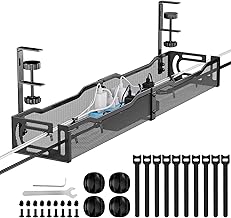
Worth it: A single, well-ventilated under-desk cable management tray, installed with a clamp, used as a “dump zone” for power bricks and cable slack. It solves real problems (safety, damage, major visual clutter) with almost zero ongoing mental overhead. The Univivi No-Drill Under Desk Tray is a prime example—sturdy metal, mesh for heat, and it clamps on in two minutes.
Skip it: Everything else in the cable management aisle. The elaborate raceway kits, the sticky-backed clips, the fabric sleeves, the color-coded braiding, the obsessive routing. This is overrated performance theater. It’s a hobby, not a productivity hack. If you enjoy it as a craft, fine. But don’t confuse it with meaningful work.
Your final goal is a desk that gets out of the way. A tool that doesn’t demand tooling. Stop fetishizing the infrastructure and start using it. Dump the bricks in a tray, get the cables off the floor, and then close the mental file on “cable management” forever. Your real work is on the screen, not under the desk.
For the engineering-minded approach to the physical protection of your cables, once you’ve adopted the dump-tray philosophy, our guide on Cable Damage Prevention: The Real Fix covers the actual wear-point failures you should watch for.
Frequently Asked Questions
Does cable clutter actually affect productivity?
Not in the way people think. The visual mess is rarely the direct cause of distraction. The real productivity killer is the obsessive *behavior* of constantly trying to fix the cables, which pulls you out of deep work. It's task substitution, not a solution.
What is the most effective cable management solution?
A single, ventilated under-desk tray or mesh basket. Dump all power bricks and excess cable slack into it. This solves the practical hazards (tripping, damage, heat buildup) without the time-sink of perfect routing. It's functional, not aesthetic.
Are cable sleeves and fabric organizers safe?
Often, no. Bundling multiple power supplies (which generate heat) in a non-breathable fabric or sealed tube creates a thermal pocket. This can degrade components and is a known long-term fire risk. Always prioritize ventilation for anything containing active electronics.
How much time should I spend on cable management?
Minimal initial setup (under 30 minutes for a basic tray install), then essentially zero. Your setup should be easy to modify. If your 'management' system takes longer to undo than to set up, it's hurting your productivity by making change difficult.

Written by
Amanda hates visible cables. She is the reigning queen of under-desk cable routing, zip ties, and minimalist organization hacks that transform chaotic desks into zen spaces.
3 Comments
Share your thoughts with the community
Been burned by bad advice on cable clutter productivity before, so I was skeptical reading this. Glad I kept going.
The part about cable clutter productivity is spot on. Wish I had known this 6 months ago.
I've seen a lot of conflicting opinions on cable clutter productivity — this breaks it down better than most.
Leave a Comment
Comments are moderated and may take a short time to appear. Links are not permitted.