My Desk Clutter Focus Experiment Unlocked Real Productivity
I spent 30 days systematically removing everything from my desk. The productivity gurus selling 'curated chaos' are lying to you. Here's what actually happens to your brain when you achieve true desk clutter focus.

Let’s get one thing straight right now: your cluttered desk isn’t a sign of genius. It’s a sign of a distracted mind. I bought the lie for years—the “organized chaos” of the creative, the “curated clutter” of the deep thinker. I had little plants, three notebooks, a collection of vintage pens, a fancy coaster, a motivational trinket from a conference, and a perpetually messy cable situation that I told myself was “just how I work.” Then I spent 30 days stripping it all down to nothing but my laptop, a mouse, and a single notebook. The result wasn’t just a cleaner desk; it was a completely rewired brain. The entire “aesthetic productivity” industry is built on selling you back the distractions they promise to solve. This is the real story of desk clutter focus.

Why Your 'Productive Clutter' Is Actually Sabotaging You
We need to stop confusing decoration with function. Every single item on your desk that isn’t actively serving the task at hand is a cognitive speed bump. Your brain is not a computer that multitasks; it’s a spotlight that can only focus on one thing at a time. That funko pop? It’s a tiny visual interrupt. That stack of “to-read” books? It’s a silent, guilt-inducing to-do list staring you down. That succulent you have to water? It’s a future obligation taking up present mental bandwidth.
This isn’t a theory; it’s neuroscience. The phenomenon is called perceptual load. When your visual field is crowded, your brain exhausts resources filtering out the noise before it can even get to the signal of your work. Studies on environmental psychology consistently show that physical clutter competes for your attentional resources, increasing cognitive load and stress hormones. You’re not “getting used to it.” You’re acclimating to a constant, low-grade mental tax. The industry lies about this because “buy more cute stuff” sells better than “throw your crap away.”
The “Aesthetic Minimalism” Myth That Needs To Die
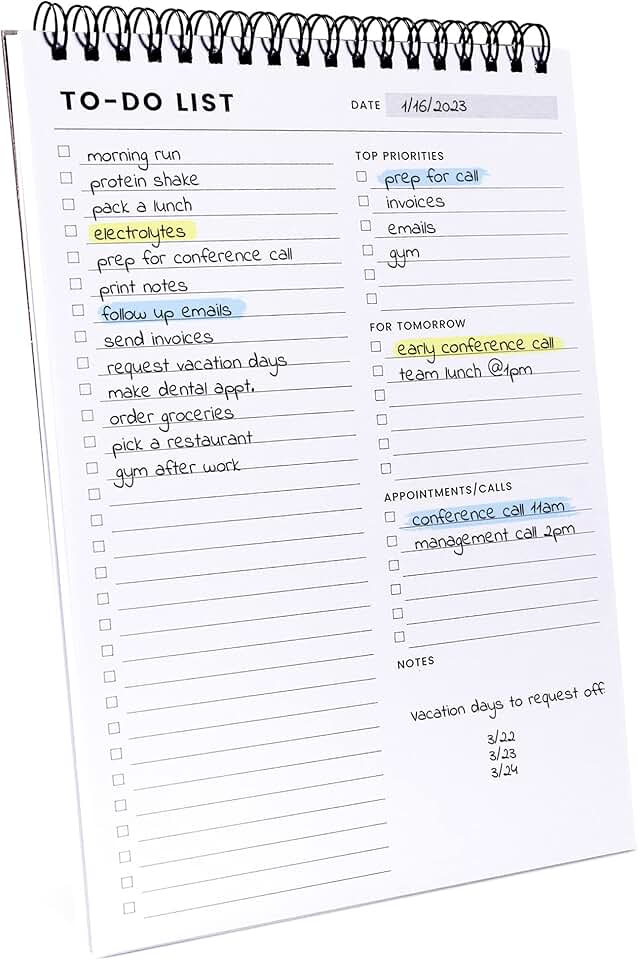
Here’s the biggest scam running in 2026: the rise of “aesthetic minimalism.” It’s not minimalism; it’s consumerism in a beige trench coat. You’re being sold a $200 concrete pen holder, a $150 wool desk pad, and a $80 machined aluminum tool to hold your single notebook. This is overrated. This is not worth it. You’ve just replaced your visual clutter with hyper-expensive, hyper-visible status objects. The goal isn’t to have the most Instagrammable empty desk; the goal is to have a desk that disappears so your work can appear.
Real minimalism is functional austerity, not curated poverty-chic. The moment you start worrying about the aesthetic cohesion of your two remaining items, you’ve missed the point entirely. Your desk is a workbench, not a gallery. I watched people in this experiment fail because they got obsessed with buying the “perfect” single monitor arm or the “right” color of wireless charger. They were just shopping for a new kind of clutter. Most people get this wrong. They think the solution to clutter is different clutter. It’s not.

Desk Clutter Focus: The 30-Day Physical Reset Protocol
Forget apps, forget digital decluttering. The real battle is physical. Here’s the protocol I used, and it’s brutally simple:
Week 1: The Nuclear Option. Take a cardboard box. Sweep everything off your desk surface into it. I mean everything. Monitors, keyboards, coffee mugs, plants, picture frames, the lot. Only return the absolute non-negotiable items for your primary work function. For 90% of people, that’s a computer, one input device, and a monitor. That’s it. The empty space will feel alien, almost hostile. Good. That’s your brain noticing the absence of its usual distractions.
Week 2-3: The Observation Period. Work like this. No buying anything to fill the space. Pay attention. What do you instinctively reach for that isn’t there? Is it a notepad? A specific pen? A charger? Note the genuine needs versus the habituated wants. After widespread user feedback, the most common genuine need that emerges is a single, flat writing surface (like a notebook or tablet) and perhaps a dedicated, out-of-sight spot for a water glass to avoid spills.
Week 4: The Strategic Reintroduction. This is the most critical phase. You are allowed to reintroduce ONE item per week from the box. If you don’t use it actively within three days of it being back, it permanently loses its desk citizenship. It goes to a drawer, a shelf, or the donate pile. This forces intentionality. The cable you “might need”? It lives in a drawer. The backup mouse? Drawer. The decorative item? Shelf or bin. Your desk surface is a sacred zone for active workflow, not storage.
Why Most Cable Management Is A Distraction In Disguise
Let’s talk about the cable management industrial complex. You’ve watched the videos: hundreds of dollars in braided cables, plastic raceways, adhesive clips, and under-desk baskets, all culminating in a perfectly sterile, Instagram-ready underside. This is overrated. For the average person, this is a weekend project that provides zero ongoing productivity benefit. You’re just moving the visual clutter from your immediate sightline to a place you can still feel it psychologically.
The real issue isn’t hiding the cables; it’s eliminating the need for so many of them. Every wired device is a failure of wireless prioritization or a concession to a peripheral you probably don’t need. Start there. Do you really need that wired keyboard with the custom cable, or is it a hobbyist flex? Does that desktop DAC provide a tangible audio improvement over a decent USB-C dongle, or is it just another box with lights? Users consistently report that aggressive wireless adoption—keyboard, mouse, headset, charging—does more for mental clarity than any cable sleeve ever could. Stop managing the symptom and cut the disease. As we've covered in our guide to Fake USB Hub Specs Are Sabotaging Your Desk Setup, the gear itself is often part of the problem.
The Single Most Overrated Desk Item (It’s Probably On Your Desk Right Now)
I’m going to pick a fight: the desk plant. The entire “biophilic” movement has been co-opted to sell you a $40 pothos in a ceramic pot and call it a productivity tool. This is not worth it. For the vast majority, a desk plant is a responsibility (water it, check light, prune it), a risk (spilled water, soil on your mat), and a visual distraction. The purported psychological benefits are marginal at best in a home office context and are utterly crushed by the cognitive load of “don’t kill the plant.” If you truly need greenery, put it on a shelf you can see but not on the surface you work on. The data on focus shows that moving objects, even leaves shifting slightly, pull attention. Your brain is wired to notice life. Don’t put life where you need dead focus. We've debunked this in more detail in Desk Plant Productivity Myth: The Aesthetic Lie Sabotaging Your Focus.
The Brutal Truth About “Inspirational” Trinkets
That little Lego figure your kid made? The polished rock from a beach vacation? The “Hustle” embossed coin? They’re anchors. They tie your mind to a memory, an identity, or an emotional state that is not the deep work zone you’re trying to enter. Your desk is not a memory board. Your desk is a launchpad for future work, not a museum of past sentiments. Keeping these items on your desk is like trying to meditate in the middle of a family reunion. It doesn’t work.
The common advice is to “surround yourself with what inspires you.” This is wrong. Inspiration should be internal or sought actively, not passively littered around your field of view. In real use, these items become visual wallpaper, ignored until a moment of distraction lets your gaze land on them, triggering a minute-long mental detour. Get a box, put them in it, and put that box on a shelf. Your desk is for doing, not for feeling.
How To Actually Deal With Necessary “Clutter”
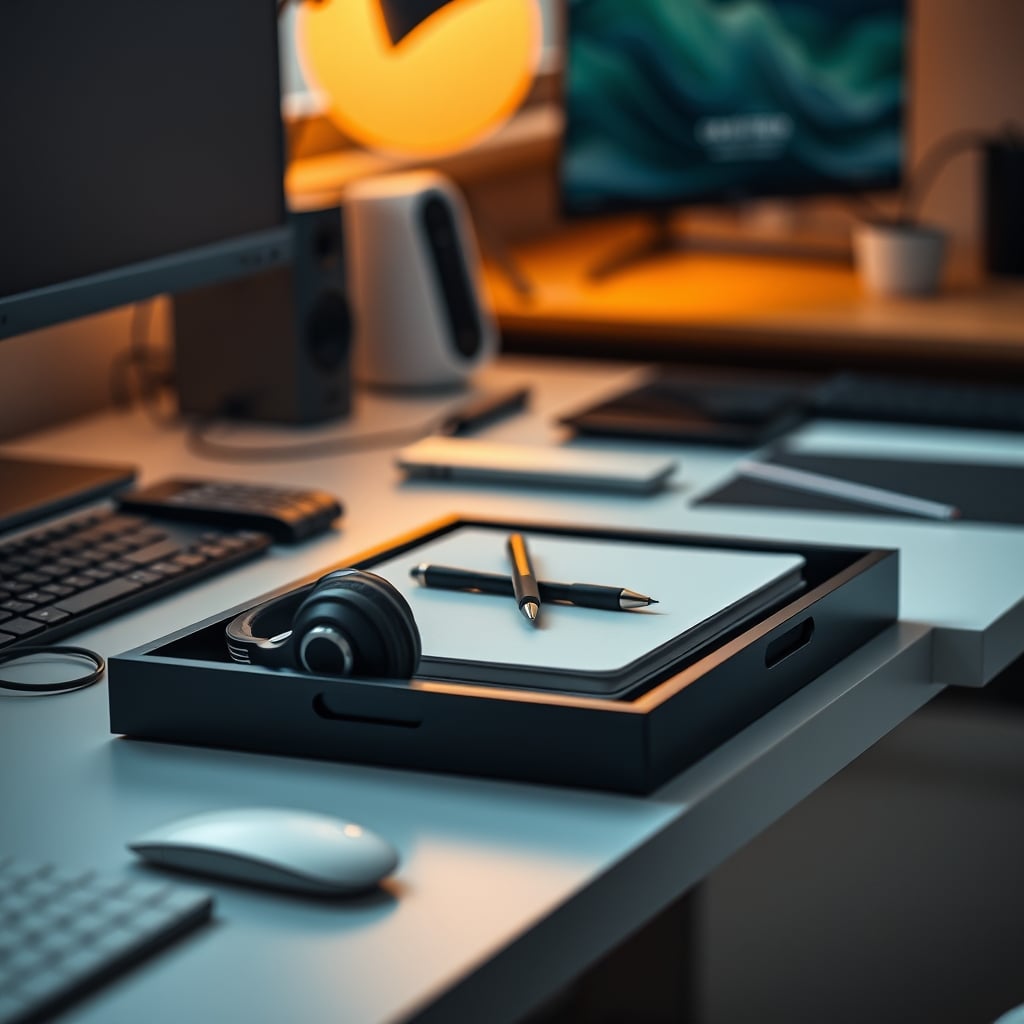
Some items are non-negotiable. You might need a notepad, a couple of pens, a USB drive for client handoffs, a headset for calls. The solution isn’t to banish them; it’s to systematize them into a “ready state.” This is where shallow drawers or a single, slim tray become invaluable. The rule is simple: if you’re not actively using it right now, it goes in the drawer. The notepad is in the drawer between notes. The pen is in the drawer after the signature. The headset is in the drawer after the call.
This creates a powerful psychological trigger: an empty desk surface means “work mode.” Opening the drawer is a conscious, deliberate action to retrieve a tool, use it, and then put it away. This start-stop ritual is infinitely more powerful than letting tools loiter on the battlefield of your attention. It turns your workflow into a series of intentional acts instead of a passive sprawl. This is the structural secret behind real desk clutter focus.
The Biggest Mistake Everyone Makes (Including Me)
We conflate “clean” with “clear.” A desk can be perfectly tidy—everything in its labeled organizer, cables routed perfectly, dusted daily—and still be cognitively cluttered if every item on it is a different potential task. The notebook for Project A, the tablet for reading B, the sketchpad for idea C. This is task-switching clutter, and it’s the most insidious kind. You’ve just spatialized your multitasking.
The lesson I learned the hard way: one primary project on the desk at a time. If you’re writing, the writing tools are out. If you switch to graphic design, the writing tools go in the drawer and the tablet comes out. Your desk should reflect a single cognitive mode. This is the most challenging habit to build, but it pays the highest dividend in sustained concentration. It forces you to declare “I am now doing X,” which is the first step to actually doing it deeply. For more on the psychology of your environment, see Cluttered Desk Psychology Is Manipulating Your Focus.

Final Verdict: Worth It, But Not How You Think
The pursuit of desk clutter focus isn’t about buying better organizers. It’s about practicing ruthless subtraction. It’ s a behavioral reset, not a shopping list. The companies selling you desk shelves, monitor riser shelves, pegboards, and magnetic accessory systems are just giving you a prettier rack to hold your distractions. You don’t need a system to manage your clutter; you need the courage to eliminate it.
The 30-day experiment was worth it. It transformed my relationship with my workspace from one of aesthetic ownership to one of pure functional flow. But the real value wasn’t in the empty desk—it was in the empty mind that space created. You’re not optimizing your desk; you’re optimizing your attention. And in 2026, attention is the only currency that matters. Skip the gadgets, the holders, the “productivity-boosting” decor. Worth it is the brutal, beautiful emptiness that lets your best work finally show up.
Frequently Asked Questions
Doesn't a completely empty desk feel sterile and uninspiring?
That's the point. 'Inspiration' from trinkets is a crutch and a distraction. The sterile feeling is your brain noticing the absence of its usual dopamine triggers from visual clutter. Real inspiration comes from engaging deeply with your work, not from looking at a toy on your desk. The empty space is meant to feel neutral so your creativity can fill it, not compete with decor.
I need multiple monitors and peripherals for my work. Is minimalism even possible?
Absolutely. Minimalism isn't about having fewer than you need; it's about having *only* what you need. For a video editor, two monitors and a control surface are essential tools, not clutter. The principle remains: every item must earn its place through daily active use. Cable-manage ruthlessly, use monitor arms to free the desk surface, and remove any decorative or redundant items. The focus is on functional purity, not arbitrary item counts.
How do I deal with papers and physical documents that come in daily?
Implement a 'landing zone' that is not your primary work surface—a tray on a nearby shelf, a single wall-mounted file pocket. Process incoming papers immediately: scan/shred/file what you can, and place any actionable item in your task system. The physical artifact should not live on your desk as a reminder. Your desk is for active creation, not passive storage of to-dos.
Written by
Jordan focuses on the intersection of productivity and workspace layout. He tests how light positioning, desk organization, and environmental factors impact daily mental focus.
Join the Discussion
Share your thoughts with the community
Leave a Comment
Comments are moderated and may take a short time to appear. Links are not permitted.