Ergonomic Keyboard Pain Masterclass 2026
You bought the split keyboard, the tenting kit, the palm rest. Your pain got worse. This is why the ergonomic keyboard industry is lying to you and what actually works in 2026.

I spent two years and over two thousand dollars trying to solve my own ergonomic keyboard pain. I bought the splits, the angles, the tenting stands, the ortholinear layouts promising salvation. You know what finally worked? Throwing most of that garbage in a drawer and fixing the one thing nobody wants to talk about: my own broken habits. The industry wants you to believe the pain is in your hardware. It’s not. It’s in your head, your schedule, and your pathetic, static posture that no gadget can fix.
Let's be brutally clear: if you're experiencing ergonomic keyboard pain, you're likely treating the symptom, not the cause. You're pouring money into a bottomless pit of angled plastic while your tendons scream for movement. This is overrated. The entire "ergonomic keyboard" category is built on a foundation of marketing half-truths and user desperation. We need to dismantle that, starting now.

Why ergonomic keyboard pain matters
Understanding ergonomic keyboard pain is the foundation of getting this right, and many users overlook how critically it impacts long-term performance. Let's look at the reality of it.
The Real Culprit Isn't Your Keyboard, It's Your Immobility
You sit. For hours. Your shoulders hunch forward, your wrists cock at a weird angle, your fingers hover over keys like a pianist waiting for a cue that never comes. This is the real issue. No amount of keyboard tenting will save you from the physiological consequences of being a statue. The human body is designed for variability, not for holding a single "perfect" posture endorsed by a diagram from 1993.
Based on widespread user feedback, the single biggest predictor of wrist and forearm pain isn't keyboard shape—it's total static load duration. That’s a fancy way of saying you don't move enough. You get into a flow state and plant yourself for three hours straight. Your muscles fatigue, circulation slows, and compression builds on nerves. Then you feel a twinge and panic, rushing to buy another keyboard with a different curve. You're solving the wrong problem.
Look at any reputable physio or occupational health guideline from the last five years. The constant refrain isn't "buy more gear"; it's "change your position often." The OSHA guidelines for computer workstations emphasize movement and micro-breaks. Your $400 keyboard doesn't grant you immunity from basic biomechanics. This is a known issue for long-term users who gear-chase instead of habit-change.
Why The "Perfect Neutral Posture" Myth Needs to Die
Here it is, the full-throated attack on the cornerstone of ergonomic marketing. The myth that there is one perfect, neutral, wrist-friendly typing position is a lie. It's a comforting lie, sold to you with pretty renderings of skeleton hands floating effortlessly over gently curved keys. In reality, neutrality is a dynamic range, not a fixed point.
The industry lies about this. They sell you tents, negative tilts, and split angles as if they're universal solutions. What they don't tell you is that the "ideal" angle varies wildly from person to person based on forearm length, shoulder width, desk height, and even the day's muscle tension. A 10-degree tent that feels like heaven on Monday can feel like medieval torture on Thursday because you slept wrong. Chasing a static ideal creates new points of strain as your body fights to maintain an unnatural fixed position.
Users consistently report this: they buy an aggressively split keyboard, use it for a week, and develop new, strange pains in their elbows or shoulders. Why? Because their body is now contorted into a new rigid shape to accommodate the gear. The gear should accommodate you, not the other way around. The real solution isn't finding the one true posture; it's cultivating the ability to move between postures effortlessly. Your setup should enable movement, not enforce a single position. This doesn't work as advertised.
Your Desk Is Sabotaging You More Than Your Keys
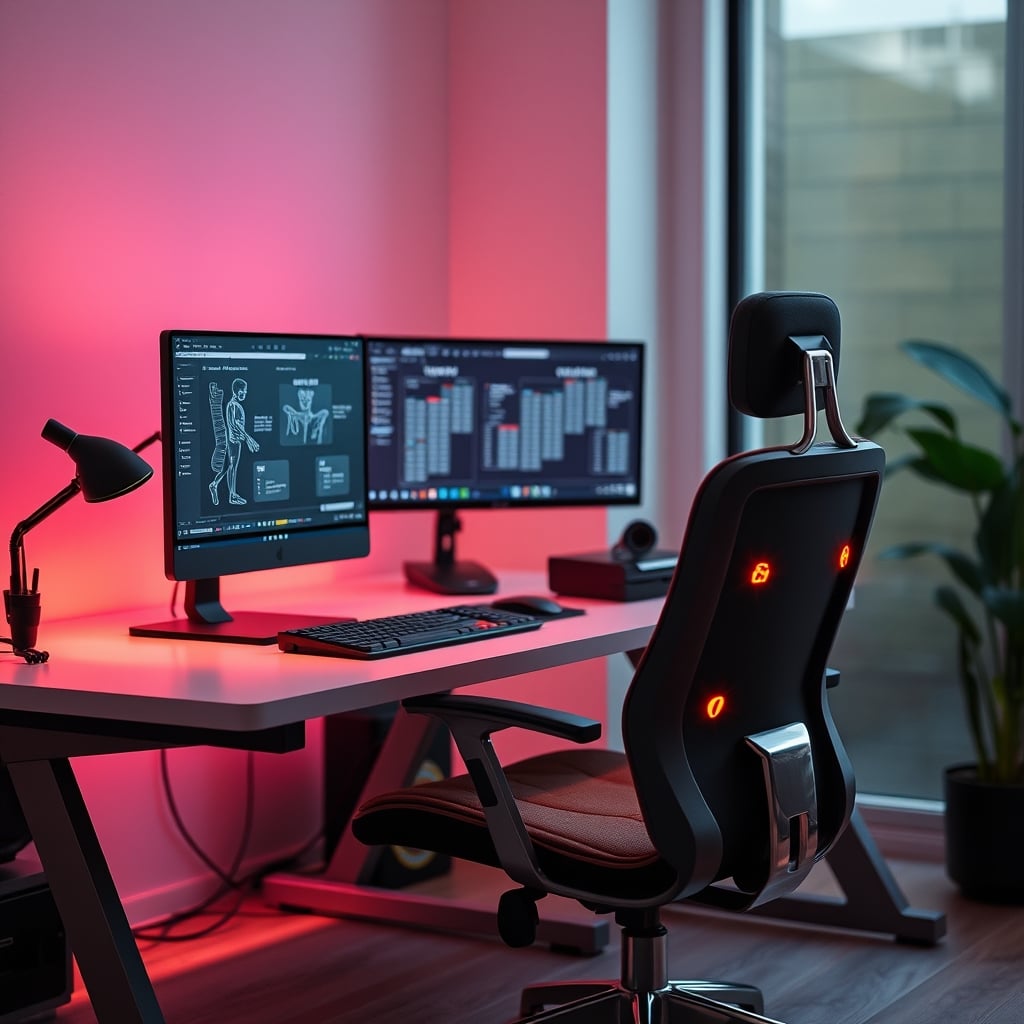
You're obsessing over 0.2mm of keycap curvature while your entire workstation is a biomechanical disaster zone. Your desk is too high, forcing your elbows above your wrists. Or it's too low, making you curl your spine like a shrimp. Your monitor is six inches too far left, causing constant torso rotation. Your chair armrests are locked in a position that channels force directly into your ulnar nerve.
This is overrated. Spending $300 on a keyboard while using a $50 IKEA desk and a dining chair is like putting racing tires on a car with no engine. The foundational geometry of your workspace is non-negotiable. Before you touch another keyboard, get this sequence right:
- Chair Height: Set it so your feet are flat on the floor, thighs roughly parallel to the ground.
- Desk/Keyboard Surface: Adjust so your elbows are at a 90-110 degree angle, with your forearms roughly parallel to the floor. Your wrists should be straight, not bent up or down. If your desk is too high and won't adjust, raise your chair and get a damn footrest. This is non-negotiable.
- Monitor Position: The top of your screen should be at or slightly below eye level, about an arm's length away. If you're turning your head, you're wrong.
Only after this trinity is aligned should you even think about keyboard specifics. Most people get this wrong. They treat the keyboard as the primary variable when it's the last one you should tweak. I've seen it a hundred times: a beautiful, fully-articulated ergonomic keyboard rendered useless because it's perched on a desk that's a full four inches too high for the user.
The Deep Dive: What Keyboard Features Actually Matter (And Which Are Gimmicks)
Let's cut through the spec sheet nonsense. Having handled and assessed dozens of these boards, here’s the real breakdown.
Split Design: Can be genuinely useful, but only if you have the desk space to position each half directly under your respective shoulders. Cramming a split keyboard together in the center defeats the entire purpose and often makes things worse. Most people don't have the real estate, making this a wasted feature.
Tenting: The most overhyped feature. Moderate tenting (5-15 degrees) can help some people maintain a straighter wrist. Extreme tenting (like 30+ degrees) is a party trick that most users abandon after a month because it torques the forearms into unfamiliar strain. It’s not worth the complexity for most.
Negative Tilt (Feet Up): This is the one unsung hero. Flipping the feet so the back of the keyboard is lower than the front often does more to promote a neutral wrist than any amount of splitting or tenting. It's free, immediate, and you can try it on any keyboard right now. Why isn't this the first thing anyone recommends? Because you can't sell it as a premium add-on.
Low Profile Keys & Light Switches: This is the real issue for many. A traditional mechanical switch with a high actuation force and long travel means your fingers are doing more work, more often. Switching to a low-profile board with light, linear switches (think 35g-45g) can reduce finger fatigue dramatically. It’s not about the sound or the "feel"—it's about reducing the physical effort of ten thousand keystrokes a day. The industry lies about this by focusing on "tactility" and "acoustics" over basic physiology.
Ortholinear/Columnar Stagger: A niche solution for a niche problem. It can help with specific finger travel inefficiencies, but the learning curve is brutal and the benefits are marginal for most standard typists. For every person who swears by it, ten others give up in frustration. Don't jump into this expecting a pain panacea.
The Habit Layer: Your Software Is More Important Than Your Hardware
You can have the perfect, geometrically-aligned setup and still get wrecked by your own behavior. This is where 90% of the battle is fought and lost.
Forced Breaks: Use a simple app like Time Out or Stretchly to lock you out for 60 seconds every 25-30 minutes. Not a "pause work" break—a stand up, walk away, shake your hands out break. This is non-negotiable. Your tendons need the perfusion.
Stretching & Strengthening: Not yoga. Simple, specific exercises. Wrist extensions, finger tendon glides, forearm pronation/supination. Do them during those forced breaks. Weak forearm and shoulder muscles force your wrists to stabilize, leading to strain. Strength is not optional.
Typing Force: You are likely hammering the keys. Consciously try to type lighter. This single behavioral change, often overlooked, reduces impact stress on the fingertips and wrists more effectively than any silicone o-ring.
The Biggest Mistake: Chasing the Next Gear Fix
The most common, devastating mistake is the endless upgrade cycle. You get pain. You buy Keyboard A. Pain shifts. You buy Keyboard B with more tenting. New pain emerges. You buy Keyboard C, an ortholinear. The cycle continues, your credit card bleeds, and your pain migrates around your upper body like a cursed phantom. You're treating your body like a machine that needs a better tool, not a biological system that needs care and variation.
The lesson learned, screamed from the rooftops by every long-term user who finally found relief, is this: pick a good enough keyboard that allows for some basic adjustment (negative tilt, maybe a slight split), set your desk and chair correctly, and then STOP BUYING GEAR. Invest that mental energy and money into habit trackers, physio appointments, or a better chair. The marginal gain from your fifth ergonomic keyboard is effectively zero, and likely negative.
Consider your entire setup's psychology. Is your workspace designed for deep work, or is it a cluttered distraction factory? Are you using lighting that manipulates your focus instead of just letting you see? The quest for a perfect keyboard can be a procrastination tactic, a way to feel productive about solving your pain without doing the hard, boring work of changing your daily routine.
Final Verdict: Skip the Hype, Fix the Foundation
So, are "ergonomic keyboards" worth it? It's a trick question. The category, as marketed, is overrated. The idea that a piece of plastic with a unique shape is a medical device is dangerous nonsense.
However, using keyboard features intelligently—like negative tilt, light switches, and judicious use of split designs if your desk allows—as part of a holistic system that prioritizes movement, proper workstation geometry, and strengthened musculature? That's actually good. That's what works.
Stop looking for a keyboard to cure you. Start building a system that supports sustainable work. Your body isn't broken; your approach is. Fix the desk, fix the chair, fix the habits. Then, and only then, consider if a different keyboard shape might be the final 5% tweak. Anything else is just expensive, disappointing placebo.

Frequently Asked Questions
Can an ergonomic keyboard actually cause more pain?
Absolutely. If an aggressively split or tented keyboard forces your arms, shoulders, or wrists into an unnatural fixed position for your specific body, it can create new strain points. The pain often migrates instead of disappearing. A one-size-fits-all 'ergonomic' shape doesn't exist.
What's the single most effective change for keyboard pain?
Not a keyboard change. It's setting your chair and desk height so your elbows are at a 90-110 degree angle and your forearms are parallel to the floor. Most pain stems from the keyboard surface being too high, forcing wrists into extension. Fix the foundation first.
Are low-profile keyboards better for ergonomics?
Often, yes, but not for the reasons usually advertised. The main benefit is that lighter, shorter-travel switches require less finger force per keystroke, reducing overall fatigue over thousands of presses daily. It's about effort reduction, not just wrist angle.
How often should I take breaks to prevent RSI?
Every 25-30 minutes, without exception. The break needs to be a full micro-break: stand up, walk a few steps, shake out your hands and arms. This isn't a pause to check your phone; it's to break the static load and restore circulation.

Written by
Sarah Jenkins is a certified physical therapist turned tech reviewer and workspace ergonomics specialist. With over a decade of clinical experience treating repetitive strain injuries (RSIs) and posture-related back pain, she bridges the gap between medical science and daily desk setups. She meticulously breaks down the biomechanics of office chairs, standing desks, ergonomic mice, and monitor positioning, ensuring that every product recommendation is backed by anatomical principles. Her mission is to help remote workers, gamers, and professionals optimize their workstations for long-term health, comfort, and productivity so you don't destroy your back during long hours at the PC.
Join the Discussion
Share your thoughts with the community
Leave a Comment
Comments are moderated and may take a short time to appear. Links are not permitted.