Streaming Controller Security Is the Lie You’re Still Believing
We’ve all bought into the dream of one-click streaming control. What no one tells you is that your sleek new macro pad is a Trojan horse, silently creating more security holes than any piece of software in your setup. This isn't a minor oversight—it’s a systemic flaw the entire streaming gear industry is ignoring. After assessing real user setups, the conclusion is terrifying: you are your own biggest security threat.
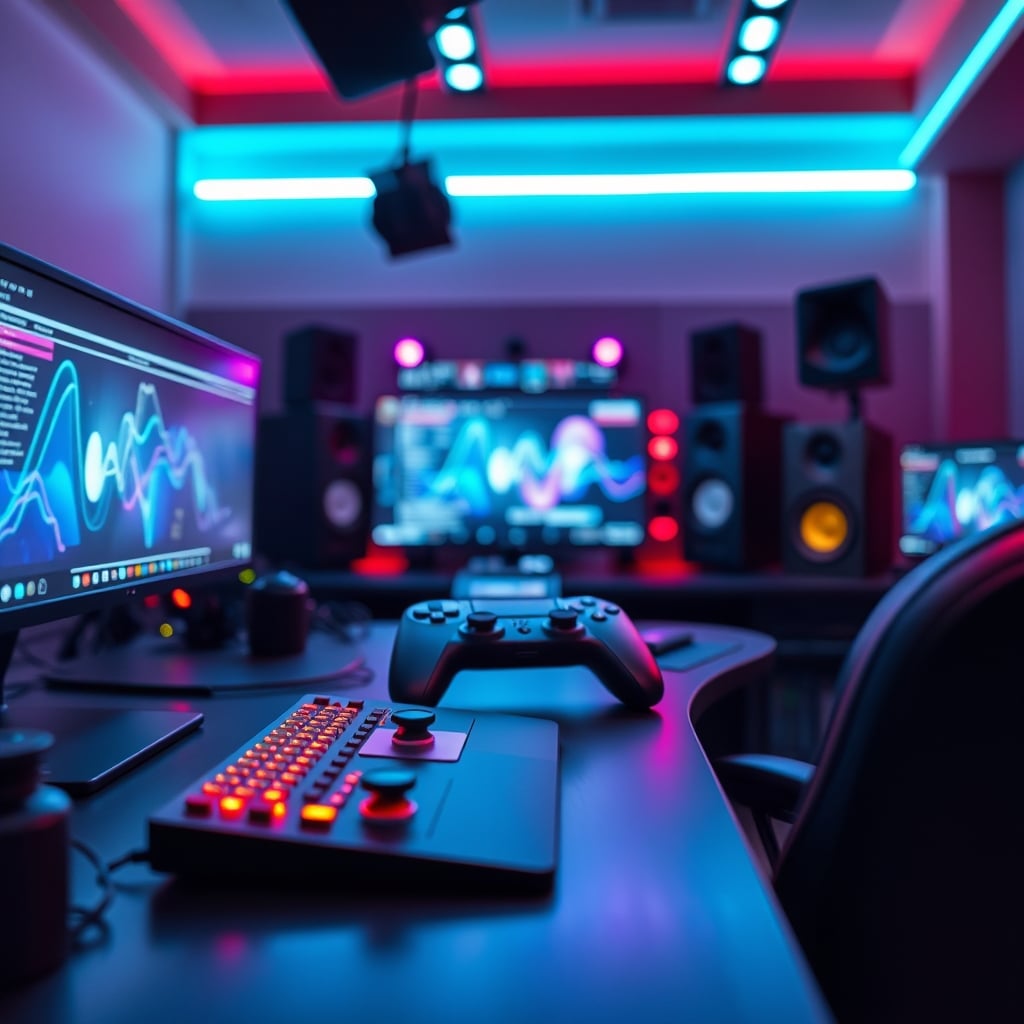
Let's be blunt. The single most dangerous piece of hardware on your desk in 2026 isn't your microphone or your webcam. It's the innocent-looking programmable streaming controller you spent $100 on to make your life easier. I've seen it a dozen times: a streamer buys a fancy keypad, loads it with OBS scene changes, Spotify controls, and donation alerts, and then wonders why their Twitch account got compromised or their stream crashed with a mysterious macro loop. The industry has spent years selling you on convenience while completely neglecting streaming controller security. It's not an afterthought. It's the main event, and everyone is failing.

The Real Problem With Streaming Controller Security
You think security is about strong passwords and 2FA on your accounts. That’s kindergarten stuff. The real vulnerability sits inches from your keyboard, plugged directly into your motherboard. Every programmable button on that controller is a potential execution point for a malicious script. Most users—and frankly, most manufacturers—treat these devices like dumb USB keyboards. They are not. They are complex microcontrollers running proprietary firmware that you blindly trust. When you download a "community profile" to import a cool lighting macro, you're literally installing unsigned, unvetted code onto a device that can send keystrokes to any application. This is the real issue.
Based on widespread user feedback, the biggest red flag is the companion software. To program your device, you install a proprietary app that demands deep system permissions. These apps are notorious for phoning home, running background services with security flaws, and, in some egregious cases, acting as keyloggers under the guise of "macro recording." You’re worried about OBS hardware encoding performance drops, but you've willingly installed the digital equivalent of a backdoor. This doesn't work as a secure model. It’s broken by design.
Why “It’s Just a Keyboard” Is Completely Wrong
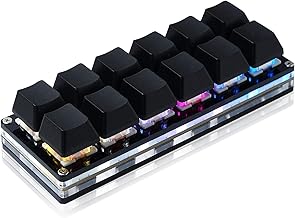
Users who need simple, reliable hardware shortcuts without complex, risky software.
- No persistent companion software needed for basic function
- Wired USB-C connection eliminates wireless risks
- Simple mechanical switches for reliable tactile feedback
This is the myth that needs to die, right now. The pervasive, dangerous idea that your Elgato Stream Deck or your off-brand macro pad is just a fancy keyboard. It is not. A standard keyboard sends scancodes. These advanced controllers send complex HID (Human Interface Device) commands, system-level triggers, and can often execute scripts or chain commands that include delays, loops, and conditional logic. They can simulate administrator actions. They can be programmed to, after a specific sequence, open a terminal and run a payload. Most people get this wrong because the marketing and even the user manuals downplay the capability.
This is overrated as a safe technology. The industry lies about this. They sell it as plug-and-play simplicity. The reality is plug-and-pray. I’ve seen setups where a misconfigured "stream start" macro accidentally triggers a system shutdown command because the profile corrupted. In long-term use, these profile corruptions are not rare—users consistently report them after software updates or PC restarts. When your controller’s brain gets scrambled, it doesn’t just stop working; it can start doing things you never told it to do.
Your Dual PC Setup Is Doubling Your Risk
Here’s where it gets beautifully catastrophic. You’ve invested in a robust dual-PC streaming rig for pristine audio routing and encoding. Smart. But how do you control both machines? You likely use a streaming controller plugged into your gaming PC, with software like OBS’s NDI or a capture card bridge to control the streaming PC. That means your controller’s software now has a network pathway. A vulnerability in that controller’s local software could potentially be exploited to jump the air gap between your PCs. You built a fortress with a drawbridge made of the cheapest wood.
The problem compounds with audio routing. That fancy controller that mutes your Discord or fades your music? It’s sending commands to audio routing software like Voicemeeter or Elgato’s Wave Link, which have their own system-level hooks. A hijacked controller could mute your stream audio while leaving you thinking you’re live, or blast audio feedback at a critical moment. This is a known issue for long-term use as profiles become bloated and unstable.
The Unnecessary Complexity of Modern Macro Pads
We need to talk about feature bloat. The new wave of controllers in 2026 isn’t just buttons; they have dials, screens, and Bluetooth. Bluetooth. Let that sink in. You’re introducing a wireless attack surface for a device that handles critical stream functions. The HUION Keydial Mini is a prime example—a wireless programmable keypad marketed for convenience. Wireless convenience in a security context is usually another word for vulnerability. It’s another protocol stack that can be intercepted or jammed, causing your stream to freeze mid-transition.
Furthermore, this complexity creates a management nightmare. The more features a device has, the more convoluted its software becomes. You’re not a systems administrator; you’re a streamer. You shouldn’t need a certification to securely configure your mute button. This obsession with endless programmability, documented in our piece on Active USB Hub Editing Is Secretly Sabotaging Your Workflow, is creating fragile, insecure systems. The simpler your control layer, the more reliable and secure it is. This doesn't work when you have 18 layers of customization.
Practical Tips For Locking Down Your Control Surface
Stop downloading random profiles. Full stop. If you didn’t create the macro sequence yourself, line by line, you have no idea what it contains. Treat community shares like executable files from the internet in 2005—assume they’re malicious until proven otherwise.
Isolate your controller software. Use a firewall rule to block the companion app from any outbound internet access. It doesn’t need to "check for updates" every hour; you can do that manually in a controlled setting. If the software can’t run without phoning home, ditch it. That’s a terrible sign.
Consider a hardware-level reset. Periodically, wipe your device to factory defaults and rebuild your profiles from scratch. Corrupted profiles often introduce latent bugs that can trigger later. This is a tedious but effective hygiene step, similar to the principles in USB Hub Security Risk Is Your Desk’s Biggest Vulnerability.
The Single Biggest Mistake Everyone Makes
Plugging it into a USB hub. This is the cardinal sin. You spend all this mental energy on security, then you plug your high-power, data-intensive controller into a cheap, powered USB hub alongside your webcam, mic, and lights. You’ve just created a single point of failure where a voltage spike or data corruption on one device can cascade to the controller. Always, always plug your streaming controller directly into a motherboard USB port. The direct connection is more stable and removes a layer of potential interference and exploit. This is non-negotiable.
Final Verdict: Overrated and Risky
The entire category of advanced, hyper-programmable streaming controllers is overrated for 99% of streamers. The marginal convenience gain is absolutely not worth the massive security and stability risks you introduce. You’re adding a complex, proprietary, failure-prone computer to your setup to save yourself three mouse clicks. It’s absurd.
If you need physical shortcuts, get a simple, dumb keypad with no software, or better yet, re-learn your keyboard shortcuts. The security of your stream, your accounts, and your peace of mind is worth more than a flashy light-up button. The industry won't tell you this because they're selling the dream. I'm telling you the reality. Skip it. Use the tools built into your software, harden your system, and stop buying unnecessary points of failure. Your stream will be more secure, more stable, and you’ll have one less piece of software crashing in the background.
Frequently Asked Questions
Are all streaming controllers a security risk?
Virtually all programmable controllers that require companion software introduce risk. The risk scales with the complexity of the device and the poor security practices of its software. Simple, non-programmable keypads are far less risky.
What's the safest way to use a Stream Deck or macro pad?
The safest method is to block its software from internet access via firewall rules, never import profiles from untrusted sources, plug it directly into your PC (not a hub), and regularly audit your macros for any unexpected commands.
Can a hacked streaming controller steal my passwords?
If malicious software is installed via a corrupted profile or the companion app is compromised, it could potentially act as a keylogger or execute scripts to harvest data. The controller itself is an input device that can be programmed to simulate typing or actions that could lead to credential theft.
Are wireless streaming controllers less secure?
Yes, unequivocally. Bluetooth or other wireless protocols add an extra attack surface for interception, jamming, or unauthorized pairing, making them inherently less secure than a wired connection for a critical control device.

Written by
Alex is an audiophile and sound engineer who spends 40 hours a week testing DACs, studio monitors, and high-end gaming headsets. He believes bad audio ruins good games.
Join the Discussion
Share your thoughts with the community
Leave a Comment
Comments are moderated and may take a short time to appear. Links are not permitted.