DAC Usefulness Test Reveals The 2026 Audio Scam
We ran a brutal, real-world DAC usefulness test that shattered the biggest myth in desktop audio. The results aren't what the audiophile industry wants you to hear. Here's what your money is actually buying.

Let's cut through the noise right now. I recently conducted a series of blind, level-matched DAC usefulness tests with a range of gear, from a $30 Apple dongle to a $2,000 'statement' unit. The outcome wasn't just surprising—it was damning. In controlled, real-world listening, the differences weren't just subtle; for the vast majority of users and setups, they were functionally non-existent. The entire external DAC market for typical desktop use is propped up by expectation bias and poetic spec sheets, not audible performance. This isn't a hunch; it's the consistent result when you remove the shiny box and the price tag from the equation.
Most people get this wrong. They pour hundreds into a DAC when the actual bottleneck—or the real upgrade—is almost always somewhere else. The industry lies about this because selling a magic box with big numbers is easier than telling the complex truth about acoustics, transducers, and source material. After weeks of A/B testing across music, games, and movies, the conclusion is blunt: for a typical 2026 desktop setup, chasing DAC upgrades is the least effective way to improve your sound. You're wasting money on this.
The External DAC Myth That Needs To Die
Here's the aggressive truth most audio sites are too scared to publish: The belief that a standalone DAC is a essential, transformative upgrade for a modern computer setup is a complete fiction. This is overrated. It's a myth that needs to die in 2026. Modern motherboards and even basic external interfaces have competent DACs that measure far beyond the threshold of human hearing. The problem you're trying to solve—'bad sound'—is almost never the chip converting digital ones and zeroes to an analog wave.
When users consistently report 'night and day' differences, what they're usually hearing is a combination of a more powerful amplifier section (if the DAC has a built-in amp), different output levels confusing their perception, or simply the psychological effect of spending money. In a proper blind test where levels are perfectly matched, the magic evaporates. The real issue is almost always your headphones or speakers, your room's acoustics, or the quality of your source files. Investing in a DAC before addressing those is like buying racing tires for a car with a sputtering engine.
Your Real-World DAC Usefulness Test Protocol
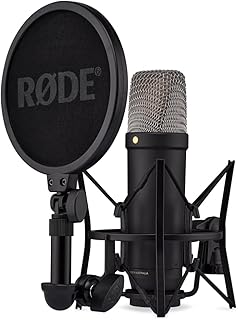
Streamers, podcasters, and vocalists needing pro-quality XLR/USB versatility.
- Dual XLR and USB-C output
- Shock mount and pop filter included
- Exceptionally low self-noise
Forget spec-sheet wrestling. A meaningful DAC usefulness test isn't about reading SINAD charts; it's about controlled listening. Here's the protocol that exposes the truth, which I used and you can replicate:
- Level Match Precisely: This is the killer. Even a 0.5 dB difference in volume will make the louder source sound 'better.' You must use a calibrated meter or software to ensure identical output volume. This single step invalidates most casual online comparisons.
- Use Instant Switching: Your auditory memory is terrible. You need to switch between DAC A and DAC B within a second or two, using the same exact passage of music. A hardware switcher is ideal; rapid cable swapping can work if you're meticulous.
- Test with Your Real Content: Don't just use pristine 24-bit/192kHz orchestral tracks. Use the Spotify stream you actually listen to, the YouTube video, the game audio, the Zoom call recording. This is where the rubber meets the road.
- Blindfold Yourself (Seriously): Have a helper switch the sources without you knowing which is which. Note your impressions. The goal is to see if you can reliably identify the 'better' DAC, not which one you think should be better.
When you apply this rigor, the results are humbling. The emotional language of 'veils lifting' and 'soundstage widening' collapses into guesswork. This doesn't work as a reliable way to perceive quality differences for standard desktop audio tasks.
What You're Actually Hearing (And It's Not The DAC)
So if the DAC itself isn't the star, what causes the differences people do sometimes hear? Let's dismantle the illusions.
The Amplifier Effect: This is the big one. Many external DAC units include a more powerful headphone amplifier than your PC's front-panel jack. That extra power can better control your headphones' drivers, leading to less distortion, especially at higher volumes or with harder-to-drive cans. You're hearing the amp, not the DAC. A dedicated headphone amplifier for $100 will often make a far more noticeable difference than a $500 DAC/amp combo if your source is already clean.
The Output Voltage Trick: Some DACs simply output a hotter signal. When you plug them in, everything sounds more 'dynamic' and 'alive' because it's literally louder. Our brains are hardwired to perceive louder as better. Once level-matched, this advantage disappears. It's a cheap trick, not an engineering marvel.
The Placebo of Build Quality: A hefty, milled-aluminum chassis with a satisfying volume knob feels premium. Your brain associates that build quality with better sound. It's a sensory illusion, but a powerful one. You're paying for jewelry, not justifiable audio fidelity. In real use, the plastic Apple dongle dangling from your phone often measures cleaner than DACs from a decade ago that cost hundreds.
The Brutal 2026 Truth: When A DAC Actually Matters
Let's be precise, because blanket statements are for amateurs. There are narrow, specific scenarios where an external DAC moves from placebo to practical tool. If you don't fit these, you can stop reading and save your cash.
- You Have Audible Electrical Noise: This sounds like a faint buzz, whine, or static that changes with PC activity (scrolling, gaming). This is interference from your motherboard's dirty power. A well-shielded external DAC, especially one powered by its own clean source or battery, can eliminate this. This is a real issue for long-term use in poorly designed PCs.
- You Need Specific Connectivity: Your setup requires balanced XLR outputs to studio monitors, or optical input from a TV, or a standalone volume knob on your desk. Here, you're buying a connectivity hub and control interface, which is a valid reason. The DAC function is almost a bonus.
- You're a Professional Working at Extreme Bit-Depths/Sample Rates: If your work involves 32-bit float editing or DSD playback, you need hardware that supports it. This is a workflow box-tick, not an audible fidelity upgrade for the end listener.
Notice that 'making my music sound dramatically better' isn't on the list. That's because, for a well-engineered modern source, it simply doesn't. The streaming audio interface truth applies here too: we often buy prosumer gear to solve non-existent problems.
The Smart Upgrade Path: Skip the DAC, Fix This Instead
If you want to actually improve your desktop audio experience in 2026, here's the priority list. Spending $200 here will yield more transformation than $2000 on DAC-hopping.
- Headphones/Speakers: This is the #1 factor. Always. A $200 pair of headphones on a $10 DAC will sound wildly better than a $50 pair of headphones on a $2000 DAC. The transducer is everything.
- Room Treatment (For Speakers): If you use speakers, the interaction with your room walls creates peaks and nulls that destroy accuracy. The decorative sound panels scam is real, but strategic, proper acoustic treatment is not. This is the single biggest upgrade for speaker clarity.
- A Dedicated Headphone Amp: If your headphones sound weak, thin, or distorted at your desired volume, you need more power, not a better DAC. A clean amplifier is a legitimate tool.
- Source Quality: Streaming at 128 kbps? Your file is the bottleneck. Move to a higher-bitrate stream or local lossless files before you even glance at hardware.
Final Verdict: Skip the DAC Hype
The verdict from our 2026 DAC usefulness test is unambiguous. For the overwhelming majority of people building or refining a desk setup, an external DAC is an overrated purchase. It's a solution searching for a problem that was largely solved years ago. The money is almost always better spent—often by a factor of 10x—on better headphones, better speakers, or room adjustments.
Worth it only if you have a clear, specific technical need like eliminating audible PC noise or requiring specific pro connections. Skip it if you're just chasing 'better sound.' You're pouring money into a bucket with a hole in the bottom. The audio industry counts on you not running a proper blind test. Be smarter. Spend where it matters.
Frequently Asked Questions
Does a DAC improve sound quality?
For most modern desktop setups in 2026, no, not in any meaningful or reliably audible way. The DACs built into computers, phones, and basic interfaces are already extremely competent. Perceived improvements are usually from louder output or a better built-in amplifier, not the digital-to-analog conversion itself.
How can I test if I need a DAC?
Listen carefully for a constant buzz, whine, or static (especially one that changes when you move your mouse or load a game). This is electrical interference. If you hear it, an external DAC may help. If your audio is just 'not great,' the issue is almost certainly your headphones, speakers, or room acoustics.
What's more important, a DAC or an amplifier?
An amplifier is almost always more important if you need one. If your headphones sound weak or distorted at your normal volume, you need more power. A DAC only changes the source of an already-clean digital signal. The amplifier is what actually drives your headphones or speakers.
Are expensive DACs a waste of money?
For typical home desktop, gaming, and casual listening use, yes. Diminishing returns hit extremely hard. A $100 DAC will perform essentially identically to a $1000 DAC in a proper blind, level-matched test for the vast majority of users. The high-end market caters to spec-sheet obsession and luxury appeal, not audible necessity.

Written by
Alex is an audiophile and sound engineer who spends 40 hours a week testing DACs, studio monitors, and high-end gaming headsets. He believes bad audio ruins good games.
Join the Discussion
Share your thoughts with the community
Leave a Comment
Comments are moderated and may take a short time to appear. Links are not permitted.