Circadian Lighting Scam Sabotaging Your Focus
You’ve been sold a lie about blue light and circadian rhythms. The expensive ‘circadian lighting scam’ promises wellness but delivers overpriced, confusing tech that actually breaks your focus. Here's what actually works for your desk.
I spent three months trying to hack my sleep and focus with a $400 ‘circadian’ smart light system. You know what happened? My sleep got worse, my afternoon focus cratered, and I developed a new, expensive hobby: constantly adjusting my lights. The entire circadian lighting scam is built on a kernel of real science stretched into marketing fantasy, sold to people who just want a nice vibe at their desk.
It preys on our desire to optimize, to bio-hack, to feel in control of our biology with tech. But the reality is brutal: your $15 standard LED strip, set to a single warm tone you actually like, will do more for your mental state and productivity than any algorithmic sunrise simulation. The industry lies about the complexity you need. Most circadian systems fail in real-world use because they ignore the single most important factor for desk lighting: consistency.
Why Your Body Doesn't Care About Your Smart Bulb
The core promise is seductive: cool, blue-ish light for morning alertness, shifting to neutral for midday focus, then melting into deep amber for evening relaxation. It mimics the sun! It respects your circadian rhythm! This is overrated for one brutal reason: the light intensity from your desk is a rounding error compared to everything else.
Think about it. A high-end ‘circadian’ bulb might pump out 800 lumens of ‘alertness’ light at your 9 AM desk session. Meanwhile, if you have a window, natural daylight is delivering 10,000 to 100,000 lux to your eyeballs. Your dinky smart bulb is a candle next to a forest fire. It’s not moving the needle. The same goes for evening. Your phone, tablet, and monitor screens are blasting your face with blue light spectra that your $60 sunset lamp can't hope to counteract.
Users consistently report the same thing: after the initial novelty, they disable the auto-scheduling. The shifts are distracting. The ‘alert’ light feels harsh and clinical, not invigorating. The ‘relax’ tone often makes the room feel dingy, not cozy. You’re paying a massive premium for a feature you’ll turn off.
The Circadian Lighting Scam Myth That Needs to Die
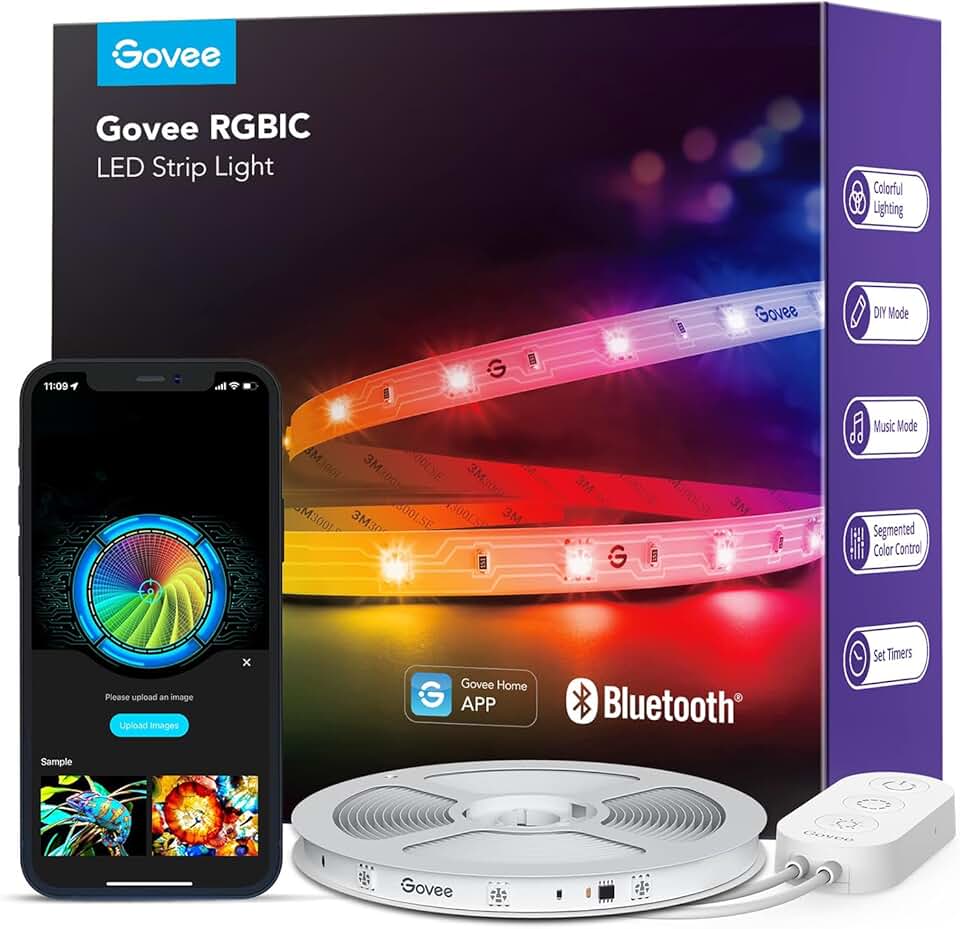
Creating a high-quality, customizable base layer of ambient light with simple app control.
- High brightness and color accuracy
- Works with Alexa/Google for voice control
- Reliable Wi-Fi app with solid static white settings
Here’s the big myth: that automated color temperature shifts are necessary or beneficial for desk work. This needs to die. This is the central pillar of the scam.
This doesn't work for focused work. Your brain craves environmental stability for deep concentration. An unexpected shift in your ambient light—even a slow, scheduled one—is a micro-distraction. It subtly pulls your awareness from your work to your environment. It’s the visual equivalent of a faint, intermittent alarm. In real use, this fails to deliver the promised ‘seamless flow.’ Instead, it creates a low-grade anxiety about whether the light is ‘right.’
The industry lies about the precision needed. They talk about Kelvin ratings and melatonin suppression as if you’re conducting a lab experiment, not trying to finish a report. The brutal truth? For 90% of desk-based work, a single, static, warm-white color temperature (around 2700K to 3000K) is superior. It’s easy on the eyes, reduces contrast strain with your cooler monitor, and creates a consistent, cocooning atmosphere that signals ‘work zone.’
What Actually Matters For Ambient Desk Light (It's Not Color)
If color temperature automation is a gimmick, what should you care about? Three things: diffusion, placement, and manual control.
First, diffusion is everything. A bare LED strip stuck under your desk is visual garbage—a string of harsh, piercing points of light. It creates glare, draws your eye, and looks cheap. The real upgrade isn’t a smarter strip; it’s a good diffuser channel. It turns those nasty points into a soft, even glow that washes your wall or desk edge. This is the difference between looking at a light source and being in a lit space. Most people get this wrong. They buy the ‘smart’ tech and skip the $20 aluminum channel that makes it look professional.
Second, placement over pixels. Where the light hits matters infinitely more than its color. Bouncing light off a wall or the ceiling creates ambient fill that softens shadows and reduces eye fatigue. Directly pointing lights at your workspace creates harsh reflections and glare. Think about painting with light, not programming it.
Finally, manual control beats automation. A simple, physical dial or a one-tap app shortcut to your favorite ‘deep work’ scene is more valuable than a perfect solar schedule. Why? Because your work doesn’t follow the sun. You might need a calming vibe at 2 PM for a stressful call, or a slightly brighter tone at 8 PM for a final push. You need to command the mood, not be a passenger to an algorithm.
How to Build a Vibe That Actually Works
Forget circadian algorithms. Here’s a real setup that works, based on widespread user feedback from people who escaped the hype cycle.
Start with a dumb, high-quality LED strip. Or a smart one if you want simple app control for on/off and basic white tones—but buy it for the build quality and brightness, not the bio-features. Immediately install it in a professional-grade diffuser channel. This alone will elevate your setup more than any smart feature.
Place it for indirect illumination. The back of your monitor, aimed at the wall behind it, is a classic for a reason. It reduces monitor contrast and creates depth. Under-desk placement, if done with a diffuser and aimed back at the wall/floor junction, can create a floating effect. Never point it where you can see the diodes.
Choose one warm-white tone you love. Spend ten minutes one evening cycling through the warm whites on your strip—from 2700K to 3500K—and pick the one that feels most ‘right’ with your monitor on. Stick with it. This is your primary work light. Consistency is your friend.
Then, and only then, consider a separate, cheap RGB strip or lamp for accent color. This is your mood piece. Cue it up for gaming, movies, or when you just want a red glow for night. This keeps your functional work light sacred and stable. This is the real secret: decouple task lighting from mood lighting.
The Biggest Mistake: Chasing the Sunrise
The most common failure story isn't about tech breaking. It’s about the psychological toll of over-optimization. People become light managers instead of workers. They tweak schedules, question if the blue is blue enough, and stress about conflicting light sources. It’s a focus leak.
The lesson learned? Stop trying to make your desk a biofeedback machine. A desk is a tool for output. Its lighting should support that—not become a secondary project that demands attention. Simplicity is a feature, not a lack of one. The most productive, focused setups we see use the least ‘smart’ lighting. They have a great, consistent base layer and maybe one fun accent they manually turn on for fun.
The Final Verdict: Skip the Scam
The entire category of ‘circadian-optimized’ smart desk lighting is overrated. It’s a classic case of tech solving a problem that doesn’t exist at the user level, then creating new problems of complexity and distraction.
You are wasting money on features that conflict with real-world focus. The money saved by skipping the circadian premium can buy you a superior diffused light strip, a good monitor light bar for actual task lighting, and a nice desk lamp. Those tools will tangibly improve your setup.
Focus on creating a single, beautiful, consistent ambient layer. Your eyes and your focus will thank you. Leave the solar simulations for the marketing brochures. For real desk performance, skip it.
Want to see other wellness tech traps? Check out our take on The AI Desk Lamp Scam Sabotaging Your Focus and how Standing Desk Wellness Features Are a Scam.
Frequently Asked Questions
What is the circadian lighting scam?
The circadian lighting scam is the marketing of expensive smart lights that claim to automatically adjust color temperature to boost your health and focus by mimicking the sun. In reality, the light intensity is too weak to matter compared to other sources, the auto-shifts are distracting, and a single, well-chosen static light works better for most desk setups.
Do circadian rhythm lights really work?
For desk use, no. The core science on light affecting circadian rhythms is real, but the application in smart bulbs is overrated. The light dose from a desk lamp is negligible compared to natural light from windows or the blue light from your screens. The promised benefits for focus and sleep often fail to materialize in real-world home office use.
What's better than circadian lighting for a desk?
A high-quality, diffused LED strip set to a single warm-white color temperature (2700K-3000K) provides consistent, eye-comfortable light that supports focus. Adding a separate, cheap RGB strip for manual accent color gives you mood control without sabotaging your primary work light. Focus on light quality and placement, not automated color shifts.
Is blue light in the morning actually good for you?
While cooler light can be alerting, getting natural daylight by looking out a window or going outside is infinitely more effective than any smart bulb. Relying on a desk lamp for this effect is misguided. For your desk, a neutral-to-warm light is better for reducing contrast with your monitor and maintaining a consistent work environment.

Written by
From bias lighting behind your monitor to smart RGB ecosystems, Leon knows exactly how to light a room for productivity during the day and gaming at night.
Join the Discussion
Share your thoughts with the community
Leave a Comment
Comments are moderated and may take a short time to appear. Links are not permitted.