Ambient Lighting Trends
Your favorite streamer’s hypnotic RGB cave is a focus-killing trap. Most ambient lighting trends peddled in 2026 are overpriced, overhyped garbage designed to look good in a 10-second reel, not to support real work. This is the no-BS guide to what actually matters.
Let’s get one thing straight: I’m not here to sell you a $300 Nanoleaf clone or convince you to bathe your office in unicorn vomit. The current ambient lighting trends of 2026 are, by and large, a spectacular con job. They’re engineered for Instagram, not for your eyes, your focus, or your bank account. I’ve seen setups that look like a Las Vegas casino threw up on a command center, all in the name of ‘vibes’. It’s nonsense. Real atmospheric lighting isn’t about the most colors or the loudest patterns; it’s about subtlety, intention, and supporting the work you’re actually doing. If your lighting setup feels like a distraction, that’s because it is. Most people get this completely wrong, chasing aesthetics that actively work against productivity.
Why The “Immersion” Trend Is Actually A Focus-Killer
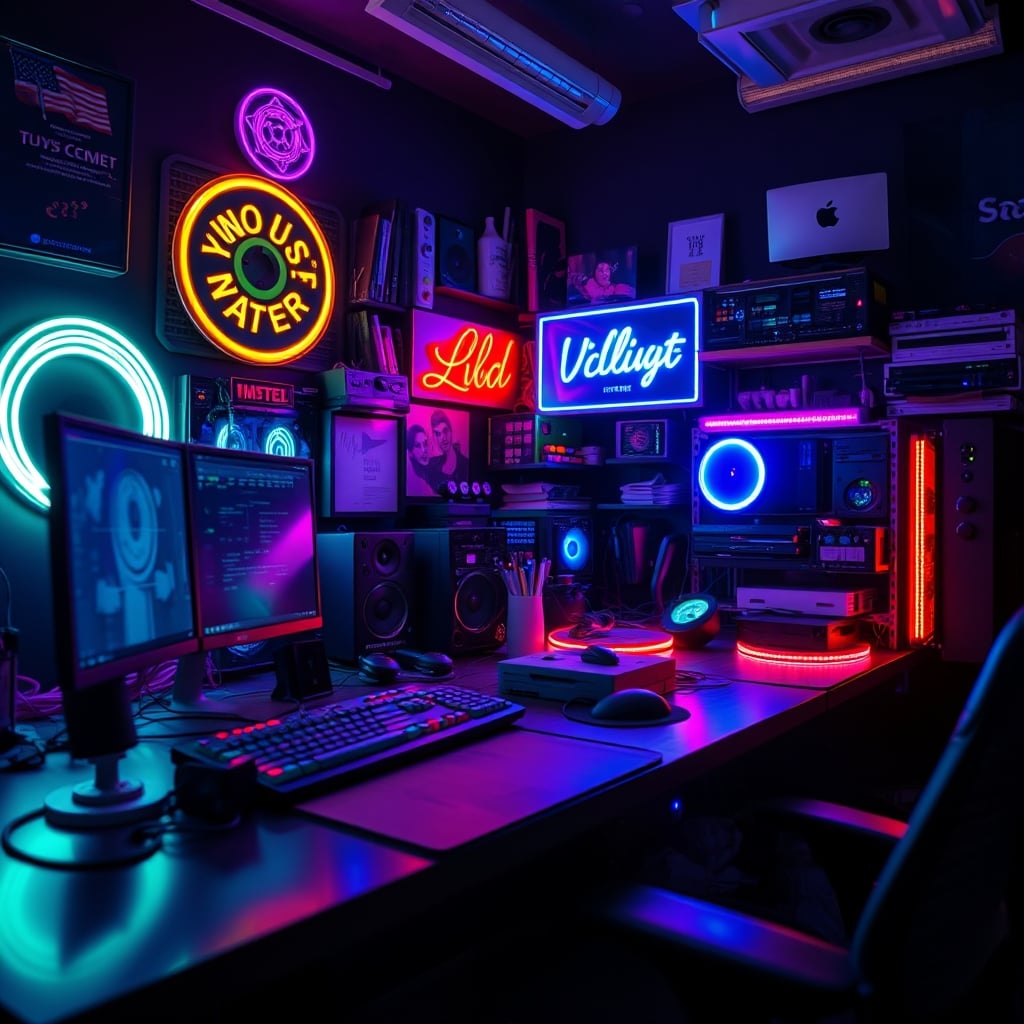
The biggest lie sold right now is the idea of ‘full immersion’. You know the look: LED strips tracing every shelf, corner, and piece of furniture, Philips Hue bulbs in every socket, all synced to your game or music. It’s visually arresting for a TikTok clip, and that’s the point. In real use, living inside a pulsating light show is cognitively exhausting. Your desk is not a nightclub. Your peripheral vision is constantly processing these moving, shifting colors, pulling attention away from the single task in front of you.
Based on widespread user feedback from people who actually try to work in these environments, the novelty wears off in about two weeks. After that, you’re left with a persistent, low-grade visual noise that makes sustained deep work harder. This is overrated. The industry lies about this by calling it ‘immersive productivity’. No serious creative I know—editors, writers, coders—can tolerate a disco in their periphery while trying to solve complex problems. If your lighting demands attention, it’s failing at its primary job.
The 2026 Ambient Lighting Trends That Need To Die
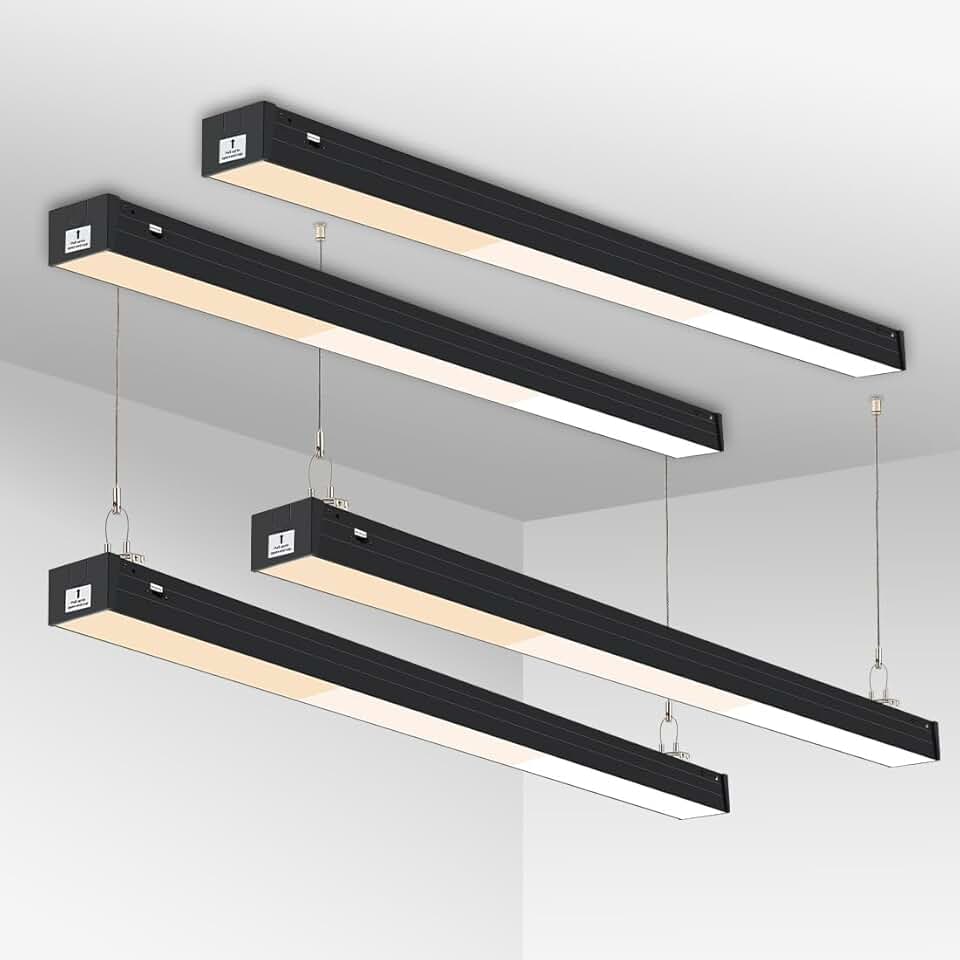
Clean, architectural wall-washing without smart-home complexity.
- 3000K/4000K/5000K selectable color temperature
- Dimmable for perfect intensity control
- Linkable design for seamless multi-fixture runs
Let’s name and shame. First up: reactive audio sync. Having your entire room throb to your playlist is a party trick, not a feature. It gets old fast and makes any video call or calm thinking session impossible. This doesn’t work for a workspace. Period.
Second, the ultra-saturated RGB everything. Not every surface needs to glow. The obsession with backlighting monitors, keyboards, mice, and desks creates a visual chaos that has no focal point. It’s the lighting equivalent of writing an entire paragraph in bold. When everything is emphasized, nothing is.
Third, and this is the real scam: proprietary smart ecosystems that lock you in. Buying into a single brand’s app and hub for your entire lighting scheme is a financial trap. It complicates what should be simple and turns a basic home comfort into a tech support nightmare when the servers go down or the app gets a terrible update.
Color Temperature Is Your Secret Weapon (And You’re Using It Wrong)
Forget chasing 16 million colors. The single most impactful setting on any light is its color temperature, measured in Kelvin (K). And the trend of blasting 6000K ‘daylight’ white all evening is a one-way ticket to eye strain and ruined sleep. Most desk setups are already too blue, adding to the circadian rhythm carnage.
Here’s the real, simple rule that most influencer setups ignore: Match your ambient light’s temperature to your screen’s white point and the time of day. During the day, a cooler ambient (4000K-5000K) can feel alerting. As evening rolls in, you should be dropping that down to 2700K-3000K—a warm, candle-like glow. This isn’t just cozy; it signals to your brain that it’s time to wind down, reducing the physiological stress of a bright, blue-lit screen in a dark room. The contrast between a warm, dim room and a cool, bright screen is also easier on the eyes, reducing the perceived glare.
Why Indirect And Diffused Light Always Wins
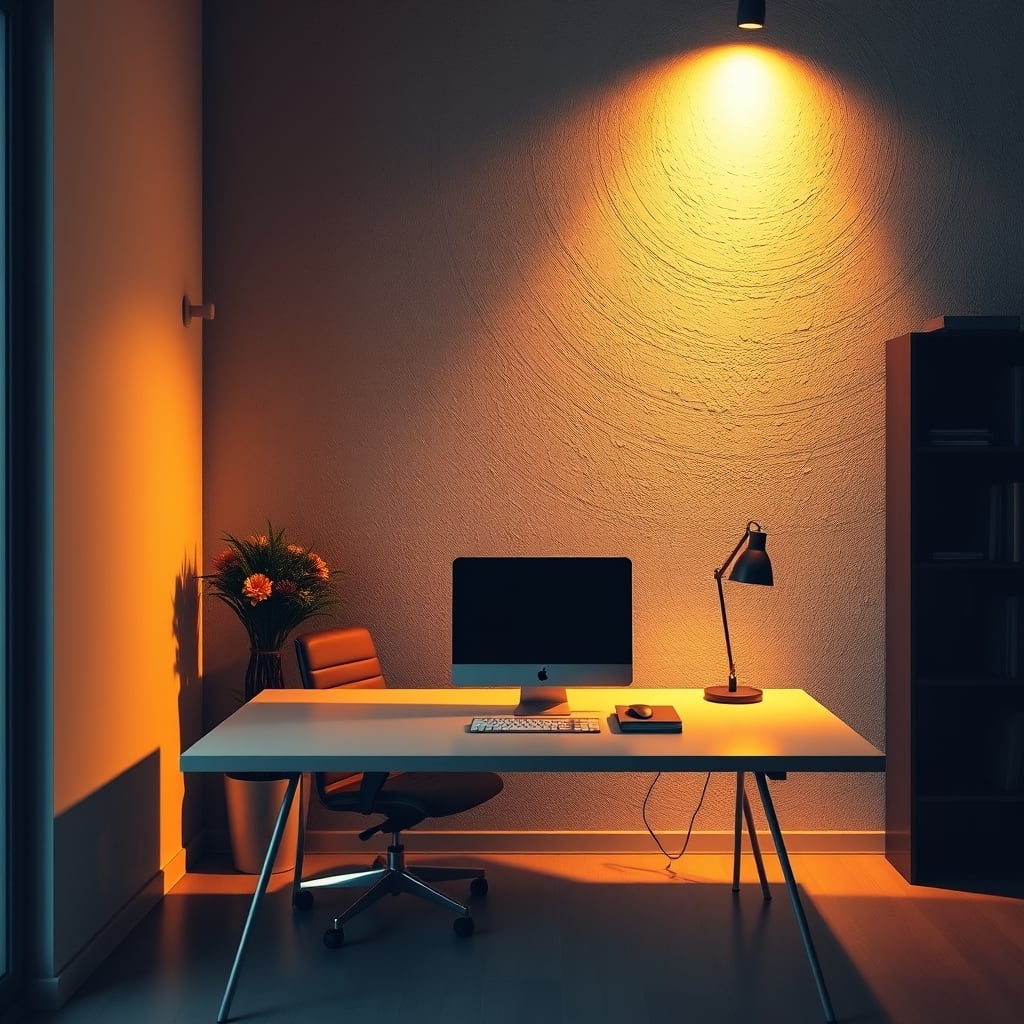
The best ambient light is light you don’t directly see. This is the core principle most flashy setups forget. A bare LED strip pointed at your wall or a bulb shining directly into your eyes is harsh and glaring. The goal is to bounce light off a surface—a wall, a ceiling, the back of a shelf—to create a soft, even wash that eliminates harsh shadows and reduces contrast.
This is where simple, architectural linear lights dominate the gimmicky stuff. A single, well-placed DAKASON 4FT LED Linear Light suspended or mounted to wash a wall with light does more for a room’s atmosphere than a dozen dancing RGBIC strips. It provides a clean, professional-grade illumination that feels built-in, not tacked on. The light becomes a feature of the space itself, not a noisy accessory. Users consistently report that this approach feels more ‘finished’ and less like a dorm room hack.
The Smart Light Privacy Risks Nobody Talks About
We have to talk about the elephants in the room: data and reliability. Connecting your room’s lighting to the internet via Wi-Fi or a proprietary hub isn’t just a convenience play; it’s a vulnerability. As we’ve covered in our investigation into Smart Light Privacy Risks Are Worse Than You Think, these devices are data collection points in your home. They can track when you’re home, your routines, and even infer activity. And for what? So you can ask Alexa to make the room pink?
Beyond privacy, cloud dependence is a fatal flaw. When the manufacturer’s servers hiccup, your lights become dumb switches at best, or bricks at worst. We’ve all seen the forums flooded with users unable to control their ‘smart’ lights after a botched app update. This is the real issue. Reliability should be paramount for your environment’s foundation. A simple, dumb dimmer switch for a set of quality LED lights often provides more consistent, frustration-free control than a flaky app that needs constant re-logging.
The Single-Light-Source Myth That’s Making Your Room Look Flat
A common piece of bad advice is to stick to one type or color of light everywhere. This creates a flat, lifeless cave. The human eye craves a bit of contrast and layering. The key isn’t more fixtures, but intentional differentiation.
Your ambient layer should be your softest, most diffused light—the wall wash or upward-facing bounce. Then, add one or two points of slightly higher intensity or marginally different tone (say, a 3000K floor lamp in a corner of a room washed with 2700K light). This creates depth and makes the space feel dynamic without being distracting. Think of it like audio mixing: you have your bed of ambient sound, and then you place a few specific elements on top to create a rich soundstage. The same principle applies visually.
Practical Tips: How To Build Light That Actually Works
Stop planning your lighting in an app. Start with the room dark. Ask yourself: where do I need to see, and where do I need to feel? Your task lighting (desk lamp, monitor light) handles the ‘see’. Your ambient lighting handles the ‘feel’.
- Bounce It: Never point a light source directly into your field of view. Always point it at a surface. A $30 LED panel pointed at the ceiling behind your monitor is more effective than a $100 ‘gaming’ light bar pointed at your wall.
- Dimmer Is Non-Negotiable: Every ambient light source must be dimmable. Intensity is everything. A bright ambient light kills the vibe and the utility. This is why I lean towards simple dimmable linear fixtures over app-controlled smart bulbs for the main ambient layer.
- Hide The Source: If you can see the individual LEDs or the hardware clearly, you’ve failed. Use channels, diffusers, or strategic placement. The light should feel like it’s emanating from the architecture, not a plastic tube.
- Prioritize Warmth At Night: Automate it or make it a habit. Your evening preset should be 2700K and dim. Your body will thank you. This simple shift has a more profound impact on your well-being than any nootropic gadget ever could.
The Biggest Mistake: Chasing The Viral Setup
The cardinal sin is replicating a setup you saw online without understanding the context. That YouTuber’s neon-blasted wall looks cool in a tightly framed shot, but in the context of their entire room and daily life, it might be utterly oppressive. They often turn it on just for the shot. As we’ve exposed in Your YouTuber Lighting Setup Sucks: Here's Why, these are sets, not sustainable workspaces.
Your lighting should serve you, not the algorithm. The most common regret we hear is, “I spent hundreds on smart bulbs and strips, and now I just leave them on plain white.” That’s your gut telling you the truth. The gimmicks are exhausting. Good lighting is quiet, supportive, and forgotten until you notice how good it makes you feel.
Final Verdict: Skip The Hype, Invest In Fundamentals
Most of the trendy, flashy ambient lighting gear peddled in 2026 is overrated. You don’t need reactive music sync, a rainbow on every surface, or a cloud-connected bulb in every socket. You’re wasting money on this.
What’s actually good? Investing in a few high-quality, dimmable, warm-capable light sources that you can place and forget. A single well-diffused linear light or a couple of strategically bounced lamps will do more for your space’s atmosphere and your personal focus than any pre-programmed ‘gamer’ lighting profile. It creates a foundation you can actually live and work in, not just photograph.
So, the verdict: Skip the RGB circus. Build a simple, layered, and warm ambient base. Your eyes, your focus, and your sense of calm will be the real metrics of success. That’s the brutal, beautiful truth about ambient lighting trends in 2026.
Frequently Asked Questions
What is the biggest mistake people make with ambient lighting in 2026?
The biggest mistake is prioritizing visual hype over function. Chasing reactive RGB setups and full-color immersion creates a distracting, cognitively noisy environment that actively harms focus for real work. Good ambient lighting should be seen, not noticed.
Is smart ambient lighting worth the money and privacy risk?
For core ambient lighting, often not. The privacy risks, cloud dependence, and app complexity add frustration for minimal gain. A high-quality, dimmable ‘dumb’ light with a physical or simple wireless dimmer is more reliable and creates a better, more consistent foundation.
What color temperature is best for evening ambient light?
2700K to 3000K. This warm, candle-like glow supports your natural circadian rhythm by reducing blue light exposure in the evening, signaling to your brain that it's time to wind down, and reducing eye strain from screen contrast.
Written by
GlowRig Editorial researches and writes practical guides about desk setups and home office gear. Our articles are produced with the help of AI research tools and are reviewed for accuracy against manufacturer specifications and public user feedback. We may earn a commission from affiliate links, which never affects our recommendations.
Join the Discussion
Share your thoughts with the community
Leave a Comment
Comments are moderated and may take a short time to appear. Links are not permitted.