Fidget Toys Productivity Is Mostly Marketing Hype
Forget what TikTok and corporate wellness blogs tell you. The connection between fidget toys productivity and actual deep work is tenuous at best. Most of these gadgets are just expensive permission slips for distraction, backed by marketing fluff instead of hard science.
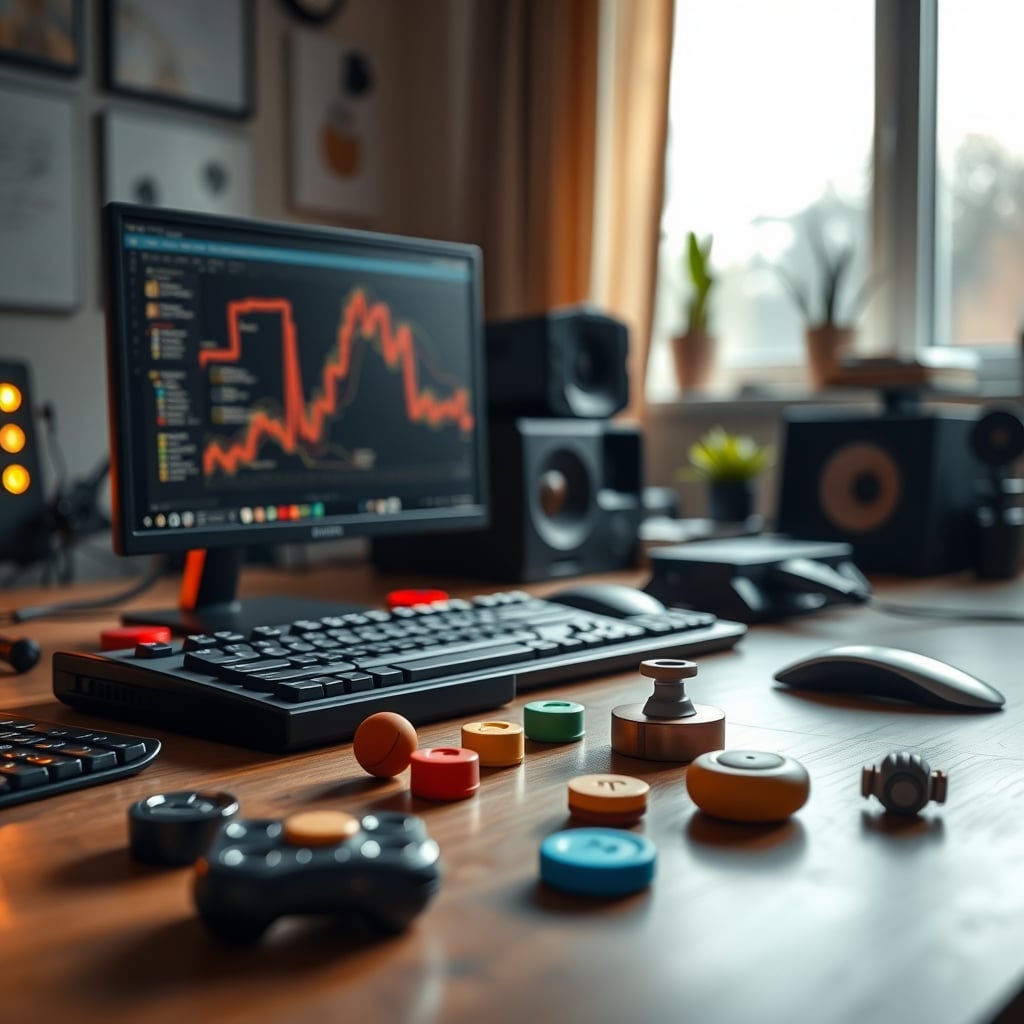
I watched yet another creator push a $50 'focus spinner' this week, claiming it unlocked their hyper-focus. It's the same recycled content from 2024, just with a fresh coat of paint for 2026. The fidget toys productivity myth has become a billion-dollar industry built on a fundamental misunderstanding of attention. Let me be clear: after using and observing dozens of these gadgets in real setups, most of them are overrated. They're solutions in search of a problem, and they're actively sabotaging workflows they claim to fix.
The real problem isn't that you need something to do with your hands—it's that your work isn't engaging enough to command your full attention. Most people get this wrong. They treat the symptom (restlessness) by buying a gadget, instead of addressing the cause (poor task design, constant digital interruptions, or a fundamentally boring job). Users consistently report that after the initial novelty wears off, the fidget toy becomes just another piece of desk clutter, ignored or used as a procrastination tool.

Why The Fidget Toys Productivity Myth Needs To Die
Let's attack the core lie head-on: the idea that kinetic motion toys directly translate to improved cognitive output. This is overrated. The studies often cited are either misinterpreted, context-specific to clinical ADHD populations, or funded by companies selling the damn things. For the average knowledge worker, the data just isn't there.
Here's what the industry lies about: they sell you on 'focus' when they're really selling 'distraction.' A spinner, cube, or slider provides a low-level cognitive task. Your brain splits resources between your work and managing the tactile feedback of the toy. Proponents call this 'occupying the restless mind,' but in real use, it's just multitasking with extra steps. This doesn't work for deep analytical thinking or creative flow states, which require undivided attention.
Widespread user feedback from long-term adopters reveals a common pattern: the toy helps during tedious, low-cognition tasks (like listening to a long meeting) but becomes a liability during work that requires serious mental horsepower. The toy shifts from a focus aid to a focus sink. This is a known issue for long-term use that you won't see in the shiny Instagram ads.
The Two Types of Desk Toys (And Why One Is Garbage)
Premium Pick
- High performance
- Premium build
Common competitor angles talk about 'calming anxiety' or 'improving concentration.' We're skipping that. Let's categorize by outcome instead of intention. There are only two real categories: Passive Distractions and Active Interruptions.
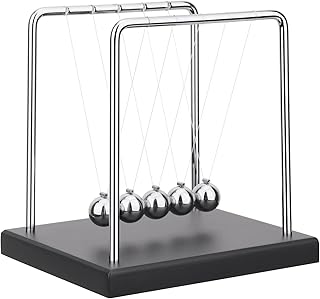
Passive Distractions are things like Newton's Cradles, perpetual motion machines, or sand gardens. They create visual or minor auditory motion. They're mostly harmless, but their value is decorative, not cognitive. The industry lies about this by calling them 'focus anchors.' They're not. They're just pretty things to glance at. This is not worth it if you're buying it for productivity.
Active Interruptions are the worst offenders. Clickers, spinners, pop-its, and complex fidget cubes. These require manual engagement. Every time you reach for them, you're making a conscious decision to divert attention from your screen to your hand. That context switch has a cost, even if it's micro-seconds. You're wasting money on this if you believe it makes you more efficient. It's adding friction, not reducing it.
For a deeper dive on how other 'productivity' gadgets fail, see how AI desk toys have become masterclasses in distraction. The pattern is identical: a cool tech solution to a human problem that misses the point entirely.

What Actually Works (And It's Not What You're Sold)
If fidget toys aren't the answer, what is? The solution is boring, human, and doesn't involve buying a new gadget. It's about structuring your environment and your habits to support the type of attention your work actually requires.
For repetitive, low-engagement tasks? Sure, a simple, silent, tactile object might help stave off the urge to check your phone. But the real fix is to batch those tasks and power through them, then reward yourself with a proper break—away from your desk. The toy is a crutch, not a cure.
For deep work? You need to eliminate choice, not add more. This is the real issue. Every extra object on your desk is a potential decision point ('Do I fidget with this now?'). The most focused setups are often minimalist for a reason. The path to flow isn't through your hands; it's through removing every possible exit from the task at front of you. The concept of a distraction-free desk is often a lie, but cluttering it with 'focus toys' is definitely not the solution.
The Fidget Toys Productivity Trap In Common Setups
Let's get specific. In a common dual-monitor coding or writing setup, here's what actually happens. You hit a tough problem. Your focus wavers. Your hand reaches for the fidget spinner on your desk. For 30 seconds, you spin it while staring blankly at the screen. You've just traded potential insight for rhythmic hand motion. You've given your brain an easy out instead of sitting with the discomfort of the problem, which is often where the breakthrough happens.
In meetings, it's even worse. The toy gives you permission to mentally check out. Instead of actively listening and engaging, you're semi-engaged in two activities. Users consistently report they retain less from meetings where they fidgeted compared to when they took handwritten notes. The toy isn't aiding focus; it's enabling a lower quality of attention.
And let's talk about the noise. The quiet clicks of a cube or the whirring of a bearing in a spinner? In a shared office or on a sensitive mic, that's antisocial behavior disguised as productivity. It's the audio equivalent of someone loudly chewing gum. It's incredibly distracting to others, which makes the whole premise of 'collective productivity' a joke.
One Toy That Doesn't Totally Suck (And Why)
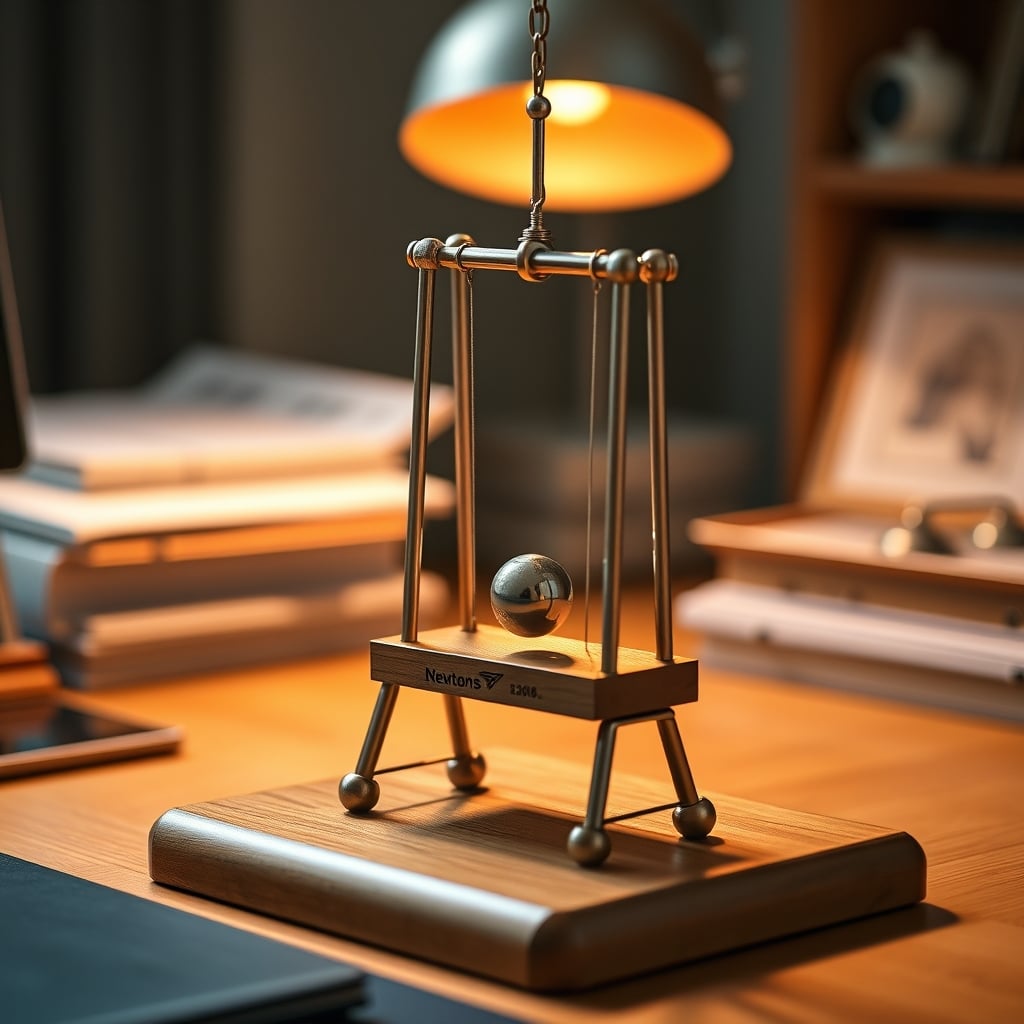
If you absolutely must have something on your desk, let's talk about the Newton's Cradle. Notice I didn't lead with this as a recommendation. It's the exception that proves the rule. Why? It's almost entirely passive. You set it in motion once, and it becomes a visual kinetic element. It doesn't demand your interaction. It doesn't make noise (if you buy a decent one). It's a pendulum, not a puppet.
Its value, if any, is as a visual metaphor for momentum and cause-and-effect. It can be a useful reminder to get started (the first ball needs a push) or to maintain rhythm. But that's a psychological hack, not a productivity tool. Buying it expecting a 10% boost in output is a fool's errand. It's a cool desk ornament that moves. Full stop.
This ties into a larger truth about desk aesthetics versus function. So much of what we buy is about the identity of being a 'productive person,' not the reality of doing productive work. As we've covered before, desk layout psychology is often a lie we tell ourselves to justify buying more stuff.
The Practical, Brutally Honest Advice
- Audit Your Fidgets: If you already own these toys, pay attention for one week. Log when you use them. Is it during high-focus work or low-focus drudgery? Be honest. You'll likely find it's the latter.
- Replace, Don't Add: Instead of buying a toy to help you focus during boring tasks, try the Pomodoro Technique. Work for 25 minutes with nothing in your hands but your keyboard/mouse. Then take a 5-minute break away from your desk. Get water, stretch, look out a window. This addresses the restlessness with movement and a change of scene, which is what your body actually craves.
- Address the Real Problem: Are you fidgeting because the task is boring? Can the task be automated, delegated, or eliminated? Are you fidgeting because you're anxious? Maybe you need to address the source of the anxiety, not buy a plastic cube to squeeze. The toy is a band-aid on a bullet wound.
- If You Have ADHD: This advice is different. Consult a professional. What works for a neurotypical brain under-marketing influence is not the same as tools prescribed for managing a neurodivergent condition. Don't take productivity advice from a tech blog for a clinical situation.
The Biggest Mistake Everyone Makes
They externalize focus. They believe the solution to an internal cognitive state lies in an external physical object. Focus is a skill, like meditation or running. You can't buy a gadget that makes you a better runner. You buy good shoes and then you put in the miles. You can't buy a gadget that makes you more focused. You create a good environment and then you practice paying attention.
The mistake is believing the marketing that says the hard work can be bypassed with a clever purchase. It can't. The rise of AI productivity gadgets promising similar shortcuts is the same story with a silicon chip. Laziness sells.
Final Verdict: Skip It
For 95% of people reading this, buying a fidget toy for productivity is a waste of money. It's overrated. The minor, situational benefit for a subset of boring tasks does not justify the purchase, the desk real estate, or the self-deception that you're 'optimizing.'
Put that $25 toward a better chair adjustment, a quality desk lamp to reduce eye strain, or just save it. Your focus comes from managing your time, your energy, and your environment—not from a piece of molded plastic or metal with a ball bearing in it. Stop looking for a hack. Do the work.
The Newton's Cradle is the only thing remotely worth considering, and only as a decorative kinetic sculpture, not a productivity tool. If you want one for that reason, fine. But go in with your eyes open. You're buying a cool-looking thing that moves, not a brain upgrade.
Frequently Asked Questions
Do fidget toys actually help with ADHD or anxiety?
The evidence is mixed and highly individual. Some clinical studies show benefits for specific ADHD symptoms in controlled settings, but these findings don't cleanly translate to the mass-market desk toys sold for 'productivity.' If you have a diagnosed condition, consult a therapist or occupational therapist for personalized strategies. Do not self-medicate with Amazon gadgets.
What's the best fidget toy if I still want to try one?
If you insist, choose something silent and simple that doesn't demand visual attention. A smooth stone, a single bearing spinner without lights, or a simple silicone mesh. Avoid anything with multiple functions, clicks, or lights. Remember, you're choosing a minimally distracting distraction, which is a contradiction. A Newton's Cradle is passive and visual, making it the least intrusive option.
Why do so many people swear by fidget toys if they don't work?
Confirmation bias and the placebo effect are powerful. When you buy something expecting it to help, you're primed to notice any slight improvement and attribute it to the toy. The novelty also provides a brief dopamine boost, which feels like increased focus. Over time, as the novelty fades, so does the perceived benefit, which is why these toys often end up in drawers.
Are there any real alternatives to improve focus at my desk?
Yes, and they're free. Use the Pomodoro Technique (25 minutes on, 5 minutes off). Take your breaks AWAY from your desk. Ensure your lighting is good to reduce eye strain. Use website blockers during focus sessions. Most importantly, clarify what you're working on before you start—vague tasks lead to restless minds. Focus is about eliminating choices, not adding more.
Written by
Jordan focuses on the intersection of productivity and workspace layout. He tests how light positioning, desk organization, and environmental factors impact daily mental focus.
Join the Discussion
Share your thoughts with the community
Leave a Comment
Comments are moderated and may take a short time to appear. Links are not permitted.