Smart Plant Dangers Are Your 2026 Productivity Killer
You bought a glowing, sensor-laden plant pot to boost your focus. Now it’s the most distracting thing on your desk. This is the reality of smart plant dangers in 2026. It's time to stop believing the marketing.
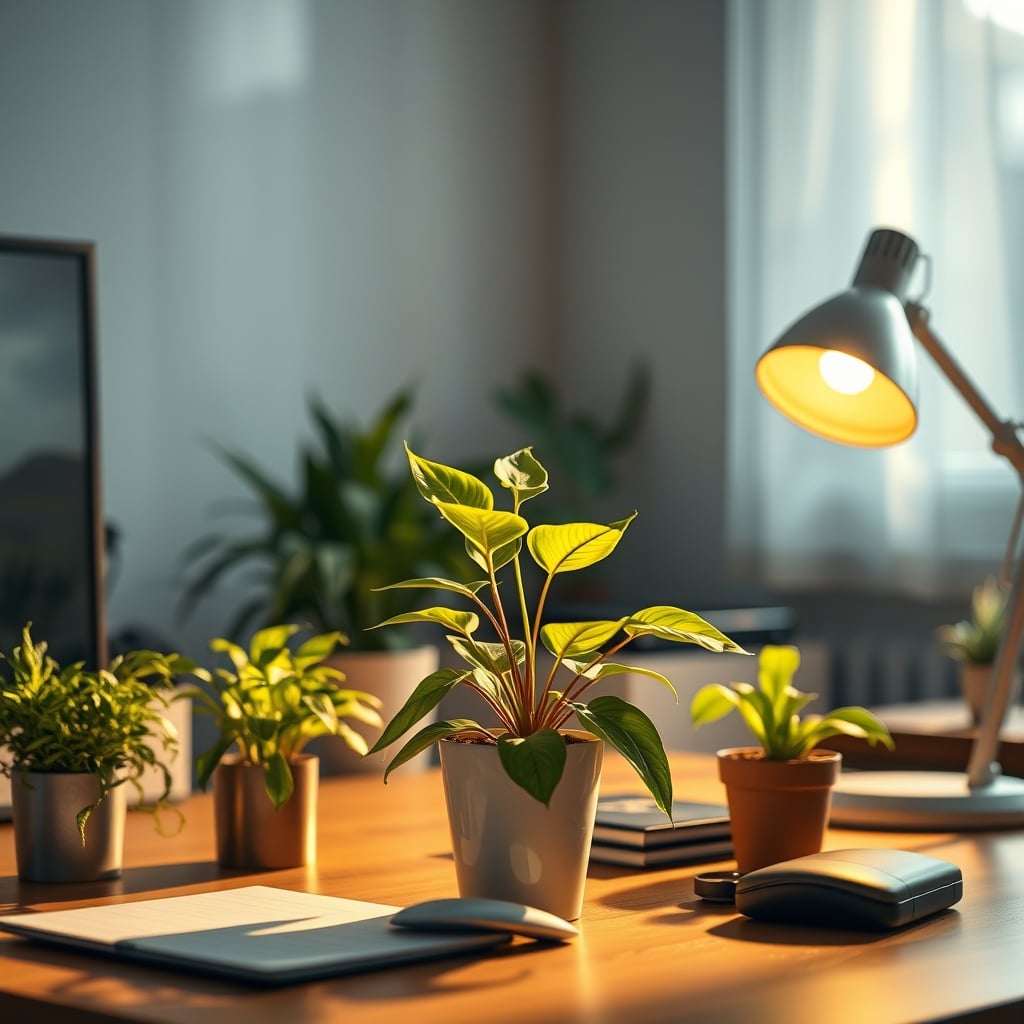
Look, I did it too. I saw the ads for that sleek, app-connected plant vase with glowing LEDs and soil sensors. It promised peace, focus, and a touch of nature in my tech-heavy world. So I spent $200. And within two weeks, I hated it. That little glowing orb became the most nagging, distracting, and pointless object on my desk. It wasn't a plant. It was a gadget. And gadgets are designed to grab your attention, not let you relax. This is the core of smart plant dangers—they turn a simple, beneficial object into a complex, anxiety-inducing device. The hype around biophilic design has been weaponized by tech companies to sell you another thing that needs charging, updating, and monitoring. It's overrated. Let’s talk about why.
The Sensor Life You Never Signed Up For
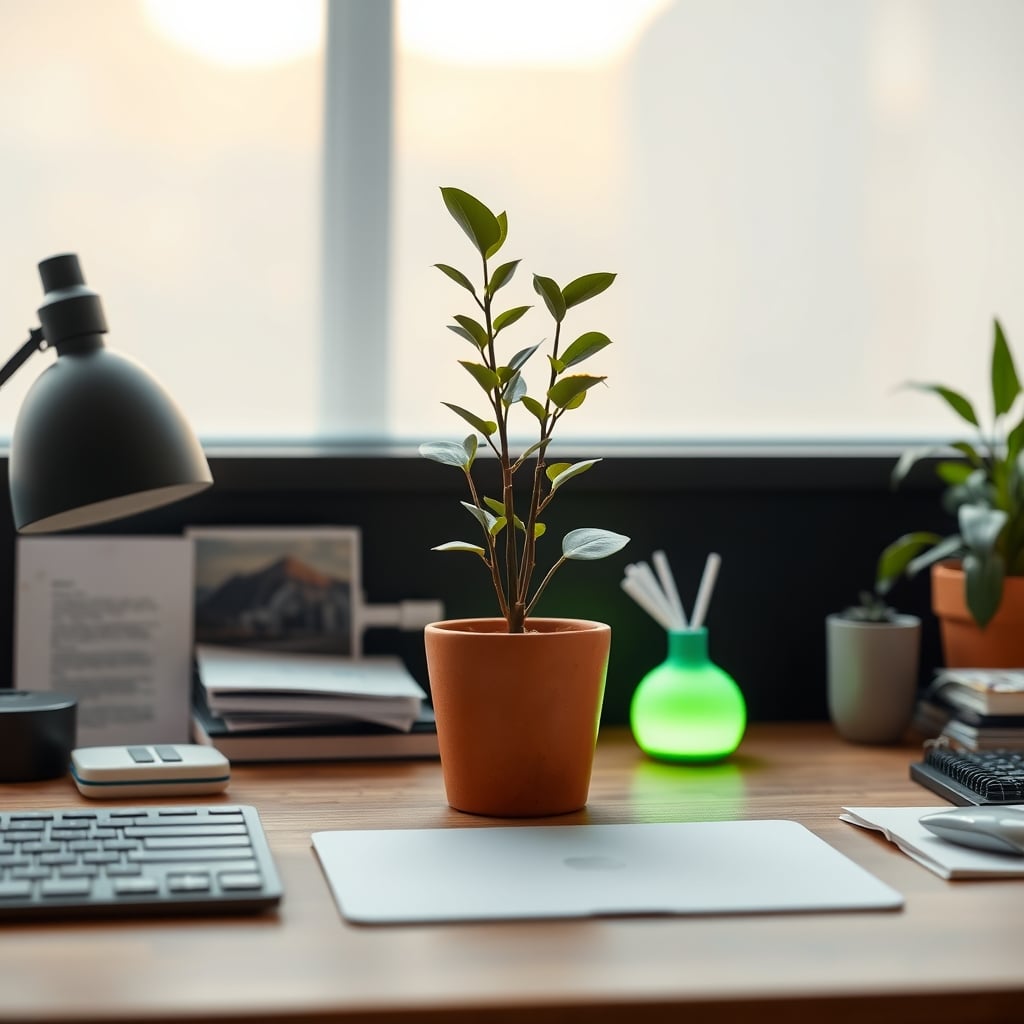
Here’s the brutal truth most people miss: a ‘smart’ plant isn’t for the plant. It’s for you. The entire ecosystem—the moisture sensors, the pH monitors, the connected app that graphs your fern’s ‘health’—exists to give you data. But you don’t need data to care for a desk plant. You need a glance. A real, living plant communicates its needs through visual cues: drooping leaves, dry soil, new growth. Adding a layer of digital metrics between you and that communication doesn’t simplify the process; it complicates it. Now you’re checking an app notification instead of looking at the thing itself. This is the opposite of mindfulness. It’s distraction dressed up as care.
In common setups, these notifications are a constant low-grade interruption. Your phone buzzes: “Your succulent’s soil moisture is at 42%.” What does that even mean? Is 42% good? Should you water it? The data is presented without context, creating decision paralysis where none existed before. You used to just pour a little water when the soil looked dry. Now you’re conducting a science experiment. This doesn’t work for productivity. It actively harms it by injecting trivial decisions into your workflow. Based on widespread user feedback, the most common outcome is that people eventually ignore the app entirely, leaving a $200 sensor array doing nothing while the plant… just exists. The industry lies about this being ‘easy.’ It’s easy until you have to manage the tech.
Why The ‘Connected Zen’ Myth Is Completely Wrong
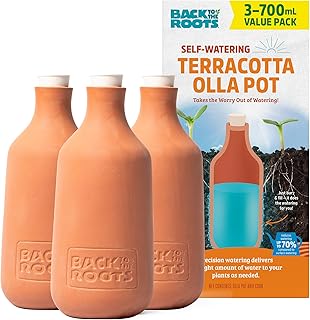
People who want passive watering help without smart tech distractions.
- Uses ancient, passive terracotta technology—no electronics or apps.
- Provides about one week of consistent moisture release.
- Material-appropriate (terracotta) and blends with natural desk aesthetics.
This is the myth that needs to die. The idea that connecting your nature to your network creates a harmonious, calming effect. It’s marketing fiction. In real use, the effect is the opposite. The glowing LEDs, often advertised as ‘growth lights’ or ‘ambient mood lighting,’ are just more screen-like emissions in your visual field. They fight against the very purpose of having a plant: a soft, natural, non-digital visual break. Your eyes are already fatigued by monitors. Adding another source of directed, often blue-tinted light doesn’t help. It’s overrated.
Furthermore, the ‘automated care’ promise is a joke. The self-watering reservoirs in these pots are notoriously finicky. They either drown the roots by creating a constantly wet environment (a death sentence for most common desk plants like succulents or snake plants) or they fail to distribute water evenly, leaving one side of the root ball parched. We’ve seen this consistently. The result is a plant that dies because of the smart system, not despite it. You’re paying for a system that increases the chance of failure. Most people get this wrong—they think automation equals better care. In biology, it often equals neglect. A plant is not a server that needs consistent uptime. It’s a living thing that thrives on occasional, attentive human intervention.
The Real Smart Plant Dangers: Privacy And Planned Obsolescence
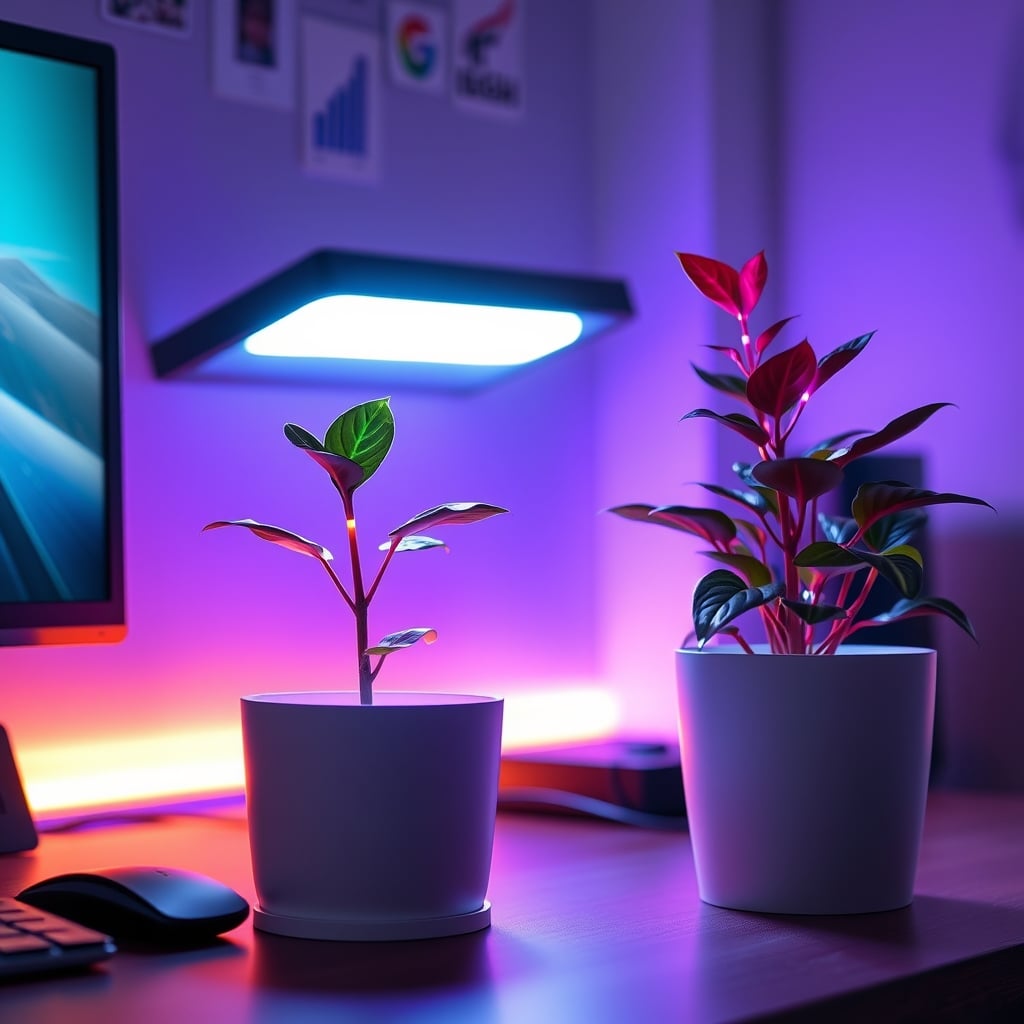
Let’s talk about the dangers nobody mentions in the glossy ads. First, privacy. Your cute little plant pot is now an IoT device on your network. Many of these gadgets require a proprietary app that collects data—not just plant data, but likely device data, network data, usage patterns. Where does that data go? What’s the company’s privacy policy? In 2026, we’ve learned from Smart Clock Privacy Masterclass: The Brutal 2026 Truth and AI Desk Gadgets Privacy Is The 2026 Lie You're Buying that ‘smart’ often means ‘surveillance.’ A plant pot shouldn’t need a firmware update or a data-sharing agreement. This is a real issue for long-term use.
Second, planned obsolescence. These are gadgets. The hardware will fail. The app will lose support. The proprietary watering mechanism will clog or break. Unlike a simple terracotta pot that can last decades, a smart vase has a lifespan dictated by its cheapest electronic component. Users consistently report that after 18-24 months, the device becomes a ‘dumb’ pot with a dead LED ring and a useless app icon on their phone. You’ve bought a temporary tech product masquerading as a permanent natural accessory. This is bad. It’s wasteful. It’s the antithesis of the sustainable, natural vibe it claims to promote.
Aesthetic Corruption: Your Desk Isn’t A Laboratory
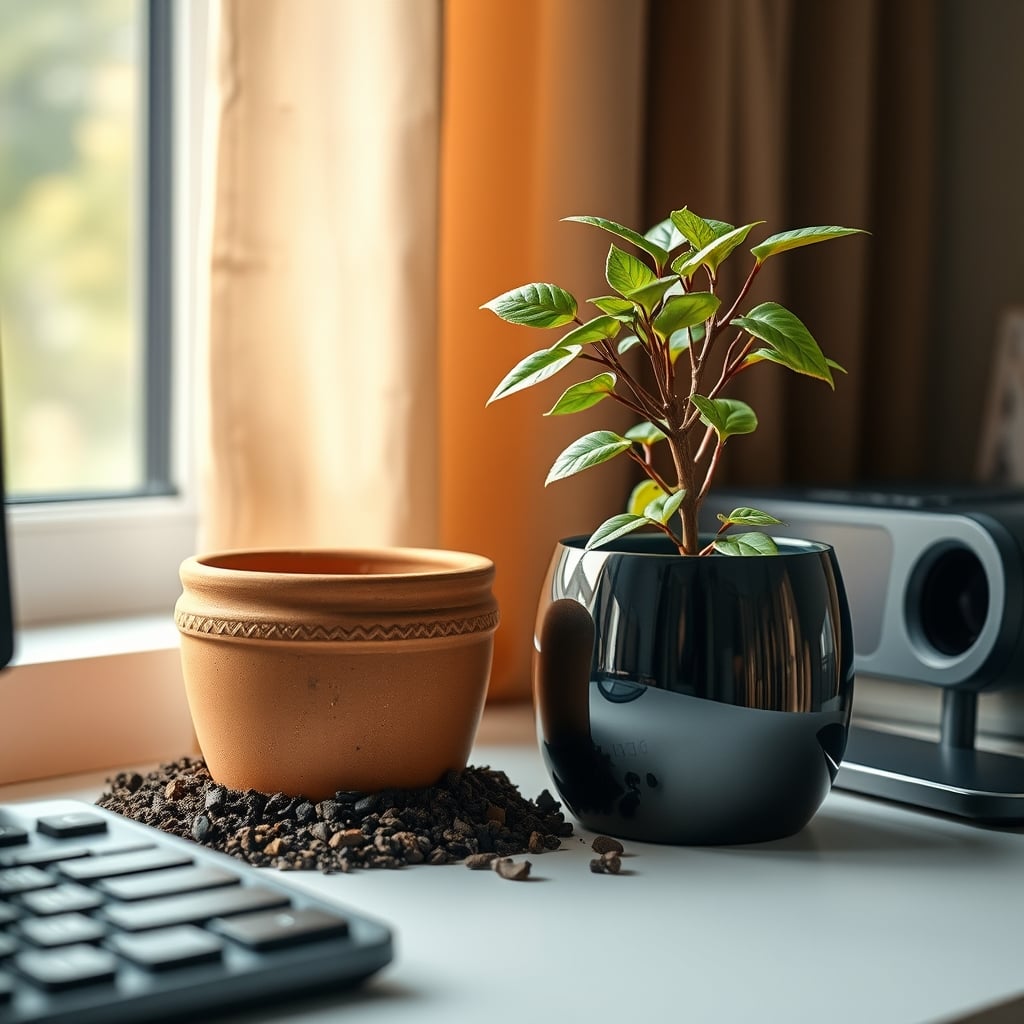
Desk aesthetics in 2026 should be about texture, material, and visual calm. A smart plant pot corrupts this. It replaces warm, natural materials like clay, ceramic, or wood with plastic, glossy acrylic, and RGB-lit plastic. The visual language shifts from ‘organic’ to ‘tech demo.’ This clashes. It introduces competing textures and light sources that disrupt a cohesive look. If you’ve invested in a warm, material-rich desk setup, a glowing orb with a USB port is an aesthetic virus.
Look at the color theory. Natural plants offer greens, browns, and soft neutrals. Smart pots often come in sterile white, black, or accent colors with cold, saturated LED hues. They don’t complement; they contrast aggressively. For an atmospheric, visual-first desk, this is a mistake. The trend pushes you towards a ‘futuristic lab’ aesthetic, which is ironically less focused and more distracting than a traditional, simple arrangement. After assessing countless setups, the ones with simple pots and real plants feel more intentional and calm. The ones with smart gadgets feel like a store display. This is overrated.
What Actually Works: The Brutally Simple Alternative
So what’s the solution? Go analog. Seriously. The most effective, beautiful, and focus-friendly desk plant setup involves zero electronics. You need three things: 1) A simple, drainage-friendly pot (terracotta is ideal). 2) A hardy, low-light-tolerant plant (a Snake Plant, ZZ Plant, or Pothos). 3) A basic watering routine (once every 2-3 weeks, when the soil is dry). That’s it. No apps. No sensors. No LEDs. This setup provides the actual biophilic benefit: a living, textural element that doesn’t demand your attention.
There’s one clever tool that bridges the gap without introducing smart plant dangers: the self-watering olla pot. This isn’t a gadget; it’s a piece of unglazed terracotta you bury in the soil. It uses ancient, passive physics—the porous clay releases water as the soil dries out—to maintain consistent moisture for about a week. It has no electronics, no apps, no lights. It’s a material solution, not a digital one. After testing, this actually works for people who travel or simply forget to water. It’s the only ‘automation’ worth considering.
The One Product That Doesn’t Ruin Your Vibes
If you insist on some help, and I get it, you want to reduce the mental load, there’s one category that escapes the pitfalls. It’s not a ‘smart’ product. It’s the Back to the Roots Self-Watering Terracotta Olla Pot. This is a small, unglazed clay pot you fill with water and submerge in your plant’s soil. It slowly releases moisture through its porous walls, providing about a week of buffer. It’s silent, material-appropriate (terracotta looks natural), and has no digital components. It addresses the actual problem—consistent watering—without creating new problems like distraction, privacy concerns, or aesthetic clash. In real use, it’s the only ‘tech’ I’d allow near my desk plants.
The Biggest Mistake Everyone Makes
The common mistake isn’t buying a smart pot. It’s believing that tech can improve a fundamentally analog experience. We’ve been conditioned to think data and connectivity enhance everything. They don’t. They often strip away the essence. The pleasure of caring for a desk plant is in the simple, tactile act—feeling the soil, seeing the growth, giving water. Outsourcing that to an app removes the pleasure and inserts a chore (monitoring the app). You’re wasting money on this. The lesson learned from the community is clear: the more ‘features’ a plant pot has, the less you actually enjoy the plant. Keep it stupid simple.
Final Verdict: Skip It
The entire category of ‘smart’ plant pots, vases, and ecosystems is overrated. It’s a solution to a problem that doesn’t exist, sold to you by marketing that conflates ‘connected’ with ‘better.’ The real dangers—distraction, privacy risk, aesthetic corruption, and planned obsolescence—far outweigh the fictional benefit of ‘connected zen.’ Your desk is a place for focus. A simple, natural plant in a humble pot can aid that. A glowing, app-dependent gadget will hinder it. Spend your money on a beautiful, material-appropriate pot and a hardy plant. Skip the smart vase. Your focus—and your plant—will thank you.
Frequently Asked Questions
What are the biggest dangers of smart plant pots?
The biggest dangers are distraction through constant notifications, privacy risks from IoT data collection, aesthetic corruption of your desk's natural vibe, and planned obsolescence as the tech fails long before the plant would.
Do smart plant pots actually help plants live longer?
No, they often harm plants. Automated watering systems frequently overwater or underwater due to poor calibration, and the constant data creates a false sense of security that leads to neglect. Simple observation and occasional watering are more effective.
What's a good alternative to a smart plant pot?
Use a simple terracotta pot with drainage and a hardy, low-light plant like a Snake Plant. For watering help, consider a passive, non-digital olla pot (a porous terracotta vessel buried in the soil). It provides a week of moisture without any electronics.
Are smart plant pots a privacy risk?
Yes. They are IoT devices that connect to apps and networks, often collecting usage data. Their privacy policies are frequently opaque, adding a surveillance layer to a benign object. In 2026, this is a known, overlooked risk.
Written by
Maya is an enthusiast for biophilic workspace design. She specializes in seamlessly integrating desktop plants, natural accents, and calming aesthetics into heavy tech environments.
Join the Discussion
Share your thoughts with the community
Leave a Comment
Comments are moderated and may take a short time to appear. Links are not permitted.