Blue Light Study Lamps Are Sabotaging Your 2026 Focus
The entire blue light study lamp market is built on a lie. You've been sold a solution to a problem that barely exists, while ignoring the real factors that trash your focus and comfort. In 2026, it's time to call out the hype.
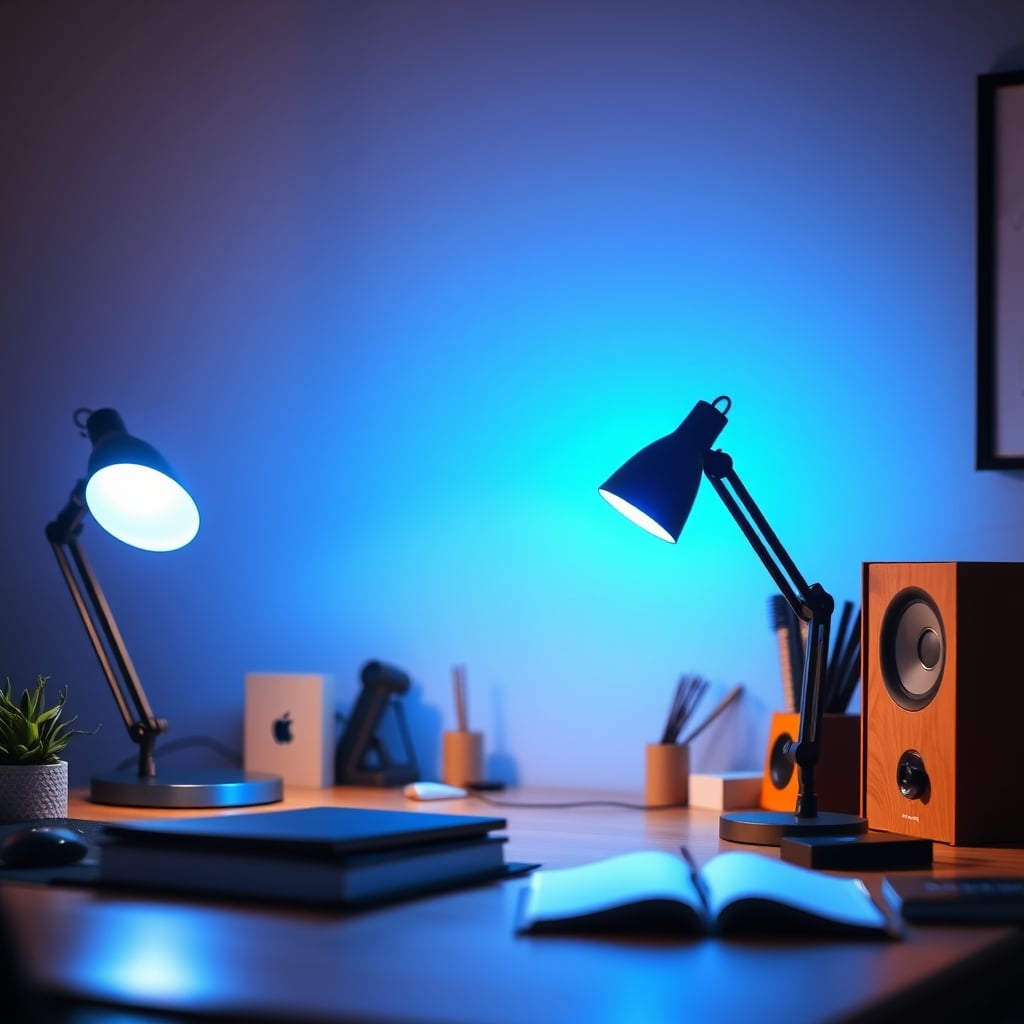
Let me be direct: I’ve had enough of the fear-mongering. I see you. You’re shopping for a new desk lamp, and you’re bombarded with ads screaming about dangerous blue light, eye strain, and disrupted sleep. You end up dropping extra cash on a “study lamp” with a special button that turns the light a weird, sickly amber, convinced it’s the healthy, responsible choice. You’ve been sold a bill of goods. After testing countless setups and watching user feedback pile up over the last few years, the verdict is clear: the core premise of most blue light study lamps is marketing fluff, and their execution often makes your workspace objectively worse.
This isn't about subtle preferences. This is about an entire sub-industry capitalizing on a simplified health panic. The promise is a lie. The typical tinted “eye care” mode on these lamps doesn’t help you focus better—in fact, it usually does the opposite, washing out color and detail in a way that makes actual reading and working more difficult. You’re trading a theoretical, minor long-term concern for a very real, immediate hit to your productivity and the visual quality of your environment.
Why The Blue Light Panic Is A Marketing Scam
The myth that the blue light from your desk lamp is a primary sleep and eye health villain needs to die. The industry has taken a kernel of scientific truth—that light exposure influences circadian rhythms—and blown it into a full-blown panic to sell you a “solution.” Let’s dismantle this.
First, the scale is all wrong. The blue light emitted from a standard, quality LED desk lamp is orders of magnitude less intense and less impactful than the light from the massive screen you’re staring at for hours, or better yet, the actual sun. You’re worrying about a puddle while ignoring the ocean. Research consistently shows that screen time, overall brightness, and your proximity to the light source matter far more than the specific blue emission from a desk fixture placed a foot or two from your work. Yet, the lamp gets the blame and the “fix.”
Second, that ubiquitous “amber” or “warm white” filter mode is a crutch, not a cure. It’s a band-aid applied with muddy fingers. When you flick that switch, you’re not just filtering blue light; you’re butchering the entire color spectrum. That warm, yellow glow might feel cozy for a minute, but it absolutely destroys color accuracy and contrast for reading text on paper or screen. It’s like putting a sepia filter over your entire desk. Users consistently report that after the initial novelty wears off, they stop using the “eye care” mode because it makes detailed tasks harder, not easier. This is overrated. It’s a feature designed to be marketed, not actually used in extended, focused work.

Third, and this is critical, this focus on blue light distracts you from the real enemies of desk comfort: glare and improper placement. A screamingly bright, poorly positioned lamp will wreck your eyes whether it’s filtered or not. No amount of amber tint will save you from the direct reflection off your glossy monitor or keyboard. The industry lies about this. They’d rather you buy a gimmicky blue-light-filtering bulb than teach you how to position a decent, dimmable lamp to the side of your monitor to avoid reflections. That’s the real issue.
Blue Light Study Lamps vs. Actual Visual Comfort

Users who want high-CRI, full-spectrum light quality without gimmicky filters.
- 10,000 LUX full-spectrum LEDs
- High CRI for accurate color
- Adjustable brightness & color temp
So if the magic button isn’t the answer, what is? Let’s talk about what actually creates a comfortable, focus-friendly lighting environment. It has almost nothing to do with a specific color filter and everything to do with control and quality.
The most important feature on any desk lamp in 2026 isn’t a blue light filter—it’s excellent, smooth dimming. The ability to dial in the exact brightness you need for the task at hand is transformative. Too bright for screen work? Crank it down. Need to illuminate a physical document? Boost it up. This dynamic adjustment is what real blue light study lamps should prioritize, but they often relegate dimming to a clunky, stepped button while the amber filter gets prime placement. Most people get this wrong. They chase the health-halo feature and ignore the fundamental utility of seamless dimming.
Next is color temperature range, not a single filtered mode. A good lamp should let you choose from a span of color temperatures, say from 2700K (warm, candle-like) to 5000K (bright, neutral white). This lets you match your ambient room lighting, reducing harsh contrast that causes eye fatigue. The scam is the lamp with a “normal” and a “filtered” mode, with no in-between. That’s lazy engineering.
Finally, we need to talk about light spread and diffusion. A cheap LED lamp with visible, glaring diode points is a torture device, filter or not. The fix is a lamp with a good diffuser—a layer that softens and spreads the light evenly, eliminating harsh hotspots and shadows. This physical design element does more for reducing eye strain than any software-based color trick. In real use, a well-diffused, dimmable lamp at 4000K will beat a harsh, “eye-care” filtered lamp every single time.
The Two Desk Lighting Mistakes Everyone Makes
Beyond the blue light hype, there are two colossal, focus-killing mistakes I see in nearly every home office setup. Fixing these will do more for you than any specialized lamp.
Mistake #1: Overhead Downlighting as Your Primary Source. Relying solely on a ceiling light is a recipe for shadows, glare on your screen, and a flat, uninspiring workspace. It’s the visual equivalent of interrogation lighting. Your desk surface needs its own dedicated, task-oriented light source. This creates a visual hierarchy, drawing your focus to your work zone. This is the real issue that gimmicky lamps ignore.
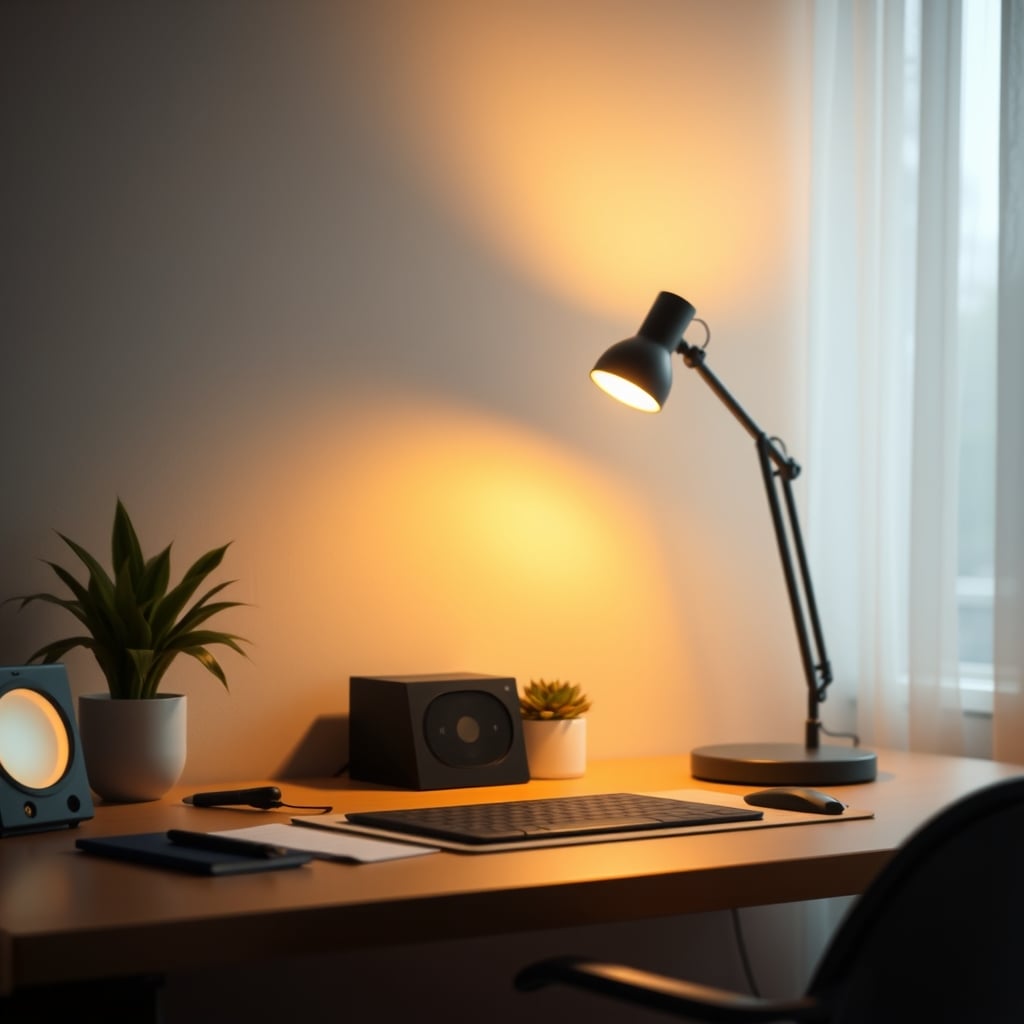
Mistake #2: Ignoring Ambient Fill Light. The opposite error is having only one harsh task light in a dark cave of a room. The extreme contrast between your bright desk and the dark surroundings is deeply fatiguing. You need a base layer of gentle, indirect ambient light in the room—a floor lamp bouncing off a wall, smart bulbs in a corner—to raise the overall light level. This reduces the strain of constantly adapting between bright and dark areas. It’s about balance, not filters.
What To Actually Look For In A 2026 Desk Lamp
Forget the “blue light blocking” marketing copy. Here’s your 2026 spec list for a lamp that genuinely enhances your workspace.
- High-CRI (Color Rendering Index): This is the secret spec that matters. CRI measures how accurately a light source reveals the true colors of objects. Sunlight is the benchmark at 100. Look for a lamp with a CRI of 90+ (often written as CRI >90 or Ra90). Why? Because accurate color means less subconscious strain for your eyes and brain. Text looks sharper, details are clearer. It’s the difference between seeing a vibrant, real-world palette and a dull, washed-out one. A lamp like the Circadian Optics Lumos 2.0 gets this right by pushing its full-spectrum, high-CRI LEDs to the forefront of its marketing, not just a gimmicky filter.
- Continuous, Not Stepped, Dimming: You want a dial, a slider, or a smooth touch control—not buttons that click between 20%, 50%, and 100%. Fine-tuning is everything.
- A Wide, Tunable Color Temperature Range: 2700K to 5000K is the sweet spot. This gives you the flexibility to create the right mood and match your environment, from late-night relaxing to midday focused work.
- Excellent Physical Adjustability: A lamp that can’t be precisely positioned is useless. You need a gooseneck or multiple articulated arms that can hold their position to place light exactly where you need it, without shining in your eyes or onto your screen.
These features create an adaptable tool. The amber-filter lamp is a one-trick pony that fails at its one trick.
Your Ambient Light Is The Real Circadian Tool
If you’re genuinely concerned about your circadian rhythm and nighttime wind-down—a valid goal—you’re focusing on the wrong light. Your desk task light is for focused work. The light that signals your brain to prepare for sleep is your ambient room lighting.
This is where smart, tunable ambient lighting systems actually shine (pun intended). Dimming the warm, indirect lights in your room 60-90 minutes before bed is far more physiologically impactful than the tiny pool of amber light on your desk. The industry lies about this to sell you a dedicated product. The real, holistic approach is covered in our breakdown of why smart lights and circadian rhythm claims are often overrated hype. Trying to make your task light do double duty as a circadian signal is like using a scalpel to hammer a nail—it’s the wrong tool and you’ll ruin both tasks.
For a lamp that perfectly exemplifies the principles of high-quality light without gimmicks, see our detailed review of the Circadian Optics Lumos 2.0.
The GlowRig Verdict: Overrated, With One Caveat
After cutting through the marketing haze and looking at real user experience, my verdict on the standard blue light study lamp is simple: Overrated. Skip it.
You are wasting money on a feature that solves a exaggerated problem in a way that hampers real work. The pursuit of the “amber mode” leads you to compromise on the features that truly matter: dimming, color quality, and adjustability.
However. There is a single, narrow caveat. If you suffer from extreme light sensitivity or a specific diagnosed condition where even minor blue spectrum light causes migraines or discomfort, then a lamp with a dedicated, deeply warm or red-tinted mode might be a legitimate accessibility tool. For you, it’s not about “study” or “health halos”—it’s medical necessity. The hooga Desk Lamp, with its 1600K amber and red modes, exists for this edge case, not for the general population looking to “study better.”
For the other 99% of you, take the money you were going to spend on the gimmick lamp and invest in a high-CRI, fully dimmable, tunable white lamp with a great physical design. Pair it with thoughtful ambient room lighting. That’s the setup that actually wins for focus, comfort, and creating a space you want to work in. Stop buying the lie.
Frequently Asked Questions
Do blue light study lamps actually work for eye strain?
Not really. The 'eye care' or amber modes on most blue light study lamps reduce color accuracy and contrast, which can make detailed work harder. Real relief comes from proper brightness (dimmability), lamp placement to avoid screen glare, and overall good lighting ergonomics, not a simple color filter.
What should I look for in a desk lamp in 2026 instead of a blue light filter?
Prioritize high CRI (90+), continuous smooth dimming, a wide tunable white color temperature range (e.g., 2700K-5000K), and excellent physical adjustability. These features give you control over light quality and placement, which are far more important for focus and comfort than a gimmicky filter mode.
Isn't blue light from screens and lamps bad for sleep?
The impact is massively overstated for desk lamps. The light intensity and exposure time from a lamp are minimal compared to your main screen. For better sleep, focus on reducing overall screen brightness before bed and using warm, dim ambient room lighting, not just filtering your tiny desk lamp.

Written by
From bias lighting behind your monitor to smart RGB ecosystems, Leon knows exactly how to light a room for productivity during the day and gaming at night.
Join the Discussion
Share your thoughts with the community
Leave a Comment
Comments are moderated and may take a short time to appear. Links are not permitted.