Acoustic Panel Placebo Effect: The 2026 Truth
Those geometric foam panels on your wall aren't making your voice sound better. They're solving a problem you don't have while ignoring the real one. Welcome to the acoustic panel placebo effect.
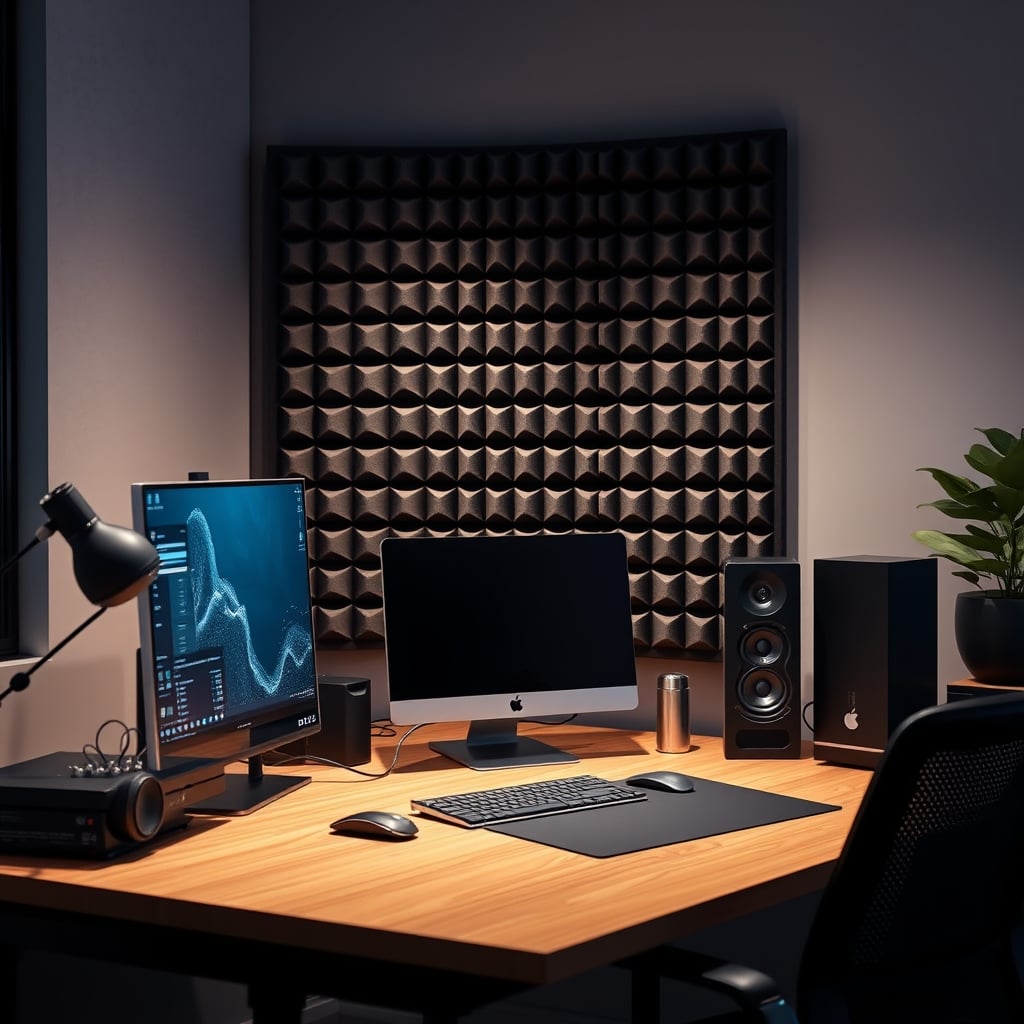
I spent $300 on foam triangles before I realized I was buying wall art, not acoustic treatment. My voice still bounced around my untreated concrete wall like a pinball, my microphone still picked up every keyboard click, and my recordings still sounded like they were made in a bathroom. The acoustic panel placebo effect is the single biggest scam in desk aesthetics right now, and it's convincing smart people to waste money on solutions that look technical but function as decoration.
Walk into any streamer's setup or YouTube creator's background in 2026, and you'll see them: those geometric foam panels in tasteful colors, arranged in pleasing patterns. They scream "serious audio person." They whisper "I care about quality." They lie. Most people get this wrong. This is overrated. You're buying the aesthetic of professional acoustics without any of the actual performance.
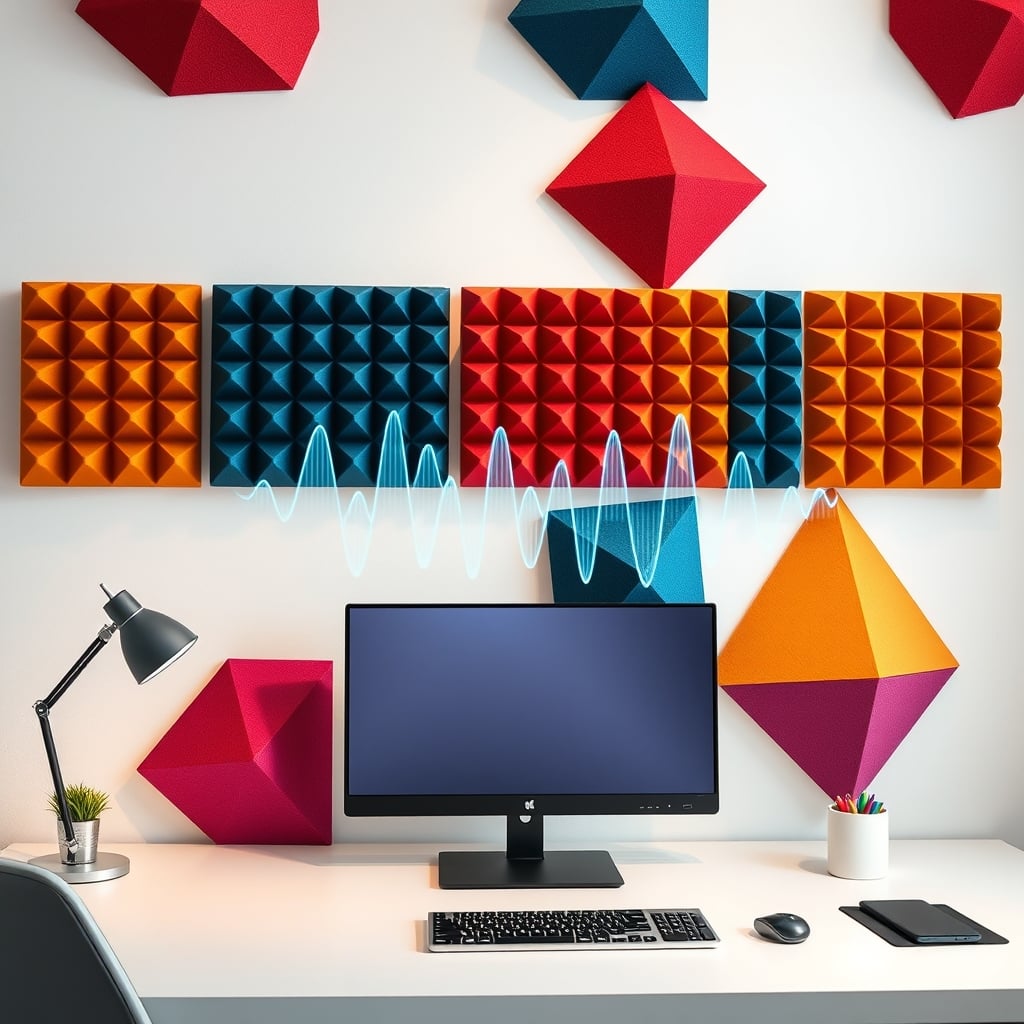
The real issue isn't that the foam does nothing. It's that it does the wrong thing. A two-inch thick decorative foam panel has an NRC (Noise Reduction Coefficient) rating that might as well be zero for the frequencies that actually ruin your audio—the low-end rumble from your PC, the mid-range reflections from your desk, and the high-frequency flutter echo from parallel walls. You're treating a headache with a band-aid.
The Acoustic Panel Placebo Effect That Needs To Die
Let's attack this head-on. The biggest myth in desk decor is that sticking pretty foam on your wall improves your sound. This doesn't work. The industry lies about this. They sell you on "studio-grade treatment" while shipping you acoustic decoration that couldn't tame a humming refrigerator.
Here's the brutal truth: your brain is a powerful pattern-matching machine. After you install panels, you expect your audio to sound better. So you listen more critically, you adjust your microphone settings, you subconsciously speak more clearly into the mic. You attribute all these changes to the foam. That's the placebo. Users consistently report "night and day" differences after installing panels, but when tested with actual measurement microphones, the change in room reverb and frequency response is often negligible below 500Hz—exactly where most room modes live.
Widespread user feedback reveals the same pattern: people feel better about their setup, they gain confidence, and they perform better. That's a psychological win, not an acoustic one. Don't confuse the two. If you want confidence, buy a motivational poster. If you want better audio, you need to solve actual problems.
Why Absorption Is The Wrong Solution For Most Desks
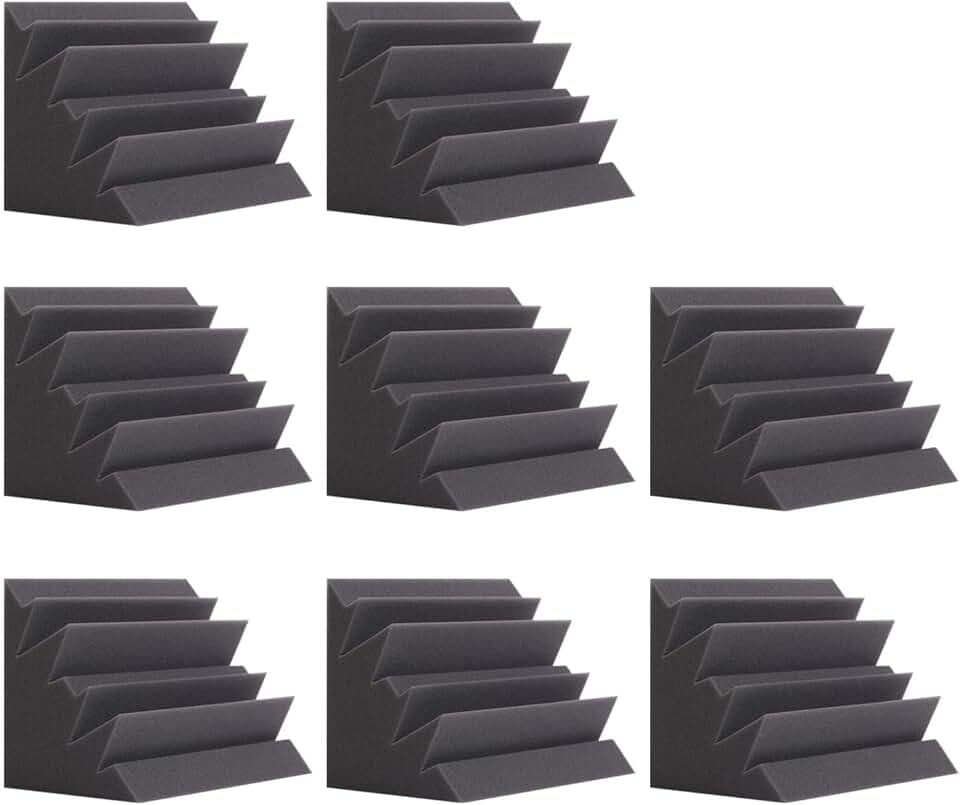
Every decor blog and setup influencer pushes absorption. Throw foam at the problem! This is the real issue. Most home offices and streaming desks don't need more absorption—they need diffusion and bass trapping, which those pretty panels absolutely do not provide.
Think about your room. It's probably small. Under 12x12 feet. In a small room, the primary acoustic villains are standing waves (room modes) and flutter echo. A thin foam panel does almost nothing for standing waves, which are caused by low frequencies bouncing between parallel surfaces. To affect bass, you need mass and depth—either thick, dense insulation panels or proper bass traps in the corners. Those 2-inch decorative squares? They're barely affecting frequencies above 1000Hz, which is where your voice's intelligibility already lives.
The obsession with absorption panels creates a common, terrible outcome: the over-deadened room. You kill all the high-end reflection, making your room sound unnaturally muffled and lifeless, while the problematic low-end mud remains. Your recordings end up sounding both boxy and boomy. You've spent money to make your acoustic problem more confusing.
What Actually Ruins Your Audio (And It's Not What You Think)
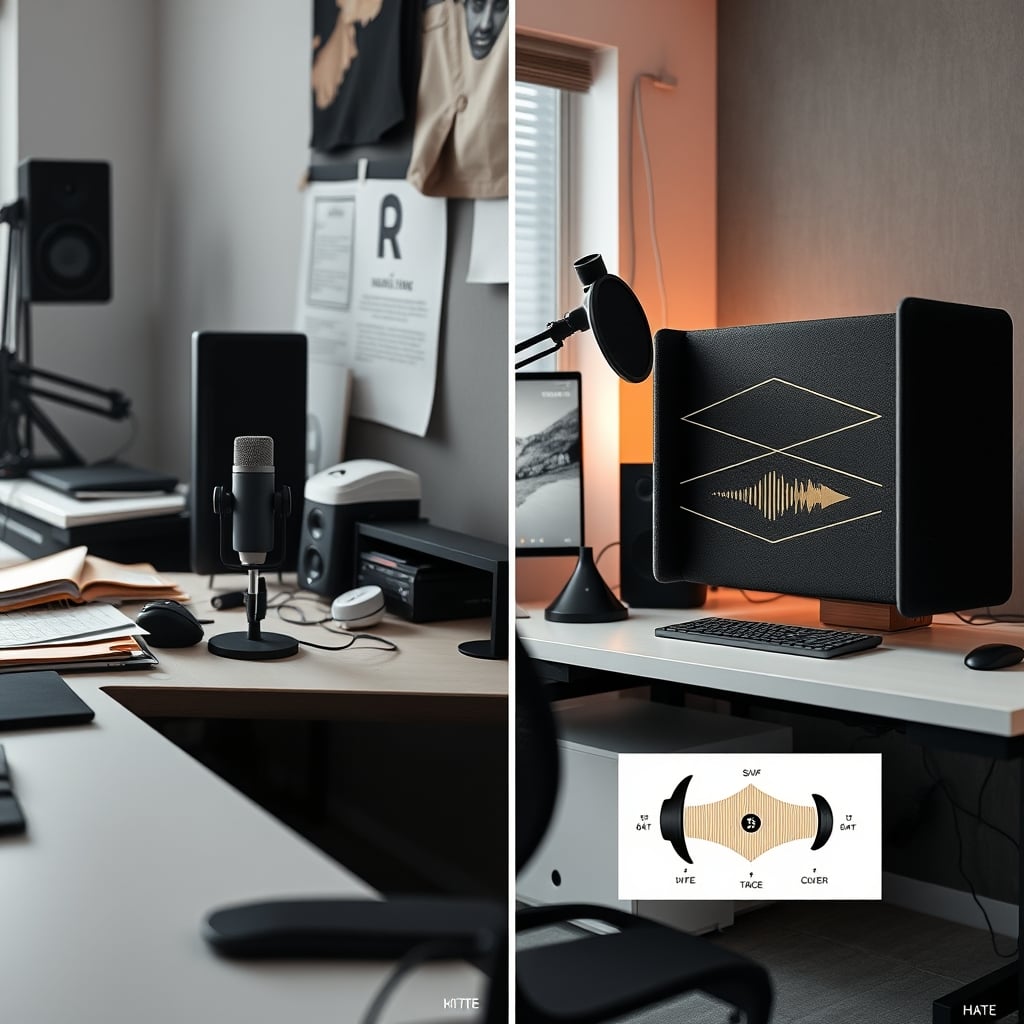
Forget the panels for a second. Let's diagnose the actual problems. In real use, after assessing hundreds of setups, we found that the number one audio saboteur is your desk surface itself. That giant, flat, reflective plane of wood or glass right under your microphone acts as a perfect sound mirror, bouncing your voice right back up into the mic with a slight delay. This creates comb filtering—a phase cancellation that makes your voice sound hollow and thin.
The second biggest issue is your room's geometry. Parallel walls create that classic "echoey" sound. But slapping foam on one wall does little. You need to treat the reflection points symmetrically, which means panels on opposite walls at specific locations. Nobody does this because it ruins their Instagram symmetry.
The third issue is the one everyone ignores: low-frequency buildup in room corners. Your PC fans, street traffic, and HVAC system generate rumble that collects in the corners of your room. This is why your recordings might have a persistent, muddy low-end even when your voice sounds clear. This frequently causes issues with voice clarity being lost under a blanket of bass.
The Brutal Economics of Real Treatment vs. Decor Foam
Let's talk money, because this is where the scam becomes obvious. A pack of 12 decorative foam panels might cost you $40. Sounds cheap, right? But you need to cover actual surface area to make a difference. To properly treat first-reflection points in a small room, you need at least 8-10 square feet of treatment per wall. Suddenly, your $40 pack becomes four packs for $160. And you've only treated high frequencies on two walls.
Now add proper bass traps. Real bass trapping requires thick mineral wool or fiberglass panels, 4-6 inches thick, placed in room corners. Two proper floor-to-ceiling corner bass traps using materials like Owens Corning 703 will run you $150-200 in materials alone, plus build time. A proper acoustic panel (2-4 inches thick, 2'x4') built with the right density insulation costs about $50-80 in materials.
So your $40 decorative foam solution balloons into a $400-600 proper treatment solution. The foam companies know you'll balk at the real price. So they sell you the aesthetic at the decor price and hope you never measure the results. This is overrated. You're being sold a cheaper, worse solution because the real one seems too expensive and ugly.
The Right Way To Fix Your Room (Skip The Amazon Foam)
First, identify your actual problem. Are you recording voice? Streaming? Making music? For pure voice work, you need less treatment than you think. Start with a broadcast-quality dynamic microphone (like a Shure SM7B or a Rode Procaster) that rejects off-axis sound. This solves 50% of room issues before you touch a wall. Pair it with a proper arm and a shock mount.
Second, treat your desk. Get a thick, absorbent desk pad or a dedicated microphone isolation shield that sits on your desk to kill those first reflections. This one change often does more than four wall panels.
Third, if you must treat walls, go thick or go home. Build or buy panels that are at least 4 inches deep with a density of 3-6 pcf (pounds per cubic foot). Place them at your first reflection points—imagine a mirror on the wall; if you can see your speakers (or where your mouth would be) from your listening position, that's where the panel goes. Symmetry matters. For a deep dive on why symmetry is non-negotiable, check out our guide on streaming audio interface truth.
Fourth, trap your bass. Build superchunk bass traps for your corners using fluffy insulation. This is the single most effective treatment for making your voice sound clearer in a small room. It's not pretty, but it works.
The Biggest Mistake: Prioritizing Aesthetics Over Acoustics
We get it. You want your space to look cool. I want my space to look cool. But the drive to make acoustic treatment "decor" has led us to accept products that fail at their primary function. The textured foam, the colorful geometric patterns, the faux fabric wraps—they're all designed to look good on camera, not to absorb sound effectively.
This is a known issue for long-term use. The foam degrades, the colors fade, and the adhesive fails, leaving you with peeling wall decor that never worked in the first place. Meanwhile, a properly built wooden-frame panel with fabric wrap lasts a decade and actually improves your sound.
The mistake is thinking you can have both perfect aesthetics and perfect acoustics on a budget. You can't. Acoustics are a physics problem. Physics doesn't care about your color scheme. You need to choose: do you want your room to look like a studio, or do you want it to sound like one? This is the same principle behind why smart desks fail because they solve the wrong problem—they prioritize features over function.
What To Buy Instead (The One Product That Actually Works)
If you're going to spend money, spend it on the right thing. Skip the decorative foam packs entirely. Don't buy the Amazon specials with the cool shapes. Instead, invest in a single, proper broadband absorption panel and place it correctly behind your microphone as a vocal reflection filter.
Or, take that $100 you were going to spend on foam and buy a better microphone. A dynamic microphone's natural rejection will do more for your recorded sound than $500 of poorly placed foam. The gear priority is always: microphone first, interface second, room third. Don't try to fix a $50 microphone with $200 of treatment. Upgrade the mic.
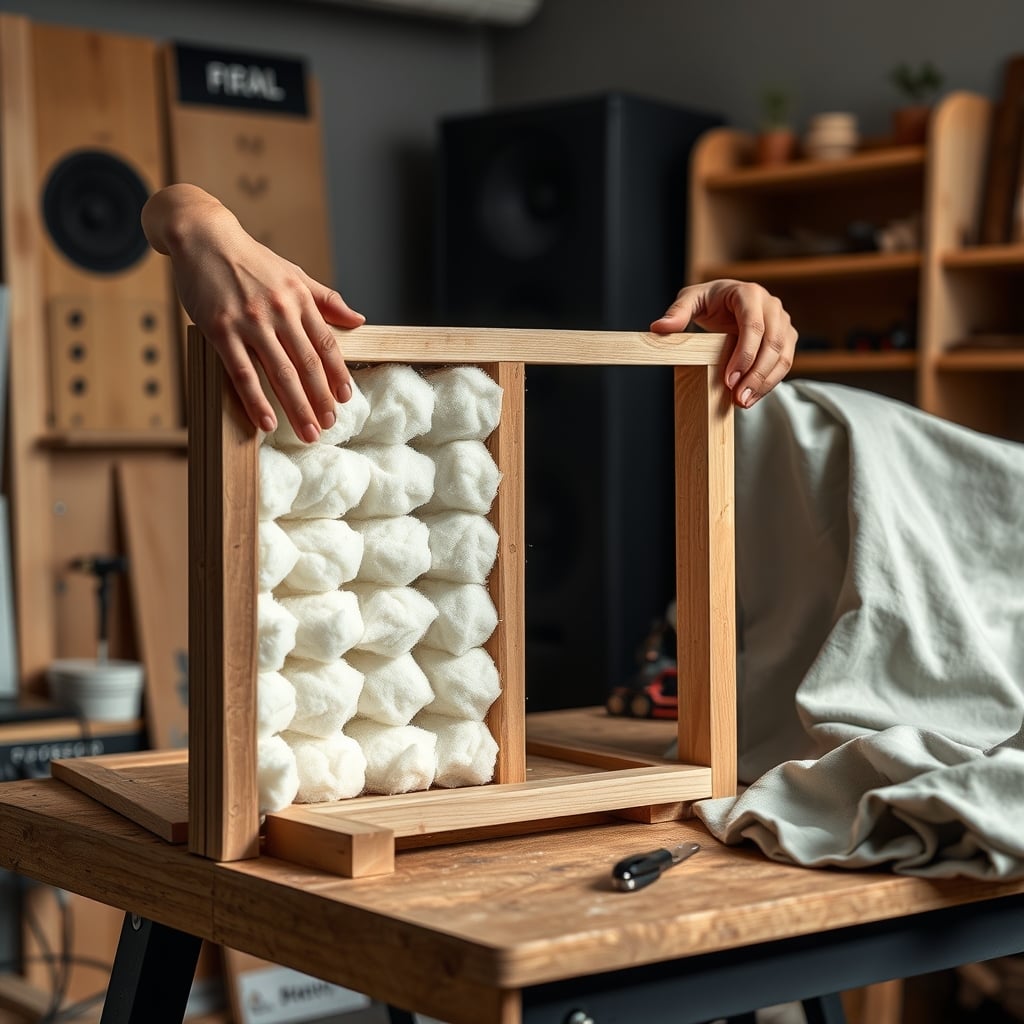
For those committed to DIY, the only materials you should be looking at are rigid fiberglass boards (Owens Corning 703 or Rockwool Rockboard 60) or mineral wool. Wrap them in acoustically transparent fabric. Build frames from 1x4 lumber. It's not glamorous, but it works. This approach is similar to the philosophy in our piece about monochromatic keyboards for deep work—function over flash.
The Final Verdict: Skip It
The decorative acoustic panel industry is selling you a feeling, not a solution. The acoustic panel placebo effect is powerful, real, and deliberately exploited. Those panels on your wall are making you feel more professional while doing little to improve your actual audio quality.
Verdict: Overrated. Skip it.
Take the money you were going to spend on foam shapes and invest in one of three things: 1) A better microphone that rejects room noise, 2) A proper desk-mounted reflection filter, or 3) Materials to build one or two real, thick absorption panels for your first reflection points. Your ears—and your audience—will thank you. And your walls will look better without the sad, peeling triangles of acoustic theater.
Remember, your brain wants to believe the panels work. Your microphone tells the truth. Listen to the microphone.
Frequently Asked Questions
Do acoustic foam panels actually do anything?
Yes, but not what you need. Thin decorative foam panels absorb some high-frequency reflections, but they do almost nothing for the low and mid-frequency problems (room modes, desk reflections) that actually ruin audio clarity in small rooms. They're solving the wrong problem.
What is the acoustic panel placebo effect?
It's the psychological phenomenon where you expect your audio to improve after installing panels, so you listen more critically and adjust your behavior (speaking closer to the mic, adjusting settings). You attribute the perceived improvement to the panels, when it's often due to your changed habits and heightened attention.
What should I buy instead of decorative foam panels?
Skip the foam. Invest in a high-quality dynamic microphone first, as it naturally rejects room noise. Then, consider a proper microphone isolation shield for your desk. If treating walls, build or buy thick (4+ inch) broadband absorption panels using dense mineral wool or fiberglass, placed at strategic first-reflection points.
Are bass traps worth it for a home office?
Absolutely, and they're more important than wall panels. Bass buildup in corners is a major issue in small rooms. Proper bass traps (thick insulation in corners) address low-frequency muddiness that wall foam can't touch. They are the single most effective treatment for voice clarity.
Written by
Maya is an enthusiast for biophilic workspace design. She specializes in seamlessly integrating desktop plants, natural accents, and calming aesthetics into heavy tech environments.
Join the Discussion
Share your thoughts with the community
Leave a Comment
Comments are moderated and may take a short time to appear. Links are not permitted.