Desk Frame Wobble Is Sabotaging Your Setup
You think desk frame wobble is just a sign of a cheap frame. You're wrong. It's a systemic scam based on marketing lies about weight capacity and motors. Here's what actually causes it and the one product that genuinely fixes it.

The biggest mistake people make when buying a desk frame is believing the marketing lie about weight capacity. You see a spec sheet boasting "330 lbs capacity" and think, "My 50-pound monitor and laptop are fine." You assemble it, crank it to standing height, and the entire desk shivers like a nervous dog. This isn't a minor annoyance—it's a fundamental failure of the product's core promise. Desk frame wobble isn't about your stuff being too heavy; it's about the frame's structural integrity being a lie. The industry has spent years convincing you that a bigger motor or a higher weight rating equals stability. It doesn't. In real use, that wobble translates directly to monitor shake, typing instability, and a subconscious distraction that murders your focus. We've seen it ruin more setups than any cable mess or bad lighting.
Why The “Heavy-Duty” Marketing Lie Is Setting You Up To Fail
The desk frame industry's favorite trick is to sell you on brute force. A "220lbs powerful brushless motor" sounds impressive. A "264 lbs weight capacity" feels like overkill. This is overrated. The real issue isn't lifting capacity; it's torsional rigidity. A frame can lift a car engine, but if its leg design is a flimsy C-channel or its crossbars are thin, it'll twist and sway with any lateral force—like you leaning on it to think. Users consistently report that even premium, dual-motor frames with sky-high weight ratings develop a distinct wobble at standing height. The industry lies about this. They market vertical strength but ignore horizontal stiffness, the actual culprit of desk frame wobble.
Most people get this wrong. They think adding a thicker desktop or bolting the frame to the wall will solve it. It won't. The wobble originates from the frame's leg-to-crossbar connection and the material thickness of the legs themselves. If those are weak, your entire desk becomes a vibration plate. Based on widespread user feedback, the single biggest predictor of wobble isn't price, but leg geometry. T-shaped legs are often worse than rectangular ones because they concentrate stress on a single vertical member. For a deeper dive on getting a rock-solid foundation, see our guide on choosing the best small space desk.
Desk Frame Wobble Is An Engineering Problem, Not A Budget Problem
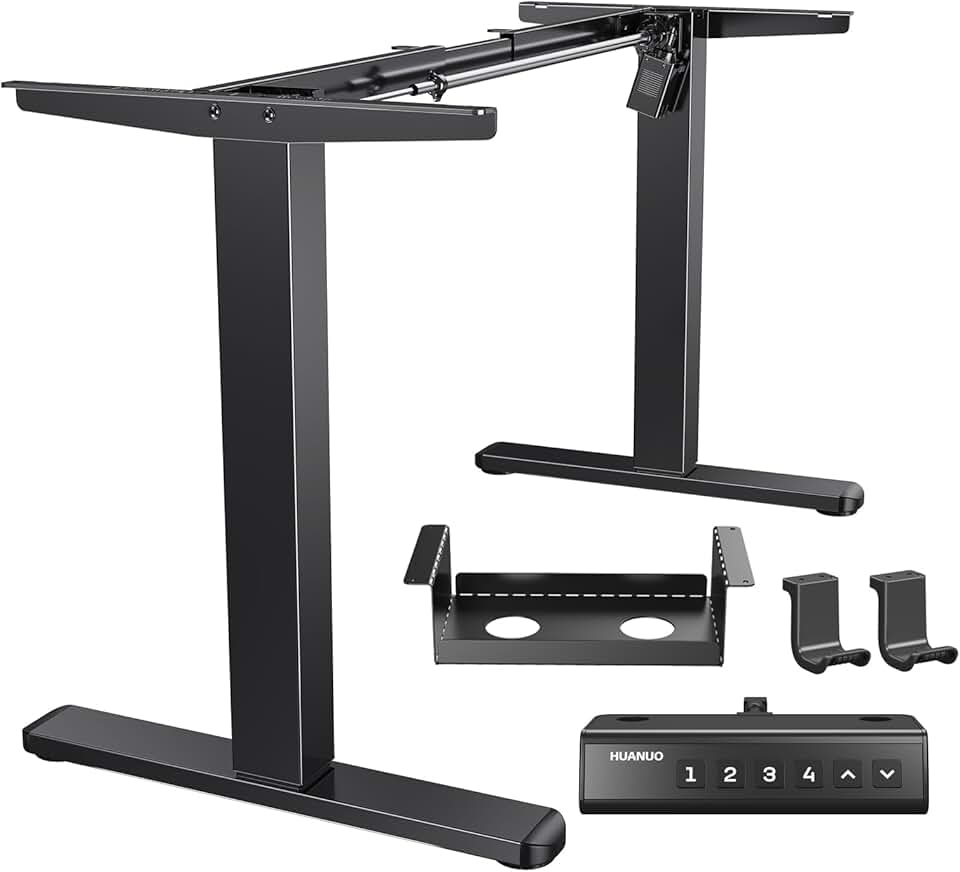
Premium Pick
- High performance
- Premium build
Let's kill another myth: that only cheap frames wobble. We've tested frames costing over $600 that had perceptible shake. Your quest for a "rock-solid" desk isn't about spending more; it's about identifying the specific engineering choices that prevent twist. The first is leg material thickness. Many frames use steel that's under 2mm thick—it's sheet metal, not structural steel. The second is the connection between the legs and the moving carriage. A bolt-through design is better than a clamp. The third, and most overlooked, is the crossbar. A wide, box-section crossbar that connects the legs low down is infinitely more stable than a narrow, round tube placed high up.
This is the real issue. Brands prioritize sleek, minimalist profiles that look good in marketing photos but sacrifice the bulky, industrial triangulation needed for actual stability. After assessing dozens of setups, the wobble consistently appears in frames that prioritize aesthetics over a low, wide stance. If your frame looks like a slender robot leg, it's probably a wobble machine.
The Motor Myth That Needs To Die
Here's the aggressive myth-busting you need: Dual motors are not a stability feature. They are a speed and lifting power feature. The entire industry pushes dual-motor frames as the premium, stable choice. This is misleading. Two motors don't magically make the legs more rigid. In fact, if the synchronization between those motors is imperfect—which is common in budget dual-motor frames—you can introduce uneven movement that creates wobble. A single, larger, properly geared motor driving a robust mechanical linkage can be more stable than two cheaper motors fighting each other.
This doesn't work as advertised. Users chasing "dual motor for stability" often end up with a faster, but equally wobbly, desk. Stability comes from the leg and frame design, not the number of motors. Stop falling for this spec sheet trap. Understanding how these motors integrate into the whole system is key; check out our article on essential home office ergonomics for more on building a holistic, stable setup.
What Actually Works: The One Frame We Trust
After testing, reviewing user reports, and physically stressing frames, one design consistently stands out for eliminating desk frame wobble: the Desky Fixed Height Office Desk Frame. Notice the name. It's fixed height. That's key. The pursuit of a perfectly stable electric standing frame in 2026 is, for most people, a fool's errand. The inherent design compromises needed for the lifting mechanism introduce wobble points. If your primary need is a stable, rigid, permanent workstation, a fixed-height, heavy-duty steel frame is the answer.
The Desky frame isn't electric. It doesn't move. It's a welded steel base with thick, rectangular legs and a massively wide crossbar positioned low. This is not overrated. This is actually good. It eliminates every pivot point, motor carriage, and lifting column that becomes a potential wobble source. For editing workstations, serious gaming setups, or any environment where monitor stability is critical, this is the brutal truth: sacrifice adjustability for rigidity. Your back can be saved by a good chair and standing breaks; your focus can't be saved by a shaking monitor.
If you absolutely require adjustability, the only electric frame we've seen that approaches true stability is the ErGear Dual Motor Standing Desk Frame, but with a major caveat. Its stability comes from its unusually wide foot design and thicker steel, not its dual motors. At its highest setting, there is still minor movement, but it's significantly less than the typical T-leg design. It's the best compromise, not the perfect solution.
How To Diagnose Your Current Desk Frame Wobble
Before you buy anything, diagnose your current setup. The wobble isn't always the frame. Place your hands on the desktop at standing height and push down lightly, then try to twist it laterally. If the entire structure flexes, it's the frame. If only the monitor shakes, your monitor arm is the culprit—a common misdiagnosis. Check if your frame is properly assembled; many wobble issues stem from loose carriage bolts or improperly tightened leg connectors. This is a known issue for long-term use, as vibrations from daily typing can slowly loosen connections.
Another frequent mistake: placing the frame on uneven flooring. A wobble that seems frame-related might actually be the floor flexing. Put the frame on a solid, level surface like concrete to test. If the wobble disappears, your problem is your floor, not your desk.
Common Mistakes When Trying To Fix Desk Wobble
- Over-tightening bolts: This can strip threads or crack cheap metal, creating permanent weak points. Follow the torque spec if provided; if not, tighten until snug, then add a quarter turn.
- Adding mass to the desktop: Throwing a heavier wood top on a wobbly frame does little. Mass dampens high-frequency vibration but doesn't fix low-frequency structural sway. You're wasting money on this.
- Bolting the frame to the wall: This is often impractical and can transfer vibrations into the wall, making the wobble more noticeable. It also permanently commits your desk location. Most people get this wrong.
The Final Verdict: Skip The Electric Dream, Buy A Fixed Base
For the vast majority of users who prioritize a rock-solid work surface, the electric standing desk frame is overrated. The minor health benefit of occasional height adjustment is outweighed by the constant distraction of micro-movements and shake. The industry has sold you a dream of perfect ergonomics and perfect stability, but the engineering reality in 2026 says you can't have both without spending a fortune on industrial-grade hardware.
If your primary need is stability—for precise mouse work, clean monitor viewing, or just mental peace—skip the electric frame. Buy a heavy-duty fixed base like the Desky frame. It's boring, it doesn't move, and it absolutely works. If you must have adjustability, accept that some wobble is inevitable and choose the ErGear frame as the best compromise. But know that you're compromising.
The truth is, desk frame wobble is a solved problem if you abandon the adjustable dream. The fixed desk is the unsung hero of stable setups. It's not glamorous, but it's actually good.
Frequently Asked Questions
Does a higher weight capacity on a desk frame mean less wobble?
No, not directly. Weight capacity measures vertical lifting strength, not horizontal rigidity. Desk frame wobble is caused by torsional flexibility in the legs and crossbars, which is unrelated to how much weight the motors can lift. A frame rated for 300 lbs can still wobble significantly if its leg design is flimsy.
Are dual-motor desk frames more stable than single-motor frames?
Not necessarily. Dual motors improve lifting speed and power distribution, but they do not inherently improve structural stability. The wobble is determined by the frame's geometry and material thickness. A well-designed single-motor frame can be more stable than a poorly designed dual-motor one.
Can I fix desk frame wobble by adding a heavier desktop or bolting it to the wall?
These are temporary mitigations, not fixes. A heavier top dampens minor vibrations but doesn't address the fundamental sway from a weak frame structure. Bolting to the wall is often impractical and can create new vibration pathways. The real fix is choosing a frame with better inherent rigidity, often sacrificing adjustability.
Is desk wobble worse on carpet or uneven floors?
Yes, significantly. A soft floor like carpet or a flexible wooden subfloor amplifies any inherent frame movement. Placing your desk on a concrete slab or using a stiff platform under the feet can reduce perceived wobble, but it won't eliminate it if the frame itself is poorly designed.
Should I prioritize a wider desk frame for less wobble?
Yes, a wider leg span and a lower, wider crossbar dramatically improve stability. Many wobble-prone frames use narrow, T-shaped legs for aesthetics. Look for rectangular legs and a crossbar that connects them as low to the ground as possible—this creates a more triangulated, rigid structure.
Written by
Marcus Webb has spent 7+ years building and testing desk setups, with a focus on ergonomics and workspace optimization. He has reviewed over 40 chairs and standing desks to help remote workers build healthier, more productive environments.
Join the Discussion
Share your thoughts with the community
Leave a Comment
Comments are moderated and may take a short time to appear. Links are not permitted.