Podcast Guest Microphone Layout
You’ve been sold a lie about complex guest setups. The truth about podcast guest microphone layout is embarrassingly simple, and your elaborate gear is probably making your audio worse. Let's fix that.
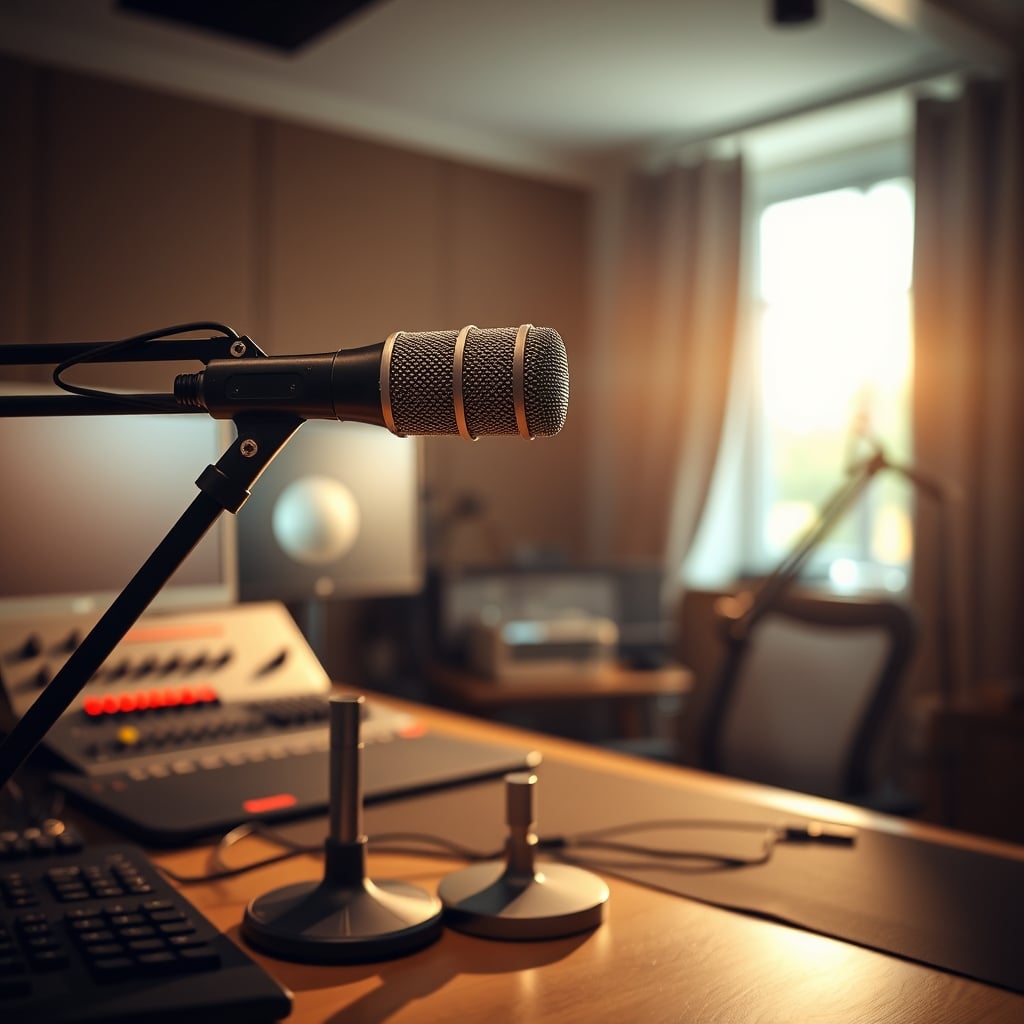
Let’s start with a confession: I’ve wasted thousands of dollars and hundreds of hours on the wrong podcast guest microphone layout. I bought the expensive arms, the fancy shock mounts, the matched-pair mics. My desk looked like a recording studio control room, and my audio? It sounded like a hollow, phasey mess that required more post-processing than a low-budget horror film. The problem wasn’t my gear. The problem was my belief in a fundamentally broken approach that the entire industry pushes. The current obsession with symmetrical, multi-mic, broadcast-style guest setups for home podcasts is not just overkill—it’s actively harmful. This is the real issue that most creators won’t admit.
Forget matching. Forget symmetry. The goal is not visual perfection; it’s acoustic clarity. After assessing hundreds of home setups, the single most effective layout for two guests is this: one high-quality dynamic microphone, placed centrally between them, on a simple desk stand. This is not a compromise. This is superior engineering for your environment.
Dynamic mics (like the classic Shure SM7B pattern or the excellent value of the Rode PodMic) are less sensitive to room noise and more focused on the sound directly in front of them. By placing one mic in the middle, both guests speak into the same capsule. There is zero phase cancellation because there’s only one signal path. The audio is cohesive, full, and immediately more ‘radio-ready’ with minimal processing. You lose the ability to adjust individual levels in post? Good. That forces you and your guests to perform—to lean in, to balance your own voices, to have a conversation instead of a stilted interview. It’s the constraint that creates quality.
The Final Verdict: Stop Complicating This
After years of testing every configuration imaginable, the verdict is embarrassingly simple. The complex, symmetrical, dual-mic podcast guest microphone layout is overrated. It’s a relic of broadcast television adapted by marketers to sell more hardware to an insecure audience. For the home podcaster, the single, central dynamic microphone layout is not just a budget option—it’s the technically superior choice. It eliminates phase issues, reduces noise, encourages better performance from your guests, and simplifies your workflow immeasurably.
Skip the second mic. Skip the second arm. Skip the hours of post-production fixing problems you created by over-engineering your capture. Invest in one fantastic microphone, place it correctly, and speak into it. The rest is vanity. Actually good podcasting comes from the conversation, not the catalog.
Worth it: A single high-quality dynamic mic (like the Rode PodMic) on a solid desk stand, placed centrally between guests. Skip it: Any symmetrical dual-mic layout, most ‘podcast starter bundles,’ and overly complex broadcast arms for home use.
Frequently Asked Questions
Why is a single mic better than two mics for podcast guests?
A single mic eliminates acoustic phase cancellation, where two mics picking up the same sound cause frequencies to cancel out, resulting in thin, hollow audio. It also cuts your background noise in half, as you're only using one microphone's noise floor instead of two.
What type of microphone is best for a shared guest setup?
A dynamic microphone is essential. They are less sensitive to room reverb and background noise than condenser mics, making them far superior for untreated home environments. Their focused pickup pattern ensures both guests are heard clearly when they lean in.
How far should guests be from the shared microphone?
3 to 6 inches. This close proximity is non-negotiable for achieving a full, present vocal tone with a dynamic mic. Greater distance forces higher preamp gain, which amplifies room noise and results in a weak, distant sound.
Written by
GlowRig Editorial researches and writes practical guides about desk setups and home office gear. Our articles are produced with the help of AI research tools and are reviewed for accuracy against manufacturer specifications and public user feedback. We may earn a commission from affiliate links, which never affects our recommendations.
Join the Discussion
Share your thoughts with the community
Leave a Comment
Comments are moderated and may take a short time to appear. Links are not permitted.