Focus Distraction Gadgets Are A Lie. Here's What Works.
The market is flooded with gadgets promising laser focus. Most are expensive placebos. We cut through the marketing to show you what actually fixes your attention span—and it’s not what you think.

Here’s the biggest mistake people make when trying to improve their focus: they think buying a gadget is the solution. They drop $200 on a fancy noise machine, $150 on a biofeedback headband, and $80 on a fidget cube that looks like a spaceship, all in search of elusive focus distraction gadgets. They clutter their desk with ‘focus’ toys and wonder why they’re still checking their phone every three minutes. The industry lies about this. They’ve convinced you that distraction is a hardware problem. It’s not. It’s an environmental and behavioral problem, and most of the gear marketed to solve it is pure snake oil.
Let’s be brutally honest. You’re not distracted because you lack a $300 gadget. You’re distracted because your workspace is a cognitive minefield and your habits are broken. The promise of a quick-fix gadget is seductive, but it’s overrated. Real focus comes from subtraction, not addition. We need to talk about the three things that actually matter when evaluating anything claiming to boost your concentration: does it remove a variable, does it create a reliable cue, and does it work without becoming a distraction itself? Most products fail all three tests.
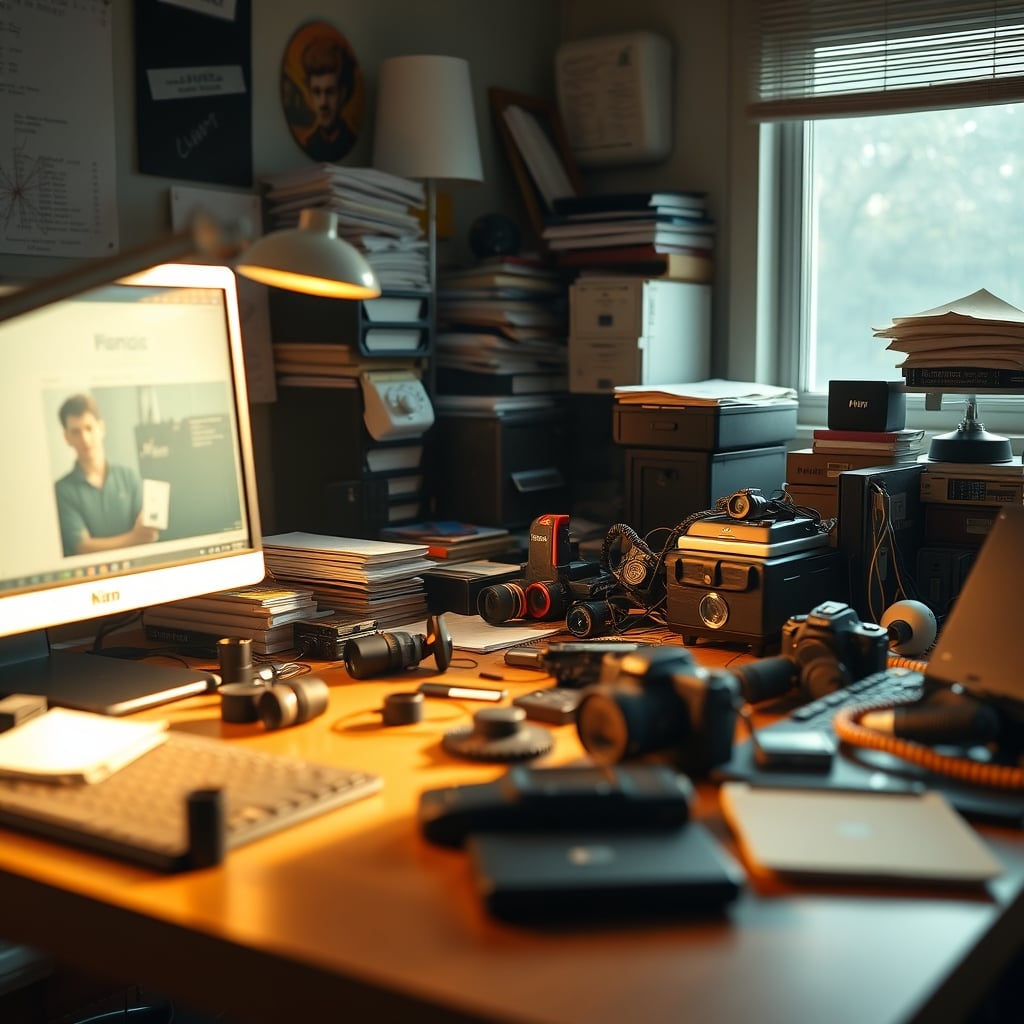
Why The “Ambient Noise Machine” Craze Is Overrated
Walk into any productivity influencer’s setup and you’ll see it: the sleek, walnut-paneled white noise machine. It’s the poster child for focus distraction gadgets. The pitch is that it masks distracting sounds with ‘science-backed’ audioscapes. This is mostly nonsense. For every user who finds genuine benefit in brown noise, ten others are just paying for ambient anxiety. The real issue isn’t the sound in your room—it’s the notification sound on your devices. A $100 machine can’t fix that.
In real use, these machines often become just another source of audio clutter. Users consistently report fiddling with the settings—“Is rainforest or deep space better for coding?”—more than they do actually working. It’s performance theater. If you need consistent audio masking, a simple fan or a free app like myNoise does the identical job for zero dollars. Spending triple digits on a dedicated hardware unit is a tax on people who believe gear equates to productivity. This doesn’t work as a magic bullet. Sound management is important, but it’s the easiest part of the equation to solve cheaply. The industry has blown its importance wildly out of proportion to sell you expensive hardware.
The Brutal Truth About Biofeedback and Neuro Gadgets
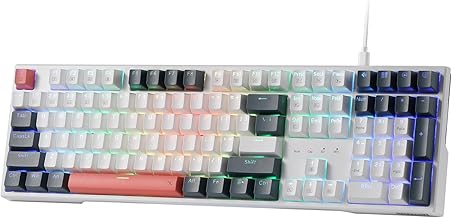
Users who want a tactile, reliable typing experience without breaking the bank.
- Wired mechanical switches for consistent response
- Sound-dampening foam for a quieter desk environment
- Dedicated media keys to control audio without tabbing out
This is where the marketing gets truly predatory. Headbands that measure your ‘focus’ with EEG, rings that vibrate when you get distracted, gadgets that claim to train your brainwaves. This is not worth it for 99% of people. The data is murky, the user experience is fiddly, and the core premise—that you need a device to tell you you’re distracted—is flawed. You already know when you’re distracted. Feeling your finger vibrate isn’t a solution; it’s just another interruption.
Based on widespread user feedback, these devices have a novelty period of about a week. After that, they become either ignored or actively annoying. The calibration is inconsistent, and the actionable insights are minimal. You’re not getting a brain upgrade; you’re getting a $400 anxiety feed. Most people get this wrong. They think more data equals more control. In reality, it equals more things to obsess over instead of doing the work. Your brain’s focus isn’t a metric to be gamified on a phone app. It’s a state to be cultivated through habit and environment. Skip the sci-fi headgear. If you want feedback on your focus, just track your output. It’s free.

Physical Fidget Gadgets: Tool or Just Another Toy?
The fidget spinner’s sophisticated cousins are everywhere: magnetic rings, infinity cubes, elaborate desk clickers. The theory is they give your kinetic energy an outlet, freeing your mind to focus. For a very small subset of people with specific ADHD-like traits, this can have a minor, tangible benefit. For everyone else, it’s just a toy. This is overrated as a broad-spectrum focus solution.
Here’s what happens in common setups: the gadget starts as a focus aid. Within two days, it becomes the focus itself. You’re not thinking about your report; you’re thinking about the satisfying clack of the magnets. It simply replaces one micro-distraction with another, more socially acceptable one. Instead of checking Instagram, you’re assembling a titanium puzzle. The net gain to your concentration is zero. If you must fidget, use a pen. Or better yet, learn to sit with the slight discomfort of not having something in your hands. That’s a mental muscle worth building. For a deeper dive on this specific trap, our Fidget Devices Focus Masterclass: The Truth breaks down why they rarely help.
The Focus Distraction Gadgets Myth That Needs to Die
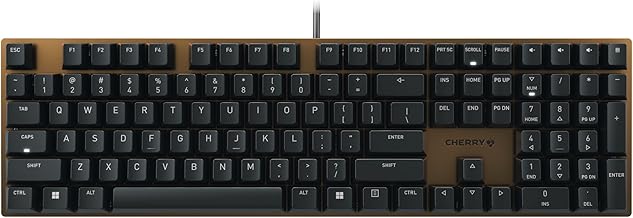
Office and deep work environments where a clean, professional look and feel is paramount.
- Uses legendary Cherry MX mechanical switches for durability
- Elegant aluminum surface and minimalist design reduces visual clutter
- Quiet operation suitable for shared workspaces
There’s a pervasive myth that adding a sophisticated gadget to your desk will create a ‘focus ritual’ that cues your brain for deep work. The myth is that the gadget itself holds the power. This needs to die. The power is in the consistency of the ritual, not the object. Lighting a $5 candle every morning can be as effective as turning on a $150 smart light sequence if the association is consistent. The industry wants you to believe the gadget is the essential ingredient. It’s not. Your repeated behavior is.
We see this constantly with ‘smart’ everything. The smart desk that rises at a scheduled time, the smart light that shifts to ‘focus mode’, the smart speaker that plays your concentration playlist. These are layers of potential failure and distraction. When the app doesn’t connect, or the firmware needs updating, or the routine glitches, your ‘focus ritual’ is now a frustration ritual. You’ve complicated a simple thing. Simplicity is reliable. Complexity is fragile. Your focus system should be so simple it can’t break. Most focus distraction gadgets add complexity, not simplicity. They become points of maintenance, not liberation.
What Actually Works: The Three Pillars of Real Focus
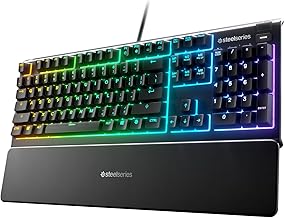
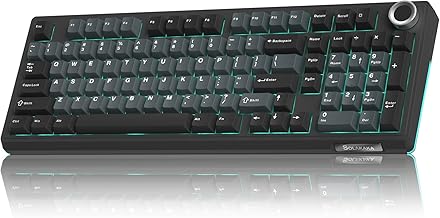
Those needing spill resistance and a comfortable wrist rest for long sessions.
- IP32 water resistance protects against accidental spills
- Includes a premium magnetic wrist rest for ergonomics
- 10-zone RGB that can be set to a single, static, non-distracting color
After assessing countless setups and user experiences, the pattern is clear. High-performing focus isn’t bought; it’s built on three non-negotiable pillars. Gadgets can support these pillars, but they can’t replace them. If a product doesn’t serve one of these three pillars, it’s clutter.
Auditory Control: This isn’t about adding sound; it’s about removing unwanted sound and having consistent control over what you hear. Active Noise Cancelling (ANC) headphones are the single most effective hardware purchase for focus, full stop. They physically remove the variable of unpredictable environmental noise—chatty coworkers, street sounds, lawnmowers. Unlike a noise machine that adds more sound, ANC subtracts. It creates a predictable, silent canvas. This is a gadget that actually works by removing a problem, not layering a solution on top of it.
Visual Funnel: Your field of vision is your focus funnel. If it’s filled with blinking LEDs, messy cables, moving objects, or secondary screens showing notifications, you will get distracted. This isn’t pseudoscience; it’s how your attentional system is wired. The ‘gadget’ here is often subtractive: monitor arms to declutter the desk, a simple desk mat to define the space, or even just a physical divider. The goal is to make your primary work the only thing in your sightline. As we’ve discussed in The Desk Layout Productivity Truth Nobody Tells You, geometry matters more than gear.
Friction for Distraction: This is the most powerful pillar. Make distractions harder to access. This can be low-tech (placing your phone in another room) or supported by a simple gadget (a physical timer for the Pomodoro technique, a website-blocking router like the Cold Turkey blocker). The key is that the tool increases friction for unwanted behaviors. A focus gadget that sits between you and your work is useless. A tool that sits between you and your distraction is powerful.

The Only Gadgets Worth Your Money (And They’re Boring)
Let’s get specific. If you’re going to spend money, spend it on tools that serve the pillars above with ruthless efficiency. No gimmicks.
First, Active Noise Cancelling Headphones. Not ‘noise isolating,’ not ‘passive,’ but true ANC. Sony or Bose are the consensus leaders for a reason. The experience is transformative because it’s subtractive. You put them on, and the world’s noise gets pushed out. It’s a physical cue that work has started. This is the number-one tool.
Second, a dedicated physical timer. Not an app on your phone—that’s like using a whiskey bottle as a water glass. A simple, tactile kitchen timer or a Pineapple. The act of twisting the dial to set a 25-minute work block is a concrete ritual. The ticking (if it has one) is a gentle auditory reminder that time is passing. When it rings, it’s a definitive break signal. It’s a single-purpose device that creates structure without connectivity or complexity.
Third, a uninterruptible power supply (UPS) or a high-quality power strip. This sounds absurd until your deep work session is shattered by your monitor flickering off from a brownout, or you have to crawl under the desk to reboot your router. Reliability is a prerequisite for focus. Eliminating these tiny, rage-inducing interruptions does more for your concentration than any Himalayan salt lamp ever will. For more on power reliability, see Charger Safety Standards: Stop Believing The Hype.
The Real-World Mistake: Chasing Novelty Over Consistency
Here’s the lesson learned from watching hundreds of setup evolutions: people buy a new focus gadget, use it intensely for three days, see a tiny bump from the placebo effect of something new, and then it fades into the background. They then buy another, chasing that initial bump. They’ve built a habit of buying, not a habit of focusing.
The real work is boring. It’s using the same headphones, the same timer, the same daily schedule for months until the association between the tool and deep work is ironclad in your nervous system. The gadget isn’t the star; it’s a reliable supporting actor. The moment a tool becomes interesting enough to think about on its own, it has failed. Your tools should be so effective they become invisible.
This is why minimalist setups so often outperform gadget-laden ones, as explored in My 30-Day Experiment: Zero-Distraction Deep Work Environment. The goal isn’t a cool-looking desk. The goal is a clear mind.
Final Verdict: Skip the Hype, Build the Habit
So, are focus distraction gadgets worth it? The overwhelming verdict is skip it. The entire category is saturated with overpriced, overhyped solutions to secondary problems. They are band-aids sold as cures.
Invest instead in the boring fundamentals: premier noise cancellation, a foolproof timer, and rock-solid power. Then, do the actual hard work of designing your environment and your habits. Turn off notifications at the system level. Design a morning ritual that doesn’t involve a screen. Use a separate computer profile for work. These are the moves that move the needle.
Your attention is your most valuable asset. Don’t outsource its management to a startup’s Kickstarter gadget. Take control with simple, reliable tools, and put in the repetitive, unsexy practice of focusing. That’s the only masterclass that matters.
Frequently Asked Questions
What is the most effective gadget for improving focus?
Active Noise Cancelling (ANC) headphones are, by a massive margin, the most effective focus gadget. They work by removing the problem of unpredictable environmental noise, not by adding another layer of stimulus. They are a subtractive tool, which is why they're so powerful.
Are expensive white noise machines worth it?
No, they are overrated. The core function—playing consistent ambient sound—can be achieved with a free app, a website, or even a simple fan. Paying over $100 for a dedicated device is unnecessary for most people and is often just aesthetic spending.
Do brainwave training headsets actually work?
For the general population seeking better focus, they are not worth it. The science is not settled for consumer applications, the user experience is fiddly, and they often become a source of distraction themselves. Consistent behavioral practice is more effective.
What's a simple, cheap tool to start with?
A physical kitchen timer. It costs under $20. Use it for the Pomodoro Technique (25 minutes work, 5 minutes break). The physical act of setting it creates a ritual, and it keeps your phone out of reach. It's simple, reliable, and effective.
How important is lighting for focus?
Good, consistent lighting is very important for reducing eye strain and maintaining energy, but you don't need 'smart' focus lighting. A quality desk lamp with adjustable brightness and color temperature is sufficient. The hype around dynamic, color-changing 'focus' cycles is mostly marketing. Read our take in Smart Light Health Effects: Why You're Getting It Wrong.
Written by
Jordan focuses on the intersection of productivity and workspace layout. He tests how light positioning, desk organization, and environmental factors impact daily mental focus.
2 Comments
Share your thoughts with the community
The part about focus distraction gadgets is spot on. Wish I had known this 6 months ago.
I didn't realize how much focus distraction gadgets could affect productivity. Completely changed how I'm thinking about my setup.
Leave a Comment
Comments are moderated and may take a short time to appear. Links are not permitted.