Podcast Mic Placement Mistake
You bought the perfect microphone, yet your voice still sounds thin and reflective. The problem isn't your gear—it's a fundamental podcast mic placement mistake everyone makes. We break down why your desk is your biggest acoustic enemy.
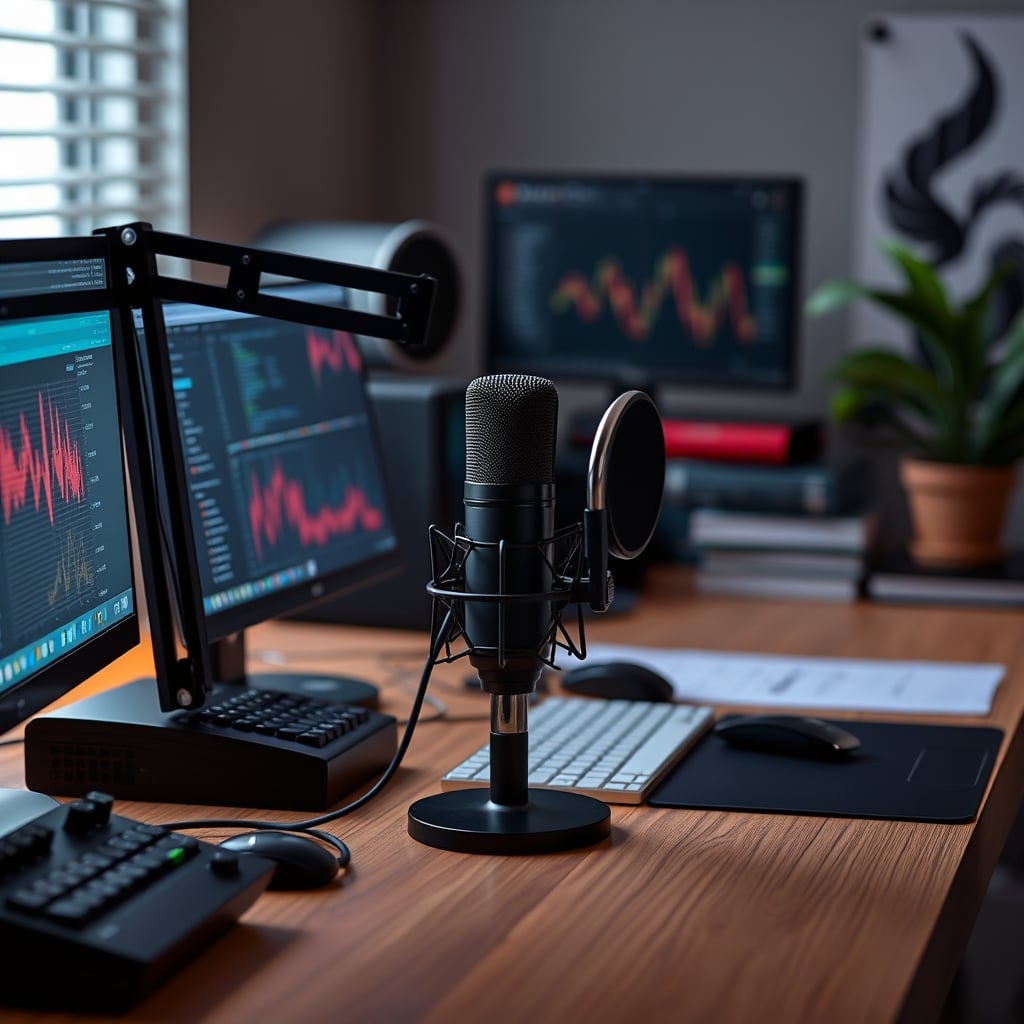
Here’s a harsh truth: that $400 podcast microphone you just unboxed sounds like garbage. Not because it’s a bad mic. Because you’ve committed the cardinal podcast mic placement mistake by putting it right on your desk. You’re hearing more of your laminated oak desktop than your actual voice. The industry is obsessed with selling you better capsules and preamps, but they’re silent on the one variable that actually matters: physics. Your desk is an acoustic mirror, and your microphone is pointing right at it.
After listening to hundreds of amateur podcast setups, the pattern is universal. People treat their microphone like a desk ornament, placing it neatly next to their monitor, often right at the hard front edge. This isn't just suboptimal; it's actively destructive. You get a hollow, boxy tone filled with high-frequency reflections that no software can fully remove. You then waste hours EQing and adding plugins, chasing a problem you built into your room. The real issue is placement, not processing.
Why Your Desk Is an Acoustic Enemy, Not a Stand
Your desk is not a microphone stand. It's a large, rigid, reflective surface. When you speak, sound doesn't just travel in a straight line from your mouth to the mic capsule. It radiates outwards, hits the desk surface right in front of you, and bounces straight up into the microphone's pickup pattern. This creates comb filtering—a phase cancellation that sucks out body and warmth, leaving you with a thin, nasal, and distinctly “amateur” sound.
Most people get this wrong. They think a pop filter and a shock mount are enough. They’re not. The shock mount only handles physical vibration; it does nothing about airborne sound reflecting off the desk. In common setups, this reflection path is shorter than the direct path from your mouth, meaning the reflected sound arrives at the mic almost instantly, causing immediate phase issues. This doesn't just sound bad; it makes your voice fundamentally harder to edit and mix. It’s the real issue.
There's a pervasive myth that getting the microphone as close as possible to your mouth is always better. This is overrated. For dynamic microphones, yes, proximity helps with gain and noise floor. But for the large-diaphragm condensers favored by podcasters, jamming the mic six inches from your face often means you're also positioning it six inches from a massive reflective plane. You're amplifying the problem. The sweet spot isn't just about distance from you; it's about distance from all reflective surfaces, especially the one directly beneath it.
Based on widespread user feedback, people who pull their mic back to 10-12 inches and lift it properly report a dramatic increase in clarity and a reduction in “roominess” or boxiness. They’re not getting less signal; they're getting less garbage. The industry lies about this by pushing “broadcast” style close-talking as the only professional technique. For a treated studio booth, fine. For your hardwood desk in a spare room? It’s a recipe for reflective mud.
The One Cable That Matters More Than Your XLR
You’re obsessing over gold-plated XLR cables while ignoring the most critical connection: the acoustic path between your mouth, the desk, and the mic. Think of it as a literal triangle. Sound from your mouth travels Path A (direct to mic) and Path B (down to desk, reflect up into mic). If Path B is only a few inches longer than Path A, you get cancellation at specific frequencies. This actually causes a hollow, cheap microphone effect regardless of your actual mic’s quality.
This is a known issue for long-term users. After months of frustration, they finally try the radical fix: breaking the triangle. You don't need expensive acoustic foam. You need to get the mic the hell away from the desk surface. The real cable you need to manage is the sound’s reflection path.
The Verdict: Worth the Radical Reshuffle
Is fixing this podcast mic placement mistake worth it? Absolutely. It’s the single highest-return, zero-cost (or low-cost, if you need a better arm) upgrade you can make to your podcast audio. You will hear an immediate transformation: more presence, less boxiness, and a voice that sits more naturally in the mix. It eliminates a problem that processing can only mask.
Skip the next microphone upgrade. Skip the fancy new preamp. First, master placement. Get that microphone suspended in free air, away from your desk's reflective plane. It’s the brutal truth the gear reviewers won't lead with because it doesn't sell new units. But it's the difference between sounding like you're in a closet and sounding like you're in control. For more on how your entire layout might be working against you, see Why Your 'Perfect' Podcast Layout is Secretly Sabotaging Your Audio Quality. Your gear is capable. Stop sabotaging it with a fundamental physics error.
Frequently Asked Questions
What is the most common podcast mic placement mistake?
The most common and damaging mistake is placing the microphone directly on or very near the hard surface of the desk, often at the front edge. This turns the desk into a reflective soundboard, causing phase cancellation and a hollow, boxy tone in your recording.
Will a shock mount fix desk reflection problems?
No. A shock mount only isolates the microphone from physical vibrations like bumps and keyboard taps. It does nothing to prevent airborne sound waves from reflecting off the desk surface and back into the microphone capsule. For that, you need distance and positioning.
How far should my microphone be from my desk?
For a significant reduction in desk reflections, aim for at least 18-24 inches of clear air space between the microphone's capsule and any part of the desk surface. This usually requires a long, articulated boom arm that can position the mic centrally over the desk.
Is close mic technique bad for podcasting?
It can be if your microphone is also close to a reflective desk. The classic "broadcast" proximity of 6-8 inches amplifies the reflected sound problem. Pulling back to 10-12 inches while also raising the mic high above the desk often yields a much cleaner, more natural sound in untreated rooms.
Should I put foam on my desk under the microphone?
It's a weak band-aid. Thin foam only absorbs the highest frequencies. The problematic reflections that cause phase cancellation and thin-sounding voice are in the low-mid frequencies, which foam does little to stop. Proper microphone positioning is a far more effective solution.
Written by
GlowRig Editorial researches and writes practical guides about desk setups and home office gear. Our articles are produced with the help of AI research tools and are reviewed for accuracy against manufacturer specifications and public user feedback. We may earn a commission from affiliate links, which never affects our recommendations.
Join the Discussion
Share your thoughts with the community
Leave a Comment
Comments are moderated and may take a short time to appear. Links are not permitted.