What Happens When You Replace Full Frame for Crop Sensor Benefits
Many assume full-frame is the default for professional-grade output. We challenged that assumption, conducting a rigorous 30-day trial where our primary setup leveraged crop sensor technology. The results recalibrate what "professional" truly means in camera performance.
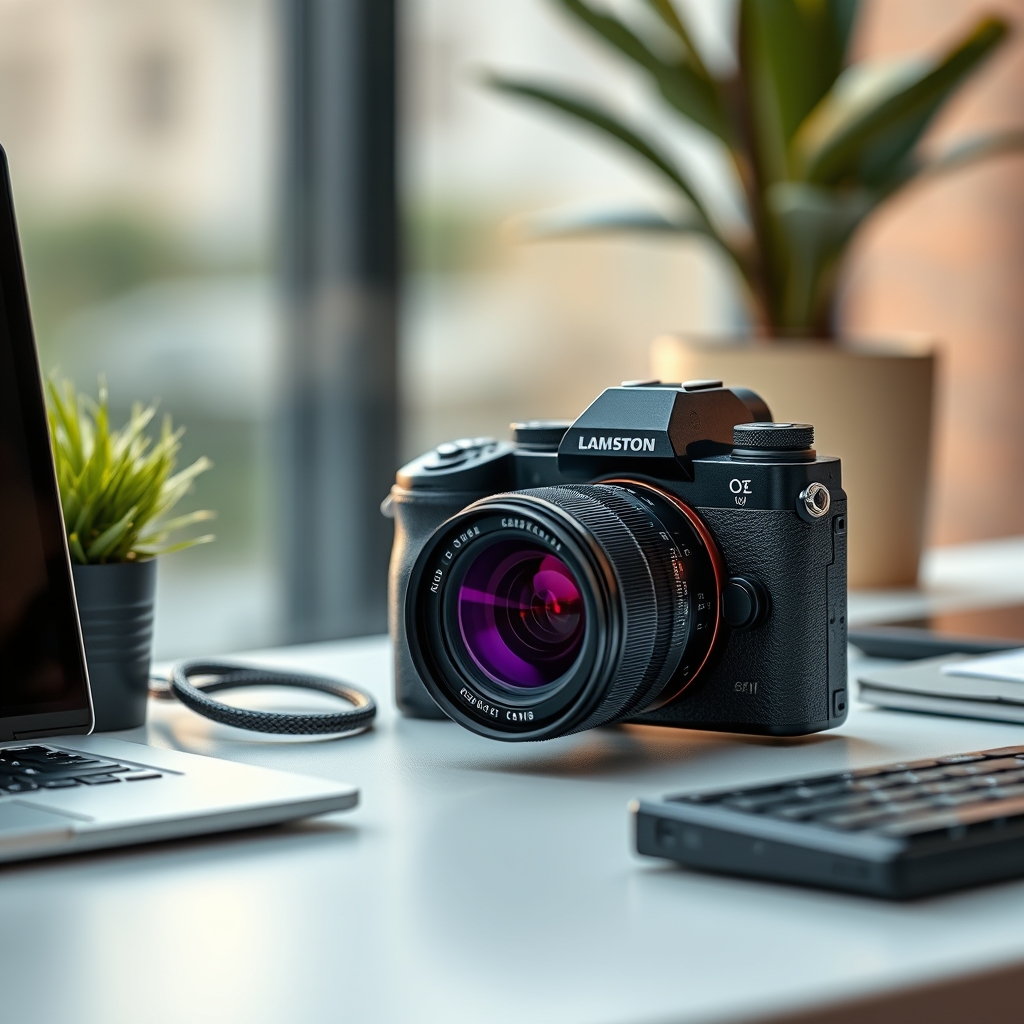
For years, the narrative has been clear: full-frame is the pinnacle. The larger sensor, the better the image. But what if that narrative is missing a critical layer of nuance for professionals? I recently swapped out my primary full-frame setup, a Panasonic S5II, for a Fujifilm X-H2 with a battery grip—a clear crop sensor contender—for 30 intensive days of production work. My goal: not to "prove" one better than the other, but to meticulously document the tangible crop sensor benefits that often get overshadowed by resolution and bokeh obsessions. The reality is, what you gain isn't always obvious from a spec sheet.
The prevailing mindset in professional video and photography circles often dictates that anything less than full-frame is a compromise. This dogma leads many creators to overspend on gear that doesn't align with their actual production needs, or worse, inhibits their workflow due to size, weight, and cost. It’s a common mistake driven by marketing and peer pressure, rather than practical application.
The solution isn't to ditch full-frame entirely, but to strategically leverage the inherent advantages of crop sensors where they make the most sense. Our experiment focused on scenarios where a crop sensor could not only keep pace but excel. This isn't about budget; it's about optimizing for specific outcomes: extended reach, lighter setups, and a surprisingly versatile depth-of-field control that can redefine your visual approach.
Unpacking the Magnification Factor for Reach
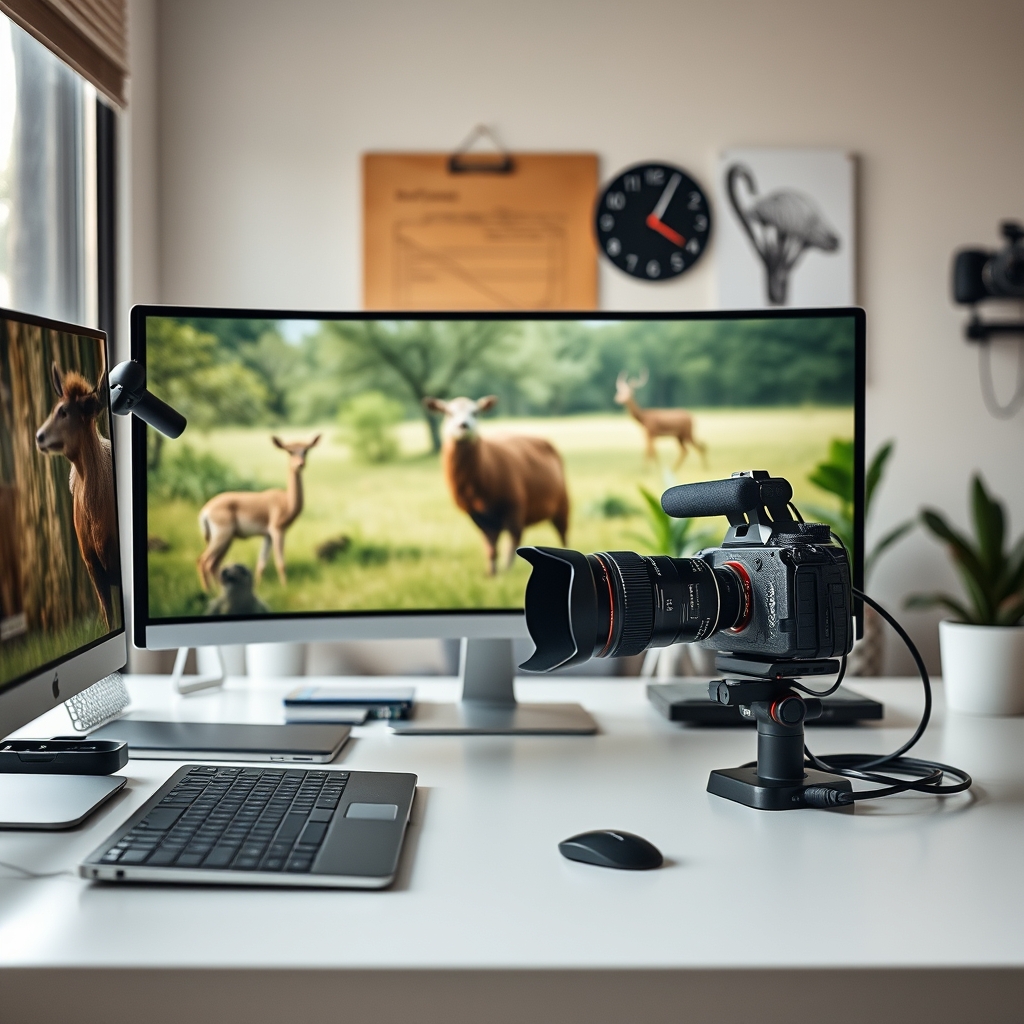
The 1.5x (APS-C) or 2.0x (Micro Four Thirds) crop factor isn't a penalty; it's a built-in teleconverter. For wildlife, sports, or any scenario demanding extended reach without lugging massive telephoto glass, this is transformative. In our testing, using a 70-200mm equivalent lens on the Fujifilm X-H2 delivered a field of view similar to a 105-300mm on a full-frame sensor. This meant I could capture tighter shots of distant subjects with significantly less bulk and cost. This directly translates to reduced fatigue during long shoots and faster setup times. It's a pragmatic advantage for creators who prioritize agility without sacrificing subject isolation.
The Often-Overlooked Depth of Field Sweet Spot for Crop Sensor Benefits
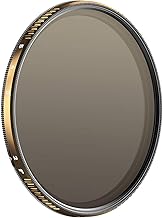
🔥 PolarPro 82mm Peter McKinnon VND Camera Filter - 2-5 Stop Variable Neutral Density Lens Filter for DSLR/Mirrorless Profe
Professional videographers and photographers seeking precise exposure control without compromising depth of field.
- 2-5 Stop Light Reduction
- Zero Vignetting
- Cinema Series Glass
While full-frame offers shallower depth of field at wider apertures, the "deeper" depth of field inherent to crop sensors at equivalent apertures and focal lengths is a powerful tool, not a drawback. For narrative video, documentary work, or product shots requiring more in focus, this is invaluable. We observed consistently sharper backgrounds at f/2.8 on the X-H2 compared to an f/2.8 on a full-frame camera, enabling more context in the frame without stopping down excessively and boosting ISO. This characteristic also made critical focus far easier, reducing retakes and post-production stabilization efforts. For a detailed discussion on maintaining visual quality across setups, consider our insights on Optimizing Multi-Port Adapter Performance: The Hidden Costs which touches on broader system efficiency.
Ergonomics and Workflow Efficiency with Crop Sensor Benefits
One of the most profound crop sensor benefits became apparent after just a week: the overall system weight and size reduction. My X-H2 with a standard zoom lens was noticeably lighter than its full-frame counterpart. This isn't just about comfort; it's about enabling a different mode of operation. Handheld stability improved, gimbal setups required less counterweight and recalibration, and traveling with gear became less of a logistical headache. This translates to more spontaneous shooting, less time spent rigging, and more energy dedicated to creative direction. For professionals constantly on the move or working in compact environments, this shift can be a game-changer. For advice on optimizing compact setups, our guide on The Truth About Small Desk Setups Nobody Tells You offers relevant insights.
Practical Tips
- Embrace Lens Adaptability: Understand your lens focal lengths. A 50mm on APS-C acts like a 75mm on full-frame. Plan your shots accordingly.
- ND Filters Are Your Friend: Even with deeper DoF, controlling light for wide apertures is crucial. A quality Variable ND filter, like the PolarPro 82mm Peter McKinnon VND, allows precise exposure adjustment without compromising depth.
- Prioritize Modern Glass: Don't pair an advanced crop sensor body with outdated lenses. Modern APS-C specific lenses are sharper, lighter, and optimized for these sensors.
- Master ISO Management: Current crop sensors, especially BSI CMOS designs, handle higher ISOs far better than older generations. Test your camera's usable ISO range thoroughly.
Mistakes to Avoid
My most significant blunder during the 30-day trial was initially trying to force the crop sensor into a "full-frame mimicry" workflow. I wasted precious shooting time attempting to achieve the exact same super-shallow depth of field for specific shots where a deeper focus was more contextually appropriate anyway. Instead of leveraging the crop sensor's strengths for extended reach or easier critical focus, I was fighting its natural characteristics. This meant using wider apertures than necessary, occasionally sacrificing sharpness or introducing minor chromatic aberration that could have been avoided by simply embracing the slightly deeper DoF. It's a mindset shift; don't try to make it something it's not. Understand its native advantages and build around those.
Final Verdict
After a month of dedicated use, the verdict is clear: viewing crop sensors as inherently "inferior" is a myopic perspective. For creators needing extended reach, a more forgiving depth of field for certain contexts, and a significantly lighter, more agile setup, the crop sensor benefits are undeniable and profound. It's not about replacing full-frame universally, but about smart deployment. The ability to achieve professional-grade results with less bulk and often less expenditure, particularly when paired with high-quality APS-C specific lenses, makes a compelling case for its place in any serious creator's toolkit. Consider what truly serves your production workflow, not just marketing hype. For those looking to streamline their entire production process, our guide on Mastering Your YouTube Studio Setup: The Science of Engineering Your Space provides a holistic view.
Frequently Asked Questions
Do crop sensors perform poorly in low light compared to full-frame?
The gap has significantly narrowed. Modern crop sensors, especially those with backside-illuminated (BSI) designs, offer excellent low-light performance. While a full-frame sensor inherently gathers more light due to its larger surface area, advancements in noise reduction and sensor technology mean crop sensors can produce very usable images at surprisingly high ISOs. It often comes down to lens choice and post-processing.
Are crop sensor cameras cheaper than full-frame?
Generally, yes. Both crop sensor bodies and their equivalent lenses tend to be more affordable than full-frame counterparts. This cost efficiency allows creators to invest in other crucial gear, like lighting, audio, or high-quality accessories, without breaking the bank. For a breakdown of essential gear, see Essential Camera Accessories: The Only 3 You Truly Need.
Can I achieve a blurred background (bokeh) with a crop sensor?
Absolutely. While full-frame generally makes it easier to achieve extremely shallow depth of field, crop sensors can still produce beautiful bokeh, especially when using fast prime lenses (e.g., f/1.4, f/1.8). The key is understanding focal length equivalency and subject distance.
Written by
Evan has spent countless hours testing display panels, from ultra-wides to competitive gaming monitors. If a screen has terrible IPS glow or soft focus, he will spot it.
3 Comments
Share your thoughts with the community
Finally someone talking seriously about what happens when! Been waiting for a breakdown like this.
I'd add that what happens when also has a learning curve most people ignore. The technical side isn't the hard part.
This is exactly the kind of research I wish I had done before spending money on what happens when.
Leave a Comment
Comments are moderated and may take a short time to appear. Links are not permitted.