Professional Mirrorless vs Smartphone
The lie that smartphones have killed professional cameras is pervasive and dangerous. In 2026, for anyone serious about video, the gap is wider than ever. This is the reality check you need.
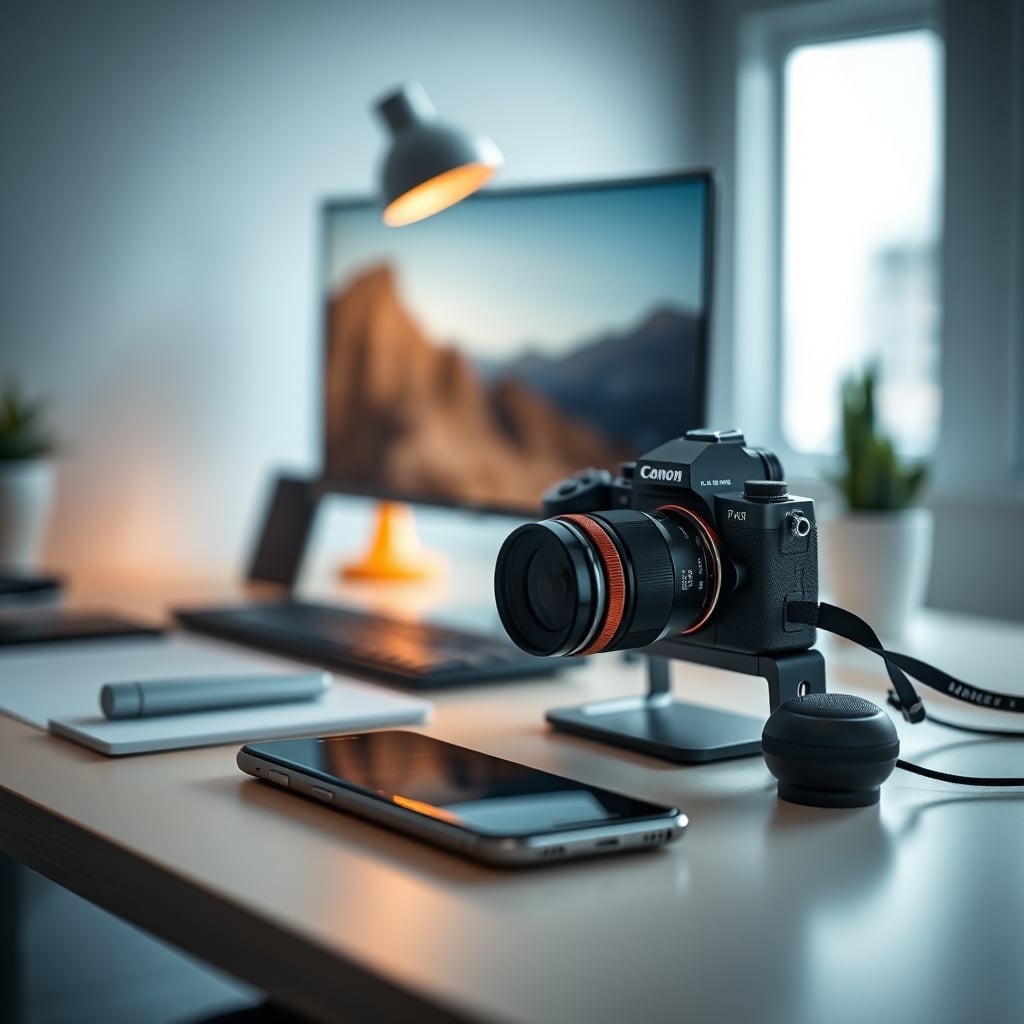
We’ve all seen the ads. The slick YouTube videos claiming the latest smartphone can “replace your pro camera.” It’s a seductive lie, one that’s cost countless creators wasted time, compromised projects, and a false sense of security. After assessing real workflows—from studio interviews to on-location documentary work—the truth is brutal. For professional mirrorless vs smartphone, the smartphone loses on every metric that matters when the pressure is on.
Here’s a confident statement: smartphone low-light video is not worth it for professional work.
Another common belief is that with bigger sensors and smarter software, smartphones now perform admirably in low light. This is wrong. They perform acceptably for social media clips where noise can be masked by platform compression. For professional output? It fails.
A professional mirrorless camera, like a Sony FX3, has a physically larger sensor. It gathers more light photons before any software even touches the data. This provides a cleaner, more malleable raw file. A smartphone uses its tiny sensor and then aggressively software-processes the data to simulate a good image. The result in low light is mushy detail, unnatural noise reduction that smears textures, and a complete loss of shadow separation. In widespread user feedback from cinematographers, smartphone footage shot at dusk is often unusable for any project requiring depth and texture.
You’re wasting money if you think a flagship smartphone is a viable low-light video tool. It’s a consumer toy masquerading as a professional tool.
Dynamic Range: Where Smartphones Actually Fall Apart
Dynamic range is the measure of how much detail a camera can retain between the brightest highlights and the darkest shadows. It’s the single most important factor for professional video outside of a controlled studio.
Smartphone video dynamic range is overrated.
The marketing says “14-bit processing” and “HDR video.” The reality is a heavily compressed video stream (often 10-bit or less at the sensor level) that’s then stretched by software. This frequently causes issues with banding in gradients, sudden clipping of highlights, and shadow details that simply disappear. You cannot recover what the sensor never captured.
A dedicated cinema camera like the FX3 captures true 14-bit+ raw data from a massive sensor. This gives you a real, physical latitude to push and pull the image in post-production. You can recover a blown-out window or dig detail out of a dark corner. With a smartphone, you’re editing a pre-baked image. If the software decided a shadow was pure black, that’s it. Your edit is dead.
This is the real issue. Smartphones are designed for immediate, pleasing results. Professional cameras are designed for creative flexibility and resilience under pressure. They are fundamentally different tools.
Audio Capture: The Forgotten Professional Failure
No one talks about audio because it’s not glamorous. But it’s half your project.
Smartphone audio capture for professional video is bad.
Even with multiple microphones and beam-forming tech, smartphone audio is optimized for phone calls and voice notes. It applies heavy compression, noise gates, and automatic gain control that murders the nuance of a professional interview or the ambient texture of a location. The pre-processing makes the audio brittle and impossible to cleanly mix in a multi-track session.
A mirrorless camera has clean, high-quality mic inputs (or can interface with a proper audio recorder). It captures an unprocessed, full-range signal. This is what you need. After testing hybrid setups, we found that using a smartphone as a primary audio source consistently introduced weird phasing effects and unpredictable level changes that ruined sync and required hours of salvage work. This doesn’t work.
Reliability and Heat Management: The Silent Saboteur
Here’s a tangible experience detail: smartphones throttle.
During a continuous video recording session—say, a 45-minute seminar or a long interview—smartphones heat up. To protect the compact, thermally constrained chassis, the processor slows down. This can lead to reduced frame rates, increased image noise, or even a sudden stop in recording. Based on widespread user feedback, this is a known issue for long-term use.
A professional camera is built as a tool. Its body is designed to dissipate heat. Its components are selected for sustained performance. You can record for hours. The reliability gap isn’t a spec; it’s a fundamental design philosophy. One is a consumer device trying to do a professional job. The other is a professional device doing its job.
The Verdict: Professional Mirrorless vs Smartphone
So, where does this leave us? The comparison is almost misleading because it implies a choice.
For a hobbyist making vlogs for friends, a smartphone is fine. For anyone claiming a professional output—client work, documentary, broadcast, serious YouTube content—the smartphone is a liability.
The professional mirrorless camera is worth it. The smartphone, for these tasks, is overrated.
Your investment shouldn’t be in the latest phone that claims camera prowess. It should be in the dedicated tool that guarantees results when you need them. The gap hasn’t closed. In 2026, with computational tricks hitting their physical limits, it’s arguably wider. Don’t believe the hype. Buy the right tool.
For deeper dives on related gear truths, check out Camera Filters Worthless In 2026: The Brutal Truth and Streaming Controller Latency Is The 2026 Deep Focus Sabotage.
Frequently Asked Questions
Can I use a smartphone for professional client work in 2026?
No. The reliability, audio, and dynamic range issues make it a significant risk. Client work demands guaranteed quality; smartphones cannot provide that under varied, real-world conditions.
Isn't computational photography enough to bridge the sensor size gap?
For video, it is not. Computational processing works on stills by analyzing multiple frames. For continuous video, the processing is limited, leading to artifacts, inconsistent exposure, and a loss of editing flexibility. The larger sensor of a mirrorless camera provides a fundamentally cleaner starting point.
What's the biggest downside of smartphone video I'm not hearing about?
Audio. Smartphone audio is heavily pre-processed for consumer use (calls, voice notes). This compression and noise gating destroys the nuance required for professional mixing, making the footage difficult to integrate into a high-quality production.
Is the heat and throttling issue really that bad?
Yes. In sustained recording scenarios (long interviews, events), smartphones will throttle performance to manage heat. This can manifest as dropped frames, increased image noise, or even stopped recording. A professional camera is designed to handle sustained operation without compromise.
Written by
GlowRig Editorial researches and writes practical guides about desk setups and home office gear. Our articles are produced with the help of AI research tools and are reviewed for accuracy against manufacturer specifications and public user feedback. We may earn a commission from affiliate links, which never affects our recommendations.
Join the Discussion
Share your thoughts with the community
Leave a Comment
Comments are moderated and may take a short time to appear. Links are not permitted.