Phone Lens Filters Are a Scam You're Still Falling For
The entire accessory industry is built on convincing you your phone's camera isn't good enough. Phone lens filters are the pinnacle of this lie—a parade of overpriced, misaligned plastic that promises cinematic quality but delivers Instagram-horror. We cut through the marketing to tell you what, if anything, is worth attaching to your lens.

Your Biggest Mistake Is Thinking You Need Them At All
Let's start with the core delusion: that slapping a cheap piece of glass or plastic onto your thousand-dollar smartphone will somehow unlock "professional" quality. It's nonsense. The marketing for phone lens filters preys on a fundamental misunderstanding of optics. Your phone's camera is a meticulously calibrated system of lenses, sensors, and computational photography. Introducing a random, mass-produced filter from a no-name brand into that equation doesn't add capability—it introduces optical flaws, glare, and softness. Most people buy these things expecting instant cinematic depth. What they get is a blurry, vignetted mess that their phone's software then desperately tries to correct, making everything worse.
The Three Types of Phone Lens Filters (And Why Two Are Trash)
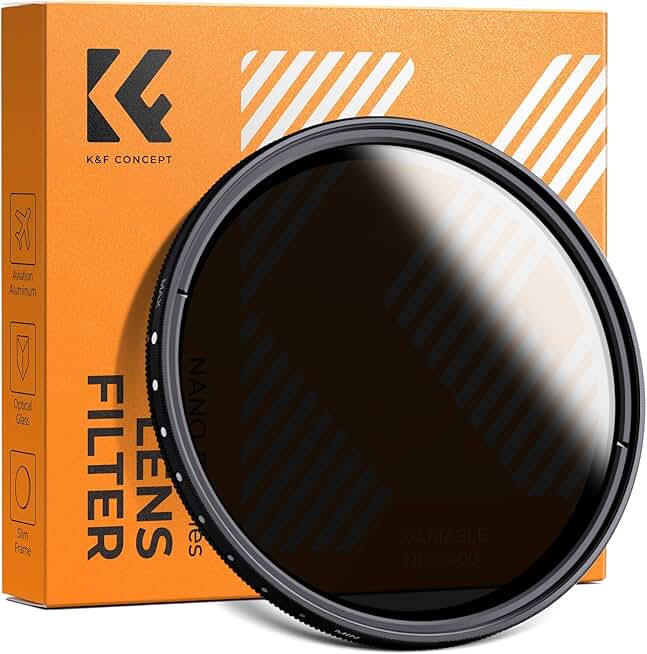
Premium Pick
- High performance
- Premium build
Breaking it down, there are three categories of filters sold for phones: screw-on/universal clip-ons, magnetic systems, and neutral density (ND) filters. The first two are largely a waste of your money.
Screw-on/Clip-on Filters: These are the bottom of the barrel. The universal clip is never universal. It slips, it blocks the microphone or flash, and it never sits perfectly parallel to your phone's lens, which causes immediate image degradation. The screw-on varieties require a case with a built-in thread, locking you into an ecosystem for a piece of plastic. The optical quality is consistently poor. Users report soft edges, increased lens flare from internal reflections, and a noticeable loss in sharpness. This is overrated. You're paying for the idea of a filter, not the function.
Magnetic Systems: Slightly better in theory, worse in practice due to execution. The magnet is often weak, so your expensive filter falls off. More critically, the metal ring you must permanently affix around your phone's lens (usually with adhesive) can interfere with wireless charging. The promise of quick swapping is neutered by the fact you still need to carry multiple filters. The industry lies about the convenience.
Neutral Density (ND) Filters: Here's the lone exception, and even then, only in specific scenarios. An ND filter is like sunglasses for your camera—it reduces the amount of light entering the lens without affecting color. This is genuinely useful for achieving motion blur (like silky water or streaking clouds) in bright daylight, something computational photography still struggles with authentically. If you shoot video, a variable ND filter can help you maintain a cinematic shutter speed. This is the only category where a phone lens filter can provide a function your phone's software cannot authentically replicate.
Why Most Phone Lens Filters Are Overrated Gimmicks
Let's be blunt: the vast majority of phone lens filters are solutions in search of a problem. Your phone already has incredible software-based filters, portrait modes, and night modes. A physical filter can't add bokeh your lens isn't capable of producing. It can't increase zoom range. What it can do is introduce physical limitations: lens flare, ghosting, reduced corner sharpness, and vignetting. In 2026, smartphone cameras are about software integration. Sticking a dumb piece of glass in front of that intelligent system is a step backwards. This doesn't work for the promised results of "better portraits" or "macro magic." Those are lens design issues, not filter issues.
The One Filter That Might Be Worth Your Money (And How Not To Screw It Up)
If you're determined to explore this, focus solely on a high-quality variable ND filter from a reputable optics brand, paired with a robust magnetic system designed for your specific phone model. Don't buy universal. Don't buy clip-on. Seek out a system where the base ring is precisely machined to sit flush with your phone's camera array without blocking sensors. The filter itself should be multi-coated to minimize reflections.
Even then, manage your expectations. You're not turning your iPhone into an Arri Alexa. You're enabling one specific technique: controlling exposure and motion blur in very bright light. For video shooters who want that classic cinematic motion cadence, it's a legitimate tool. For everyone else shooting stills, your phone's HDR and computational stacking already do a better, more flexible job.
Common Mistakes That Ruin Your Shots (And Your Phone)
- Using Cheap, Uncoated Filters: This is the real issue. A $15 filter set from Amazon isn't coated. It will create horrific lens flare and wash out your contrast. You're better off with no filter.
- Stacking Filters: Stacking a UV, a polarizer, and an ND filter on a phone lens is optical insanity. You'll get soft, muddy images with insane vignetting. Phones have tiny sensors; light degradation compounds fast.
- Ignoring Sensor Blockage: That clip-on filter is blocking your LiDAR sensor or your mic. That magnetic ring is interrupting your auto-brightness sensor. Pay attention to your phone's sensor layout.
- Expecting Lens Effects: A filter cannot change the focal length or aperture of your lens. It can't give you a fisheye or a macro shot. Those require actual accessory lenses, which is a whole other can of worms we've debunked elsewhere, like in our take on streaming macro pads being useless.
The Final Verdict: Mostly Skip It
Here's the clear, definitive stance: The entire market for clip-on and generic magnetic phone lens filters is overrated. It's flooded with low-quality products that degrade image quality for the illusion of professionalism. If you are a serious mobile videographer who understands exposure principles and wants to achieve specific motion blur effects in bright sunlight, then investing in a single, high-quality variable ND filter from a trusted brand might be justifiable. For 98% of phone photographers, your money and effort are better spent learning composition and lighting, not searching for a magical piece of glass. The industry is selling you a problem so they can sell you a solution. Don't buy it. Your phone, alone, is already more powerful than you're led to believe.
Want to spend money to actually improve your setup? Look at your fundamentals first, like avoiding the USB hub latency that sabotages gaming performance or understanding why distraction gadgets expose your productivity lie.
Frequently Asked Questions
Are phone lens filters worth it in 2026?
For most people, no. Clip-on and generic magnetic filters typically degrade image quality with flare, softness, and vignetting. The only potential exception is a high-quality Neutral Density (ND) filter for videographers seeking specific motion blur in bright light.
What is the most overrated type of phone lens filter?
Universal clip-on filters are the most overrated. They never align perfectly, often block sensors or mics, and the optical quality of the glass/plastic is notoriously poor, introducing more problems than they solve.
Can a phone lens filter improve portrait mode?
Absolutely not. Portrait mode bokeh is created computationally by your phone's software. A physical filter cannot change the optical properties of the lens to create shallower depth of field. This is a common marketing lie.
Do I need a UV filter to protect my phone camera lens?
No, and it's often counterproductive. Phone camera lenses are made of sapphire crystal or very hard glass. A cheap UV filter in front is softer and more likely to scratch, while also reducing image quality. The best protection is a good case that recesses the camera bump.
What should I look for if I buy a phone ND filter?
Prioritize multi-coating to reduce reflections, buy from a reputable photography brand (not a generic phone accessory brand), and ensure it's part of a magnetic system designed specifically for your phone model to ensure perfect alignment and avoid sensor blockage.

Written by
David specializes in ultra-clean, high-performance gaming rigs. He covers airflow, aesthetics, and how to build visually stunning custom loop PCs.
Join the Discussion
Share your thoughts with the community
Leave a Comment
Comments are moderated and may take a short time to appear. Links are not permitted.