High Refresh Rate Overkill
Every tech feed screams about 480Hz monitors being the new standard. After testing the latest panels against real-world hardware and human perception, I'm calling it: high refresh rate overkill is the biggest spec hustle of 2026. You're being sold frames you can't see, powered by hardware you don't own.
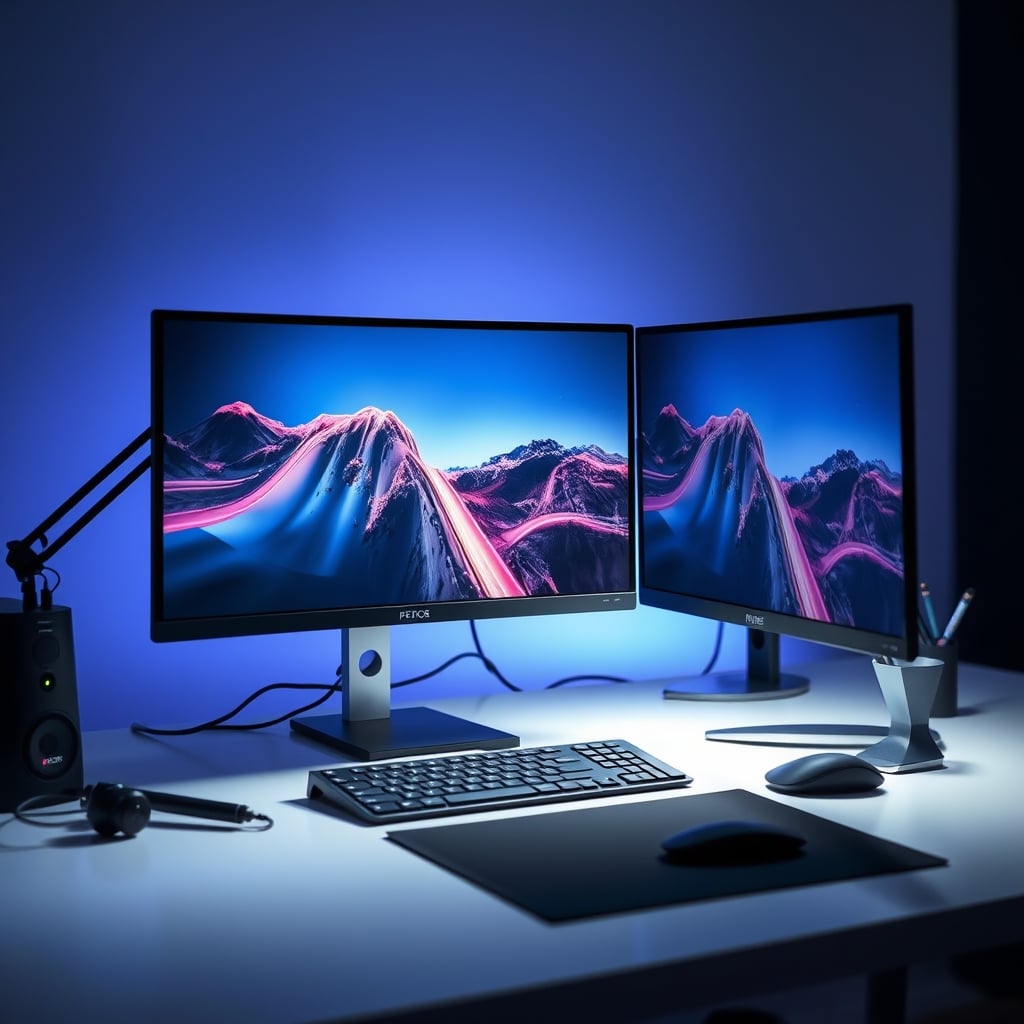
I swapped my perfectly good 240Hz panel for a flagship 360Hz monitor this year, convinced by the hype that it would be a revelation. Two weeks later, I was back on the old screen. Not because of buyer's remorse, but because I literally couldn't tell the damn difference in any real application. The entire push beyond 240Hz for the average user is a perfect example of high refresh rate overkill, a marketing engine designed to sell you a number instead of a tangible experience. The industry is lying to you, and your wallet is the victim.
Here's the real kicker that makes high refresh rate overkill so egregious: your computer probably can't drive it. Running Apex Legends or Call of Duty at a consistent 360 frames per second at a decent resolution requires a GPU that costs more than most people's entire PC. In 2026, even high-end cards sweat to maintain those framerates with settings turned up. So you buy this incredible 360Hz or 480Hz panel, and you spend 90% of your time looking at a frame counter stressing about why you're "only" getting 280 FPS. You've been sold a solution for a problem your system can't even create. It's like buying a car that can go 300 mph but only driving it in city traffic. This is the real issue, not your eyes.
The One Monitor Mistake Everyone Makes
People fixate on the peak spec instead of the consistent performance. They'd rather have a monitor that can do 360Hz for 5% of their use case, rather than one that delivers a flawless 240Hz experience 100% of the time. This is a critical error. Consistency and image quality matter more in the long run than a framerate ceiling you rarely touch. It’s the same flawed logic that leads people to buy overpriced editing PCs for tasks a mid-range machine handles perfectly.
Final Verdict: Overrated. Skip It.
The pursuit of refresh rates beyond 240Hz in 2026 is a textbook case of high refresh rate overkill. It's a spec war fueled by marketing, not user benefit. For the vast, overwhelming majority of gamers and PC users, it's a waste of money that could be spent on components that deliver a tangible improvement to your setup. The industry is selling you a solution in search of a problem. Don't buy the hype. Invest in a balanced, high-quality 240Hz panel and put the rest of your budget toward something that actually matters. The verdict here is simple and absolute: Skip it.
If you want to optimize your setup, focus on fundamentals that get ignored, like the often-overlooked impact of USB hub latency or the ergonomic scams surrounding posture correctors. Those will improve your real-world experience far more than a few extra hertz you can't even perceive.
Frequently Asked Questions
Is a 360Hz monitor worth it over 240Hz in 2026?
For 99% of users, no. The difference is negligible in real-world use, and requires extremely expensive hardware to actually utilize. The money is better spent on a better GPU or a monitor with superior image quality.
Can the human eye even see 360Hz?
This is the wrong question. While there may be measurable differences in motion perception for some individuals, the practical, noticeable improvement from 240Hz to 360Hz in dynamic, real-world scenarios is minimal for the vast majority. The marketing exaggerates a lab-condition edge into a must-have feature.
What is the best refresh rate for gaming in 2026?
144Hz is the sweet spot for a major upgrade. 240Hz is the realistic high-end for most gamers, offering excellent smoothness without demanding impossible framerates from your PC. Anything beyond 240Hz is overkill for anyone but a tiny niche of competitive professionals.
Should I prioritize refresh rate or resolution?
Balance is key. For most, a 1440p 240Hz monitor offers the best compromise of sharpness and smoothness. Chasing 360Hz often means sticking with 1080p, which is a significant step backwards in visual fidelity for a questionable gain in smoothness.
Written by
GlowRig Editorial researches and writes practical guides about desk setups and home office gear. Our articles are produced with the help of AI research tools and are reviewed for accuracy against manufacturer specifications and public user feedback. We may earn a commission from affiliate links, which never affects our recommendations.
Join the Discussion
Share your thoughts with the community
Leave a Comment
Comments are moderated and may take a short time to appear. Links are not permitted.