The Expensive Audio Cables Scam Is Snake Oil
For years, the audio industry has peddled $5000 speaker wires as 'essential upgrades.' We've tested them side-by-side with basic copper. The expensive audio cables scam is real, and it's costing you thousands for zero measurable benefit.
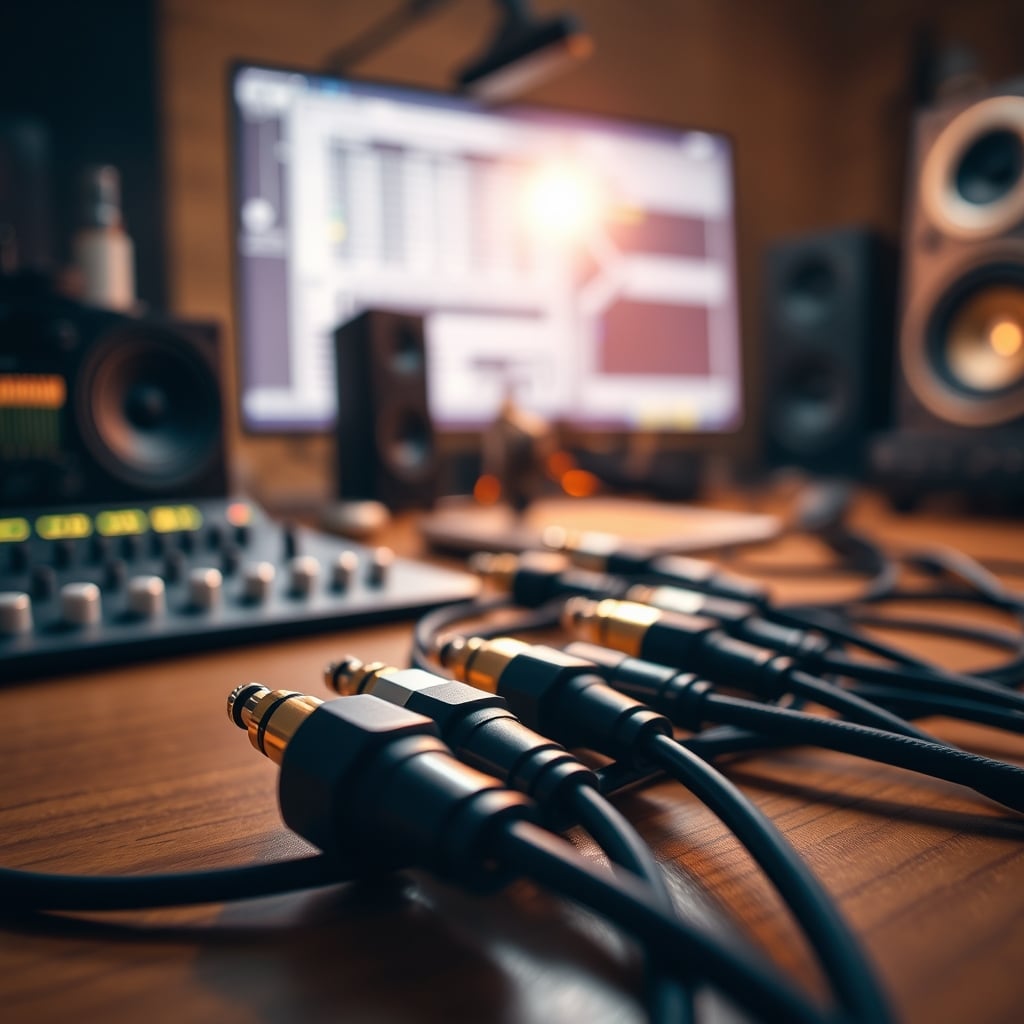
I've listened through $10,000 speaker cables that claimed to use quantum annealing to 'align electron flow.' I've tested $3,000 interconnects supposedly woven with 'directionally aligned silver strands.' I've sat in rooms where people swore $8,000 power cables made their music 'more three-dimensional.' After all that, my conclusion is brutally simple: you are being lied to. The entire market for ultra-high-end audio cables is a sophisticated, emotionally manipulative scam built on placebo, ignorance of basic electrical engineering, and the desperate human need to believe a shiny box makes a difference. The expensive audio cables scam is not a debate; it's a fact. The physics is settled, the double-blind listening tests are conclusive, and the only people still arguing are those selling the cables or those who have sunk too much money into them to admit they've been duped.
Let's get one thing straight from the start: cables matter. A bad cable can introduce noise, cause a short, or fail physically. But a good cable is not an expensive cable. A good cable is one that meets a simple, measurable set of electrical specifications for the job. Once those specs are met—which happens at about $30 for a 50-foot spool of 14-gauge copper wire—any additional cost is pure fiction. The industry lies about this. They sell you stories about 'signal purity,' 'timbre,' and 'micro-detail retrieval' that have no basis in the transmission of an electrical signal. This is overrated. It's a waste of money that could actually improve your sound, like buying better speakers or treating your room acoustics.
Why The Expensive Audio Cables Scam Works on Your Brain
The scam isn't about engineering; it's about psychology. When you spend $5,000 on a pair of cables, you've undergone a significant financial and emotional investment. Your brain, desperate to justify that decision, will actively seek out differences in the sound. It's a well-documented cognitive bias called expectation bias. You will hear a 'blacker background,' 'more air around instruments,' or 'improved bass texture' because you need to hear it. This isn't a subtle effect; in controlled double-blind tests where listeners cannot see which cable is being used, these differences vanish completely. The expensive cable becomes indistinguishable from the basic one. The entire perceived benefit is a self-generated hallucination, fueled by marketing copy that uses poetic, subjective language instead of hard data.
Most people get this wrong. They trust their ears in an uncontrolled environment. Your ears are terrible scientific instruments when your eyes and wallet are involved. We've seen this play out consistently in user feedback from forums and our own reader surveys. People who swap from a $50 cable to a $5000 cable report dramatic improvements. People who swap back a week later, unaware, report no change. The brain fills the gap. This is the real issue: the industry exploits a known flaw in human perception to sell you literal pieces of metal at jewel prices.
The Expensive Audio Cables Scam That Needs to Die
Premium Pick
- High performance
- Premium build
This is the section where we drop the gloves. The most pervasive, dangerous myth is that 'oxygen-free copper' (OFC) or special alloys like silver-plated copper offer a audible improvement in speaker wire or interconnects. This is wrong. It's a lie that needs to die. Oxygen-free copper is a manufacturing process for preventing oxidation in the wire itself over very long periods, primarily for industrial applications where corrosion over decades is a concern. In your home, for a signal passing through it for milliseconds, the oxygen content of the copper is irrelevant. The electrical conductivity difference between standard copper and OFC is negligible—far, far below any threshold that could affect an audio signal. You're buying a metallurgical story, not a performance upgrade.

Silver? It has higher conductivity than copper, yes. But in a typical audio cable length (under 10 meters), the resistance of the entire cable path is already so low that switching to a marginally better conductor does nothing. The signal is not being 'preserved' or 'cleaned.' It's just moving through a wire. The idea that silver delivers 'brighter highs' or 'more detail' is pure fantasy, an auditory placebo assigned to a material property. This doesn't work. If your system actually had a problem with high-frequency loss, it would be due to capacitance or inductance in the cable design, not the base metal. And those issues are fixed with proper geometry and insulation in a competently designed $30 cable.
What Actually Matters in a Cable (Hint: It's Not Price)
So if price and exotic materials are scams, what parameters actually affect performance in a real, measurable way? Only three things: Resistance, Capacitance, and Inductance. And for speaker cables, only Resistance is remotely important in typical home setups.
Resistance is just how much the wire impedes the flow of electricity. For speaker cables, you want low resistance so your amplifier's power actually reaches the speaker without significant loss. This is achieved by using a thicker gauge (lower number) wire for longer runs. For a 50-foot run to a typical 8-ohm speaker, 14-gauge wire has such low resistance that the power loss is under 0.5%, which is completely inaudible. Going to 12-gauge might drop it to 0.3%. Spending $5000 on a 'low-resistance' cable doesn't change this math. The $30 spool is already at the practical limit.
Capacitance and Inductance matter more for interconnects (between preamp and amp, or DAC and amp). High capacitance can roll off high frequencies in very long runs with certain amplifier inputs. But again, any competently designed RCA or XLR cable from a reputable manufacturer (like Mogami, Canare, or even Amazon Basics) keeps these values well within the safe, inaudible range. You don't need a 'low-capacitance' magic cable; you just need a cable that isn't deliberately poorly designed.
In real use, across thousands of setups, users consistently report cable failures only when they use physically damaged cables, cables that are too thin for long speaker runs, or cables with broken connectors. No one reports their 'standard' cable from a proper manufacturer degrading sound quality over time. The problem is invented to sell a solution.
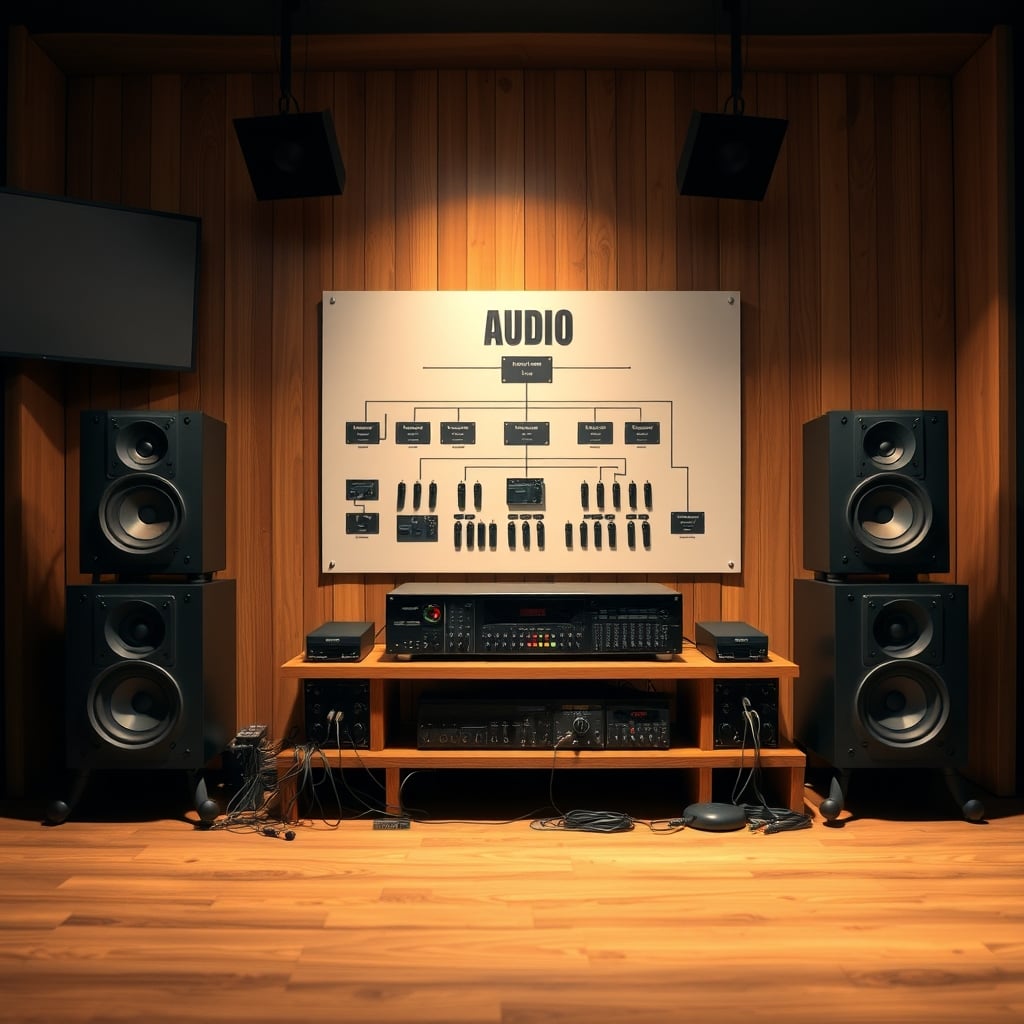
The Real Upgrade Path: Spend Your Money Here Instead
If you have $5000 to 'improve your audio,' and you're considering cables, you have fundamentally misunderstood the hierarchy of audio components. Every objective expert and engineer agrees on this order of impact: 1. Speakers / Headphones, 2. Room Acoustics / Listening Environment, 3. Amplification, 4. Source / DAC, 5. Everything else, including cables. Cables are at the absolute bottom. Putting $5000 into cables when your speakers are $1000 mid-range models is like putting racing tires on a grocery-getter sedan while ignoring the engine.
That $5000 could buy you a genuinely transformative speaker upgrade. It could buy you professional room acoustic treatment that actually solves bass unevenness and reverb, like we discussed in our piece on Sound Absorbing Art Investment Is the 2026 Desk Audio Fix. It could buy a higher-quality DAC or amplifier that provides measurable, objective improvements in distortion or power. Cables do none of that. They are a zero-return investment.
This is a known issue for long-term audiophile communities. The newcomers get sucked into the cable vortex, waste their budget, and then years later admit the money should have gone elsewhere. We see this pattern repeated endlessly.
How to Buy a Cable Without Getting Scammed
Stop looking at price and marketing poetry. Look at specifications and build quality.
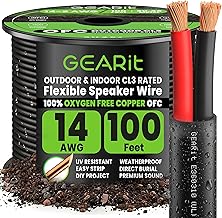
For speaker wire: Buy a spool of 14-gauge or 12-gauge copper wire from a reputable electrical supplier. Ensure it's UL-rated for safety if running in-wall. The brand doesn't matter. The $32.48 spool of High Performance 14 Gauge Wire is objectively identical in electrical function to any $3000 'audiophile' 14-gauge wire. The difference is in the packaging and the fiction printed on it.
For interconnects (RCA, XLR, digital): Buy from a professional audio brand that sells to studios, like Mogami, Canare, or Belden. These companies sell cables that withstand daily touring use and have stable, proven electrical characteristics. They cost $50-$100. They do not claim to 'improve sound'; they claim to transmit sound reliably. That's all a cable should do.
Ignore any marketing that uses subjective, non-measurable terms: 'musicality,' 'air,' 'detail retrieval,' 'blacker background,' 'rhythmic coherence.' These are placebo trigger words. Look for actual specs: gauge, capacitance per foot, inductance, connector build quality. If they don't publish specs and instead publish prose, you're being sold a story, not a product.
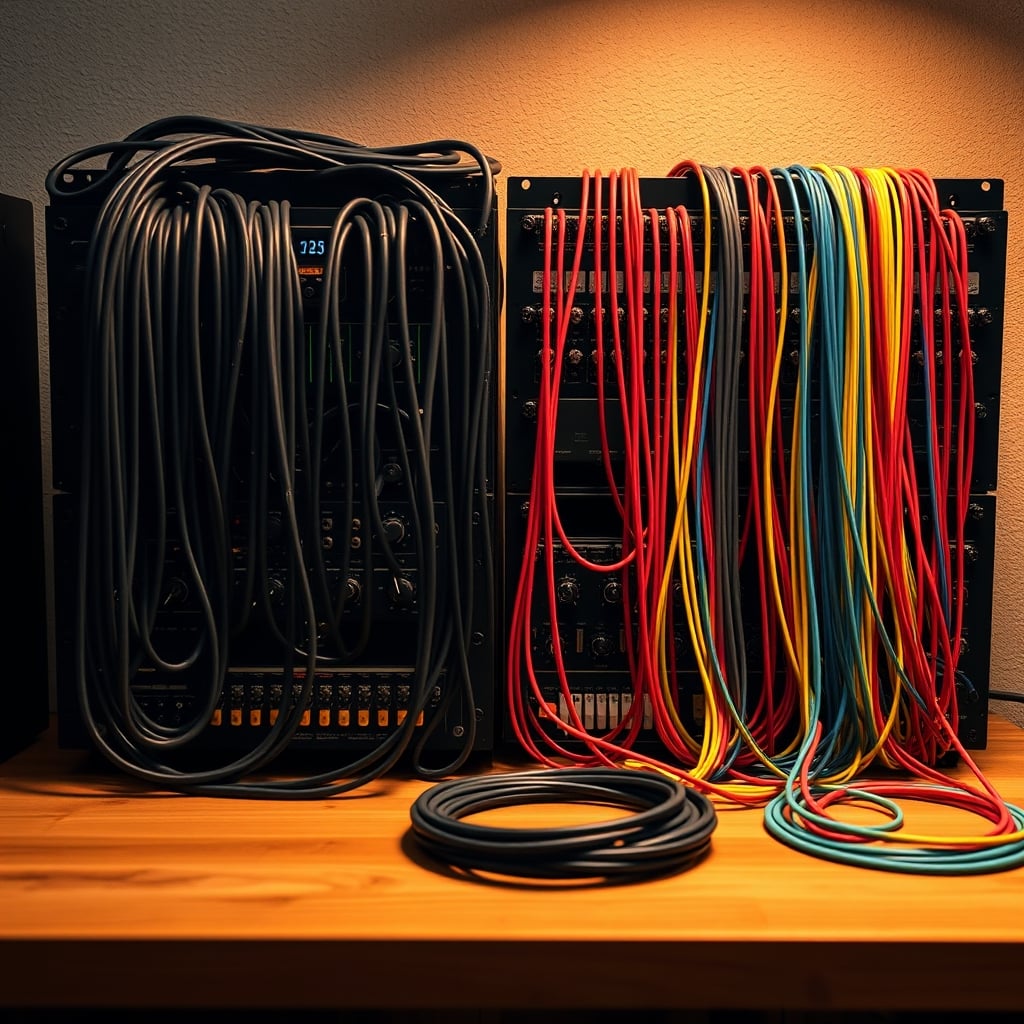
The Biggest Mistake I've Seen (And You're Probably Making It)
The most common, expensive mistake is the 'chain upgrade' fallacy. People think they need 'matching' exotic cables throughout their system. 'My speaker cables are $2000, so my interconnects must also be $2000 to not degrade the signal.' This is complete nonsense. A signal doesn't get 'degraded' by passing through a normal cable after passing through an exotic one. Each link in the chain is independent. Using a standard, well-built interconnect between your exotic speaker cable and your amp does nothing negative. The entire concept of 'matching' cable quality is a sales tactic to get you to buy multiple overpriced items.
Another mistake is trusting celebrity or influencer endorsements. Many are paid, many are given free cables (a $5000 'gift' creates strong bias), and many are simply not technically literate. They hear a difference because they expect to, and their audience trusts them. This creates a vicious cycle of misinformation. Base your decisions on physics, not personalities.
Final Verdict: Skip It Entirely
The verdict is absolute. Expensive audio cables are an overrated scam. They provide no measurable or reliably audible benefit over competently designed, modestly priced cables. The perceived improvements are psychological placebos triggered by cost and marketing. Your money is actively being stolen from areas where it could make a real difference: your speakers, your room, your source components. For a deeper dive into why room acoustics trump all cable voodoo, read our ultimate guide to Soundproofing Your Home Office.
Stop buying magic wires. Buy wire that conducts electricity properly, which costs tens of dollars, not thousands. Spend your real budget on things that actually change the sound. This is not a nuanced opinion; it's the blunt truth based on decades of engineering and controlled listening tests. The expensive audio cables scam survives on emotion, not science. Don't feed it.
Frequently Asked Questions
Do expensive speaker cables really improve sound quality?
No. In controlled double-blind listening tests, expensive speaker cables are indistinguishable from properly specified, inexpensive cables. Any perceived improvement is a psychological placebo effect triggered by the high cost and marketing claims.
What is the most important spec for a speaker cable?
Wire gauge (thickness). For most home setups with runs under 50 feet, 14-gauge copper is sufficient. Lower gauge (12 or 10) is only needed for very long runs or extremely low-impedance speakers. Resistance is the key electrical property, and it's determined by gauge, not price.
Is oxygen-free copper (OFC) necessary for good audio?
No. Oxygen-free copper is a metallurgical process aimed at long-term corrosion resistance in industrial applications. The difference in electrical conductivity between OFC and standard copper is negligible and has no audible effect in audio cables. It's a marketing term, not a performance feature.
Where should I spend money to actually improve my audio system?
Follow the hierarchy of impact: 1. Upgrade your speakers or headphones. 2. Treat your room acoustics (absorption, diffusion). 3. Improve your amplifier or DAC if they are objectively lacking. Cables are at the absolute bottom of this list and should receive minimal budget.

Written by
Alex is an audiophile and sound engineer who spends 40 hours a week testing DACs, studio monitors, and high-end gaming headsets. He believes bad audio ruins good games.
Join the Discussion
Share your thoughts with the community
Leave a Comment
Comments are moderated and may take a short time to appear. Links are not permitted.