The Brutal 2026 Truth About Adaptive Lighting Accuracy
Your lights claim to adapt, but they’re guessing. We dive into the hardware failures and false promises that make 2026's adaptive lighting one of the most overrated tech trends on your desk. Stop trusting the marketing and start seeing the light.
I spent weeks with my desk bathed in the supposed ‘genius’ of adaptive lighting systems, waiting for that promised nirvana of ambient perfection. What I got instead was a jarring, discordant light show that felt less like a circadian rhythm and more like a disco seizure triggered by a passing cloud. The promise of adaptive lighting accuracy—the holy grail of hands-off ambience—is, for most people in 2026, a complete fabrication. The industry is selling you a vision of seamless, intelligent light that responds to your environment and your biology. In reality, you’re buying a glorified timer with a cheap light sensor and a marketing department that’s laughing all the way to the bank. Most systems aren't adapting to anything; they're just guessing, and they're terrible at it.
Why Your Smart Lights Are Still Incredibly Dumb
The core lie is in the word 'adaptive.' It implies a level of sensory intelligence and nuanced response that simply doesn't exist outside of six-figure architectural lighting systems. Your average smart bulb or light strip? It’s running on a comically simplistic set of rules. If the ambient light sensor (a tiny, often obstructed photocell) detects a dimming, it might slowly ramp up. That’s not adaptation; that’s a crude reaction, and a slow one at that. The real issue is that these systems have zero context. They don't know if the dimming is from a sunset (good to warm up) or a thunderstorm (might want to stay cool for focus). They don't know what's on your screen. They certainly don't know if you're reading a novel or editing a spreadsheet. This isn't adaptive intelligence. It's automated stupidity.
Users consistently report the same frustrations: lights shifting to a warm, cozy glow in the middle of a bright, focused work session because the algorithm hit a pre-set ‘evening’ marker. Or, conversely, lights blasting a cold, clinical white during a late-night movie because the external ambient light is low. The disconnect isn't a bug; it's a fundamental flaw in the premise. True adaptive lighting accuracy requires a fusion of data—screen content, time of day, room occupancy, your calendar, even the weather—that no single consumer ecosystem has seamlessly cracked yet. What you get is a party trick, not a productivity tool. If you've ever been yanked out of a deep work flow by an unwanted, dramatic shift in your room's atmosphere, you've experienced this failure firsthand. This doesn't work.
The Adaptive Lighting Accuracy Myth That Needs To Die
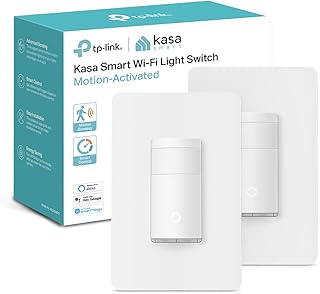
Premium Pick
- High performance
- Premium build
Let’s slaughter the sacred cow right now: the myth that these systems are good for your circadian rhythm or focus. It’s pervasive, it’s marketed aggressively, and it’s mostly pseudoscientific nonsense when applied to the typical desk setup. Companies love to throw around terms like ‘circadian-aligned’ and ‘biologically tuned,’ but they’re taking a broad, population-level health concept and smushing it into a product that operates in your specific, messy reality.
The truth is, for circadian entrainment to be effective, the light needs to hit your eyes at a specific intensity and spectrum, for a sustained period, and at the correct biological time. Your desk lamp or bias lighting, no matter how ‘adaptive,’ is a pathetic substitute for morning sunlight. Conversely, the warm light it throws at 6 PM is utterly negated by you staring into a massive, full-brightness, blue-light-emitting monitor for three more hours. The idea that a gentle gradient on your wall is ‘preparing you for sleep’ while you’re grinding through a high-stakes gaming session or a tense work deadline is laughable. You cannot outrun your screen's impact with a smart bulb. This focus on adaptive lighting accuracy for health is a distraction from the real, more solvable problem: managing your primary light sources—your monitors. For a deeper dive into how your entire room's light should work together, read our guide on Ambient Lighting Myths: Debunking Common Desk Setup Fallacies.
This is overrated. The industry is lying about this. They’ve sold you a band-aid solution (ambient adaptive lights) for a bullet wound (poor overall light hygiene dominated by screens). Investing hundreds into an ecosystem for a marginal, context-free ambient glow is a misallocation of resources. The real gains come from mastering your monitor’s brightness and color temperature manually, or using software that actually ties into your display content. The ambient stuff is just decor.
The Sensor Problem: Why Your Lights Are Flying Blind
The hardware is holding you back, and no one wants to admit it. That beautifully designed bulb or sleek light bar? Its brain is a $0.02 sensor buried inside, meant to detect crude brightness levels, not nuanced color temperature or spectral content. It can't distinguish between the warm glow of a sunset and the warm glow of your incandescent desk lamp. It has no idea what color the light in your room actually is; it just knows if it's bright or dark.
This is why systems that rely solely on external ambient sensing fail so spectacularly. They’re blind to the most important light source in the room: your monitor. A common nightmare scenario unfolds like this: you’re working late with your monitor as the primary light source. The room is dark. Your ‘adaptive’ bias lighting, sensing darkness, kicks into a bright, high-contrast mode to ‘compensate,’ creating a blinding halo effect and completely destroying any subtlety in your screen’s image. It’s correcting for a problem that doesn’t exist, because its sensor can’t see the 500-nit rectangle dominating your field of view.
Based on widespread user feedback, this sensor blindness is the number one cause of adaptive lighting systems feeling ‘off’ or ‘annoying.’ They’re reacting to the wrong stimuli. For true accuracy, you’d need a colorimeter pointed at your main viewing area, feeding data back to the lights in real-time. No mainstream consumer product does this. They’re all taking cheap shortcuts.
The Ecosystem Trap: When Your Lights Fight Your Other Gear
Here’s an unpopular truth: diving deep into a single brand’s adaptive ecosystem, like Philips Hue’s ‘Dynamic Scene’ or Nanoleaf’s ‘Screen Mirror,’ often makes your overall setup dumber, not smarter. You’re locking yourself into a walled garden where the lights only talk to each other, ignoring the rest of your tech environment. Your lights might be adapting to a generic ‘sunset,’ but what about your smart shades? Your desktop LEDs? Your monitor’s own night mode?
You end up with a cacophony of automated systems working at cross-purposes. I’ve seen setups where the Hue lights go warm for ‘evening,’ but the user’s monitor is stuck in a cold, clinical color profile because that’s managed by a different, unconnected app. The result is a sensory dissonance that’s more fatiguing than just using a single, static, well-chosen light tone. This pursuit of adaptive lighting accuracy within a closed system sabotages the holistic ambience of your desk. It creates pockets of ‘intelligence’ surrounded by islands of dumb gear, and the overall experience is fractured.
The better, if less glamorous, approach is often centralized control. A platform like Home Assistant can, with considerable tinkering, theoretically correlate data from your computer, your outdoor light sensor, your calendar, and your lights. But let’s be blunt: that’s a hobbyist’s nightmare, not a polished product. The promise was plug-and-play ambience. The reality is that for true multi-device accuracy, you need a degree in systems integration. The advertised simplicity is a scam.
What Actually Works: A Realistic Approach to Desk Light Accuracy
So, is all hope lost? Should you just run a single, dim, warm bulb forever? Not quite. You just need to reset your expectations and focus on control over automation. Stop chasing the fully adaptive dream and start building for consistent, manual mastery.
First, decouple your bias lighting from any notion of ‘adaptation.’ Its job is to increase perceived contrast and reduce eye strain from your monitor. Set it to a static, neutral white (around 6500K) at a low, consistent brightness. That’s it. Its job is to be invisible in its perfection, not to put on a show. For this, a simple, dumb LED strip with a high CRI (Color Rendering Index) is often superior to a ‘smart’ strip bogged down with flaky adaptive logic.
Second, for your primary task and ambient lighting, think in terms of manual ‘scenes’ or ‘modes,’ not continuous adaptation. A ‘Focus’ mode: cool, bright, and even. A ‘Creative’ mode: slightly warmer, with perhaps a splash of accent color. A ‘Wind Down’ mode: very warm and dim. The goal is to have one-touch access to these proven, stable environments, not to have your lights constantly tweaking themselves based on flawed sensors. Tools like the Elgato Key Light Air or standard desk lamps with high-quality bulbs in smart plugs offer this kind of reliable, instant control without the adaptive pretense.
This is the real issue: we’ve been sold on ‘set it and forget it’ when the superior experience is ‘know it and control it.’ The muscle memory of hitting a ‘Focus’ button on a Stream Deck is faster, more reliable, and more psychologically impactful than waiting for a dumb algorithm to maybe figure out you’re working.
The One Automated Feature That’s Actually Worth It
After all that bashing, I’ll concede one point. There is a single form of automation that consistently delivers value, but it has nothing to do with ambient light sensors. It’s the simple, time-based schedule. Having your main lights turn on at a gentle level when your workday starts, and more importantly, having everything turn off at a hard cutoff time, is invaluable. It creates a ritual bookend to your day and saves you from the ‘forgot the lights on’ energy drain.
This isn’t adaptive. It’s dumb as a brick. It’s a timer. But it works every single time because it doesn’t try to be clever. It just follows a rule. Pair this with motion sensors for utility spaces (like a room you walk into) and you’ve automated the boring, functional stuff perfectly. For the nuanced light on your desk—the light that affects your mood, your focus, your creative output—keep that control in your hands. As we’ve covered in our piece on Smart Lights Sleep Sabotage: Your Ambience Is Broken, trying to outsource your biological cues to cheap hardware is a losing battle.
Your Move: Skip the Hype, Build for Control
Your time and money are better spent on quality of light, not intelligence of light. Prioritize high CRI (90+) bulbs that render colors accurately and feel pleasant on the eyes. Invest in fixtures that give you even, diffused light without glare. Get a couple of solid, dimmable sources you can point and control independently. This foundational layer matters infinitely more than whether your bulbs can slowly turn orange over two hours.
If you must have ‘smart’ features, treat them as remote controls and schedulers, not AI lighting directors. The product that wins is the one that disappears, not the one that constantly announces its presence with unasked-for changes. And for god’s sake, stop looking at your RGB ecosystem as anything other than decorative mood lighting for gaming or entertainment. It’s not a productivity tool.
The verdict? For true adaptive lighting accuracy at your desk in 2026: Skip it. The technology, as marketed to consumers, is not worth it. It’s an overrated, half-baked solution chasing a problem that’s better solved with intentional design and manual control. The money you save from avoiding the premium adaptive ecosystems can buy you vastly superior quality static lights, better monitors, or acoustic treatment that will have a far greater impact on your actual workspace performance and comfort. Your lights shouldn't be trying to think. They should just shine.
Frequently Asked Questions
Is adaptive lighting bad for your eyes?
Most adaptive lighting isn't 'bad,' it's just irrelevant for eye strain. The constant, often incorrect, subtle shifts do nothing to counter the primary source of eye fatigue: your monitor's brightness and blue light. A static, high-CRI bias light set correctly is far better for your eyes than a 'smart' light guessing wrong.
What is the most accurate adaptive lighting system?
In 2026, 'accurate' is a stretch. Systems that sync directly to your screen's content, like some Nanoleaf setups, are more 'reactive' than 'adaptive,' but at least they're responding to the right source (your monitor). However, they are purely for entertainment ambience, not consistent, productive lighting.
Should I use circadian lighting at my desk?
The circadian benefit at a desk is massively overstated. The intensity of light needed for true biological impact comes from sunlight or very bright, specialized lamps, not the gentle glow of an adaptive desk lamp. Focus on reducing blue light from your screens in the evening via software (like f.lux or Night Shift) instead.

Written by
From bias lighting behind your monitor to smart RGB ecosystems, Leon knows exactly how to light a room for productivity during the day and gaming at night.
Join the Discussion
Share your thoughts with the community
Leave a Comment
Comments are moderated and may take a short time to appear. Links are not permitted.