Smart Alarm Dangers Are Real and You're Ignoring Them
That sleek smart clock on your nightstand is a wolf in sheep's clothing. It's not optimizing your sleep; it's fragmenting it, spying on you, and selling the idea of 'smart' rest while delivering profoundly dumb results. Wake up to the real smart alarm dangers.
I made the same mistake you probably did. I bought into the hype. I swapped my simple, silent analog clock for a gleaming orb of 'intelligence'—a device promising to wake me gently with light and sound, to track my sleep cycles, to make me more productive. After a month of feeling perpetually foggy, irritable, and less focused, I threw it against the wall. The silence was the best alarm I'd ever had. This isn't an isolated rant; it's a widespread reckoning with the fundamental smart alarm dangers that the gadget industry desperately wants you to ignore. They're not productivity tools; they're sleep saboteurs wrapped in minimalist plastic.
The core problem is a category-wide lie: that more data and more automation equal better sleep. This is marketing nonsense. Sleep is a primal, analog process. Introducing a network-connected computer with microphones, speakers, and blinding LEDs inches from your head is not an upgrade. It's an invasion. The industry sells you on the dream of optimized rest but delivers a reality of fragmented sleep, anxiety-inducing data, and a device that's listening more than you realize. This isn't about one bad product; it's about a fundamentally flawed premise.
Most people get this wrong. They think a sunrise simulation is inherently good. They believe sleep stage tracking is accurate. They assume a gentle wake-up sound is better than silence. The industry lies about all of this. These features are often poorly executed, based on shaky science, and come with a hidden tax on your privacy and neurological peace. You're not buying a better morning; you're buying a subscription to your own biological data and a guaranteed worse night.
Why The "Gentle Wake-Up" Feature Is A Complete Scam
Let's dismantle the flagship feature first. The promise of a 'sunrise simulation' or 'gradually increasing sounds' to mimic a natural awakening is the cornerstone of smart alarm marketing. It's also largely ineffective for most people, and often counterproductive. The science they vaguely reference is real—our cortisol levels naturally rise in the morning, preparing us to wake—but the gadget's execution is a pale, pathetic imitation.
Here's the reality. In real use, these devices fail for one simple reason: sleep inertia. If the light or sound starts while you're in deep sleep (Slow-Wave Sleep) or even REM sleep, it doesn't gently nudge you. It either gets completely ignored, or it violently yanks you out of a critical restorative phase. You wake up disoriented, groggy, and often more tired than if a traditional alarm had sounded at a lighter sleep stage. The device's guess at your 'optimal wake window' is just that—a guess, based on laughably crude movement or sound metrics from a $5 accelerometer or microphone. This is overrated. You're paying a $100+ premium for a feature that works inconsistently at best, and makes you feel worse at worst.
Furthermore, that soft, warm glow they use? It's still light. Even dim amber light hitting your closed eyelids sends signals to your suprachiasmatic nucleus, potentially suppressing melatonin and shifting your circadian rhythm if it happens at the wrong time. You're essentially doing a mini version of checking your phone at 3 AM. The concept of a completely dark, silent, and electronics-free sleep environment isn't just old-school advice; it's neurobiology. Introducing a light source, however 'gentle,' contradicts this fundamental need. Based on widespread user feedback, the most common outcome isn't a peaceful awakening; it's either sleeping right through the 30-minute sunrise cycle or being jolted awake by the final, louder alarm sound, which defeats the entire purpose.
The Data Tracking Myth That Needs To Die
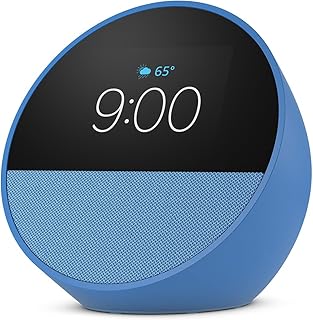
Premium Pick
- High performance
- Premium build
This is the myth that infuriates me the most. "Know your sleep with advanced tracking!" It's a bold-faced lie for bedside devices. Unless you're wearing a medically validated EEG headband (you're not), your smart clock is guessing. It's using ballistocardiography (measuring tiny movements through the mattress) or an even cheaper microphone listening for rustling. These methods can vaguely distinguish 'restless' from 'still' but cannot accurately delineate between light, deep, and REM sleep stages.
You're not getting data. You're getting a persuasive fiction. A story written by an algorithm desperate to show you pretty graphs so you feel you got your money's worth. Waking up to a 'Sleep Score: 78' is meaningless. Was your deep sleep truncated? Did you have enough REM for memory consolidation? The device doesn't know, but it will confidently display numbers anyway, creating sleep performance anxiety—orthosomnia—where you stress over data that is likely wrong. This doesn't work. You're wasting mental energy analyzing junk metrics.
The real danger here is behavioral. You start trusting the gadget over your own body's signals. You feel rested, but the app says you had poor sleep, so you believe the app and drag through the day. Or you feel terrible, but the app gives you a great score, making you doubt your own perception. It externalizes your sense of well-being to a flawed machine. This is a known issue for long-term users, who report increased anxiety about sleep precisely because of the tracking. Want to understand your sleep? Keep a simple pen-and-paper log of when you went to bed, how you felt waking up, and your energy levels at 2 PM. It's free, private, and far more accurate for guiding real behavioral change.
The Unseen Smart Alarm Dangers: Privacy and The Always-On Mic
Now we get to the truly sinister layer. You've invited an always-on, internet-connected microphone into the most private space in your life: your bedroom. It's not just 'listening for the wake word.' These devices have buffers, they process audio locally and in the cloud, and they are, by design, audio sensors in your home. The privacy policy you didn't read allows for voice recording analysis to 'improve services.' Human reviewers have been known to listen to snippets. Even if you trust the corporation (you shouldn't), it's a security liability. A device with mediocre firmware, constantly connected to your Wi-Fi, is a potential backdoor.
This is the real issue everyone glosses over. We've normalized surveillance in the name of convenience. You wouldn't install a live mic owned by a data-hungry tech giant in your child's room, but you'll put one next to your own head for eight hours a night? The trade-off is insane. The fractional convenience of yelling "Alexa, stop!" at your alarm is not worth the monumental privacy sacrifice. This isn't paranoia; it's basic op-sec. For a deeper dive on how smart devices overreach, look at how we've covered Smart Light Health Effects: Why You're Getting It Wrong.
Furthermore, the constant low-level anxiety of being listened to—even subconsciously—can inhibit the very relaxation needed for sleep. Your brain knows a judge is present. It never fully powers down. This subtle stressor is never mentioned in the shiny marketing brochures.
What Actually Works: The Brutally Simple Alternative
If smart alarms are so bad, what's the solution? It's going to disappoint the gadget lovers, but here it is: radical simplicity.
A Dumb Alarm Clock: Get a battery-powered or plug-in digital clock with a dimmable, preferably red LED display (red light has the least impact on melatonin). Turn the brightness to the lowest setting. Place it across the room, forcing you to get out of bed to turn it off. This solves the 'snooze' problem and the light-pollution problem instantly. This is not overrated. It's a century-proven technology that works every single time without fail, privacy breaches, or firmware updates.
True Darkness and Silence: Blackout curtains. No charging LEDs, no router lights, no standby power indicators. Use earplugs or a simple, non-smart white noise machine (not an app on a phone) if you need sound masking. The goal is zero digital photon emission and zero unpredictable notification sounds. Your sleep architecture depends on this stability.
The Phone Exile: This is non-negotiable. Your phone does not belong in your bedroom. Its charging station is in another room. This alone will improve your sleep quality more than every smart alarm on the market combined. It removes the temptation for midnight scrolling, eliminates blue light exposure, and severs the psychological tether to work and social pressure. If you use your phone as an alarm, you are sabotaging yourself. Full stop.
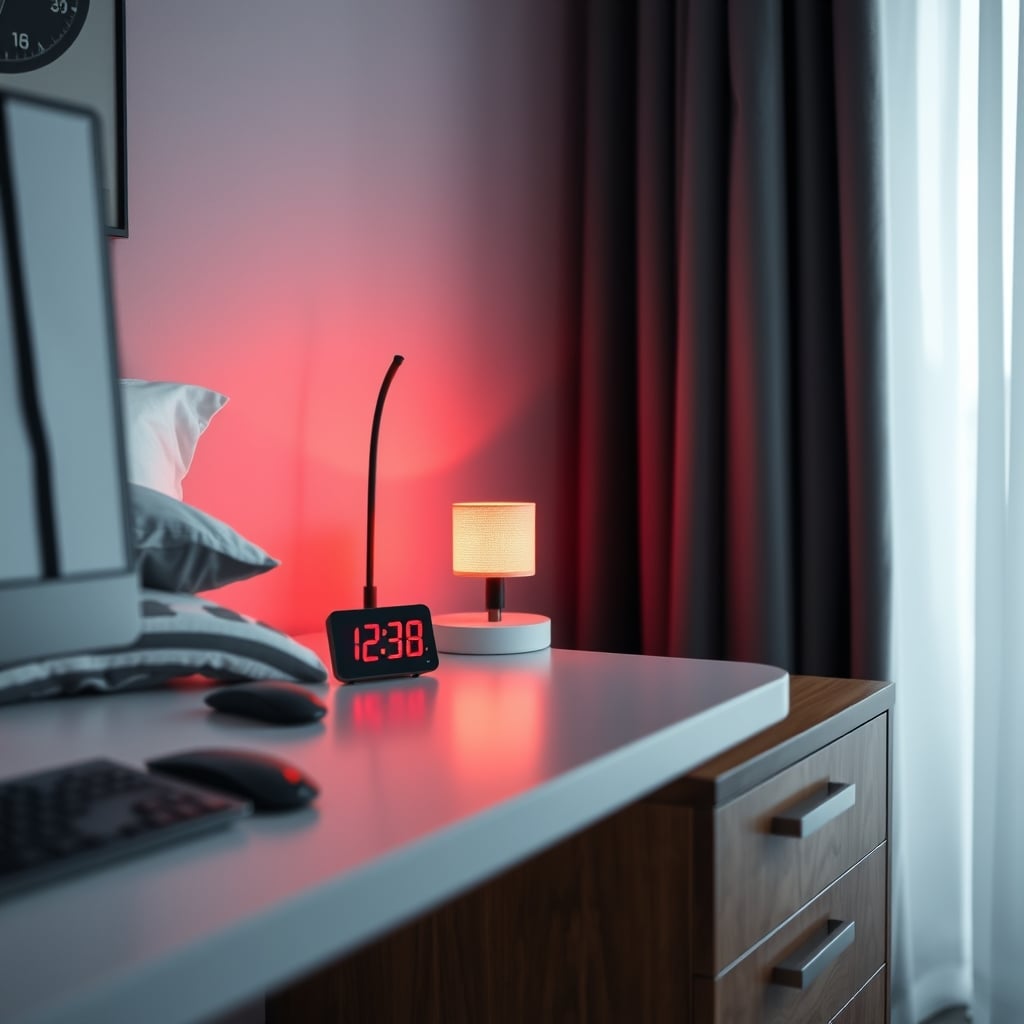
The gear you need for perfect sleep costs under $30: a basic clock, some blackout material, and maybe earplugs. It requires no app, no account, no Wi-Fi password, and collects zero data. The entire 'smart sleep' industry is built on convincing you that this simple, perfect solution isn't enough. It is. The pursuit of complex, data-driven sleep 'optimization' is often just procrastination from enforcing the basic, boring habits that actually matter. For more on stripping away pointless tech, see our take on The 'Ugly' Setup Secret: How Extreme Minimalism Unlocks Uninterrupted Deep Work.
Your Final Verdict: Skip the Smart Alarm. All of Them.
The verdict is unambiguous. Skip it. The entire category of networked, data-harvesting, light-emitting bedside smart alarms is overrated and fundamentally at odds with quality sleep.
The risks—fragmented sleep, performance anxiety from bad data, and profound privacy erosion—catastrophically outweigh the dubious benefits of a poorly executed sunrise simulation. You are not buying a tool for better rest; you are buying a liability. The promised land of scientifically perfect awakenings is a mirage sold to you by companies whose real product is your attention and data.
Invest instead in the boring fundamentals: darkness, silence, consistency, and a physical separation from the digital world. Your brain will thank you with deeper sleep, sharper focus, and the quiet confidence that comes from knowing your most private moments are truly your own. Ditch the smart clock. Reclaim your night.
Frequently Asked Questions
Are sunrise alarm clocks actually bad for you?
They can be. The core issue is timing. If the simulated sunrise begins while you're in deep or REM sleep, it can disrupt a critical restorative phase, leading to worse grogginess. Furthermore, even warm light can suppress melatonin and shift your circadian rhythm if used incorrectly, making them counterproductive for many users.
Do smart alarms really listen to you sleep?
Yes, if they use microphone-based sleep tracking or have a voice assistant (like Alexa or Google Assistant). These devices process audio to detect movement or await wake words. This creates legitimate privacy concerns, as audio data can be stored or reviewed. You are placing an always-on internet-connected microphone in your most private space.
What's the best alternative to a smart alarm clock?
A basic, non-connected digital or analog alarm clock with a dim red display, placed across the room. Combine this with absolute darkness (blackout curtains), no phones in the bedroom, and a consistent bedtime. This simple, private, and reliable setup outperforms complex smart alarms for consistent, high-quality sleep.

Written by
From bias lighting behind your monitor to smart RGB ecosystems, Leon knows exactly how to light a room for productivity during the day and gaming at night.
3 Comments
Share your thoughts with the community
Been dealing with issues related to smart alarm dangers for months. Finally feel like I understand what's going on.
Some of this I disagree with, but the core argument about smart alarm dangers is solid.
Solid overview of smart alarm dangers. The one thing I'd push back on is the assumption that one size fits all here.
Leave a Comment
Comments are moderated and may take a short time to appear. Links are not permitted.