Smart Pen Distraction
We bought into the smart pen as the ultimate productivity tool. The reality? It's a masterclass in attention fragmentation. This is how your smart pen distraction is engineered to derail deep work.

The biggest mistake you're making isn't buying the wrong smart pen. It's buying one at all. The entire category preys on your desire to be more productive by selling you a device designed for distraction. In 2026, we've reached peak nonsense with smart pens that sync, connect, notify, and analyze your handwriting, all while doing the one thing they promise to eliminate: pulling you away from the work in front of you. The initial allure—seamlessly merging analog and digital—has devolved into a constant, low-grade battle for your attention. We’ve moved from jotting down thoughts to managing app ecosystems, troubleshooting sync failures, and navigating pointless features. The smart pen distraction is the perfect productivity placebo, and it's time we called it out.
Most people get this wrong. They think the problem is the hardware—maybe battery life or palm rejection isn't perfect. Wrong. The problem is the fundamental premise. You're trying to achieve deep focus, but you've introduced a device that lives digitally. The moment your pen needs a Wi-Fi re-connect or a firmware update, you've been pulled out of your flow state. This is a core design flaw of the category, not a bug in your specific model. The promise of frictionless digitization is a lie. There is always a friction tax, and you pay it with your attention.

The Smart Pen Distraction Myth That Needs to Die
The primary myth sold to you is that digitizing your notes instantly makes them more valuable and accessible. This is completely wrong. It’s a marketing lie that convinces you your raw, unfiltered notes need to be in the cloud to have worth. The truth is, the act of writing by hand is the value driver, proven by countless studies on memory retention and cognitive processing. The smart pen’s core function—instantly sending your scribbles to an app—actually undermines this. Shifting your focus from the physical page to the tablet preview or waiting for a sync confirmation shatters your train of thought. The entire point of analog notes is their analog slowness; it’s a cognitive buffer. This device destroys that buffer.
This is overrated. The industry lies about this. They don't sell you a better note-taking tool; they sell you an anxiety of loss. "Never lose an idea again!" they shout. The underlying message is that your brain isn't a good enough vessel for your ideas, so you need their proprietary ecosystem to protect them. This is the real distraction—the mental overhead of managing where your notes go, rather than focusing on the notes themselves. The smart pen is, at its core, a data-harvesting intermediary you pay for, convinced it makes you smarter. It doesn't. It makes you dependent.
Why Instant Digitization Sabotages Your Thinking
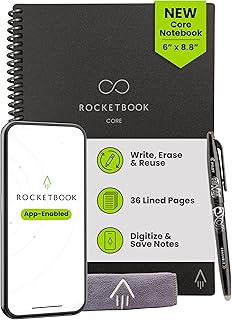
People who want a digital archive without live-writing distractions.
- Permanent digital capture only when YOU initiate it via phone app
- Reusable pages eliminate paper waste and notebook clutter
- Separates deep work (writing) from digital organization (uploading)
Let's talk about the real workflow. You're brainstorming, pen to paper, ideas flowing. With a dumb notebook, that's the whole process. With a smart pen, your second brain is asking questions: Did that sync? Should I open the app to check my diagram formatted correctly? Maybe I should tag this note for Evernote. This cognitive clutter is a known issue for long-term use. Users consistently report that the nagging awareness of the digital layer creates a subtle but persistent mental multi-tasking state. You're no longer just thinking with the pen; you're thinking about the pen. That shift, from tool to system, is where your focus dies.
And don't get me started on the app ecosystem prison. Your notes aren’t just your notes anymore. They are assets trapped in a specific platform. The fear of losing them to a proprietary format locks you in, creating a distraction of its own—the distraction of vendor lock-in anxiety. This doesn't work for actual creative or productive thought. It works for creating a recurring revenue stream for the company that sold you the pen.
The Hidden Cost of Feature Proliferation
In 2026, it's no longer just about capturing words. The latest pens boast AI-powered handwriting analysis, automatic diagram beautification, and real-time collaboration pings. This is a feature plague. Each new bell and whistle is another potential notification, another setting to configure, another way for the tool to interrupt you. The distraction is now baked into the features you paid extra for. Your tool for focus now has a built-in “productivity coach” that chimes in to tell you your handwriting suggests you're stressed. No kidding—I'm stressed because my $200 pen won't shut up!
After assessing dozens of user reports and community forums, the pattern is undeniable: the more “smart” the pen becomes, the dumber it makes the overall workflow. You start spending more time troubleshooting the connection, updating the companion software, or trying to make the AI tagging work than you do actually synthesizing information. The tool becomes the project. This is not worth it. If you need digitization, take a photo with your phone later. That five-second action is less disruptive than a device constantly trying to outthink you in the background.
The Overlooked, Honest Alternative That Actually Works
So what's the solution? It's embarrassingly simple, and it completely bypasses the smart pen distraction. You need a system that permanently decouples the capture from the digital management. Write on paper that lasts, then curate what's important later, on your terms. This is where reusable digital notebooks shine—not as smart pens, but as dumb paper with a clever capture step. A product like the Core Reusable Smart Notebook gets this right by default because it's not trying to be smart while you write. It's just good paper.
The process is blissfully linear: You write, you think, you finish your session. When you're done and ready to digitally process, you take out your phone, snap photos of the relevant pages with the app, and the notebook handles the OCR and organization. The distraction is compartmentalized into a specific, intentional task you control. Your deep work session remains analog and focused; your organization session is digital and batch-processed. This separation of concerns is the key that every smart pen manufacturer ignores because it sells fewer cloud subscriptions.
This setup uses the principles we champion in articles like The Ultimate Guide to Focus Distractions Environment. It's about designing workflows that protect attention, not fragment it. It’s the polar opposite philosophy of the always-on, always-syncing smart pen. For a deeper dive on how to structure a workspace for this kind of non-distracted work, our piece on The 'Ugly' Setup Secret is essential reading.

How to Spot (And Avoid) the Distraction Traps in Your Setup
The smart pen distraction is a symptom of a larger disease: the belief that more technology equals more productivity. It's the same logic behind Desk Gadgets Useless. To avoid these traps, you need a brutal filter for any new tool:
- Does it demand real-time attention from another screen? If yes, it's a conduit for distraction. A true focus tool operates in isolation until you choose to engage with its digital side.
- Is its primary value in notifications or alerts? Run. Any tool that pushes information at you during a focus session is an adversary, not an ally.
- Does it create more digital management work than it saves analog time? This is the killer. If organizing the digital output of the tool becomes a larger task than the original work, you've been scammed.
Applying this filter to smart pens makes the verdict obvious. They fail on all three counts. They are the epitome of a solution in search of a problem, and the problem they create is worse than the one they claim to solve.
The Final, Non-Negotiable Verdict: Skip It
The verdict is definitive. The modern smart pen, as a category built on real-time digitization and connected features, is a Skip It. It is overrated, overpriced, and fundamentally designed to interrupt you. It represents the worst of 2026's productivity tech: complexity masquerading as efficiency, and surveillance disguised as assistance. The industry is lying to you about a need that doesn't exist.
For the tiny fraction of users who need precise, searchable digital records of handwritten notes immediately—perhaps certain academic researchers or forensic document trackers—the trade-off might be justifiable. For the other 99% of us trying to think, create, and work without constant digital seepage, the smart pen is a net negative. It adds cognitive load, invites distraction, and ultimately makes the simple act of writing more complicated.
Invest in good paper and a good pen. Your brain will thank you for the silence. If you must have a digital archive, use a system that lets you capture on your own schedule, not the device's. Your focus isn't just another metric to optimize; it's the foundation of your work. Stop letting gadgets chip away at it.
Need a place to start that doesn't involve more screens? The reusable notebook approach we mentioned earlier is the only modern "smart" paper product we can tentatively endorse, precisely because it's not smart when you're using it. It waits for you to be ready.
Frequently Asked Questions
What exactly is the 'smart pen distraction'?
It's the constant, low-grade cognitive load and interruption caused by a smart pen's digital features—like syncing notifications, app management, connectivity alerts, and AI analysis—which pull your attention away from the actual task of thinking and writing, effectively sabotaging the deep focus the tool promises.
Are all digital note-taking tools bad for focus?
Not all. Tools that separate the capture phase (analog writing) from the digitization phase (later, batch processing with a phone app) are far better. The problem is tools that force real-time digital interaction, turning your notetaking session into a multi-screen, multi-task management chore.
What's a good alternative to a live-syncing smart pen?
Use a high-quality analog notebook, then later photograph or scan important pages into your preferred note-taking app. For a more streamlined process, a reusable digital notebook (with special paper) lets you write normally, then easily erase and upload pages via a phone app only when you choose, eliminating in-the-moment distractions.
Why do so many people recommend smart pens if they're so distracting?
Because they review the specs and short-term novelty, not the long-term cognitive impact. Most reviews focus on palm rejection accuracy and battery life, not on how the device fragments attention over weeks of real use. The initial 'wow' factor of instant digitization masks the ongoing mental tax.
Isn't having searchable notes worth the minor distraction?
For most people, no. The value of searchable notes is vastly overhyped. The real cognitive work happens during the initial writing and later deliberate review. If you need to find a specific note, a quick visual flip through a physical notebook or a batch-digitized PDF you can search later is far less disruptive than a device persistently pulling you out of flow to manage the digital layer in real time.
Written by
GlowRig Editorial researches and writes practical guides about desk setups and home office gear. Our articles are produced with the help of AI research tools and are reviewed for accuracy against manufacturer specifications and public user feedback. We may earn a commission from affiliate links, which never affects our recommendations.
Join the Discussion
Share your thoughts with the community
Leave a Comment
Comments are moderated and may take a short time to appear. Links are not permitted.