Desk Toy Personality Is Your Rorschach Test
You think that Newton's Cradle or RGB headphone stand is just a cute accessory. You're wrong. Your desk toy personality is a neon sign flashing your deepest insecurities, productivity fears, and the marketing lies you've swallowed whole. We're cutting through the BS.

You’ve seen the perfectly curated setups on social media. The clean desk, the single succulent, the tasteful RGB glow, and the one, solitary ‘quirky’ desk toy placed just so—a miniature zen garden, a branded fidget spinner, a useless but beautiful brass puzzle. It’s a lie. A complete fabrication. That setup is a sterile museum exhibit, not a living workspace. The real story of your desk toy personality isn’t found in that single, Instagram-approved ornament. It’s in the chaotic, honest pile of crap that accumulates when you’re actually working. It’s the three dead fidget cubes in the drawer, the ‘inspirational’ quote block you haven’t touched since 2025, and the ‘smart’ globe that’s been displaying the wrong timezone for six months.
We treat desk toys like harmless decor, but they’re psychological fingerprints. Every single one, from the hyper-expensive titanium bolt action pen to the free conference swag stress ball, is a tiny confession. It reveals what you think you lack, what you aspire to be, and what brand of tech-industry Kool-Aid you’re currently drinking. Most people get this completely wrong. They buy for aesthetics or fleeting trends, never realizing they’re building a shrine to their own professional anxieties. This isn’t about having fun. This is about the stories we tell ourselves to feel in control of the digital chaos.

The Minimalist Toy Lie Is Exhausting
Let’s start with the biggest facade: minimalist desk toy culture. This is the belief that a single, hyper-designed, often brutally expensive object conveys discipline, taste, and focus. A single anodized aluminum card holder. A solitary magnetic levitating hourglass. It’s all performative nonsense. In real use, this doesn’t work. That one perfect toy either becomes invisible background noise within a week, or it creates a paralyzing fear of clutter that’s more distracting than any mess.
Users consistently report that these ‘curated’ items fail to provide any actual interactive value. They’re sculptures, not tools. You don’t play with a $200 zirconium spinning top; you nervously polish it and worry about scratches. This obsession with one perfect thing is a direct offshoot of toxic productivity culture—the idea that a clear desk equals a clear mind. It’s a fantasy. As we’ve explored in desk clutter psychology, a completely barren workspace can be just as cognitively draining as a hopelessly cluttered one. The minimalist toy isn’t a tool for focus; it’s a trophy for austerity, and it’s boring as hell.
Why The “Productivity Toy” Myth Needs To Die
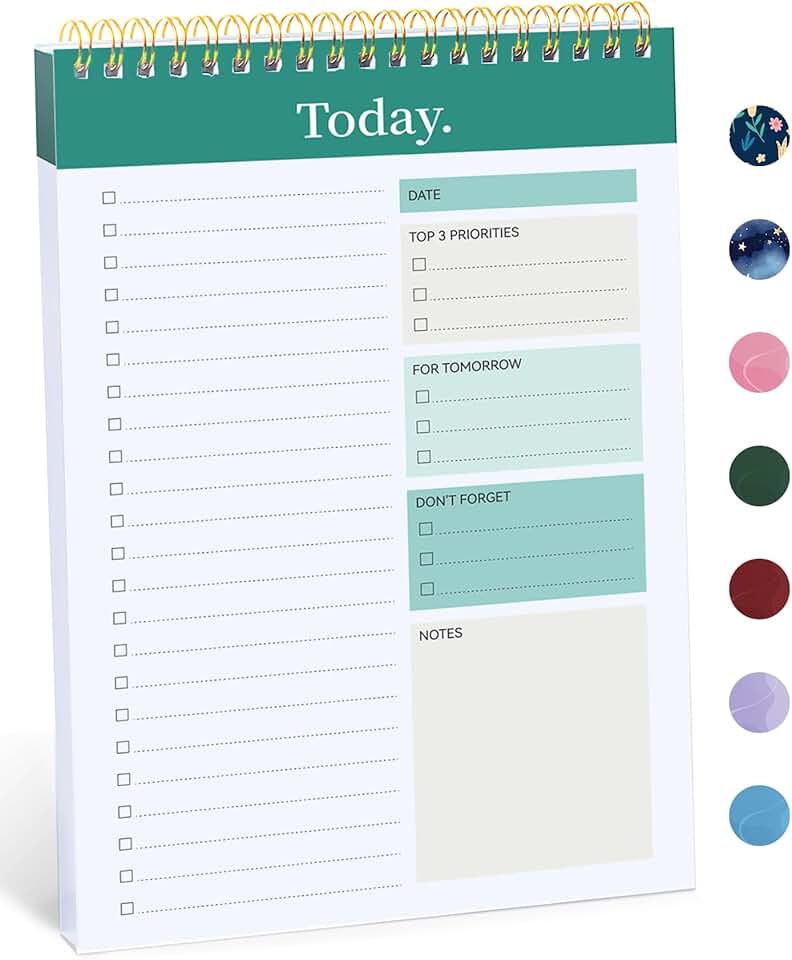
Replacing digital task clutter with simple, disposable analog lists.
- Undated format removes the guilt of missing days
- Physical act of writing improves task retention vs digital apps
- Disposable pages prevent buildup of 'precious' notebooks you never review
This is the section where we burn a sacred cow to the ground. The entire category of “productivity” desk toys is a scam, propped up by marketing departments preying on your desire to optimize every second. We’re talking about those ridiculous countdown timer cubes, the “Pomodoro” gadgets with needlessly complicated interfaces, and the “smart” notebooks that promise to digitize your scribbles but actually just create a second, more annoying pile of digital clutter.
This is overrated. Let’s be blunt: if you need a physical, $40 plastic cube to tell you to work for 25 minutes, your time management problems are far deeper than any gadget can solve. The industry lies about this. They sell you a solution to a problem they invented. The real issue is distraction, and adding another device—especially one that buzzes, lights up, or requires Bluetooth pairing—is like trying to put out a fire with gasoline. Based on widespread user feedback, these toys have a novelty lifespan of about 72 hours. After that, they either get ignored or actively resented for their passive-aggressive blinking.
Look at the “smart” notebook trend. The promise is seamless analog-to-digital workflow. The reality, as we’ve seen with why your AI smart notebook is pointless, is a frustrating process of charging special pens, syncing apps that never work flawlessly, and ending up with PDFs you’ll never look at. You’ve traded the simple, frictionless joy of a paper notebook for a convoluted tech stack that fails at its one job. That’s not a productivity boost; it’s a productivity tax.

Your Desk Toy Personality Is A Cry For Help
Now, let’s decode what you actually have on your desk. This is the real diagnosis. We’re moving past the curated lie and into the honest mess.
The Fidget Arsenal: If your desk is littered with fidget spinners, cubes, pop-its, and clicky pens, you’re not just “a little ADHD.” You’re broadcasting a deep, unmet need for kinetic engagement that your work isn’t providing. The work is under-stimulating, or the cognitive load is so high you need a physical pressure release valve. This isn’t a bad thing—it’s a brilliant adaptation. But buying the tenth fidget gadget is treating the symptom, not the cause. The real fix might be more challenging work, scheduled breaks, or a different task structure.
The Nostalgia Bunker: Old game cartridges turned into pen holders, vintage Star Wars figurines, a disassembled rotary phone. This personality is clinging to tactile, analog nostalgia in a digital world. It’s a protest against the intangible nature of modern work. You create things in software that have no physical form, so you surround yourself with physical artifacts that have weight, history, and permanence. This is actually one of the healthier expressions, as it grounds you. The danger is when it becomes a museum of the past that stifles engagement with the present.
The “Tech Bro” Status Symbol Collection: The titanium bottle opener, the magnetic wireless charger that only works in one perfect spot, the designer desk mat that costs more than your chair. This isn’t a desk toy personality; it’s a LinkedIn profile in object form. Every item is chosen to signal membership in a tribe of “those who get it.” It’s about perceived efficiency and premium materials. The problem? This is often the most joyless setup of all. There’s no playfulness, only a cold, expensive optimization that screams, “I have disposable income and read too many gear blogs.” It’s the equivalent of driving a luxury car with the seat still wrapped in plastic.
The Pile of Abandoned Projects: The half-soldered Arduino board, the 3D-printed prototype that failed, the keyboard with six different keycap sets. This is the creator’s chaos. It looks like a mess, but it’s a fertile mess. This personality uses the desk as an active lab, not a showroom. The “toys” are actually tools in various states of completion. This is the only personality where the clutter is genuinely functional. It’s not for everyone—it can be visually overwhelming—but it’s authentically tied to the work being done.
The Only Two Desk Toys That Are Actually Good
After trashing most of the category, are there any worth having? Yes, but not for the reasons you think. Their value has nothing to do with productivity or aesthetics.
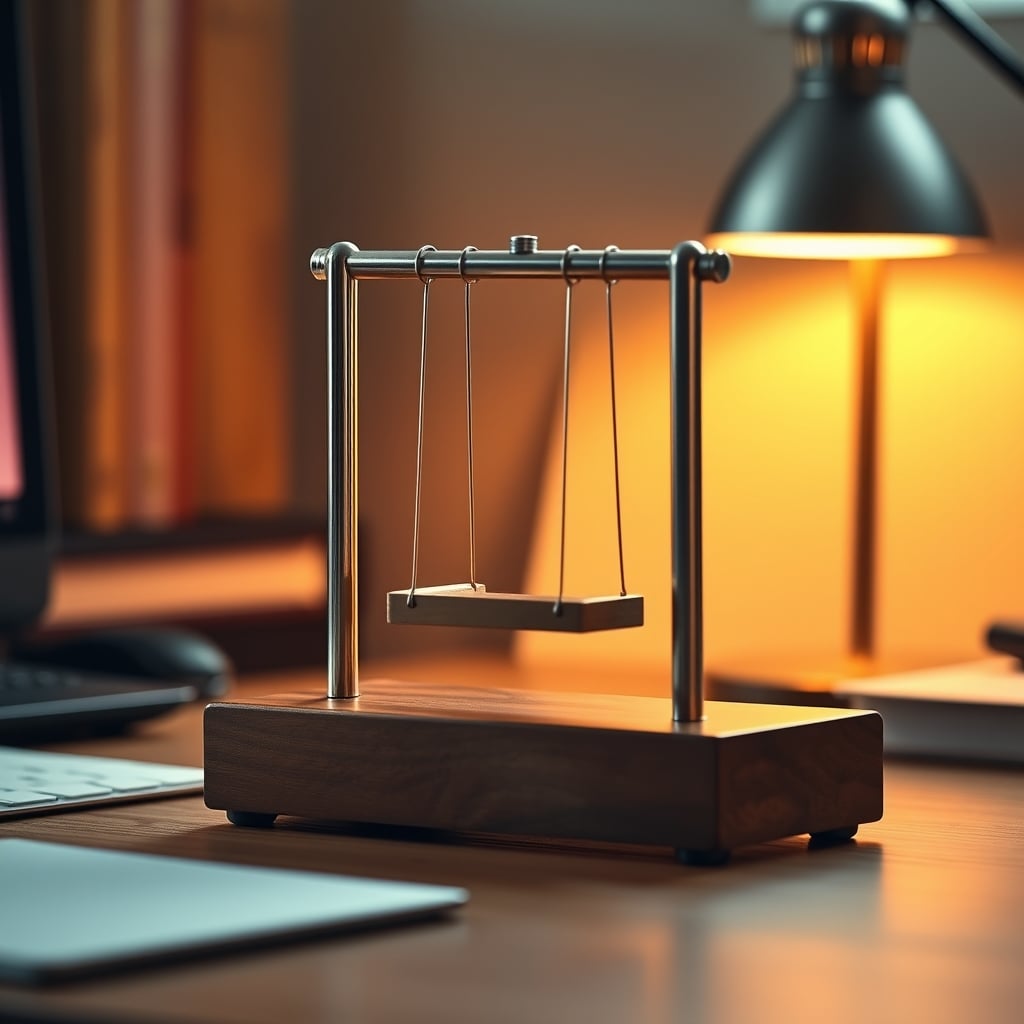
First, the truly pointless kinetic toy. Think Newton’s Cradle, a rolling gear sculpture, a sand timer. Its only function is to be visually and rhythmically satisfying. It requires no apps, has no settings, and makes no promises. In moments of mental block, watching a predictable, endless physical motion can act as a cognitive reset. It’s a visual metronome for your thoughts. The key is it must be completely separate from your work tools. If it has a USB port, you’ve already failed.
Second, the single, sentimental artifact. Not a collection, not a themed set. One thing. A rock from a meaningful hike, a toy from your kid, a coin from a grandparent. This item’s value is purely emotional and personal. It has zero resale value and would mean nothing to anyone else. Its purpose is to tether you to a reality outside the spreadsheet, the code editor, the never-ending inbox. It’s an anchor, not a decoration.
The Smart Toy Trap Is Privacy Suicide
We have to address the elephant in the room: the so-called “smart” desk toy. The “emoji mood lamp” that connects to your calendar, the “AI companion cube” that supposedly learns your workflow, the Bluetooth-enabled everything. This is not worth it. You’re trading a ridiculous amount of privacy and data for a gimmick with a two-week novelty window.
As we’ve exposed in AI desk gadgets privacy, these devices are data harvesters dressed up as fun. That cute little robot on your desk? It’s likely listening for wake words, tracking the patterns of your day, and selling that behavioral data to the highest bidder. The industry lies about the utility. The “smart” features are a thin veneer over a surveillance business model. You’re paying to put a corporate spy on your desk. Hard pass.
How To Actually Choose A Desk Toy (If You Must)
If you’re still determined to add something to your landscape after all this, here’s the brutally honest filter to use. Ask these questions:
- Does it need power or an internet connection? If yes, immediately walk away. You’re not buying a toy; you’re adopting a liability.
- Will it still be interesting in six months, or is it a meme? That viral TikTok fidget gadget will feel as dated as a pet rock by summer. Buy for lasting tactile satisfaction, not social media relevance.
- Does it solve a problem I actually have, or one a YouTuber told me I have? Be ruthlessly honest. Do you need a magnetic tool holder, or do you just like the way they look in setup videos?
- Can I ignore it completely? The best desk toy disappears until you want it. It doesn’t blink, beep, or demand attention. It sits there, quietly being itself, waiting for you to reach for it in a moment of distraction.
The Final Verdict: Mostly Overrated, But Revealing
Here’s the ultimate truth. Your desk toy personality is far more important than any individual toy you own. It’s a lens into your work psyche. Pay attention to what gathers around you organically, not what you stage for a photo.
The relentless pursuit of the perfect, minimalist, productivity-enhancing gadget is a fool’s errand. It’s consumerism disguised as self-optimization. The market is saturated with overpriced, overhyped junk that complicates your life under the guise of simplifying it.
Worth it: A single, powerless, kinetic item for mental resets, or one deeply personal artifact. That’s it.
Skip it: Everything marketed as “smart,” “productivity-boosting,” or part of a “curated collection.” Your desk is a workshop, not a showroom. Stop treating it like a diorama of your aspirational self and let it be the honest, slightly messy space where real work happens. The toys that matter are the ones that serve you, not the ones that make you serve a brand’s aesthetic or a marketer’s fantasy.
Focus on the work. Let your personality emerge from what you create, not what you curate on your desk mat.
Frequently Asked Questions
What does my desk toy personality say about me?
Your desk toy personality is a psychological tell. A pile of fidget gadgets suggests a need for kinetic stimulation your work isn't providing. Nostalgic items signal a longing for tangible analog life. A single ultra-minimalist toy is often performative, not functional. It reveals your insecurities and unmet needs more than your tastes.
Are productivity desk toys worth it?
No, productivity desk toys are almost universally overrated and a waste of money. They solve invented problems. A physical timer cube is less effective than a phone app, and smart notebooks create more digital friction than they remove. Real productivity comes from workflow, not gadgets.
What is the best type of desk toy to buy?
The only desk toys worth considering are 1) Simple, powerless kinetic toys (like a sand timer) for mental resets, and 2) A single, personal sentimental item with zero monetary value. Avoid anything that needs power, an app, or an internet connection. Its value should be in idle interaction, not promised output.
Written by
GlowRig Editorial researches and writes practical guides about desk setups and home office gear. Our articles are produced with the help of AI research tools and are reviewed for accuracy against manufacturer specifications and public user feedback. We may earn a commission from affiliate links, which never affects our recommendations.
Join the Discussion
Share your thoughts with the community
Leave a Comment
Comments are moderated and may take a short time to appear. Links are not permitted.