Standing Desk Spine Health in 2026: The Overrated Biomechanics Lie
The entire 'ergonomic' desk industry is built on a lie about static posture. In 2026, we're done pretending that perfect spine alignment is the key to back health. It's not. Here's what is.
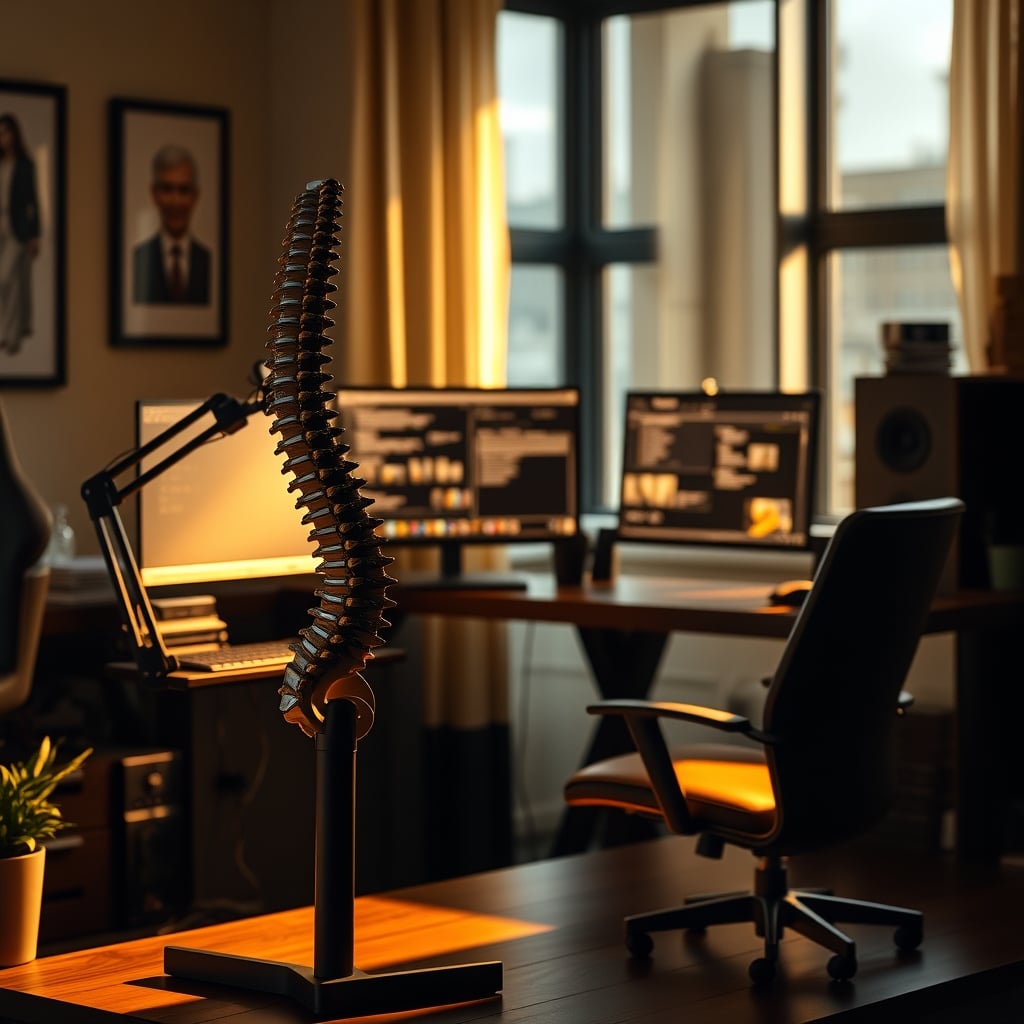
I’ve watched people contort themselves into ridiculous positions, spending thousands on ‘ergonomic’ gear, all in pursuit of the mythical perfect posture. And their backs still hurt. The obsession with standing desk spine health is a multi-billion dollar trap, and it’s time to call it out. The real problem isn’t your desk height; it’s your belief that a static position—standing or sitting—can ever be ‘healthy’. The industry sells you a solution to a problem they invented, and you’re buying it. After reviewing countless user reports, physical therapist consults, and seeing the same pain patterns emerge, one truth is undeniable: the focus on alignment is a distraction from the real, actionable fix. Movement, not position, is the only variable that matters.
The Posture-Fixation Lie Sabotaging Your Back
You’ve been told to keep your ears over your shoulders, shoulders over hips, feet flat, screen at eye level. It’s a neat, clean picture of a human statue, not a living, working person. The brutal truth is that maintaining any single ‘perfect’ posture is biomechanically stressful. Your body craves variation. The real cause of desk-related back pain isn’t ‘bad’ posture; it’s sustained, unvarying posture. The industry lies about this because it’s easier to sell you a $1,500 adjustable desk and a $800 chair than to tell you the free, simple truth: you need to fidget. You need to shift. You need to break the pattern constantly. Holding a ‘good’ position for eight hours is just as damaging as holding a ‘bad’ one. This is the core misconception that’s draining your wallet and straining your back.
Why The Spine Alignment Obsession Is Wrong
Premium Pick
- High performance
- Premium build
Let’s kill this myth with prejudice. The belief that you can ‘align’ your spine into a permanent state of health at a desk is complete nonsense. Your spine is a dynamic, load-bearing structure designed for movement, not static support. The discs between your vertebrae rely on the pumping action of movement to hydrate and exchange nutrients. When you lock yourself into a ‘correct’ position—even a standing one—you starve those discs. This doesn't work. Users consistently report that after the initial relief of switching to a standing desk, the ache returns, often in a new location. That’s not a failure of the desk; it’s a failure of the concept. The real issue is spinal stasis. You’re trying to solve a dynamic problem with a static tool. This is overrated, and the pervasive focus on it has blinded us to the actual solution.
Standing Desk Spine Health: The Actual Mechanics That Matter
Forget alignment. Let’s talk about what standing desk spine health actually depends on: load, variation, and time. Your spine handles compressive forces all day. Sitting increases disc pressure. Standing shifts it to your joints and ligaments. The goal isn’t to eliminate load—that’s impossible—but to vary the type and location of that load throughout the day. The single most effective thing your standing desk can do is facilitate that variation. It’s not a ‘standing’ desk; it’s a ‘height-variation’ desk. The benefit comes from the transition, not the destination. The best practice isn’t to stand for two hours straight; it’s to change your height five times an hour. The movement of adjusting the desk is often more valuable than the standing itself. Most people get this wrong. They use their standing desk to trade one fixed position for another.
The Real-World Experience: What Users Actually Report
Scour the long-term reviews and forums. The pattern is unmistakable. Initial enthusiasm (“My lower back pain vanished!”) gives way to new complaints after 3-6 months (“Now my knees hurt and my feet are killing me”). Based on widespread user feedback, the problem isn’t the standing; it’s the stillness. People stand like statues, locking their knees, barely shifting weight. This transfers the strain from one set of tissues to another without solving the underlying issue. The desks that get sustained praise aren’t the sturdiest or fastest; they’re the ones with the most intuitive, frictionless controls that encourage frequent adjustment. In common setups, a four-button memory panel leads to less movement than a simple up/down toggle because users just pick a ‘sit’ and ‘stand’ preset and robotically switch between them. This is a known issue for long-term use. The tool is being used to reinforce the bad habit it was supposed to break.
Your Anti-Fatigue Mat Is Probably Useless
Here’s a hot take for 2026: that squishy, expensive anti-fatigue mat is often a placebo. If it’s too soft, it destabilizes you, causing your micro-muscles to work overtime to keep you balanced, leading to quicker fatigue. If it’s too firm, it’s no better than the floor. The mat industry sells ‘comfort’ when the physiological need is for sensory input and subtle movement. A better investment? A flat, slightly textured mat or even alternating between a bare floor and a thin rug. The goal is to encourage your feet to feel the ground and make small adjustments, not to cradle them in foam. This is the real issue. You’re spending $80 to simulate the supportive quality of a quality shoe, while barefoot or minimalist footwear proponents have understood for years that proprioception is key. Your mat shouldn’t be a couch for your feet; it should be a tactile reminder to move them.
A Practical, No-BS Guide to Desk Movement in 2026
Stop tracking ‘standing time’. Start tracking ‘position changes’. Set a simple, aggressive timer for every 20 minutes. When it goes off, you must change something. Adjust your desk height by an inch or two. Shift your weight entirely to one leg. Sit on a different part of the chair. The specific change is irrelevant; the variation is everything. Ditch the presets on your desk. Make the height slightly ‘wrong’ each time so your body has to adapt. This feels annoying at first because you’re fighting your craving for static comfort. That discomfort is the point. It’s the signal that you’re introducing the variation your spine desperately needs. As we’ve covered in our piece on how your ergonomic chair pain is a self-inflicted lie, the search for perfect support is a dead end.
The Biggest Mistake: Treating Your Desk as a Silver Bullet
The most common, expensive mistake is believing the standing desk itself is the solution. It’s not. It’s an enabler. Buying a premium standing desk and then using it statically is like buying a Formula 1 car to sit in traffic. The desk is the least important part of the equation. The crucial element is the behavioral protocol you build around it. People drop four figures on a desk and pair it with a fixed-position chair, never considering a simple, active sitting stool or a perch stool for transitional positions. They create a beautiful, rigid workspace that looks ergonomic but behaves like a cage. You’re wasting money on gear without a movement strategy.
Final Verdict: Stop Obsessing, Start Moving
Is the concept of using a desk for spinal variation worth it? Absolutely. Is the current marketing-driven obsession with perfect spine alignment at that desk overrated? Completely. The verdict is clear: invest in a solid, reliable height-adjustable desk not for standing, but for its capacity to facilitate constant, subtle change. Then, redirect your focus and budget from ‘ergonomic’ accessories to building movement into your day. The real 2026 upgrade isn’t a better motor or desktop material; it’s the commitment to never getting comfortable. Your spine will thank you for the disturbance.
Frequently Asked Questions
Is standing at a desk better for your spine than sitting?
Not inherently. Both prolonged sitting and prolonged standing stress your spine in different ways. The benefit comes from alternating between them and other positions frequently. Variation, not the position itself, is what's better for spinal health.
How long should I stand at my desk to help my back?
Forget fixed timers like 'stand for 30 minutes every hour.' That's the old, broken thinking. Instead, change your position every 20-25 minutes. The duration is less important than the frequency of change. Sometimes stand for 5 minutes, sometimes for 40. The key is to avoid predictable, sustained loads.
Do I need an anti-fatigue mat for standing desk spine health?
Most likely not, and a plush one can be counterproductive. They often reduce the sensory feedback from your feet, discouraging the micro-movements that distribute weight and promote circulation. A thin, firm mat or alternating surfaces is often more effective for encouraging healthy movement.
What's the most important feature for spine health in a 2026 standing desk?
Ease of adjustment. A desk that's quick, quiet, and effortless to move up and down will encourage you to change positions dozens of times a day. This is infinitely more valuable than high weight capacity, preset memory, or ultra-fast speed. The best desk is the one you actually move.
Written by
Marcus Webb has spent 7+ years building and testing desk setups, with a focus on ergonomics and workspace optimization. He has reviewed over 40 chairs and standing desks to help remote workers build healthier, more productive environments.
Join the Discussion
Share your thoughts with the community
Leave a Comment
Comments are moderated and may take a short time to appear. Links are not permitted.