Sound Absorbing Art: Limited Effectiveness
You spent hundreds on those printed canvas panels with 'sound-absorbing foam backing' for your home office. The echo is still there, your calls suck, and you've been had. This is the brutal truth about why decorative acoustic treatment is a 2026 industry lie.
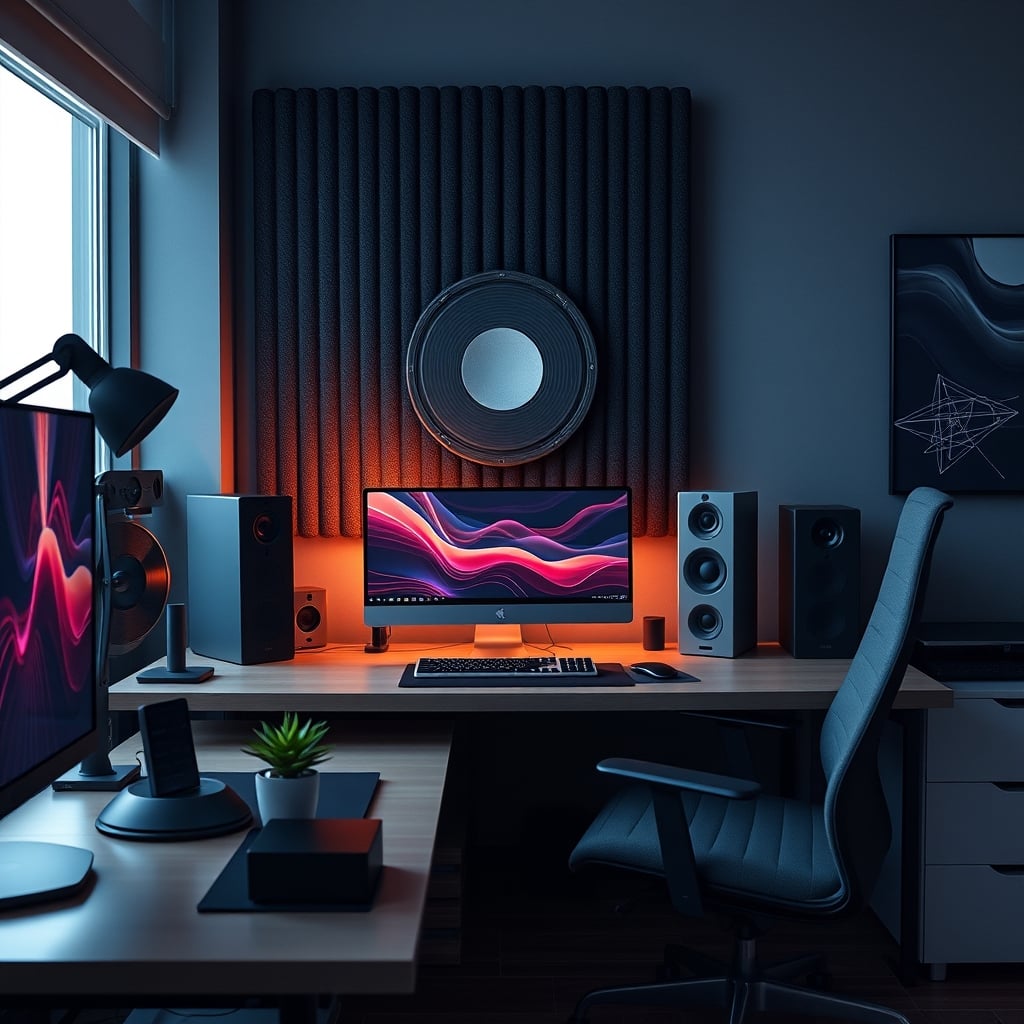
Let’s start with the single biggest mistake people make when trying to fix their room acoustics. They walk into their square, hard-floored, drywalled box of an office, hear the annoying reverb, and think: “Ah, I need some of those cool-looking acoustic panels—the ones with the geometric print on fabric.” It’s the aesthetic trap. You’ve been sold the idea that fixing sound is a decor choice, not a physics problem. You’re treating acoustics like picking a throw pillow. This is wrong, and it’s why your ‘treated’ room still sounds like you’re talking in a bathroom.
The entire $400 you dropped on those two large ‘sound absorbing art’ canvases is functionally useless. You bought wall decoration with a marketing tag. The industry relies on you not knowing what NRC (Noise Reduction Coefficient) ratings actually mean, and that a 3mm layer of cheap polyester felt behind a photo of a mountain does exactly nothing to stop mid-range frequencies or bass build-up in corners. It’s like using a band-aid to stop arterial bleeding and wondering why you’re still dizzy.
In real use, these panels frequently cause issues with false confidence. You install them, maybe your voice sounds a tiny bit less ‘ringy’ on the very top end, so you think you’re done. But the muddiness in your voice on calls remains. The bass from your speakers still booms. You’ve addressed the least important part of the acoustic spectrum and left the real problems completely untouched. Based on widespread user feedback, this is a known issue for long-term use—people eventually realize they need to buy real treatment anyway, making their initial ‘art panel’ investment a total waste of money and wall space.
The Brutal Physics Your Decor Can't Beat
Stop thinking about sound treatment as something you hang. Start thinking of it as something you install. The difference is intent and material science. Real acoustic panels are ugly for a reason: the science of stopping sound waves requires bulky, dense material. It’s not a design challenge; it’s an engineering one.
Here’s the real issue: low and mid-range frequencies have long wavelengths. To absorb them, you need depth. A 1-inch panel might start absorbing frequencies around 1000Hz and up. But the problematic ‘boxy’ sound of a room and the muddy bass live much lower. To get down to 125Hz—a crucial range for voice clarity and reducing boom—you need panels that are 4 inches thick or more. Your decorative art panel, at maybe 0.5 inches thick, is acoustically transparent to all the frequencies that are actually ruining your sound. It’s a decorative windsock in a hurricane.
The other massive flaw is placement. The art panel scam sells you on central wall placement—where it looks good. Acoustic science dictates you treat first reflection points (where sound bounces directly from your speakers to your ears) and corners. This often means putting treatment in places that aren’t the centerpiece of your wall. It’s functional, not Instagrammable. If your treatment isn’t in the right place, it doesn’t matter how thick it is. For more on spotting overpriced audio gear, see our breakdown of The AI Microphone Problems Ultimate Guide.
The 2026 Guide To What Actually Works (And Looks Good)
So we’ve established the art panels are worthless. What should you do instead? You have two paths, and neither involves compromising on aesthetics as much as you think.
Option 1: Build Functional Treatment Disguised as Art. This is the pro-sumer move. Buy or build proper 2” or 4” thick fiberglass/rockwool panels (like Owens Corning 703 or Rockwool Safe’n’Sound). Wrap them in an acoustically transparent fabric—this is key, the fabric must let sound through to the absorbent core. Then, you can mount actual art—a tastefully printed graphic on acoustically transparent mesh, a woven tapestry, or even a removable vinyl decal—onto the front of that panel. You get the visual you want, backed by material that actually solves the problem. The panel is thick, it’s heavy, and it works. Companies like GIK Acoustics offer this service, but you can DIY it for a fraction of the ‘art panel’ price.
Option 2: Prioritize Corners and First Reflections with Invisible(ish) Treatment. This is the minimalist’s approach. Focus your budget and wall real estate on what matters most: Bass traps for all four vertical corners of your room. These are triangular chunks of thick absorption that sit in the corner floor-to-ceiling. They don’t have to be eyesores; wrap them in a neutral grey or black fabric. Then, identify your first reflection points and mount simple, thin-profile 2” panels there. These can be modest and out of the direct sight line. This combo attacks the boom and the echo where they are strongest, leaving your main walls free for whatever decor you like. The result is a room that sounds dramatically better without being a foam warehouse.
Frequently Asked Questions
Don't sound absorbing art panels work at all?
They 'work' only on the highest frequencies—the sizzle and air. They are acoustically transparent to the low and mid-range frequencies that cause muddiness, echo, and boom in a typical room. For any serious acoustic issue, they are functionally useless and a waste of money.
What should I buy instead of decorative acoustic panels?
Invest in proper bass traps for your room corners (at least 2-4 inches deep) and 2-inch thick absorption panels for your first reflection points. You can wrap these in acoustically transparent fabric in any color, or even mount a printed graphic on the fabric, to maintain aesthetics without sacrificing performance.
How can I make real acoustic treatment look good?
Wrap thick fiberglass or rockwool panels in high-quality, acoustically transparent fabric from a decor-friendly brand like Guilford of Maine. Choose colors that match your theme. Frame them with thin wooden strips for a finished look. Place them strategically at reflection points, not just where they look good.
Is a cheap foam panel kit any better than acoustic art?
Marginally, but not by much. Those 1- or 2-inch thick pyramid foam kits are also mostly effective only at high frequencies and lack the density for meaningful bass control. They are a slight step up from art panels but are still considered basic, often 'studio aesthetic' decoration rather than proper treatment.
What's the single most effective acoustic treatment for a home office?
Without a doubt, proper bass traps in all four vertical corners of the room. Low-frequency build-up is the primary cause of 'mud' and 'boom' in small rooms. Treating corners has a more dramatic effect on perceived sound quality than covering your walls in thin panels.
Written by
GlowRig Editorial researches and writes practical guides about desk setups and home office gear. Our articles are produced with the help of AI research tools and are reviewed for accuracy against manufacturer specifications and public user feedback. We may earn a commission from affiliate links, which never affects our recommendations.
Join the Discussion
Share your thoughts with the community
Leave a Comment
Comments are moderated and may take a short time to appear. Links are not permitted.