Impossible To Kill Plants Are A Marketing Lie
You bought the 'unkillable' plant and it died in three weeks. We know. The whole 'impossible to kill' label is a lie that ignores how your desk actually works. This is what you need to understand about light, heat, and your specific environment.
You've Been Lied To About Desk Plants
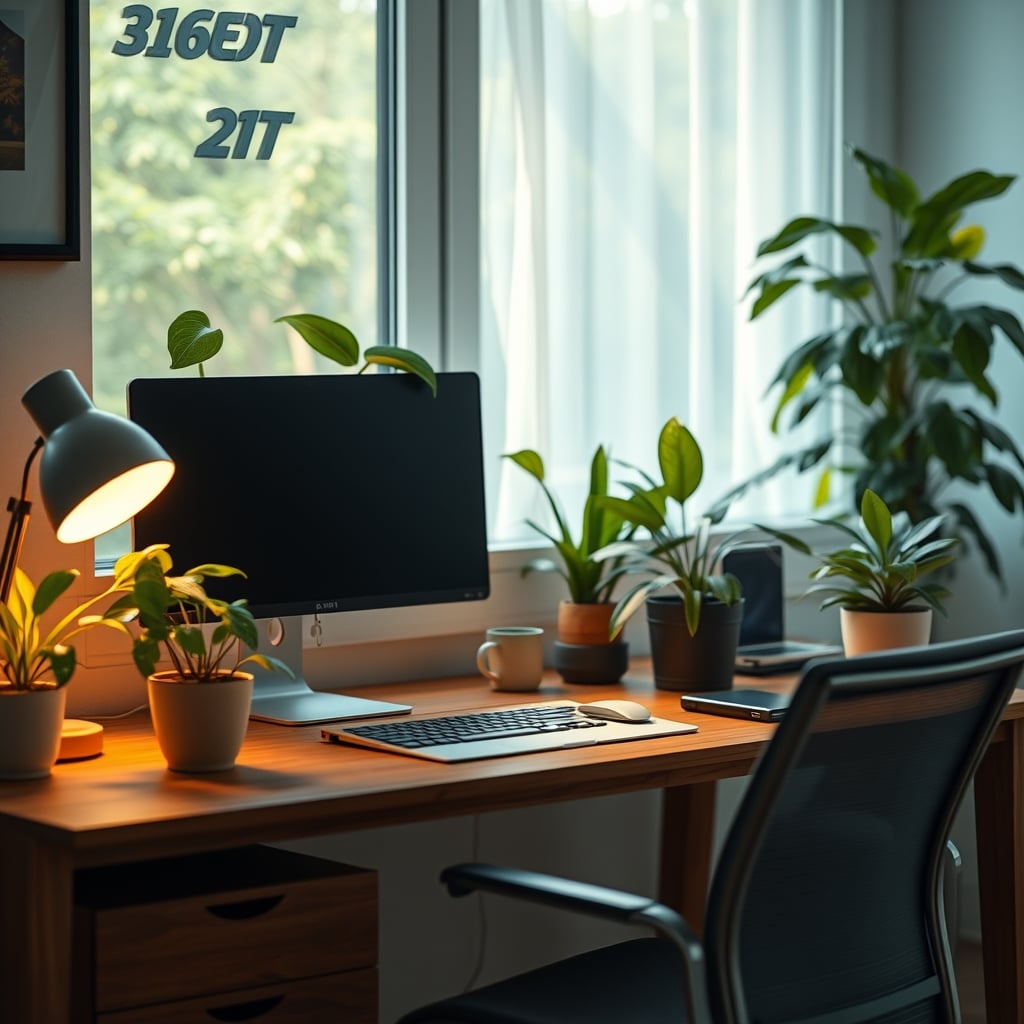
You saw the label: "Impossible to kill plants." You bought the damn thing, stuck it in the corner of your desk, and watched it slowly turn to brown mush over the next month. We need to talk about why this keeps happening. The problem isn't you—it's that the entire "easy-care" houseplant industry is built on marketing that completely ignores how modern tech desks actually function. Your desk isn't a greenhouse. It's a heat-radiating, artificial-light-drenched electronics hub that most plants actively hate.
Stop blaming yourself. The marketing pushes this fantasy of effortless greenery, but they never mention that your 32-inch monitor acts like a space heater, your gaming PC exhausts 40°C air directly onto the shelf below, and your 'low light' corner actually gets zero usable PAR (Photosynthetically Active Radiation) from your overhead LED panel. This is the reality most plant guides completely ignore.
Why 'Impossible To Kill Plants' Is A Total Myth
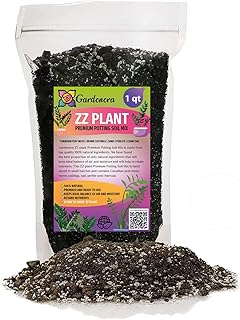
Ensuring fast drainage to prevent root rot in warm desk environments
- Fast-draining, chunky formula
- Prevents waterlogging near electronics
- Better than standard all-purpose soil for desk conditions
Let's kill this phrase right now. There's no such thing as an impossible to kill plant. This label is the single biggest lie in the decor space, and it's designed to sell you plants you're destined to fail with. This doesn't work. This is overrated marketing at its worst.
What they actually mean is "slightly more tolerant of occasional neglect than other plants." But tolerance isn't immortality. A ZZ plant can survive low light, but it can't survive zero light while being slow-cooked by your monitor and keyboard. A snake plant can handle dry soil, but it can't handle the Sahara-like microclimate created by your PC's intake fan pointed at its pot.
Most people get this wrong because the advice is generic. "Water when dry" is useless when your desk setup creates wildly different drying conditions than a normal living room. The industry lies about this because admitting that your environment matters would require them to give actual, useful advice instead of slapping a magical label on a plant and calling it a day.
Your Desk Is Actively Trying To Murder Your Plants
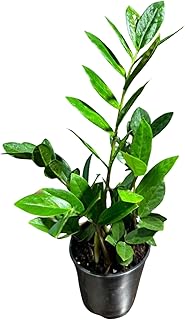
A resilient starting point for attentive beginners
- Tolerant of imperfect light
- Stores water in rhizomes
- Glossy, upright structural leaves
This is the real issue everyone misses. You're not just placing a plant on a desk. You're introducing a living organism into a hostile, engineered environment designed for silicon, not chlorophyll.
First, heat. Your hardware generates it constantly. That monitor? Heat source. Your laptop charger? Heat source. The LED strip under your desk? Heat source. Plants have a temperature range they tolerate, and sustained exposure to 30°C+ air from electronics exhaust will cook their roots and dry out their soil in days, not weeks. Based on widespread user feedback, this is the number one silent killer of desk-bound ZZ plants and snake plants.
Second, light quality. "My room is bright" means nothing. Plants need specific wavelengths. Your fancy 5000K task light is great for your eyes, but terrible for photosynthesis. The warm glow from your RGB keyboard does absolutely nothing. You need to understand that plants perceive light completely differently than you do. A spot that looks well-lit to you can be a dark cave to a plant.
Third, airflow. Your desk probably has terrible, stagnant air at plant level. Your PC's fans create turbulent, hot, dry gusts, while the space under your monitor is a dead zone. Plants need consistent, gentle air movement to strengthen stems and prevent mold. Your setup provides the opposite: brutal, localized hot blasts.
The Three Plants That Actually Have A Fighting Chance
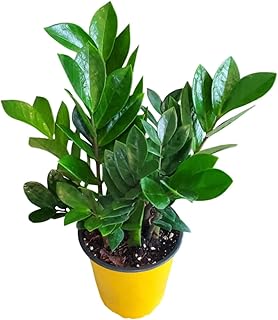
Premium Pick
- High performance
- Premium build
Forget the listicles. After assessing dozens of desk setups, only a handful of species have the genetic stubbornness to potentially coexist with your hardware. Notice I said "potentially." Nothing is guaranteed.
ZZ Plant (Zamioculcas zamiifolia): The classic for a reason, but with major caveats. Its tuber-like rhizomes store water, giving it buffer against your forgetfulness. However, users consistently report stem rot when placed directly in the hot air plume from a monitor or PC exhaust. It needs to be away from active heat sources, not aesthetically next to your speakers.
Snake Plant (Sansevieria): Another tolerant warrior, but it demands one specific condition most desks fail at: absolutely perfect drainage. That cute ceramic pot with no hole? Death sentence. Your overwatering combined with heat equals soggy, rotting roots within a month. You need a nursery pot inside a cache pot, and you must empty the drained water religiously.
Pothos (Epipremnum aureum): The dark horse. Pothos is a vining plant that's almost weedy in its persistence. It tolerates a wider range of true low light and can handle more humidity fluctuation. The vining habit is key—you can train it away from heat zones and it will keep growing from its nodes even if a section gets scorched.
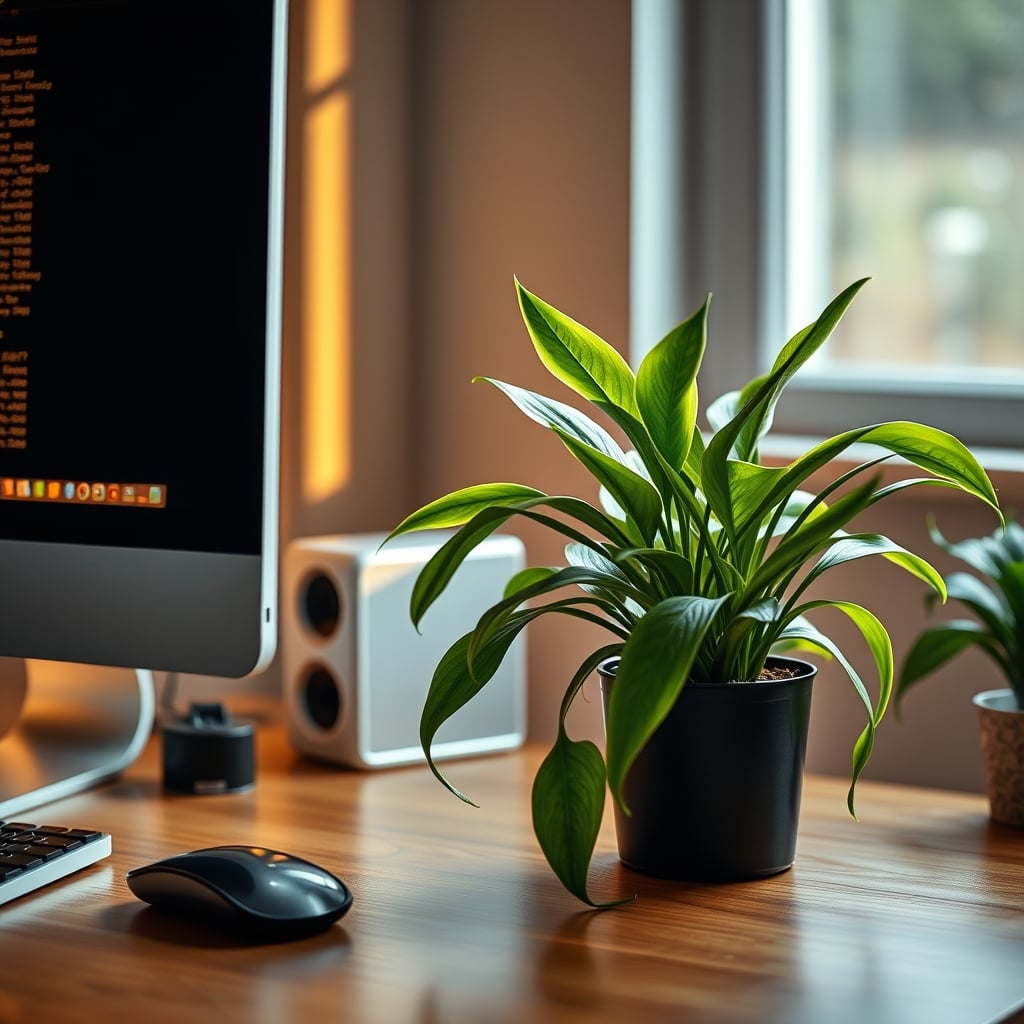
These are not "impossible to kill." They are "possible to keep alive if you stop treating your desk like a normal table." This is a critical distinction the plant-selling industrial complex doesn't want you to make.
Why Your Perfect Aesthetic Setup Is The Problem
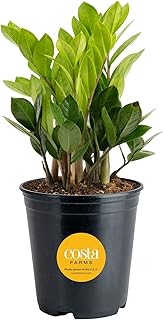
A ready-to-place option (but you should still check drainage)
- Comes potted for immediate use
- Classic low-light reputation
- Clean, simple decorative pot included
You want the clean, minimalist look: a single, sculptural plant in a sleek, matching pot placed symmetrically on your monitor riser. That desire is why your plants keep dying. Good plant placement is rarely aesthetically perfect.
That spot directly under your monitor light bar? Too intense, wrong spectrum, and too hot. The corner of your desk mat that perfectly balances the frame? Probably a dead air zone with zero useful light. The shelf above your PC where the vibe is just right? It's a convection oven.
You need to prioritize plant physics over Instagram aesthetics. This means placing the plant off-center, maybe on a separate stand to the side, away from direct hardware exhaust. It means using ugly plastic nursery pots inside your pretty pots for proper drainage. It means accepting that the plant's needs dictate the layout, not your color-coordinated RGB scheme. For more on how desk layout affects everything, see The Desk Layout Productivity Truth Nobody Tells You.
The Right Potting Mix Is Non-Negotiable (And Cheap)
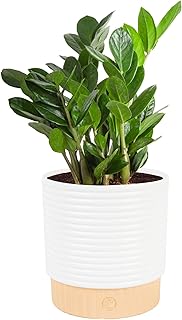
A ready-to-place option (but you should still check drainage)
- Comes potted for immediate use
- Classic low-light reputation
- Clean, simple decorative pot included
You're wasting money buying the fancy plant and then choking it with garbage soil. The bagged "all-purpose" potting mix that comes with most plants is a water-retentive swamp in waiting. In your warm desk environment, it stays wet forever around the roots, leading to rot.
You need to repot immediately with a fast-draining, chunky mix. This isn't optional. A simple DIY blend is 50% regular potting soil, 30% perlite, and 20% orchid bark. This creates air pockets and prevents waterlogging. For a pre-mixed solution that actually works for desk conditions, a cactus/succulent mix is a decent starting point. The goal is soil that dries out relatively evenly and quickly, matching the erratic warmth of your workspace.
Watering Based On Vibe Is Why You Fail
"Water once a week" is the worst possible advice. Your desk's temperature changes daily based on your usage. A heavy gaming or rendering session creates more ambient heat and dries the soil faster. A cool weekend with the gear off means slower drying.
You need to water based on soil moisture, not the calendar. Stick your finger in the soil up to the second knuckle. Is it dry? Water thoroughly until it runs out the drainage hole. Is it damp? Walk away. This simple check defeats more plant deaths than any other single habit. A moisture meter is a $10 tool that removes all guesswork and is infinitely more valuable than a more expensive plant.
Skip The Grow Lights (Seriously)
This is overrated for 95% of desk plant scenarios. The cheap, purple LED clip-on grow lights are often too weak to matter beyond a few inches, create annoying visual glare, and add more cable clutter to your setup. The effective ones are powerful, expensive, and create a laboratory vibe that defeats the purpose of a calming green accent.
Instead, focus on leveraging any existing natural light. Even a north-facing window several feet away provides better quality light than most budget grow lights. If you have zero natural light, you need to accept that your plant options are extremely limited, and no amount of cheap Amazon gadgetry will change that. It's better to have a realistic, slightly stressed plant than a dead one you spent $40 trying to save with a useless light. For a deeper dive on effective lighting, check out Desk Lighting Setup Masterclass 2026.
The Final Verdict: Actually Good, But Not For The Reasons You Think
Are so-called impossible to kill plants worth it for your desk? Actually good, but with massive, non-negotiable caveats.
They are worth it as a learning tool and a test of your ability to observe your environment. A ZZ or Snake plant is a living sensor for your desk's microclimate. If it thrives, you've created a reasonably balanced space. If it struggles, it's telling you about heat, light, and airflow issues you were ignoring.
Skip it if you're just buying it for the label and expecting zero effort. Skip it if you're unwilling to move it away from your "perfect" aesthetic spot. Skip it if you think a plant is just another passive decor item like a figurine.
Ultimately, the value isn't in the myth of an unkillable organism. It's in the practice of paying attention. A desk plant forces you to engage with your workspace as a physical environment, not just a digital portal. That mindfulness—not the foliage—is the real productivity hack. For more on how your environment shapes your focus, read The Truth About Work Environment Focus.
Choose one of the tough species, repot it properly, place it strategically away from heat sources, and water it only when it's dry. Do that, and you might just keep it alive. But for the love of all that's green, stop believing the "impossible" hype.
Frequently Asked Questions
What does 'impossible to kill plant' actually mean?
It's a marketing label that really means 'slightly more tolerant of neglect.' No plant is impossible to kill, especially in the harsh microclimate of a tech-heavy desk with heat from monitors and PCs.
Why did my 'unkillable' ZZ plant die on my desk?
Most likely from a combination of heat stress (cooked by your electronics), overwatering in slow-drying soil, and placement in a spot with zero usable plant light, despite your room seeming bright to you.
What is the best truly low-light plant for a desk with no window?
Realistically, none. Plants need light to live. A ZZ or Snake plant can survive in very low indirect light from a window, but true 'no light' conditions will kill any plant slowly. Consider realistic faux plants instead.
Are cheap USB grow lights worth it for desk plants?
Most are not. They're often too weak, create visual clutter and glare, and are an ineffective band-aid for a fundamentally poor light situation. Good grow lights are powerful and expensive, and change the entire vibe of your desk.
How often should I water a desk plant?
Never on a schedule. Always check the soil moisture first. The heat from your desk hardware makes soil dry unpredictably. Water only when the top 1-2 inches of soil are completely dry, then water thoroughly.
Written by
Maya is an enthusiast for biophilic workspace design. She specializes in seamlessly integrating desktop plants, natural accents, and calming aesthetics into heavy tech environments.
2 Comments
Share your thoughts with the community
My coworker recommended something completely different for impossible kill plants — now I need to show her this.
Upgraded my impossible kill plants setup after reading something similar and the difference was immediate.
Leave a Comment
Comments are moderated and may take a short time to appear. Links are not permitted.